Every contaminant on this site gets two pages: an explainer that answers whether you should worry, and a roundup that answers what removes it. Certification is the dividing line throughout — a filter is only proven against the contaminants it is specifically certified for.
By Scooter M.·Published September 1, 2026·Last updated September 1, 2026·Certification claims verified September 1, 2026
People arrive at this hub because of a headline, a neighborhood rumor, a note from the utility, or a doctor. The name is already in their head. What they need is whether it warrants the worry, and what genuinely removes it.
So every contaminant here gets two pages rather than one. The explainer answers should I worry. The roundup answers what removes it. They are split on purpose: burying the buy path under fifteen hundred words of anxiety serves nobody, and neither does a product list that never explains what it is protecting you from.
One exception, deliberately: chromium-6 is a single buyer's guide rather than a pair, because the answer is short — no carbon filter in NSF's listings carries a claim for it, and the certified route is reverse osmosis.
Certification is the whole game
The single most useful thing to understand before reading any contaminant page is that filter certifications are contaminant-specific. A filter is not "NSF certified" in general. It is certified against a particular standard, for a particular list of contaminants, at particular concentrations. Marketing language blurs this constantly, and the blur is where money gets wasted.
Standard
What it actually covers
Is it a health claim?
NSF/ANSI 42
Aesthetic effects: taste, odor, chlorine
No
NSF/ANSI 53
Health effects: lead, cysts, VOCs, chromium, certain PFAS and others
Emerging compounds at trace level, e.g. pharmaceuticals
Yes
NSF P473
A protocol specific to PFOA and PFOS
Yes
Standards scope per NSF. Full detail in our standards guide, and the clearest example of a contaminant carbon cannot touch is fluoride.
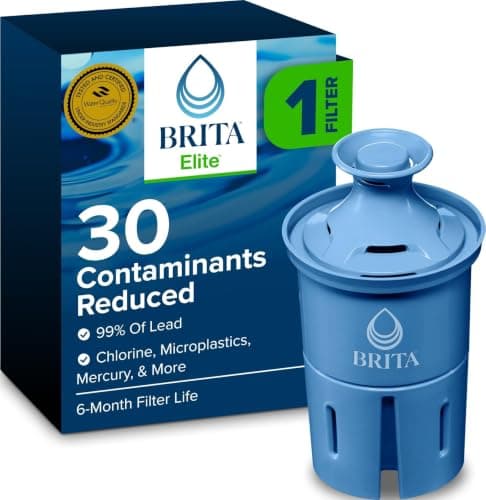
The practical consequence is blunt: a pitcher certified to NSF/ANSI 42 is an excellent answer to a chlorine taste and no answer at all to lead. A pitcher certified to 53 for lead may still have no PFAS certification. The Brita Elite is exactly that case, and it is the most common mismatch we see.
"Certified to" and "tested to" are different claims
Some of the best-performing filters on the market are tested to NSF standards rather than certified under them. That is not a scam, and it is not equivalent either. Testing means an independent lab ran the standard's method and published the result. Certification means a listing body verified it and keeps verifying it, with the product listed publicly.
Clearly Filtered and Epic both fall in the tested-to camp, and both have genuinely broad results. If you need a listing you can point a landlord or a lender at, that distinction decides your purchase. If you are satisfied by published test data, it probably does not. Either way you should know which one you are buying, and this site says so on every product.
Which tier for which contaminant
The negative cells in this matrix matter as much as the positive ones. Telling somebody that a pitcher will not fix their rotten-egg smell is the honest answer, and it is the one most sites skip.
Contaminant
Pitcher
Under-sink / RO
Whole-house
Well
Lead
Yes, certified models only
Yes
Rarely appropriate
Yes
PFAS
Yes, certified models only
Yes — RO strongest
Yes
Yes
Chlorine / chloramine
Yes
Yes
Yes
No — wells are not chlorinated
Iron and sulfur
No
Limited
Yes
Yes — primary
Hardness
No
No
Softener, not a filter
Yes
What we do not do here
We do not tell you your water is dangerous in order to sell you a filter. Several contaminant pages on this site conclude that for most readers, on most supplies, the honest answer is "probably not a problem for you, and here is how to check." Chlorine is the clearest example: the taste is genuinely annoying and the health case for removing it at typical municipal levels is thin. We say so on the page.
We also date every certification claim. Manufacturers revise performance data sheets, and a certification that was accurate last year may not be accurate now. Each page carries the date we last checked, and corrections are logged publicly when we get something wrong.
Start with a pick
Each of these ends in a specific product, a live price where one exists, and a link that goes straight to the retailer.
Our pick: SpringWell WS1 Well Water Iron Filter (Air Injection)
Sold direct by SpringWell Water. No affiliate link, so nothing to click and nothing for us to earn. The maker's page is in the sources below. Disclosure.
How do I find out what is actually in my tap water?
If you are on a public supply, your utility publishes an annual Consumer Confidence Report listing detected contaminants and their levels. It is free and it is the correct starting point. It will not tell you about lead, though, because lead almost always enters from the service line or household plumbing after the utility's sample point — that requires testing at your own tap.
Does a filter certified for lead also handle PFAS?
No, not unless it is separately certified for PFAS. NSF/ANSI 53 covers a list of health contaminants, and a product is certified for the specific ones it was tested against, not the whole list. The Brita Elite is certified for lead under 53 and is not certified for PFOA or PFOS. That is a real and common example of the gap.
Is reverse osmosis the answer to everything?
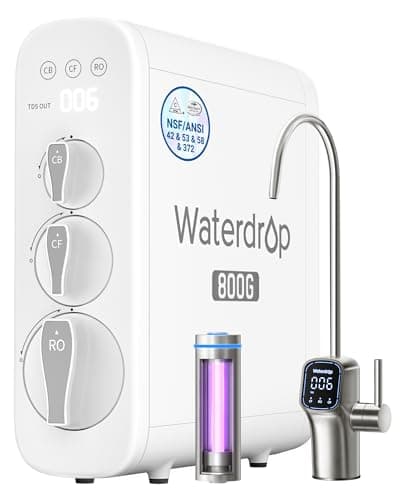
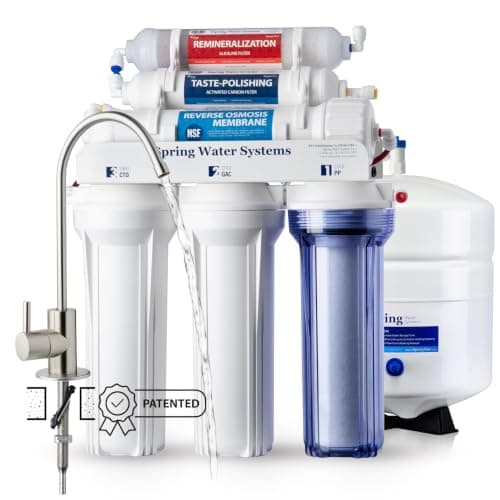
It is the broadest single technology for drinking water, covering dissolved contaminants that carbon cannot touch — fluoride, nitrate, arsenic, total dissolved solids. It is not the answer to everything: it treats one tap rather than the house, it sends some water to the drain, it is slower, and it does nothing for the hardness that is scaling your water heater.
Why do you keep saying certification instead of just telling me what works?
Because we do not test filters, and we will not pretend otherwise. What we can do is read certification listings, pull manufacturer performance data sheets, cite the standards, and do the cost-per-gallon arithmetic in the open. Certification is third-party evidence that a claim was verified by somebody with something to lose. Our opinion is not.

 Best filter for chromium-6Best Water Filters For Chromium-6The claim exists under NSF/ANSI 58 and nowhere else. Which certified systems carry it.