
Hexavalent chromium is covered federally by the total chromium limit of 0.1 mg/L, and California set a dedicated 10 ppb limit effective 1 October 2024. In NSF's certified listings the chromium-6 reduction claim appears under NSF/ANSI 58 — reverse osmosis — and under no other standard.
Quick picks
Tap any row to jump to the full write-up. The button goes straight to the retailer.
| # | Product | Best for | Price |
|---|---|---|---|
| 1 | 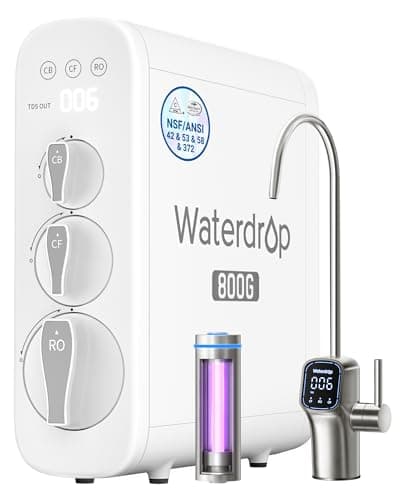 Waterdrop G3P800 Tankless Reverse Osmosis SystemCertified by IAPMO R&T to NSF/ANSI 42, 53 and 58, with hexavalent chromium among the named claims. Waterdrop G3P800 Tankless Reverse Osmosis SystemCertified by IAPMO R&T to NSF/ANSI 42, 53 and 58, with hexavalent chromium among the named claims. | Best overall | $699.00 - View on Amazon $999.00 — 30% off #ad Price as of October 6, 2026. We may earn a commission. Disclosure. |
| 2 | 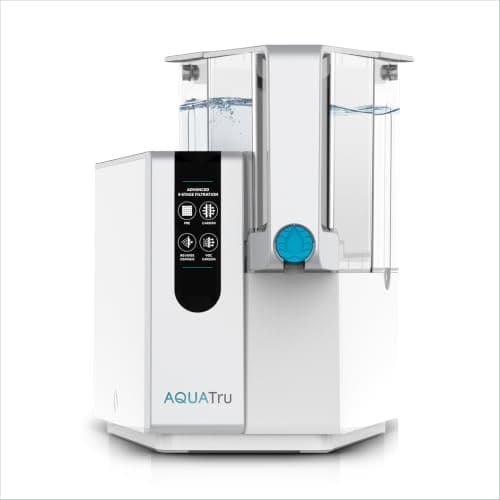 AquaTru Classic Countertop Reverse Osmosis PurifierCertified by IAPMO across 84 contaminants, chromium-6 included, with no installation at all. AquaTru Classic Countertop Reverse Osmosis PurifierCertified by IAPMO across 84 contaminants, chromium-6 included, with no installation at all. | No plumbing | $403.75 - View on Amazon $475.00 — 15% off #ad Price as of October 6, 2026. We may earn a commission. Disclosure. |
| 3 | 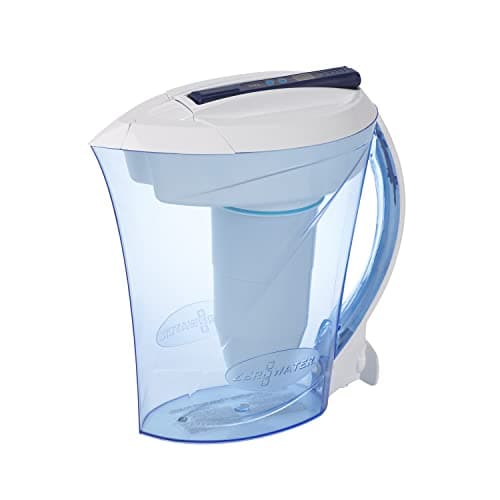 ZeroWater 10-Cup Ready-Pour PitcherIAPMO certified to reduce chromium, with 99% published for chromium-6 in laboratory testing. ZeroWater 10-Cup Ready-Pour PitcherIAPMO certified to reduce chromium, with 99% published for chromium-6 in laboratory testing. | Cheapest route | $28.99 - View on Amazon $59.98 — 52% off #ad Price as of October 6, 2026. We may earn a commission. Disclosure. |
| 4 | 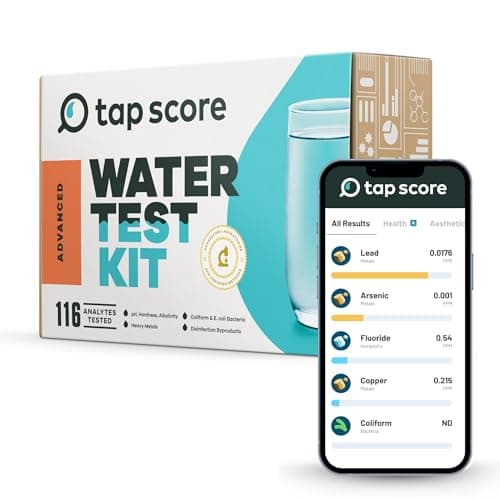 Tap Score Advanced Water Test (SimpleLab)Chromium-6 is not on a standard utility report in most states. A laboratory panel is how you find out. Tap Score Advanced Water Test (SimpleLab)Chromium-6 is not on a standard utility report in most states. A laboratory panel is how you find out. | Before any of them | $215.20 - View on Amazon $269.00 — 20% off #ad Price as of October 6, 2026. We may earn a commission. Disclosure. |
What chromium-6 is, and what the rules say
Chromium occurs in two forms in drinking water. Trivalent chromium is an essential trace nutrient. Hexavalent chromium — chromium-6 — is the industrial form, used in plating, tanning and pigment manufacture, and it is the one associated with cancer risk when ingested over a long period.
The federal position is that they are regulated together. The EPA's standard is 0.1 milligrams per liter, or 100 parts per billion, for total chromium, and that limit covers all forms including chromium-6 — the agency's reasoning is that the forms convert back and forth depending on conditions in water and in the body.
California went further. The State Water Resources Control Board adopted a dedicated hexavalent chromium limit of 10 parts per billion, effective 1 October 2024, with initial sampling by community systems required on or before 1 April 2025. Before that, the state regulated it under a total chromium limit of 50 µg/L. If you are in California, your utility is now measuring this specifically and publishing it.
The certification picture, counted
The useful question is not "which filters claim chromium-6" but "which filters have been tested for it by somebody independent". We searched NSF's own certified product listings by reduction claim on the date at the top of this page.
| Search in NSF's listing database | Distinct system models returned |
|---|---|
| NSF/ANSI 58 with a Chromium (Hexavalent) Reduction claim | 122 |
| NSF/ANSI 53 with a Chromium (Hexavalent) Reduction claim | 0 |
| NSF/ANSI 58 with a Fluoride Reduction claim | 129 |
| NSF/ANSI 58 with a Nitrate/Nitrite Reduction claim | 85 |
That is as clear a technology signal as this site ever gets to print. In NSF's database the chromium-6 claim does not exist under the carbon standard at all. It exists under 58, which is the reverse osmosis standard — and even there it is an optional claim, so a certified reverse osmosis system may never have been tested for it.
How we judged the picks
- Does the certification name chromium? Not "heavy metals". The element, on the claim list, from a named body.
- Certified or lab-tested? Both are evidence; they are not the same weight of evidence, and this page says which is which for every pick.
- Can you actually install it? A certified under-sink system is useless to a renter who cannot plumb one in, which is why a countertop option is on the list.
- What does it cost per gallon? The pitcher route is cheap to buy and expensive to run. That trade is explicit below.
The three routes, honestly
| Under-sink RO | Countertop RO | Ion exchange pitcher | |
|---|---|---|---|
| Example | Waterdrop G3P800 | AquaTru Classic | ZeroWater 5-stage |
| Evidence for chromium | IAPMO R&T certification naming hexavalent chromium | IAPMO certification across 84 contaminants | IAPMO certification for chromium; 99% published for chromium-6 in lab testing |
| Installation | Plumbed, needs power | None | None |
| Filter life | Cartridges on a 6-24 month rotation | Two cartridges, months apart | About 15-20 gallons |
| Wastewater | Yes, published ratio | Yes | None |
| Cost per gallon | Lowest | Middle | Highest by a wide margin |
The ion exchange route deserves a note. ZeroWater's resin strips dissolved solids rather than adsorbing contaminants, which is why it reaches metals that carbon does not — and why its filter life collapses on high-TDS water. ZeroWater, honestly covers that trade in full, and the lead verdict shows the same pattern with a different metal.
What does not work
Carbon. Pitchers, faucet mounts, fridge filters, under-sink carbon blocks and whole-house tanks. Zero products in NSF's database carry a chromium-6 claim under the carbon standard, and the physics is the reason: chromium-6 is a dissolved anion and carbon adsorption does not hold it. The pitcher limits page lists the other contaminants in the same category.
Boiling. It concentrates chromium rather than removing it, exactly as it does with every dissolved metal.
Whole-house systems. Wrong tier. A tank filter treats the water you flush and shower with, and the certified chromium claims live at the point of use.
Find out whether you have it first
Outside California, chromium-6 is rarely broken out on a consumer confidence report — what you will usually see is total chromium, if anything. That makes this one of the contaminants where a laboratory panel genuinely changes the decision rather than confirming it.
The testing guide explains what a panel covers and what strips and meters cannot do, and reading your report shows where total chromium appears if your utility publishes it.
The cost-per-gallon math
A household drinking two gallons a day uses about 730 gallons a year.
An under-sink reverse osmosis system covers that on a cartridge rotation measured in months and a membrane measured in years. A ZeroWater pitcher rated at roughly 15 to 20 gallons covers it in something like forty cartridges — which is why this page puts the pitcher last on cost per gallon while still listing it, because for a renter with a real chromium number and no plumbing access it is a legitimate answer.
We show the arithmetic rather than a verdict so you can redo it with the price you actually pay. Filter prices move; the rated capacities above do not.
The picks in full
Best overall
Waterdrop G3P800 Tankless Reverse Osmosis System
Waterdrop
Tankless reverse osmosis that gives back the cupboard a pressure tank would eat, fills a glass without the pause, and sends markedly less water down the drain than a classic tank system.
Certification status
Certified to NSF/ANSI 42 for chlorine reduction, NSF/ANSI 53 and 58 for TDS, fluoride, cadmium, hexavalent chromium and selenium, and NSF/ANSI 372 for lead-free materials.
Published specifications
| Output | 800 GPD |
|---|---|
| Pure-to-drain ratio | 3:1 |
| Format | Tankless — no pressure tank |
| Certified standards | NSF/ANSI 42, 53, 58, 372 |
| Installation | Two holes: smart LED faucet and drain |
| Faucet | Included, with TDS display |
What we like
- No pressure tank, so it fits cabinets a tank system cannot
- 3:1 pure-to-drain is far better than the ratio typical of older reverse osmosis
- 800 GPD means no waiting for a tank to refill
What we do not
- Needs a power outlet under the sink — a real constraint in older kitchens
- Proprietary filter cartridges, so you are tied to Waterdrop's pricing
- Requires drilling for the included faucet unless you have a spare hole
Skip it if
Renters, and anyone with no outlet under the sink. It is a permanent, powered installation — a countertop unit is the answer if you cannot commit to that.
$999.00 — 30% off
#ad Price as of October 6, 2026. We may earn a commission. Disclosure.
Where these specifications came from
No plumbing
AquaTru Classic Countertop Reverse Osmosis Purifier
AquaTru
Reverse osmosis performance with no plumbing, no drilling and no landlord conversation. You pay for that with counter space, a wait, and two tanks you fill and empty by hand.
Certification status
Certified by IAPMO to NSF/ANSI 53, 58, 401 and P473, covering lead, reverse-osmosis performance, emerging compounds and the PFOA/PFOS protocol.
Published specifications
| Filtration | 4-stage countertop reverse osmosis |
|---|---|
| Clean water tank | 0.75 gallons |
| Tap water tank | 1 gallon |
| Installation | None — no plumbing connection |
| Certified standards | NSF/ANSI 53, 58, 401, P473 (IAPMO) |
What we like
- Real reverse osmosis with a P473 PFOA/PFOS certification and zero installation
- The strongest answer available to a renter with a lead or PFAS problem
- No drilling, no drain saddle, no landlord permission needed
What we do not
- Takes up substantial counter space
- You refill and empty tanks by hand — it is not on-demand
- Highest purchase price in the no-plumbing tier by a wide margin
Skip it if
Anyone who can plumb in an under-sink system. A permanent under-sink RO is cheaper per gallon, on-demand, and out of sight. Buy this when you genuinely cannot install.
$475.00 — 15% off
#ad Price as of October 6, 2026. We may earn a commission. Disclosure.
Where these specifications came from
Cheapest route
ZeroWater 10-Cup Ready-Pour Pitcher
ZeroWater
The only mainstream pitcher that hands you a TDS meter and invites you to check its work. It buys you a PFOA/PFOS certification the Brita Elite does not have, and it costs you filter life.
Certification status
The 5-stage filter is system-certified by IAPMO against NSF/ANSI 42 for chlorine taste and odor and NSF/ANSI 53 for lead, hexavalent chromium, mercury and PFOA/PFOS.
Published specifications
| Filtration | 5-stage, including ion-exchange resin |
|---|---|
| Rated filter life | About 15-20 gallons, varying with source TDS |
| Certified standards | NSF/ANSI 42 and 53 (IAPMO) |
| PFOA / PFOS | Certified under NSF/ANSI 53 |
| Published reduction — PFOA/PFOS | 99% |
| Published reduction — lead | 95% |
| Published reduction — chromium 6 | 99% |
| Included | Handheld TDS meter |
What we like
- Carries a PFOA/PFOS certification, which the Brita Elite does not
- The bundled TDS meter turns 'is it still working' from a guess into a reading
- Ion exchange drives total dissolved solids far lower than carbon alone
What we do not
- Filter life is the shortest of any pitcher here, and it collapses further on hard or high-TDS water
- Cost per gallon is the highest in the pitcher tier as a result
- Some owners find the taste flat or faintly sour at very low TDS — a real preference issue, not a defect
Skip it if
Anyone on hard, high-TDS water who will not tolerate changing a filter every few weeks. On 400+ ppm supply the running cost is genuinely painful and an under-sink system is cheaper inside a year.
$59.98 — 52% off
#ad Price as of October 6, 2026. We may earn a commission. Disclosure.
Where these specifications came from
Before any of them
Tap Score Advanced Water Test (SimpleLab)
SimpleLab
Mail-in testing through certified laboratories, with a report that names contaminants, gives concentrations, and compares them against health guidelines. This is the number every system on this site is sized from.
Certification status
Samples are analyzed by laboratories in the SimpleLab network certified to ISO/IEC 17025, and Tap Score is recognized by the Water Quality Association.
Published specifications
| Method | Mail-in sample, certified laboratory analysis |
|---|---|
| Lab accreditation | ISO/IEC 17025 certified network laboratories |
| Panels available | City water, well water, and contaminant-specific tests |
| What you get | Concentrations plus health-guideline comparison |
What we like
- Certified-laboratory analysis, not a color-matching strip
- The report explains what each result means rather than dumping numbers
- Contaminant-specific panels exist when you only need one answer
What we do not
- Costs meaningfully more than a strip kit
- Turnaround is days, not minutes
- You have to actually collect the sample correctly, which is where home tests usually go wrong
Skip it if
Somebody whose entire complaint is a chlorine taste. That diagnosis is free — you can smell it — and a certified carbon filter costs less than the test.
$269.00 — 20% off
#ad Price as of October 6, 2026. We may earn a commission. Disclosure.
Where these specifications came from
Questions people actually ask
What removes chromium-6 from drinking water?
Reverse osmosis, and ion exchange resin. In NSF's certified listings the hexavalent chromium reduction claim appears only under NSF/ANSI 58, the reverse osmosis standard — zero products carry it under the carbon standard NSF/ANSI 53. Carbon filters of any size do not reduce it.
Is there a federal limit for chromium-6?
Not a separate one. The EPA regulates total chromium at 0.1 mg/L — 100 parts per billion — and states that this covers all forms including chromium-6, because the forms convert back and forth in water and in the body. California adopted its own hexavalent chromium limit of 10 parts per billion, effective 1 October 2024.
Do Brita or PUR filters remove chromium-6?
Neither claims it. Both are carbon pitcher filters, and no carbon product on this site carries a hexavalent chromium claim. The certified routes are reverse osmosis and ion exchange.
How do I know if my water has chromium-6?
In California your utility now measures and reports it under the state limit. Elsewhere it is rarely broken out — you may see total chromium on your consumer confidence report, or nothing at all — so a certified laboratory panel is the only reliable way to get a number for your own tap.
Does boiling water remove chromium-6?
No. Boiling removes microbiological risk, not dissolved metals. Because water evaporates while the chromium stays behind, boiling concentrates it slightly rather than reducing it.