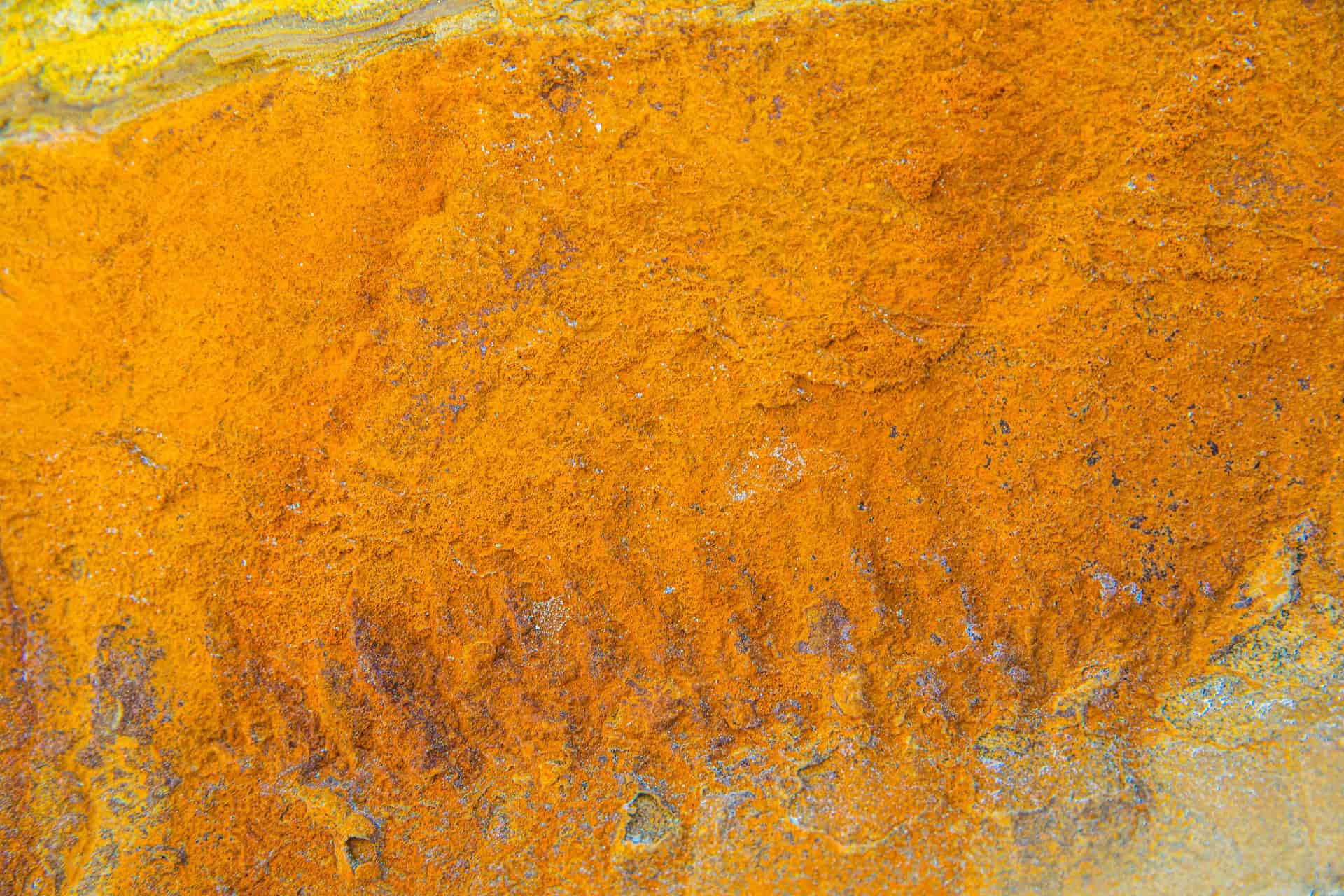
Iron, manganese and hydrogen sulfide are the classic well-water trio and they usually arrive together. All three need oxidation — converting a dissolved substance into a particle that can be filtered — which is why carbon filters and pitchers do nothing for them.
Three problems, one chemistry
Iron, manganese and hydrogen sulfide are all dissolved in groundwater, all invisible in the aquifer, and all removed by the same basic move: oxidize them into a solid particle, then filter the particle out. That shared mechanism is why one system usually addresses all three, and why nothing on the pitcher tier addresses any of them.
| Contaminant | The sign | EPA threshold | What it wrecks |
|---|---|---|---|
| Iron | Orange or reddish-brown staining, metallic taste | 0.3 mg/L, secondary (aesthetic) | Laundry, fixtures, appliances |
| Manganese | Black or dark gray staining | 0.05 mg/L secondary, plus a health advisory | Laundry, and it has a health dimension iron does not |
| Hydrogen sulfide | Rotten-egg smell | No federal standard | Plumbing corrosion, silverware, quality of life |
Ferrous versus ferric: the distinction that decides the purchase
Iron arrives in two forms and they are treated differently.
- Ferrous, or "clear water" iron. Dissolved. The water looks clean at the tap and turns orange in the glass over a few minutes as it meets air. It must be oxidized before it can be filtered.
- Ferric, or "red water" iron. Already oxidized into a particle. The water is visibly discolored immediately, and mechanical filtration alone can catch it.
A system built for ferric iron will not handle ferrous, and a sediment filter in front of dissolved iron does nothing. Watching a glass sit on the counter for five minutes is the cheapest diagnostic available, and it tells you which of these you have.
Iron bacteria: a third case
If you find a reddish-brown slime in the toilet cistern or a rainbow sheen on standing water, you likely have iron bacteria — organisms that metabolize iron and produce a gelatinous mass that clogs pipes, pumps and filters. They are not a health hazard and they are a genuine nuisance, and they are not removed by a standard iron filter. Shock chlorination of the well is the usual treatment, and recolonization is common.
pH decides whether the treatment works at all
This is the detail that turns a good system into a disappointing one. Oxidation chemistry is pH-dependent, and below roughly 6.8 iron oxidizes slowly and incompletely. An air-injection iron filter installed on acidic water underperforms in a way that looks exactly like a defective product.
If your pH is low, a neutralizing filter goes first, ahead of the iron system. Sequence matters more here than anywhere else on this site, and it is one of the few places where a water treatment professional genuinely earns the fee.
Match the numbers to the equipment
Every treatment system publishes ppm ceilings, and they are hard limits. Buying above them does not produce partial performance; it produces early failure. From the systems we list:
- Air injection oxidation reaches the highest limits — up to 7 ppm iron, 8 ppm hydrogen sulfide and 1 ppm manganese on the SpringWell WS1.
- Cartridge systems cap much lower. The iSpring WGB32BM caps at 3.0 ppm iron and 1.0 ppm manganese, and its rated capacity halves at the top of that range.
- One cartridge system caps on a combined figure. The Home Master HMF3SdgFeC is rated to 3 ppm across iron, manganese and sulfur together — so 2 ppm iron plus 2 ppm manganese is already over.
Which is why testing comes first, always. Which products: the iron and sulfur roundup.
Questions people actually ask
Is iron in drinking water harmful?
The EPA regulates iron as a secondary contaminant, meaning the standard exists for aesthetic reasons — taste and staining — rather than health. Manganese is different: it carries a health advisory alongside its staining threshold, so black staining warrants more attention than orange.
Will a sediment filter remove iron?
Only ferric iron, which is already an oxidized particle. Ferrous iron is dissolved and passes straight through a sediment filter, then oxidizes downstream and stains everything anyway. Watch whether a glass of water turns orange as it sits — that tells you which one you have.
Why does my water smell only in the shower?
Two possibilities with different fixes. Hydrogen sulfide is more noticeable when water is agitated and warm, so a whole-house issue shows up worst in the shower. But if the smell is on the hot side only, it is your water heater's magnesium anode rod reacting with sulfate, which is a cheap part swap rather than a treatment system.
Can one system handle iron, manganese and sulfur together?
Yes — that is exactly what air-injection oxidation systems are built for, and they publish separate ppm limits for each. Cartridge alternatives can also cover all three at lower concentrations, but read whether the limit is per contaminant or combined, because that changes the answer completely.