
Pitchers differ far more than they look. One is certified for lead but not PFAS, another is certified for PFAS but lasts a fortnight, and two of the broadest performers are tested rather than certified. Pick by the contaminant you actually have.
Quick picks
Tap any row to jump to the full write-up. The button goes straight to the retailer.
| # | Product | Best for | Price |
|---|---|---|---|
| 1 | 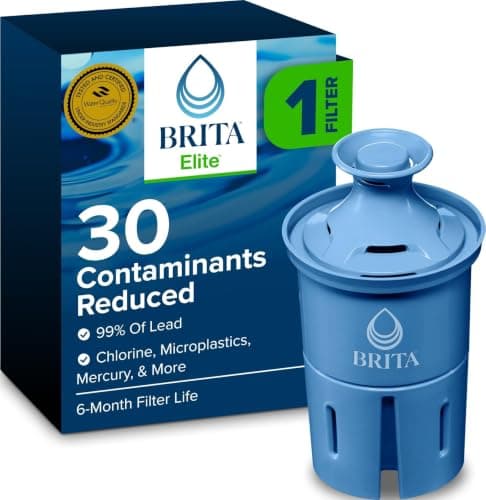 Brita Elite Filter (with any Brita pitcher)Certified for lead, 120 rated gallons, and it fits the pitcher you probably own. Brita Elite Filter (with any Brita pitcher)Certified for lead, 120 rated gallons, and it fits the pitcher you probably own. | Best overall | $19.88 - View on Amazon #ad Price as of October 17, 2026. We may earn a commission. Disclosure. |
| 2 | 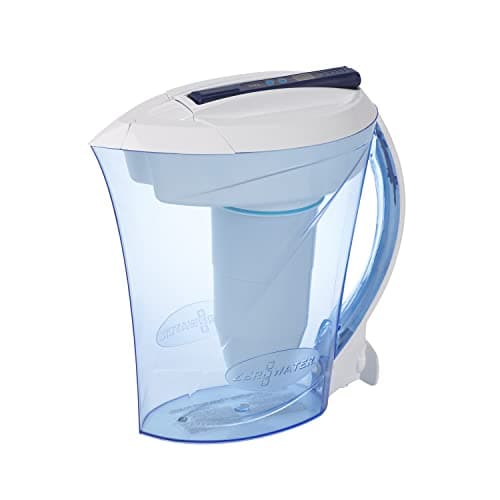 ZeroWater 10-Cup Ready-Pour PitcherCertified for PFOA and PFOS, with a TDS meter so you can check its work. ZeroWater 10-Cup Ready-Pour PitcherCertified for PFOA and PFOS, with a TDS meter so you can check its work. | Best for PFAS and TDS | $28.99 - View on Amazon $59.98 — 52% off #ad Price as of October 17, 2026. We may earn a commission. Disclosure. |
| 3 | 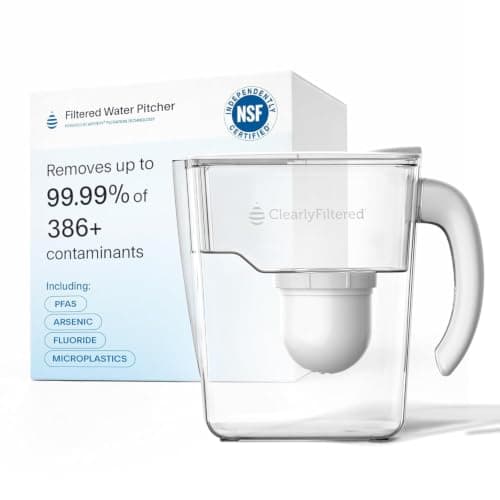 Clearly Filtered Water Pitcher (Affinity)Tested to NSF 42, 53, 401 and P473 across 386+ contaminants. Tested, not certified. Clearly Filtered Water Pitcher (Affinity)Tested to NSF 42, 53, 401 and P473 across 386+ contaminants. Tested, not certified. | Widest claim list | $109.99 - View on Amazon #ad Price as of October 17, 2026. We may earn a commission. Disclosure. |
| 4 | 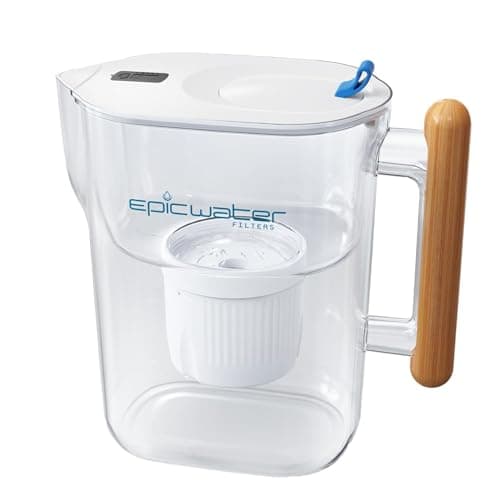 Epic Pure Water Filter PitcherOne of very few pitchers that addresses fluoride, at 150 rated gallons. Epic Pure Water Filter PitcherOne of very few pitchers that addresses fluoride, at 150 rated gallons. | Best for fluoride | $82.00 - View on Amazon #ad Price as of October 17, 2026. We may earn a commission. Disclosure. |
| 5 | Pno photoPUR PLUS Pitcher with Lead-Reducing FilterThe same NSF/ANSI 53 lead certification as the Elite, at a shorter 40-gallon life. | Best supermarket pick | Check price on Amazon #ad We do not show a price we cannot verify today. We may earn a commission. Disclosure. |
The one table that decides this
Pitchers look interchangeable and are not. Here is what each is actually certified or tested for, which is the only comparison that matters.
| Pitcher | Lead | PFOA / PFOS | Fluoride | Rated life | Evidence |
|---|---|---|---|---|---|
| Brita Elite | Certified (53) | Not certified | Not claimed | 120 gal | NSF/ANSI 42, 53, 401 |
| Brita Standard | Not certified | Not certified | Not claimed | 40 gal | NSF/ANSI 42 only |
| ZeroWater 5-stage | Certified (53) | Certified (53) | Not claimed | ~15-20 gal | IAPMO certification |
| PUR PLUS | Certified (53) | Certified, total PFAS 99.75% | Not claimed | 40 gal | IAPMO R&T to NSF/ANSI 42, 53, 401 (July 2026 sheet) |
| Clearly Filtered | Tested | Tested | Tested | 100 gal | NSF certified to 42; tested to 53, 401, P473 |
| Epic Pure | Tested | Tested | Tested | 150 gal | Tested to NSF 42/53/401/P473 |
Reading the table
Three patterns fall out of it, and they cover most buying decisions:
- Lead is the easy one. Three pitchers carry a real NSF/ANSI 53 lead certification at supermarket prices. If lead is your worry, this is a cheap problem.
- PFAS narrows the field hard. ZeroWater carries the certification. Brita explicitly does not — per Brita's January 2026 performance data sheet the Elite is not certified for PFOA or PFOS. Clearly Filtered and Epic have test data rather than a listing.
- Fluoride essentially requires the tested-not-certified route, or reverse osmosis. No certified pitcher on this list claims it.
The Brita filter trap, because it is worth repeating
Brita sells two pitcher filters that fit the same pitcher and sit next to each other on the shelf. The white Standard is certified to NSF/ANSI 42 for taste and odor and is not certified for lead. The blue Elite is certified to NSF/ANSI 42, 53 and 401, and the 53 covers lead.
They differ by a few dollars and by a factor of three in rated life — 40 gallons versus 120. If you bought a Brita for lead and put a white filter in it, you did not buy a lead filter. Full detail here.
Why ZeroWater is both the best and the most annoying
ZeroWater's ion-exchange stage does something carbon cannot: it drives total dissolved solids toward zero, and it earns a PFOA/PFOS certification with published 99% reduction. The bundled TDS meter is a genuine trust feature — you can verify the filter is still working rather than guessing.
The cost is filter life. Rated capacity is around 15 to 20 gallons and falls with source TDS, because the resin is being consumed by everything dissolved in the water, not just the contaminant you care about. On hard, high-TDS supply that can mean a filter change every two weeks and the highest running cost in the tier by a wide margin.
Tested versus certified, one more time
Clearly Filtered and Epic both publish broad independent test results against NSF methods. That is real evidence, and it is not the same as a maintained certification listing with ongoing surveillance.
Practical rule: if you need to point a landlord, a lender or a health directive at something, buy certified. If you are satisfied by published test data and you want fluoride or the widest contaminant list, the tested products are the ones that offer it. Either is defensible; buying one while believing it is the other is not.
The cost-per-gallon math
Filter price divided by rated gallons is the number, and across this table it varies by roughly a factor of ten.
A household drinking two gallons a day uses about 730 gallons a year. Against that: the Brita Elite at 120 rated gallons needs roughly six filters a year. The PUR PLUS at 40 gallons needs about eighteen. The Epic Pure at 150 gallons needs about five. ZeroWater at 15 to 20 gallons needs something like forty on soft water, and more on hard.
Multiply each by the filter price on the day you shop. That number, not the pitcher price, is what you are committing to — and it is why the cheapest pitcher on the shelf is frequently the most expensive one to own.
We show the arithmetic rather than a verdict so you can redo it with the price you actually pay. Filter prices move; the rated capacities above do not.
The picks in full
Best overall
Brita Elite Filter (with any Brita pitcher)
Brita
The cheapest route to an NSF/ANSI 53 lead certification. It drops into a pitcher most households already have, and it is emphatically not the same filter as the white Brita Standard.
Certification status
Certified to NSF/ANSI 42, 53 and 401. The lead certification belongs to the Elite (blue) filter only — the Standard (white) filter is certified to NSF/ANSI 42 for taste and odor and is not certified for lead. Per Brita's January 2026 performance data sheet the Elite is not certified for PFOA or PFOS, and no Brita pitcher filter is certified for fluoride.
Published specifications
| Rated filter life | 120 gallons / about 6 months |
|---|---|
| Standard filter life, for comparison | 40 gallons / about 2 months |
| Certified standards | NSF/ANSI 42, 53, 401 |
| Lead | Certified under NSF/ANSI 53 |
| PFOA / PFOS | Not certified (January 2026 performance data sheet) |
| Fluoride | Not certified, not claimed |
What we like
- Genuine NSF/ANSI 53 lead certification at the lowest entry price of anything on this site
- Fits Brita pitchers and dispensers already in millions of kitchens — no new hardware
- Three times the rated life of the Standard filter, which changes the cost-per-gallon math
What we do not
- Not certified for PFOA or PFOS, so it is the wrong answer to a PFAS worry
- No fluoride claim at all
- Slow gravity flow, like every pitcher
Skip it if
Anyone whose actual worry is PFAS or fluoride. The Elite is not certified for either, and buying it for those is buying the wrong thing.
#ad Price as of October 17, 2026. We may earn a commission. Disclosure.
Where these specifications came from
Best for PFAS and TDS
ZeroWater 10-Cup Ready-Pour Pitcher
ZeroWater
The only mainstream pitcher that hands you a TDS meter and invites you to check its work. It buys you a PFOA/PFOS certification the Brita Elite does not have, and it costs you filter life.
Certification status
The 5-stage filter is system-certified by IAPMO against NSF/ANSI 42 for chlorine taste and odor and NSF/ANSI 53 for lead, hexavalent chromium, mercury and PFOA/PFOS.
Published specifications
| Filtration | 5-stage, including ion-exchange resin |
|---|---|
| Rated filter life | About 15-20 gallons, varying with source TDS |
| Certified standards | NSF/ANSI 42 and 53 (IAPMO) |
| PFOA / PFOS | Certified under NSF/ANSI 53 |
| Published reduction — PFOA/PFOS | 99% |
| Published reduction — lead | 95% |
| Published reduction — chromium 6 | 99% |
| Included | Handheld TDS meter |
What we like
- Carries a PFOA/PFOS certification, which the Brita Elite does not
- The bundled TDS meter turns 'is it still working' from a guess into a reading
- Ion exchange drives total dissolved solids far lower than carbon alone
What we do not
- Filter life is the shortest of any pitcher here, and it collapses further on hard or high-TDS water
- Cost per gallon is the highest in the pitcher tier as a result
- Some owners find the taste flat or faintly sour at very low TDS — a real preference issue, not a defect
Skip it if
Anyone on hard, high-TDS water who will not tolerate changing a filter every few weeks. On 400+ ppm supply the running cost is genuinely painful and an under-sink system is cheaper inside a year.
$59.98 — 52% off
#ad Price as of October 17, 2026. We may earn a commission. Disclosure.
Where these specifications came from
Widest claim list
Clearly Filtered Water Pitcher (Affinity)
Clearly Filtered
The broadest claim list of any pitcher we list, and the one that needs the most careful reading: it is independently tested to NSF standards, not certified by a listing body. That distinction is the whole decision.
Certification status
Two different kinds of evidence sit on this pitcher. NSF's own listing records the Filtered Water Pitcher under NSF/ANSI 42 at 100 gallons for chlorine reduction and taste and odor reduction, and Clearly Filtered states it holds NSF/ANSI 42 and 372 certifications and is pursuing 53 and 401. Everything beyond that — the 386+ contaminant list, including fluoride, PFAS, arsenic and chromium-6 — comes from testing at QFT, now IAPMO New Jersey, an ISO 17025 laboratory working to NSF/ANSI protocols. Test data, not a certification listing.
Published specifications
| Capacity | 80 oz / 10 cups |
|---|---|
| Rated filter life | 100 gallons / about 4 months |
| Filtration | 3-stage: stainless mesh, coconut carbon, Affinity composite shell |
| Certified | NSF/ANSI 42 and 372 (chlorine, taste and odor; lead-free materials) |
| Tested, not certified | NSF/ANSI 53, 401 and P473 methods |
| Manufacturer claim | Up to 99.99% of 386+ contaminants |
| Fluoride / lead | >99.54% / 99.34% (laboratory data) |
| PFOA / PFOS | 99.64% / >99.80% (laboratory data) |
| Housing | Tritan, BPA-free |
What we like
- Addresses PFAS and fluoride, which most certified pitchers do not touch
- 100-gallon rated life is far longer than ZeroWater's
- Published test data covers an unusually wide contaminant list
What we do not
- Outside chlorine and materials, every claim is test data rather than a certification listing
- Highest sticker price in the pitcher tier
- Flow is slow even by pitcher standards
Skip it if
Anyone who needs a certification listing for a specific contaminant — for a landlord, a lender, a health directive, or their own peace of mind. If the listing is what you need, buy a certified product instead.
#ad Price as of October 17, 2026. We may earn a commission. Disclosure.
Where these specifications came from
Best for fluoride
Epic Pure Water Filter Pitcher
Epic Water Filters
One of very few pitchers that addresses fluoride at all, with a 150-gallon rated life that partly offsets a high filter price. Like Clearly Filtered, it is tested against the standards rather than certified under them.
Certification status
Tested against NSF/ANSI 42, 53, 401 and P473. Tested to the standards, not certified under them — read the claim precisely.
Published specifications
| Rated filter life | Up to 150 gallons |
|---|---|
| Standards tested against | NSF/ANSI 42, 53, 401, P473 |
| Manufacturer claim | Over 200 contaminants, including lead, PFAS, chromium-6 and fluoride |
What we like
- Addresses fluoride, which certified pitchers essentially never do
- 150-gallon rated life is the longest in the pitcher tier
- Published test data spans an unusually broad contaminant list
What we do not
- Tested to, not certified under, the NSF standards
- Expensive per filter, though the long life narrows the gap per gallon
- Slow flow — the trade-off for a dense media block
Skip it if
Anyone who needs a certification listing rather than a test report, or anyone whose only problem is chlorine taste — this is a lot of filter for that job.
#ad Price as of October 17, 2026. We may earn a commission. Disclosure.
Where these specifications came from
Best supermarket pick
PUR PLUS Pitcher with Lead-Reducing Filter
PUR
The direct competitor to the Brita Elite, and honestly close to a coin flip. It reaches the same lead certification with a shorter filter life, so the deciding factor is usually price per filter on the day.
Certification status
Ships with the PUR PLUS lead-reducing filter (PPF951K). PUR's July 2026 performance data sheet states the pitcher systems are certified by IAPMO R&T to NSF/ANSI 42, 53 and 401 for the claims listed, and the PPF951K column lists lead at 99.9% (pH 6.5) and 99.2% (pH 8.5), total PFAS at 99.75% against a seven-compound test mixture, and microplastics at 99.8%. No fluoride claim, and PUR states its filters do not remove microbes.
Published specifications
| Rated filter life | 40 gallons / about 2 months |
|---|---|
| Lead | Certified (IAPMO R&T, NSF/ANSI 53): 99.9% at pH 6.5, 99.2% at pH 8.5 |
| Total PFAS | 99.75% (July 2026 data sheet) |
| Microplastics | 99.8% |
| Filter | PPF951K lead-reducing |
| Pitcher capacity | 11 cups (PPT111) |
What we like
- Certified lead reduction at a mainstream-supermarket price
- Larger pitcher than the standard Brita 10-cup
- Widely stocked, so replacement filters are easy to find in person
What we do not
- 40-gallon filter life against the Brita Elite's 120 — three times the replacement cadence
- The filter must be pre-soaked, and skipping that step is the most common cause of slow flow
- No fluoride claim, and the basic PUR filter fits the same pitcher with no lead or PFAS figure at all — check which cartridge is in the box
Skip it if
Anyone who will resent changing a filter every two months. The Brita Elite reaches the same lead certification and lasts three times as long.
#ad We do not show a price we cannot verify today. We may earn a commission. Disclosure.
Questions people actually ask
Which water filter pitcher is best for lead?
Any of the three carrying an NSF/ANSI 53 lead certification: the Brita Elite, the PUR PLUS lead-reducing filter, or ZeroWater's 5-stage. The Elite usually wins on cost per gallon because its 120-gallon rated life is three times the PUR's.
Do any pitchers remove fluoride?
Very few, and none of the certified ones on this page claim it. Epic Pure and Clearly Filtered both address fluoride in independent testing rather than under a certification listing. For a certified fluoride claim you need reverse osmosis, under NSF/ANSI 58.
Is an expensive pitcher filter worth it?
Only if it is certified or tested for a contaminant you actually have. Paying four times as much for a broader claim list you do not need is money spent on reassurance. Work out your contaminant first, then buy the cheapest thing that genuinely covers it.
How do I know when to change the filter?
Rated gallons, not the indicator light. Most indicators are timers and have no idea how much water you actually put through. If you have a ZeroWater, the bundled TDS meter is a real measurement — a rising reading means the resin is exhausted.