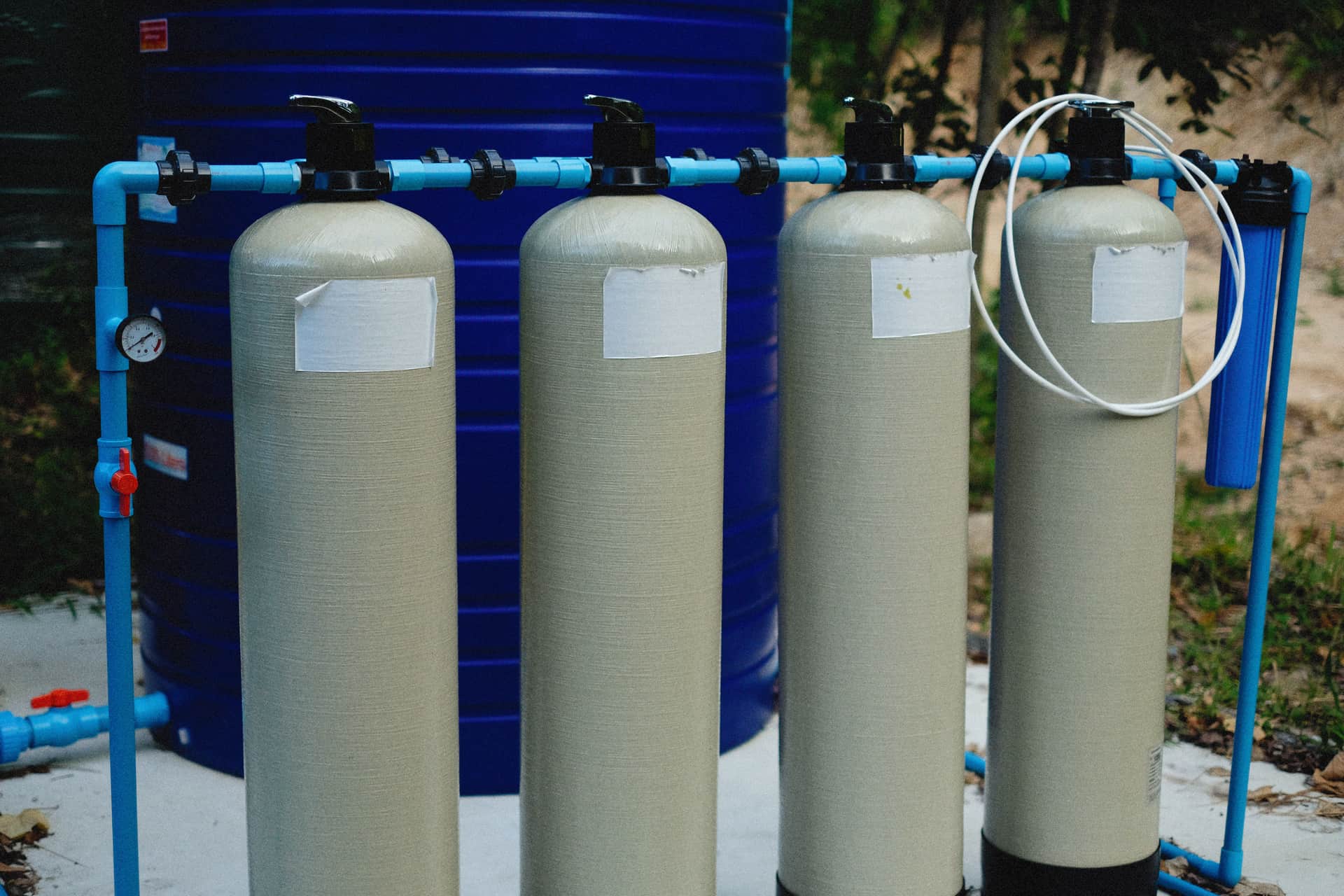
Fluoride is a small dissolved ion, so carbon filters do not reduce it at all. Reverse osmosis does, and fluoride reduction is an optional certified claim under NSF/ANSI 58 — which means you have to check that the specific system carries it rather than assuming every RO unit does.
Quick picks
Tap any row to jump to the full write-up. The button goes straight to the retailer.
| # | Product | Best for | Price |
|---|---|---|---|
| 1 | 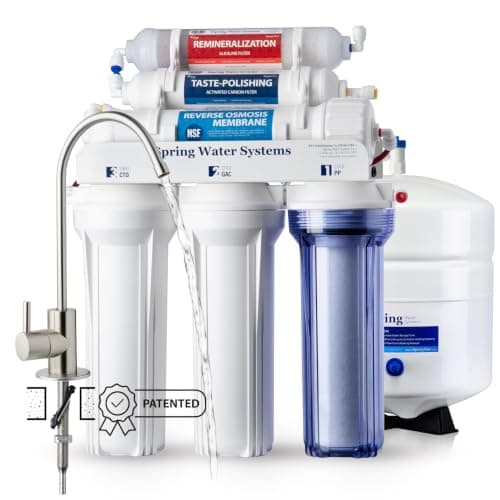 iSpring RCC7AK 6-Stage Reverse Osmosis SystemNSF/ANSI 58 certified with 97.4% fluoride reduction published by the manufacturer. iSpring RCC7AK 6-Stage Reverse Osmosis SystemNSF/ANSI 58 certified with 97.4% fluoride reduction published by the manufacturer. | Best overall | $198.75 - View on Amazon $234.99 — 15% off #ad Price as of October 6, 2026. We may earn a commission. Disclosure. |
| 2 | 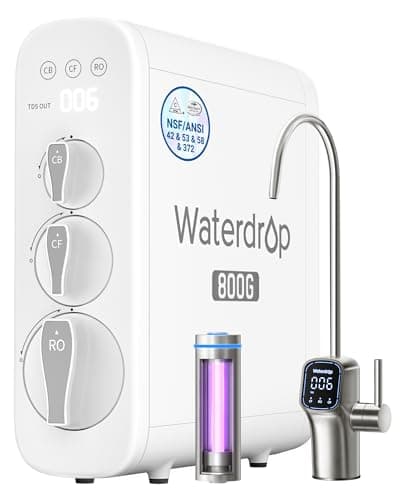 Waterdrop G3P800 Tankless Reverse Osmosis SystemCertified by IAPMO R&T to NSF/ANSI 42, 53 and 58, with fluoride named in the claim list. Waterdrop G3P800 Tankless Reverse Osmosis SystemCertified by IAPMO R&T to NSF/ANSI 42, 53 and 58, with fluoride named in the claim list. | Best tankless | $699.00 - View on Amazon $999.00 — 30% off #ad Price as of October 6, 2026. We may earn a commission. Disclosure. |
| 3 | 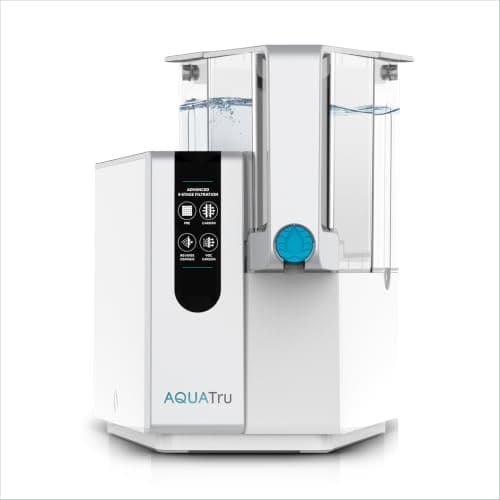 AquaTru Classic Countertop Reverse Osmosis PurifierCountertop RO certified by IAPMO across 84 contaminants, fluoride included. AquaTru Classic Countertop Reverse Osmosis PurifierCountertop RO certified by IAPMO across 84 contaminants, fluoride included. | Best without plumbing | $403.75 - View on Amazon $475.00 — 15% off #ad Price as of October 6, 2026. We may earn a commission. Disclosure. |
| 4 | 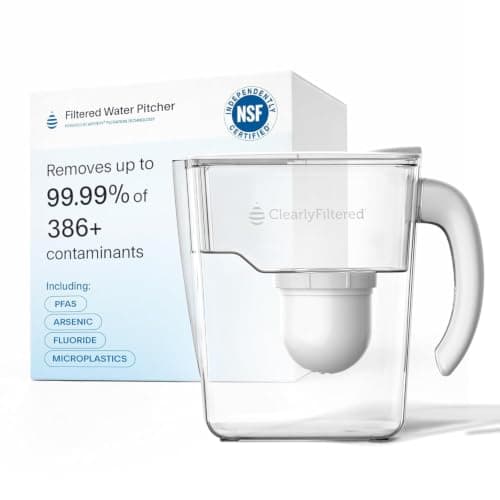 Clearly Filtered Water Pitcher (Affinity)Publishes over 99.5% fluoride reduction — from independent testing, not a fluoride certification. Clearly Filtered Water Pitcher (Affinity)Publishes over 99.5% fluoride reduction — from independent testing, not a fluoride certification. | Best pitcher-tier option | $87.99 - View on Amazon $109.99 — 20% off #ad Price as of October 6, 2026. We may earn a commission. Disclosure. |
The criteria, in the order that decides it
- Is the technology capable at all? Fluoride is a small dissolved ion. Carbon adsorption does not remove it, so an entire tier of this site — pitchers with carbon filters, faucet mounts, carbon under-sink blocks — is out before price is even discussed. Reverse osmosis, activated alumina and distillation are the shortlist.
- Does the specific system carry the fluoride claim? This is the trap. NSF/ANSI 58 covers reverse osmosis systems, but fluoride reduction is an optional claim within it — a system can be legitimately 58-certified for total dissolved solids and never have been tested for fluoride. NSF's own certified listings for systems with a fluoride reduction claim run to roughly 145 products across 35 companies, which sounds like a lot until you compare it to the number of reverse osmosis systems on the market.
- Certified, or tested? A certification means a listing body stands behind the claim under ongoing surveillance. Independent test data means a laboratory measured it once. Both are real information; they are not the same assurance, and this page labels which is which on every pick.
- Can you install it? Under-sink RO needs a cold supply, a drain connection and usually a hole in the counter. Countertop RO needs none of that and asks for space instead.
- What does it cost to run? Membranes and cartridges on a schedule, plus the water sent to the drain. Fluoride removal is not a one-time purchase.
Certified, tested, and claimed — the three tiers of evidence here
| Product | Evidence for its fluoride claim | What that means |
|---|---|---|
| iSpring RCC7AK | NSF/ANSI 58 certification, 97.4% published | Strongest evidence on this page |
| Waterdrop G3P800 | IAPMO R&T certification to 42, 53 and 58; fluoride named | Certified, percentage not published on the product page |
| AquaTru Classic | IAPMO certification across 84 contaminants including fluoride | Certified, and the only no-plumbing certified option |
| Clearly Filtered pitcher | Independent laboratory testing, over 99.5% claimed | Test data, not a fluoride certification listing |
| Any carbon pitcher or faucet mount | None — no claim exists | Cannot reduce fluoride at any price |
We rank the iSpring first for one reason: it is the only product here where a named certifying body, a named standard and a published percentage all line up on the same claim. That is the highest grade of evidence available in this category, and it costs less than most of what it beats.
Why carbon cannot do this, in one paragraph
Activated carbon works by adsorption — organic molecules stick to an enormous internal surface area. Fluoride does not stick. It is a small, highly charged ion that stays dissolved and passes through the carbon with the water. This is not a quality problem that a better carbon block solves; it is a mechanism problem, and it applies equally to a fifteen-dollar pitcher filter and a premium certified carbon system.
The same logic explains why the list of things pitchers cannot remove starts with fluoride, and why filtration versus reverse osmosis treats this as the textbook case for the difference between the two technologies.
The pitcher-tier exception, read carefully
Two pitchers claim fluoride reduction, and both do it with composite media rather than plain carbon. Clearly Filtered publishes over 99.54% fluoride reduction from independent laboratory testing against the NSF standards' methods. Epic's Pure pitcher publishes a fluoride claim of the same general shape.
Neither holds a fluoride certification, and that distinction is the whole reason this section exists rather than a simple ranking. Independent testing is real evidence — it is measured data from an accredited laboratory. A certification adds a listing body that audits the claim over time. If your reason for removing fluoride is a strong one, buy the certified route. If you are renting, cannot install anything and want the best available no-plumbing option below the price of countertop RO, the pitcher is a defensible choice made with your eyes open.
The running-cost math also differs sharply from the certified route: the pitcher roundup covers rated capacities across the tier, and these composite filters are the most expensive per gallon on the site.
Under-sink or countertop
| Under-sink RO | Countertop RO | |
|---|---|---|
| Installation | Cold supply, drain connection, usually a drilled faucet | None — fill a tank |
| On demand | Yes | No, you wait for a batch |
| Counter space | None | Substantial |
| Renting | Sometimes, with a direct-connect variant | Always fine |
| Cost per gallon | Lower | Higher |
| Wastewater | To the drain automatically | You empty a tank by hand |
If you own the home, under-sink is the cheaper and less intrusive answer over any reasonable horizon. The reverse osmosis roundup covers tankless versus tank and the wastewater ratios in detail. If you rent, the countertop unit is the only certified option that needs no permission from anyone.
What to check before you buy anything
- Your actual fluoride number. Your annual water quality report has it, or a well test does. Buying reverse osmosis for a number you have never seen is the most common avoidable mistake in this category.
- That the product names fluoride. Not "removes 99% of contaminants". The word fluoride, in the certification or the performance data sheet.
- Whether you have a power outlet under the sink. Tankless systems are pumped. Older kitchens frequently have no outlet in the cabinet, and that is a hard stop.
- Whether you mind the minerals going too. Reverse osmosis removes calcium and magnesium along with everything else. What that actually costs you nutritionally is smaller than the marketing on both sides suggests, and remineralization stages exist if you dislike the taste.
The cost-per-gallon math
Fluoride removal is a running cost, not a purchase, and the honest comparison is per gallon over five years.
An under-sink RO system replaces pre-filters roughly annually and a membrane every few years, and sends some water to the drain in the process — the published pure-to-drain ratio is the number to compare, and it varies by a factor of several between systems.
A composite pitcher filter rated at 100 gallons is the highest cost per gallon on this site. For a household drinking and cooking with filtered water, a hundred gallons is a matter of weeks, and over five years the cartridges cost multiples of an under-sink system.
We do not print prices here. Look up the current replacement cost for whichever route you are considering, divide by rated gallons, and compare the two numbers before the sticker prices persuade you of anything.
We show the arithmetic rather than a verdict so you can redo it with the price you actually pay. Filter prices move; the rated capacities above do not.
The picks in full
Best overall
iSpring RCC7AK 6-Stage Reverse Osmosis System
iSpring
The value pick of the reverse-osmosis tier: a WQA Gold Seal system with an alkaline stage, usually at the lowest price of anything here that carries a real certification.
Certification status
Certified against NSF/ANSI 58 for TDS reduction and carries the WQA Gold Seal, with 97.2% TDS removal certified.
Published specifications
| Output | 75 GPD |
|---|---|
| Stages | 6, including alkaline remineralization |
| Certified TDS reduction | 97.2% |
| Feed pressure | 45-70 psi |
| Feed temperature | 40-100 degrees F |
| Assembled size | 15.5" deep x 19.5" high, 25 lb |
| Certification | NSF/ANSI 58, WQA Gold Seal |
What we like
- Certified performance at the lowest price in the tier
- Push-fit tubing makes a first-time install genuinely manageable
- Alkaline stage included rather than sold as an upgrade
What we do not
- Narrow 45-70 psi feed window — low-pressure homes may need a booster pump
- Tank plus housing needs real cabinet depth
- Conventional reverse-osmosis drain ratio
Skip it if
Homes with feed pressure below 45 psi that will not add a booster pump, and anyone who wants a tankless footprint.
$234.99 — 15% off
#ad Price as of October 6, 2026. We may earn a commission. Disclosure.
Where these specifications came from
Best tankless
Waterdrop G3P800 Tankless Reverse Osmosis System
Waterdrop
Tankless reverse osmosis that gives back the cupboard a pressure tank would eat, fills a glass without the pause, and sends markedly less water down the drain than a classic tank system.
Certification status
Certified to NSF/ANSI 42 for chlorine reduction, NSF/ANSI 53 and 58 for TDS, fluoride, cadmium, hexavalent chromium and selenium, and NSF/ANSI 372 for lead-free materials.
Published specifications
| Output | 800 GPD |
|---|---|
| Pure-to-drain ratio | 3:1 |
| Format | Tankless — no pressure tank |
| Certified standards | NSF/ANSI 42, 53, 58, 372 |
| Installation | Two holes: smart LED faucet and drain |
| Faucet | Included, with TDS display |
What we like
- No pressure tank, so it fits cabinets a tank system cannot
- 3:1 pure-to-drain is far better than the ratio typical of older reverse osmosis
- 800 GPD means no waiting for a tank to refill
What we do not
- Needs a power outlet under the sink — a real constraint in older kitchens
- Proprietary filter cartridges, so you are tied to Waterdrop's pricing
- Requires drilling for the included faucet unless you have a spare hole
Skip it if
Renters, and anyone with no outlet under the sink. It is a permanent, powered installation — a countertop unit is the answer if you cannot commit to that.
$999.00 — 30% off
#ad Price as of October 6, 2026. We may earn a commission. Disclosure.
Where these specifications came from
Best without plumbing
AquaTru Classic Countertop Reverse Osmosis Purifier
AquaTru
Reverse osmosis performance with no plumbing, no drilling and no landlord conversation. You pay for that with counter space, a wait, and two tanks you fill and empty by hand.
Certification status
Certified by IAPMO to NSF/ANSI 53, 58, 401 and P473, covering lead, reverse-osmosis performance, emerging compounds and the PFOA/PFOS protocol.
Published specifications
| Filtration | 4-stage countertop reverse osmosis |
|---|---|
| Clean water tank | 0.75 gallons |
| Tap water tank | 1 gallon |
| Installation | None — no plumbing connection |
| Certified standards | NSF/ANSI 53, 58, 401, P473 (IAPMO) |
What we like
- Real reverse osmosis with a P473 PFOA/PFOS certification and zero installation
- The strongest answer available to a renter with a lead or PFAS problem
- No drilling, no drain saddle, no landlord permission needed
What we do not
- Takes up substantial counter space
- You refill and empty tanks by hand — it is not on-demand
- Highest purchase price in the no-plumbing tier by a wide margin
Skip it if
Anyone who can plumb in an under-sink system. A permanent under-sink RO is cheaper per gallon, on-demand, and out of sight. Buy this when you genuinely cannot install.
$475.00 — 15% off
#ad Price as of October 6, 2026. We may earn a commission. Disclosure.
Where these specifications came from
Best pitcher-tier option
Clearly Filtered Water Pitcher (Affinity)
Clearly Filtered
The broadest claim list of any pitcher we list, and the one that needs the most careful reading: it is independently tested to NSF standards, not certified by a listing body. That distinction is the whole decision.
Certification status
Two different kinds of evidence sit on this pitcher. NSF's own listing records the Filtered Water Pitcher under NSF/ANSI 42 at 100 gallons for chlorine reduction and taste and odor reduction, and Clearly Filtered states it holds NSF/ANSI 42 and 372 certifications and is pursuing 53 and 401. Everything beyond that — the 386+ contaminant list, including fluoride, PFAS, arsenic and chromium-6 — comes from testing at QFT, now IAPMO New Jersey, an ISO 17025 laboratory working to NSF/ANSI protocols. Test data, not a certification listing.
Published specifications
| Capacity | 80 oz / 10 cups |
|---|---|
| Rated filter life | 100 gallons / about 4 months |
| Filtration | 3-stage: stainless mesh, coconut carbon, Affinity composite shell |
| Certified | NSF/ANSI 42 and 372 (chlorine, taste and odor; lead-free materials) |
| Tested, not certified | NSF/ANSI 53, 401 and P473 methods |
| Manufacturer claim | Up to 99.99% of 386+ contaminants |
| Fluoride / lead | >99.54% / 99.34% (laboratory data) |
| PFOA / PFOS | 99.64% / >99.80% (laboratory data) |
| Housing | Tritan, BPA-free |
What we like
- Addresses PFAS and fluoride, which most certified pitchers do not touch
- 100-gallon rated life is far longer than ZeroWater's
- Published test data covers an unusually wide contaminant list
What we do not
- Outside chlorine and materials, every claim is test data rather than a certification listing
- Highest sticker price in the pitcher tier
- Flow is slow even by pitcher standards
Skip it if
Anyone who needs a certification listing for a specific contaminant — for a landlord, a lender, a health directive, or their own peace of mind. If the listing is what you need, buy a certified product instead.
$109.99 — 20% off
#ad Price as of October 6, 2026. We may earn a commission. Disclosure.
Where these specifications came from
Questions people actually ask
What is the best water filter for fluoride?
A reverse osmosis system carrying a fluoride reduction claim under NSF/ANSI 58. The iSpring RCC7AK is the clearest case on this page: NSF/ANSI 58 certified with a published 97.4% fluoride reduction figure. Fluoride is an optional claim under that standard, so the certification has to name it.
Do Brita, PUR or ZeroWater filters remove fluoride?
No. None of them carries a fluoride claim, and carbon-based media do not remove fluoride by any mechanism. ZeroWater's ion-exchange resin reduces total dissolved solids broadly, but the company does not publish a fluoride reduction figure on its results page.
Does every reverse osmosis system remove fluoride?
In principle the membrane rejects it, but only some systems have been tested and certified for that specific claim. NSF/ANSI 58 treats fluoride reduction as an optional claim, so check that the product's certification or performance data sheet names fluoride rather than assuming it.
Is a whole-house fluoride filter worth it?
Almost never. You do not absorb meaningful fluoride through skin in a shower, so treating every gallon in the house — including the laundry and the toilets — to change the drinking water is an expensive way to solve a drinking-water problem. Treat the tap you drink from.
How much fluoride does reverse osmosis actually remove?
Where manufacturers publish certified figures they are high: iSpring publishes 97.4% for the RCC7AK under its NSF/ANSI 58 certification. Real-world performance varies with feed concentration, pressure, temperature and membrane age, which is why the certified figure is a tested benchmark rather than a promise about your kitchen.
Sources
- iSpring — RCC7AK 6-stage reverse osmosis system, NSF/ANSI 58 certified reduction data
- NSF — certified drinking water treatment units listed for fluoride reduction under NSF/ANSI 58
- AquaTru — Classic countertop reverse osmosis purifier, certification and contaminant list
- Clearly Filtered — water filter pitcher published reduction data
- NSF — Certified Products and Systems