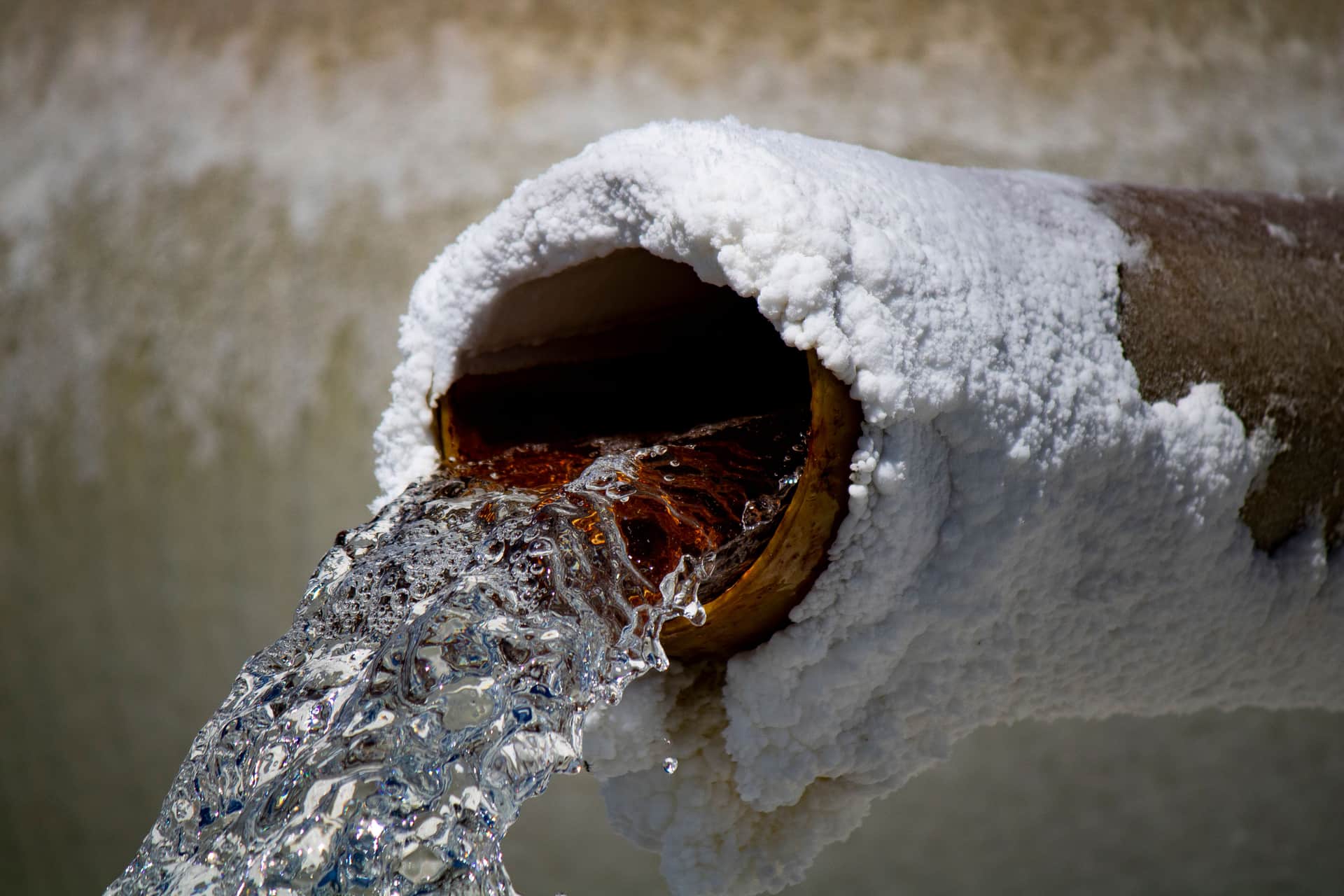
Hard water is dissolved calcium and magnesium picked up from rock. It is not regulated as a health contaminant and there is nothing wrong with drinking it. The cost is mechanical — scale in your water heater, your appliances and your plumbing — and no filter removes it.
What hardness is
Rain falls soft. As it moves through limestone, chalk and dolomite it dissolves calcium and magnesium, and by the time it reaches a well or a reservoir it carries them in solution. That is hardness. It is a property of your geology, not a failure of anybody's treatment.
It is measured in grains per gallon (gpg) or milligrams per liter (mg/L, equivalent to ppm). One grain per gallon equals about 17.1 mg/L.
| Grains per gallon | mg/L | Classification |
|---|---|---|
| 0 - 3.5 | 0 - 60 | Soft |
| 3.5 - 7 | 60 - 120 | Moderately hard |
| 7 - 10.5 | 120 - 180 | Hard |
| Over 10.5 | Over 180 | Very hard |
What it actually costs
Nothing about hard water hurts you. Everything about it costs you slowly.
- Water heaters. Heating hard water precipitates calcium carbonate onto the element and the tank floor. Scale insulates, so the heater works harder every year to deliver the same hot water, and it fails earlier. This is the largest single cost.
- Appliances. Dishwashers and washing machines accumulate the same deposits in their heating elements and valves.
- Soap and detergent. Hardness ions react with soap to form the scum that films on shower doors and stiffens laundry. You use more detergent to get the same result.
- Fixtures and glassware. The visible complaint, and the least expensive one.
- Skin and hair. Widely reported, harder to quantify. Soap scum residue is the usual mechanism proposed.
Why no filter removes it
Carbon works by adsorption, holding organic molecules on a huge internal surface area. Calcium and magnesium ions are small, charged and inorganic — carbon does not adsorb them. Sediment filtration works by size exclusion, and dissolved ions pass straight through. So neither of the two mechanisms behind almost every filter on this site touches hardness.
What does work is ion exchange. Water passes through a resin bed loaded with sodium ions; calcium and magnesium bind to the resin and sodium is released in their place. Periodically the resin is flushed with brine, the hardness goes to drain, and the bed is reloaded with sodium. That machine is a softener, and it is the only consumer product that genuinely removes hardness. See filter versus softener.
Reverse osmosis is a partial exception: an RO membrane does reject hardness ions, so RO water leaves no spots. It treats one tap, so it does nothing for your water heater.
Salt-free conditioners, honestly
Template-assisted crystallization and similar systems do not remove hardness. They convert dissolved hardness into microscopic crystals that are less inclined to adhere to surfaces. Independent evidence for scale reduction exists and is reasonable.
What they do not do: soften. After a conditioner, your hardness test reads the same, your soap still will not lather, and your glassware still spots. If your goal is protecting pipework without salt or a drain, a conditioner is a legitimate choice. If your goal is the feel of soft water, it is the wrong purchase and you will be disappointed.
Deciding whether to soften
Under about 7 gpg the case is usually weak: the salt, the water used in regeneration and the installed cost outweigh the benefit, and a dishwasher rinse aid fixes the visible complaint. Above 10.5 gpg the appliance cost is real and compounding, and softening generally pays. In between, it depends on how much the spotting bothers you.
Which products: the hard water roundup.
Questions people actually ask
Is hard water bad for you?
No. Calcium and magnesium are dietary minerals, and the EPA regulates hardness as a secondary, aesthetic matter rather than a health one. Some studies have looked for a mild protective association with cardiovascular health. The damage hard water does is to equipment.
How do I find out how hard my water is?
On a public supply, the annual water quality report publishes it. On a well, a lab test or a hardness test strip will tell you — this is one of the few things strips measure well enough to act on. Many local utilities also publish an area hardness map.
Does a Brita filter soften water?
No. No pitcher filter removes hardness. Carbon adsorption does not act on calcium and magnesium ions, so your kettle will scale exactly as before. Any perceived improvement is the chlorine taste going away, not softening.
Will softened water damage my pipes?
Properly softened water is not corrosive, and softeners have been standard in hard-water regions for decades. The genuine considerations are the sodium added in proportion to hardness removed, which matters on a sodium-restricted diet, and local rules on discharging brine to septic systems.