A whole-house system — properly, point-of-entry — sits where the water main enters the building and treats everything downstream. Every faucet, every shower, the washing machine, the dishwasher, the water heater and the ice maker. It is the only tier that changes what your skin and your appliances experience, and it is the tier most often bought for the wrong reason.
What it genuinely fixes
- Chlorine and chloramine everywhere. This is the strongest case for point-of-entry on city water. A pitcher fixes the taste of the water you drink; it does nothing for the chlorine you shower and breathe steam in for ten minutes every morning. People who install these systems consistently report the shower as the noticeable change, not the kettle.
- Sediment. Grit, rust flakes and silt that clog aerators, wreck cartridge valves and shorten the life of every appliance in the house.
- Chloramine specifically, if you buy catalytic carbon rather than standard activated carbon. Many utilities have moved from chlorine to chloramine because it persists longer in the distribution system, and standard carbon handles it poorly. This is a real specification difference worth checking before you buy.
- Iron, manganese and hydrogen sulfide, with the right oxidizing system. On a well that is usually the whole reason for the purchase — see the well hub.
What it does not fix, and this is where money gets wasted
- Hardness. A filter is not a softener. Carbon and KDF media do not remove calcium and magnesium, and the scale will keep forming. If your reason for shopping is limescale, you want a softener, and possibly both units together.
- Lead, reliably. Lead almost always enters from the service line or household plumbing, which is downstream of where a point-of-entry system sits. Filtering at the main and then running the water through the same lead-bearing pipe achieves very little. Lead is a point-of-use problem — see the lead roundup.
- PFAS, at typical point-of-entry certification levels. Most whole-house filters are certified to NSF/ANSI 42 for aesthetic effects, which is not a health claim at all. PFAS reduction at the drinking tap is far more reliably handled with a certified point-of-use system.
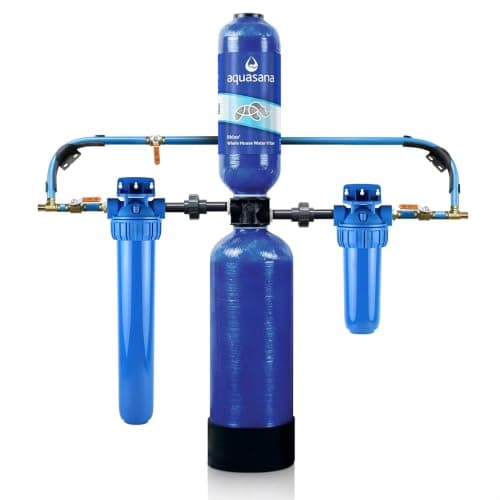
That NSF/ANSI 42 point deserves repeating because it is the most common misunderstanding in this tier. The Aquasana Rhino EQ-1000 is certified by NSF International to NSF/ANSI 42 — a genuine, verified certification, for taste, odor and chlorine. It is not a lead certification, and the product does not claim to be one. Reading "NSF certified" as "removes everything" is how a $1,000 purchase ends up not solving the problem it was bought for.
The real cost, honestly
The sticker price is not the installed price. A point-of-entry install typically wants a bypass loop so the system can be serviced without shutting off the house, sometimes a pressure regulator, and always somewhere the tank actually fits — a 48-inch tank plus head needs real headroom and most people measure after ordering. Budget for a plumber unless you are comfortable cutting and soldering or crimping the main line.
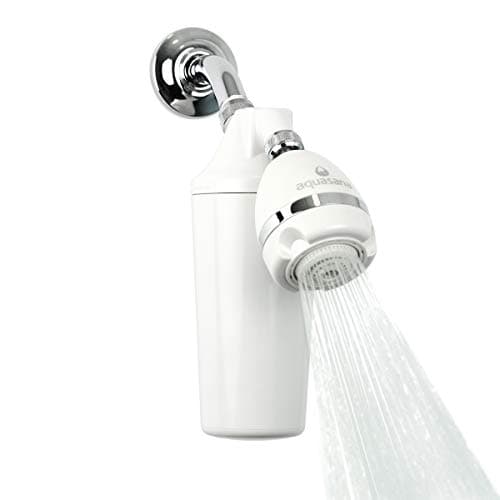
Running cost splits by design. Tank systems like the Rhino are rated for a million gallons or ten years, so the maintenance is essentially a pre-filter and nothing else. Cartridge systems cost a fraction up front and ask for a heavy, wet cartridge change roughly annually. Neither is wrong; they suit different people, and the honest question is whether an annual cartridge change is realistically going to happen in your house. If the complaint is only ever in the shower, there is a much smaller purchase first: a shower filter treats that one fixture for chlorine, though it cannot touch hardness and nothing at this tier is certified for PFAS. The cost page lays out the full arithmetic, and Aquasana against SpringWell takes the two most-shopped tank systems head to head. Whichever format you choose, the sediment stage in front of it decides how long its media actually lasts.
City water and well water are different purchases
Almost every whole-house buying mistake we see comes from treating these as one category. City water arrives disinfected, so the job is removing the disinfectant and its by-products with carbon. Well water arrives untreated, so the job is oxidizing and removing iron, manganese and sulfide before any carbon sees them — putting a carbon tank on raw well water fouls the media fast. The comparison page covers it in detail.

 Best whole-house filterWhole-House Filters, ComparedTank or cartridge, million-gallon media or annual changes. And what none of them fix.