The honest answer to hard water is a softener, because ion exchange is the only consumer mechanism that removes calcium and magnesium. Size it by multiplying your hardness in grains per gallon by daily household water use, then choose a capacity with headroom.
Quick picks
Tap any row to jump to the full write-up. The button goes straight to the retailer.
| # | Product | Best for | Price |
|---|---|---|---|
| 1 | Wno photoWhirlpool WHES40E 40,000-Grain Water Softener40,000 grains, demand regeneration, NSF certified, and it tolerates 10 ppm clear-water iron. | Best for most houses | Check price on Amazon #ad We do not show a price we cannot verify today. We may earn a commission. Disclosure. |
| 2 | 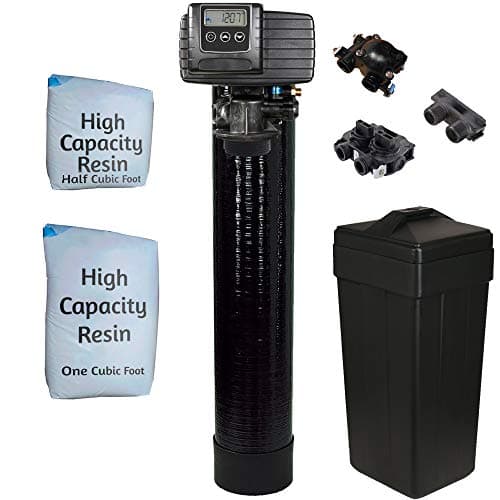 AFWFilters Fleck 5600SXT 48,000-Grain Metered Softener48,000 grains on the Fleck valve that dealers and parts suppliers actually stock. AFWFilters Fleck 5600SXT 48,000-Grain Metered Softener48,000 grains on the Fleck valve that dealers and parts suppliers actually stock. | Best for larger homes | $793.00 - View on Amazon #ad Price as of October 17, 2026. We may earn a commission. Disclosure. |
| 3 | 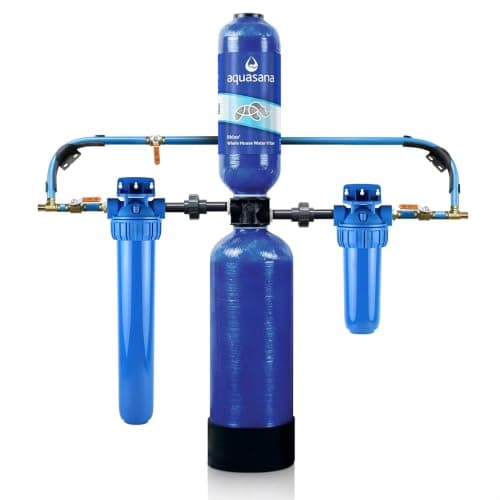 Aquasana Rhino EQ-1000 Whole-House FilterA softener handles scale; this handles chlorine. Different jobs, commonly installed together. Aquasana Rhino EQ-1000 Whole-House FilterA softener handles scale; this handles chlorine. Different jobs, commonly installed together. | Pair it with this | $1,123.00 - View on Amazon #ad Price as of October 17, 2026. We may earn a commission. Disclosure. |
Why this roundup is softeners
This site is about filtration, and the honest answer to hard water is that filtration does not solve it. Carbon does not adsorb calcium and magnesium; sediment filters do not catch dissolved ions. Recommending a filter here to keep the page on-topic would be selling somebody a product that cannot do the job. So: softeners.
Sizing, which is the whole decision
Softeners are rated in grains of hardness removed between regenerations. The arithmetic:
Hardness (gpg) x people x 75 gallons per person per day = grains removed per day. Multiply by the days you want between regenerations, and that is the capacity you need.
Worked through: a four-person household on 15 gpg water uses about 300 gallons a day and removes 4,500 grains a day. A 40,000-grain unit regenerates roughly every nine days at that load. That is a comfortable interval — regenerating more often than every three days wears the resin and wastes salt and water, and going much beyond two weeks lets the resin sit loaded.
Buy with headroom, but not enormous headroom. An oversized softener regenerates rarely, which sounds efficient and actually means channeling in an under-used bed.
Demand regeneration versus a timer
Both units here regenerate on measured demand rather than a clock, and that is the feature worth insisting on. A timer-based softener regenerates on a fixed schedule whether or not you used the capacity — so it wastes salt and water when you are away, and runs out early when you have guests. Demand regeneration measures actual usage and regenerates when the bed is genuinely loaded.
Iron changes the answer
Iron fouls softener resin. Softeners can handle a published amount of dissolved "clear water" iron as a side effect — the Whirlpool WHES40E is rated to 10 ppm — but oxidized ferric iron coats the resin and shortens its life considerably.
If your water has meaningful iron, it gets removed before the softener, by one of these systems. Getting the order wrong is a common and expensive well-water mistake.
The appliance-style versus component-style choice
| Whirlpool WHES40E | AFWFilters Fleck 5600SXT | |
|---|---|---|
| Capacity | 40,000 grains | 48,000 grains |
| Service flow | 8.5 gpm | Up to 12 gpm |
| Format | Single cabinet appliance | Components you assemble |
| Valve | Proprietary | Fleck 5600SXT — industry standard |
| Iron tolerance | Up to 10 ppm clear-water iron | Not published for this configuration |
| Service parts | Through the manufacturer | Widely available from many suppliers |
| Tank warranty | 10 years | 10 years |
The real difference is what happens in year seven. A Fleck valve is the component independent dealers have serviced for decades, so parts and expertise exist everywhere. A cabinet softener is simpler to install and more pleasant to live with, and you are tied to one manufacturer for parts.
Running cost, and the appliance argument
A softener's running cost is salt plus regeneration water. Salt use scales with hardness and household size; the regeneration water is a fixed volume per cycle. Demand regeneration reduces both by only regenerating when needed.
The case for buying is usually made against your water heater. Scale insulates the element, so the heater consumes more energy each year and fails earlier. Set your local salt cost per year against the fraction of a heater replacement you are deferring, using your own numbers — a heater replacement is a four-figure job in most of the country.
At 15 gpg that arithmetic usually favors softening. At 5 gpg it usually does not, and we would rather you kept the money.
We show the arithmetic rather than a verdict so you can redo it with the price you actually pay. Filter prices move; the rated capacities above do not.
The picks in full
Best for most houses
Whirlpool WHES40E 40,000-Grain Water Softener
Whirlpool
A demand-regenerating softener sized for most houses, sold in a single carton with a manual anyone can follow. It is a softener, not a filter, and that is exactly the point — nothing else on this site touches hardness.
Certification status
NSF certified. Softening capacity and iron tolerance are published by the manufacturer.
Published specifications
| Capacity | 40,000 grains |
|---|---|
| Hardness handled | Up to 125 grains per gallon |
| Clear-water iron tolerance | Up to 10 ppm |
| Service flow | 8.5 gpm |
| Dimensions | 19" D x 18" W x 47 7/8" H |
| Regeneration | Demand — regenerates on usage, not a timer |
| Power | 110/120 V AC, transformer included |
| Warranty | 10 years on salt and resin tanks; 3 years on the control board |
What we like
- Demand regeneration uses noticeably less salt and water than a timer-based unit
- One carton, one manual, no dealer visit required
- Handles up to 10 ppm clear-water iron, which many softeners in this class do not
What we do not
- Softening only — it does nothing for chlorine, lead or PFAS
- Adds sodium to the softened water, which matters on a sodium-restricted diet
- Needs a drain and a power outlet at the install point
Skip it if
Anyone whose problem is taste, odor or a health contaminant. A softener swaps calcium and magnesium for sodium; it is not a purifier and it is not marketed as one.
#ad We do not show a price we cannot verify today. We may earn a commission. Disclosure.
Where these specifications came from
Best for larger homes
AFWFilters Fleck 5600SXT 48,000-Grain Metered Softener
AFWFilters
The Fleck 5600SXT is the valve independent water-treatment dealers have used for decades, which means parts, manuals and people who know it are everywhere. Assembled rather than boxed as an appliance.
Certification status
Manufacturer-published capacity and flow figures. The valve is an industry-standard component with widely available service parts.
Published specifications
| Capacity | 48,000 grains |
|---|---|
| Resin | 1.5 cubic feet, 8% cross-linked |
| Resin tank | 10" x 54" |
| Brine tank | 14" |
| Service flow | Up to 12 gpm |
| Control | Fleck 5600SXT digital metered valve |
| Connection | 1" male threaded yoke, bypass valve included |
| Warranty | 5 years on the valve, 10 years on the tank |
What we like
- Fleck valves are the industry standard, so service parts and expertise are genuinely available
- Higher capacity and flow than most consumer-boxed softeners
- Metered regeneration rather than a clock
What we do not
- Ships as components — you assemble and load the resin yourself
- Larger physical footprint than an appliance-style unit
- No help at all with anything other than hardness
Skip it if
Anyone who wants an appliance experience. If loading a resin tank and programming a valve sounds like a bad Saturday, buy a boxed softener or hire a dealer.
#ad Price as of October 17, 2026. We may earn a commission. Disclosure.
Where these specifications came from
Pair it with this
Aquasana Rhino EQ-1000 Whole-House Filter
Aquasana
A million-gallon point-of-entry filter for chlorinated municipal supply. It fixes the shower and the laundry as well as the kitchen tap, and it does not pretend to be a health-contaminant system.
Certification status
Certified by NSF International to NSF/ANSI 42, with the tank certified to NSF/ANSI 61 for material safety. NSF/ANSI 42 is an aesthetic-effects standard — taste, odor and chlorine — not a health-effects claim.
Published specifications
| Rated capacity | 1,000,000 gallons / up to 10 years |
|---|---|
| Rated flow | 7.0 gpm |
| Max operating pressure | 100 psi |
| Operating temperature | 40-90 degrees F |
| Dimensions | 46" L x 9" W x 44" H, 44.1 lb |
| Certified standards | NSF/ANSI 42; tank to NSF/ANSI 61 |
| Published chlorine reduction | Greater than 97% |
What we like
- Ten years or a million gallons before the main media is due — effectively no maintenance routine
- Treats every tap, so showers and laundry benefit, not just drinking water
- NSF/ANSI 61 material certification on the tank
What we do not
- NSF/ANSI 42 only — this is a chlorine and aesthetics system, not a lead or PFAS system
- Needs a main-line install, usually a plumber, and space where the water enters
- Does nothing for hardness
Skip it if
Anyone buying it to solve lead, PFAS or hard water. It is certified for aesthetic effects. Pair it with an under-sink system for drinking-water health contaminants, and a softener for hardness.
#ad Price as of October 17, 2026. We may earn a commission. Disclosure.
Where these specifications came from
Questions people actually ask
Can I put a filter on my whole house instead of a softener?
You can, and it will not soften the water. Whole-house carbon filters remove chlorine, taste and odor. They do not remove calcium and magnesium, so scale keeps forming exactly as before. The two machines do different jobs and are frequently installed together.
How much salt does a softener use?
It depends on hardness and household water use, since salt consumption scales with the grains being removed. Demand-regenerating units use meaningfully less than timer-based ones because they only regenerate when the capacity has genuinely been used.
Do I need a plumber to install a softener?
It needs a cut into the main line, a bypass valve, a drain connection and usually a power outlet. If you are comfortable with all four, it is a realistic weekend job. If any of those is unfamiliar, a plumber costs far less than a flooded utility room.
Is a salt-free conditioner as good as a softener?
For protecting pipework and heaters from scale adhesion, it is a legitimate option with reasonable supporting evidence. For actually softening water, it is not — the hardness is still there, your soap still will not lather, and a hardness test reads the same. Buy one for the first reason, never the second.