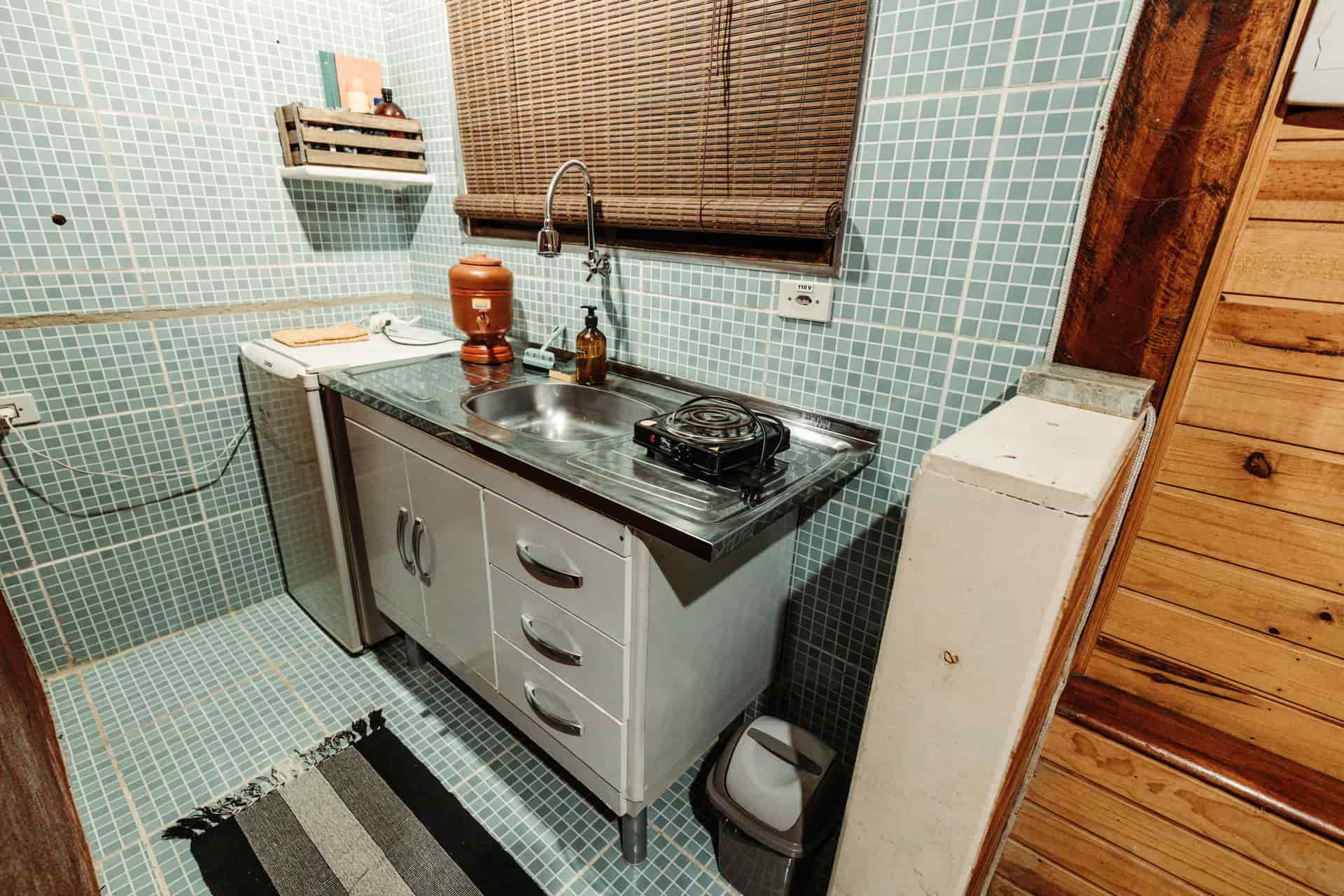
No renter-installable device softens a whole apartment. A portable ion-exchange softener is the only true softening option without plumbing, and it serves one fixture at a time. For shower complaints a filter helps with chlorine, not hardness. Fix the fixtures that bother you, in that order.
Quick picks
Tap any row to jump to the full write-up. The button goes straight to the retailer.
| # | Product | Best for | Price |
|---|---|---|---|
| 1 | 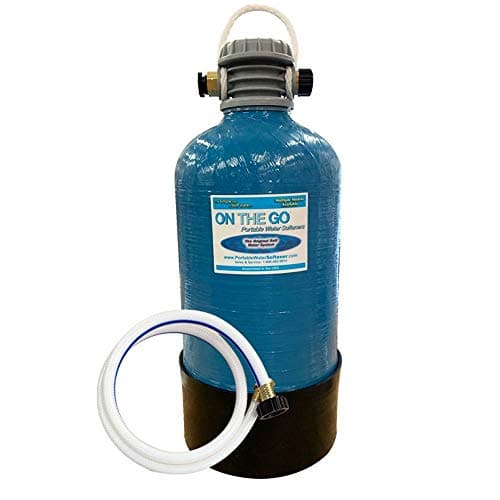 On The Go Portable Double Standard Water Softener, 16,000 Grain16,000 grains of ion-exchange resin on hose threads, regenerated by hand with table salt. On The Go Portable Double Standard Water Softener, 16,000 Grain16,000 grains of ion-exchange resin on hose threads, regenerated by hand with table salt. | Only real softening without plumbing | $209.00 - View on Amazon #ad Price as of October 17, 2026. We may earn a commission. Disclosure. |
| 2 | 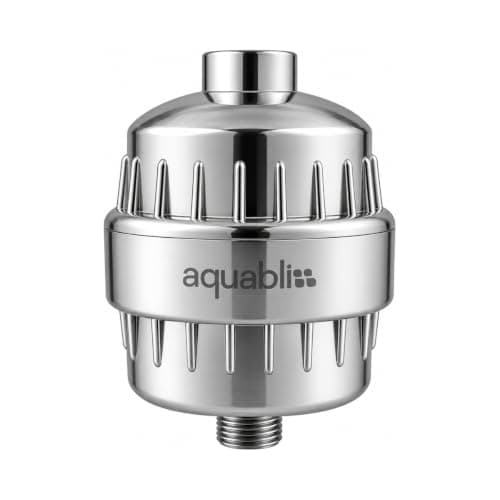 AquaBliss SF220 Multi-Stage Shower FilterMulti-stage shower filter — genuinely good on chlorine and chloramine, and honest that it does not soften. AquaBliss SF220 Multi-Stage Shower FilterMulti-stage shower filter — genuinely good on chlorine and chloramine, and honest that it does not soften. | Best for the shower complaint | $35.99 - View on Amazon #ad Price as of October 17, 2026. We may earn a commission. Disclosure. |
| 3 | 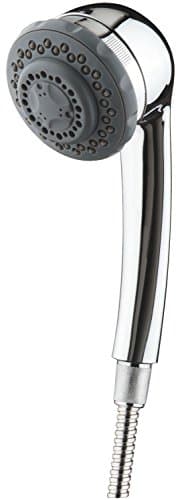 Culligan HSH-C135 Filtered Handheld ShowerheadIAPMO certified under NSF/ANSI 177 for free available chlorine, which is a real listing rather than a claim. Culligan HSH-C135 Filtered Handheld ShowerheadIAPMO certified under NSF/ANSI 177 for free available chlorine, which is a real listing rather than a claim. | Cheapest certified shower filter | $65.43 - View on Amazon #ad Price as of October 17, 2026. We may earn a commission. Disclosure. |
| 4 | 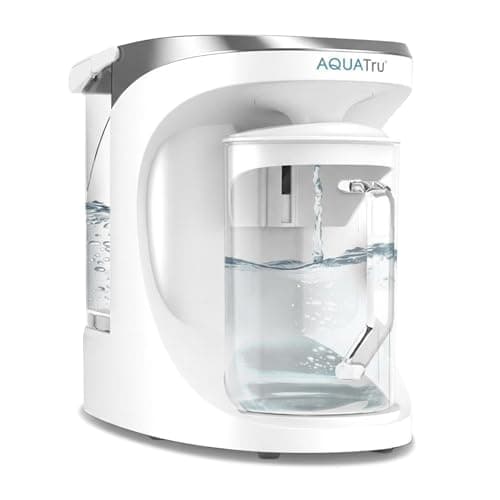 AquaTru Carafe Countertop Reverse Osmosis PurifierCertified at a 94.5% minimum TDS reduction — hardness included — with nothing to install. AquaTru Carafe Countertop Reverse Osmosis PurifierCertified at a 94.5% minimum TDS reduction — hardness included — with nothing to install. | Best for the drinking and kettle problem | $356.25 - View on Amazon $375.00 — 5% off #ad Price as of October 17, 2026. We may earn a commission. Disclosure. |
| 5 | 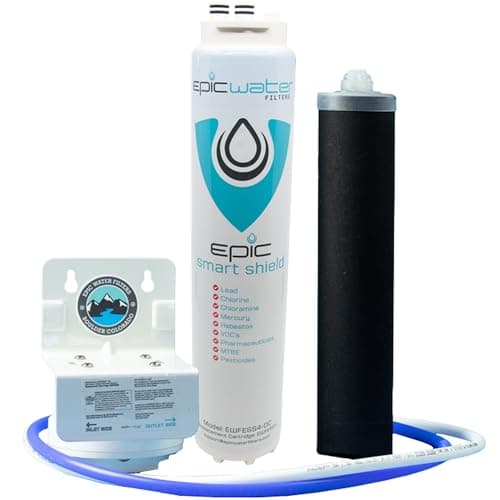 Epic Smart Shield Under-Sink FilterDirect connect, no second faucet, 651 rated gallons, and it leaves with you when the lease ends. Epic Smart Shield Under-Sink FilterDirect connect, no second faucet, 651 rated gallons, and it leaves with you when the lease ends. | If the landlord allows under-sink | $135.00 - View on Amazon #ad Price as of October 17, 2026. We may earn a commission. Disclosure. |
Why the normal answer is unavailable to you
Every other page about hard water on this site, and on everyone else's, arrives at the same conclusion: buy a softener. That advice is correct and it is also unavailable if you rent, so it is worth being precise about why rather than just noting that it is awkward.
A conventional softener needs three things done to the building. It needs cutting into the incoming supply, which is a plumbing alteration. It needs a drain connection, because regeneration flushes the resin and that brine has to go somewhere. And it needs a permanent position, usually near the point of entry, which in an apartment building is not inside your apartment at all.
That third one is the real wall. In a multi-unit building the point of entry is in a mechanical room belonging to the landlord, serving every unit. There is no version of a whole-apartment softener installed by a tenant, and products that imply otherwise are selling something else.
So the honest framing for this page is not "how do I soften my apartment". It is: which of the specific annoyances hard water causes can you fix at a fixture, and in what order?
First, find out whether you actually have hard water
This takes one search and it changes what you should buy, so it is worth doing before anything else.
USGS publishes the standard classification, in milligrams per liter as calcium carbonate: soft is 0 to 60, moderately hard 61 to 120, hard 121 to 180, and very hard above 180. Divide by 17.1 to convert to grains per gallon, the unit the softener industry uses — so 171 mg/L is 10 gpg.
Your figure is in your water utility's annual report, which it is required to send you, and that page covers how to read it. Hardness is not a regulated contaminant so it may be listed under secondary or aesthetic parameters rather than in the main table.
The reason this matters before you spend: at the moderately-hard end most of what people blame on hardness is actually chlorine — a taste and smell problem with a cheap and certified answer. At the very-hard end you have a genuine scale problem and the options narrow fast. The limescale page separates the two symptoms properly.
The portable softener, which is the only true softening option
There is exactly one device category that removes hardness minerals without touching the building's plumbing, and it comes from the RV world rather than the housing one.
A portable softener is a bottle of ion-exchange resin with hose threads on each end. The chemistry is identical to a plumbed softener — sodium-form resin trades its sodium for the calcium and magnesium in the water — and the only thing missing is the automation. You regenerate it by hand in a sink with common table or solar salt, in about half an hour, rather than having a control head do it at two in the morning.
The On The Go unit in the picks publishes 16,000 grains of capacity, and that number is the whole decision, so here is the arithmetic:
| Your hardness | In grains per gallon | Gallons between regenerations |
|---|---|---|
| 120 mg/L — moderately hard | 7 gpg | About 2,280 |
| 170 mg/L — hard | 10 gpg | 1,600 |
| 250 mg/L — very hard | 15 gpg | About 1,070 |
| 340 mg/L — very hard | 20 gpg | 800 |
Read those against actual use and the honest picture appears. At 15 gpg, 1,070 gallons is plenty for a kitchen tap used for cooking and the kettle — months. It is nothing at all for a shower, which uses two gallons a minute, so an eight-minute shower is sixteen gallons and the bottle is spent in about nine weeks of one person showering.
Which is why the hose-thread design is a feature rather than a limitation. You put it on the fixture whose hardness bothers you most, and accept that it is not serving the apartment.
Two cautions. It has no certification listing of any kind, so the capacity figure is a manufacturer specification rather than a tested claim. And ion exchange swaps hardness for sodium — not enough to matter for most people, but worth knowing if anyone in the household is on a sodium-restricted diet. The salty-water page covers that mechanism.
The shower, which is usually the real complaint
Most people who search for hard water in an apartment are describing skin and hair rather than kettles, and this is the part where the market is least honest with them.
A shower filter cannot soften water. The housing is a few inches long, water passes through it in a fraction of a second at two gallons a minute, and there is no room for enough ion-exchange resin to matter even if the media were right. The shower-filter page works through the mechanism in full, and the conclusion is unambiguous.
What a shower filter genuinely does is remove chlorine and, with the right media, chloramine. That is worth having, and it is frequently the actual cause of the complaint — chlorine is drying, and a great many people who believe they are reacting to hardness are reacting to the disinfectant. The Culligan unit in the picks holds an IAPMO certification under NSF/ANSI 177, the shower-filter standard, for free available chlorine. That is a real listing, which most of this category does not have.
The honest summary: buy a shower filter expecting a chlorine improvement, and you will probably be pleased. Buy one expecting soft water and you will have wasted the money. The shower roundup ranks the tier.
The kitchen, where you can actually win
This is the cheerful section, because the kitchen is the one place a renter can get a result that matches what a softener would have given them.
Hardness is dissolved solids, and reverse osmosis removes dissolved solids — the certified figures are in the 94% to 97% band, with the AquaTru Carafe listed at a minimum reduction of 94.5% from a 750 mg/L TDS challenge. A countertop unit needs no plumbing at all, so the whole certification is available to a tenant.
That fixes the drinking water, the kettle, the coffee and the ice. It does not fix the shower or the laundry, and it is not pretending to. For a renter whose hard-water complaint is scale in the kettle and chalky-tasting tea, it is the complete answer and it leaves in the moving van.
If your landlord will allow an under-sink installation — and many will for a direct-connect unit that needs no new hole — the Epic Smart Shield route gives you more capacity per cartridge for less money per gallon. The renters' filtration page covers that conversation and what to put in writing.
What to do in what order
| What is bothering you | What to do | What it will not fix |
|---|---|---|
| Scale in the kettle, chalky tea or coffee | Countertop reverse osmosis | Shower, laundry, fixtures |
| Dry skin and hair after showering | Shower filter, for the chlorine | Hardness — no shower filter softens |
| Spots on glasses from the dishwasher | Rinse aid, and a dishwasher salt if it takes one | Nothing a tenant installs reaches the dishwasher supply |
| Soap that will not lather | Portable softener on that fixture | Any fixture it is not connected to |
| Limescale on the shower screen | Acidic descaler and a squeegee | The cause — this is maintenance, not treatment |
| Wanting the whole apartment softened | Ask the landlord | There is no tenant-installable answer |
The last row is not a joke. In a building where several tenants complain, a point-of-entry softener is a landlord's capital decision, and it is the only route to a softened apartment. If you are making that case, the worth-it page has the running-cost and appliance-life arguments in the form a landlord will care about, and the hard-water roundup covers the equipment.
The cost-per-gallon math
For a renter the arithmetic has an extra term nobody includes: how long is left on your lease, and does the device leave with you?
Every pick on this page is portable, which means the cost should be amortized over however many years you keep using it rather than over the tenancy. A countertop reverse osmosis system bought in a flat you leave in eighteen months is still yours in the next one.
For the portable softener, the running cost is salt, and salt is cheap — the real cost is your time. Work out the interval from the table above: 16,000 grains divided by your hardness in grains per gallon gives the gallons, and your consumption gives the weeks. If that comes out at under a month, the device is the wrong shape for your use and you should be looking at the fixture-level options instead.
Compare the whole lot against the thing most renters actually do, which is buy bottled water for drinking and live with the shower. That comparison is not close on cost per gallon.
We do not print product prices in this text. The buy buttons carry the live figure and the date it was checked, which is the only price worth quoting.
We show the arithmetic rather than a verdict so you can redo it with the price you actually pay. Filter prices move; the rated capacities above do not.
The picks in full
Only real softening without plumbing
On The Go Portable Double Standard Water Softener, 16,000 Grain
On The Go
A real ion-exchange softener in a bottle you regenerate in the sink with table salt. It is the only softening technology that works without a plumber, and the compromise is that you do it by hand every few weeks.
Certification status
No NSF/ANSI certification listing. On The Go publishes a 16,000 grain capacity for the double-standard unit and states the resin is drinking-water safe. The mechanism is conventional sodium-form ion exchange — the same chemistry as a plumbed softener — so the capacity figure, not a certification, is what you size against.
Published specifications
| Format | Portable ion-exchange softener |
|---|---|
| Capacity | 16,000 grains |
| Regeneration | Manual, with common table or solar salt |
| Connection | Standard garden hose thread |
| Certified standards | None — see certification note |
What we like
- Actually softens — ion exchange removes the calcium and magnesium rather than conditioning them
- No plumbing cuts, no drain connection and no landlord conversation
- Regenerates with supermarket salt in about half an hour
- Leaves with you, and the capacity figure lets you calculate the interval before buying
What we do not
- 16,000 grains is a small softener: at 15 gpg that is roughly 1,000 gallons between regenerations
- Manual regeneration every few weeks, forever — there is no timer and no brine tank
- Hose-thread connections mean it serves one fixture, not the apartment
- No certification listing of any kind
Skip it if
Anyone who can install a plumbed softener. A cabinet softener with a brine tank regenerates itself, holds ten times the capacity and treats the whole house. Buy this when the constraint is the lease, not the budget.
#ad Price as of October 17, 2026. We may earn a commission. Disclosure.
Where these specifications came from
Best for the shower complaint
AquaBliss SF220 Multi-Stage Shower Filter
AquaBliss
The filter most people in this category actually buy, and the one with the least paperwork behind it. It is in here because pretending it does not exist would be dishonest, not because we can verify what it does.
Certification status
No NSF/ANSI 177 certification and no third-party test report we could find. AquaBliss describes a multi-stage cartridge — KDF-55, calcium sulfite, activated carbon and mineral stages — and publishes no independently verified reduction figures. Treat every number in its marketing as a manufacturer claim.
Published specifications
| Format | Inline, fits between the shower arm and any head |
|---|---|
| Media, per the manufacturer | KDF-55, calcium sulfite, activated carbon, mineral stages |
| Third-party certification | None published |
| Published reduction figures | None we could verify |
| Replacement cartridge | SFC220 |
What we like
- Inline design keeps whatever shower head you already chose
- Calcium sulfite works at hot-water temperatures, which is the right chemistry for a shower
- By far the cheapest of the three, and stocked everywhere
What we do not
- No certification and no published test data — the claims are unverified
- Cartridge life is quoted in months rather than gallons, so it cannot be compared honestly
- Adds length to the shower arm, which drops the head lower than you expect
- Does not soften water, whatever the reviews say about hard water
Skip it if
Anyone who needs evidence rather than popularity. If the reason you are filtering is a specific contaminant you can name, buy the one with the data sheet.
#ad Price as of October 17, 2026. We may earn a commission. Disclosure.
Where these specifications came from
Cheapest certified shower filter
Culligan HSH-C135 Filtered Handheld Showerhead
Culligan
Culligan's filtered showerheads are the category's old guard, and the performance data sheet says what the marketing usually will not: tested for free chlorine, and not evaluated against chloramine.
Certification status
Culligan's performance data sheet for its WSH-C125 and HSH-C135 filtered showerheads states the system was tested according to NSF/ANSI 177 for reduction of free available chlorine. The same sheet states the system has not been evaluated for free available chlorine reduction performance in the presence of chloramines.
Published specifications
| Rated capacity | 10,000 gallons / about 6 months |
|---|---|
| Rated service flow | 2.5 gpm |
| Operating pressure | 40-100 psi |
| Water temperature | 40-120 degrees F |
| Standard | NSF/ANSI 177, free available chlorine |
| Chloramine | Not evaluated |
| Replacement cartridge | WHR-140 |
What we like
- Handheld head and filter in a single fitting, which is the format most people actually want
- Higher rated flow than the Aquasana, so it feels closer to an unfiltered shower
- Replacement cartridges are stocked by general retailers, not just the manufacturer
What we do not
- The data sheet's chloramine exclusion is explicit, and chloramine is common on US municipal supply
- Culligan publishes no percentage reduction figure alongside the NSF/ANSI 177 statement
- Plastic housing at a price where metal fittings exist
- Like every shower filter, it does nothing about hardness
Skip it if
Households on chloraminated water who want a documented answer. The sheet says the system was not evaluated for that case, and we are not going to pretend otherwise.
#ad Price as of October 17, 2026. We may earn a commission. Disclosure.
Where these specifications came from
Best for the drinking and kettle problem
AquaTru Carafe Countertop Reverse Osmosis Purifier
AquaTru
The Classic's certification table in two-thirds of the footprint, pouring into glass instead of a plastic tank. You give up capacity and gain a published 63% recovery rate, which is better than almost any plumbed system manages.
Certification status
IAPMO publishes a performance data sheet covering Carafe models AT100, AT110, AT120, AT130 and AT140, certified under NSF/ANSI 42, 53 and 58, with additional testing to NSF/ANSI 401 and NSF Protocol 53 for PFOA and PFOS. The NSF/ANSI 58 table records average reductions of 99.2% for lead, 99.9% for cysts, 96.4% for fluoride, 98.8% for pentavalent arsenic, 97.5% for hexavalent chromium, 98.3% for nitrate and 94.4% for TDS. PFOA and PFOS average 99% under NSF Protocol 53.
Published specifications
| Filtration | 4-stage countertop reverse osmosis |
|---|---|
| Carafe | 64 oz borosilicate glass |
| Clean water tank | 0.5 gallons (1.9 L) |
| Tap water tank | 0.66 gallons (2.5 L) |
| Daily production rate | 35 GPD |
| Efficiency rating | 63% (IAPMO) |
| Certified standards | NSF/ANSI 42, 53, 58 (IAPMO) |
| Dimensions | 13 in H x 14 in D x 7.5 in W |
| Power | 120 V, 60 Hz |
| Max inlet hardness | 10 gpg (171 mg/L) |
What we like
- A published 63% efficiency rating — most tank reverse osmosis systems send three or four gallons to drain per gallon produced
- The NSF/ANSI 58 claim list reaches lead, fluoride, nitrate, arsenic, chromium-6 and cysts, which carbon cannot
- Glass carafe rather than a plastic holding tank, and it goes in the fridge
- No plumbing, no drilling and no drain saddle — the whole certification travels with a renter
What we do not
- A 0.5 gallon clean tank against the Classic's 0.75 — you refill it more often for the same household
- Three cartridges on three different clocks, and the manufacturer's web page and the certifier's data sheet disagree on the pre/carbon interval
- Needs a counter outlet and 7.5 inches of width it does not share
- Not for water above 10 gpg hardness without softening first, or the membrane scales
Skip it if
A household that drinks a lot of water. The clean tank holds half a gallon and refills at 35 gallons a day, so a family of four will be waiting on it. Buy the Classic for its larger tanks, or a plumbed under-sink system if you can install one.
$375.00 — 5% off
#ad Price as of October 17, 2026. We may earn a commission. Disclosure.
If the landlord allows under-sink
Epic Smart Shield Under-Sink Filter
Epic Water Filters
The product that changes how this brand should be read. Where Epic's pitchers lean on laboratory data, the Smart Shield carries an IAPMO certification across three standards — and it runs 651 gallons on the existing cold line with no second faucet.
Certification status
Epic states the Smart Shield is certified by IAPMO to NSF/ANSI 42, 53 and 401. That is the aesthetic standard, the health-effects standard and the emerging-compounds standard together, which is a stronger position than most direct-connect filters, and stronger than Epic's own pitcher line.
Published specifications
| Rated capacity | 651 gallons |
|---|---|
| Certified standards | NSF/ANSI 42, 53 and 401 (IAPMO) |
| Format | Direct connect to the existing cold line — no second faucet |
| Dimensions | 19.75" tall x 4.5" deep x 4.25" wide |
| Install time | About 15 minutes, per Epic |
| Media | Solid carbon block |
| Tested claim list | 70+ contaminants, laboratory data beyond the certified claims |
What we like
- An IAPMO certification across 42, 53 and 401 — most direct-connect filters hold 42 alone
- 651 rated gallons, several times a premium pitcher cartridge
- No dedicated faucet, no drain line and no power: the easiest certified install in the tier
What we do not
- Every drop through the kitchen tap goes through the cartridge, including washing-up water
- Proprietary cartridge at a premium price
- No fluoride claim — carbon block cannot reach it
- Nearly 20 inches tall, so it needs real vertical clearance under the sink
Skip it if
Fluoride, nitrate or dissolved solids, and cabinets too shallow for a 20-inch housing. Reverse osmosis is the answer to the first three.
#ad Price as of October 17, 2026. We may earn a commission. Disclosure.
Where these specifications came from
Questions people actually ask
Can you soften water in an apartment?
Not the whole apartment. A conventional softener needs cutting into the incoming supply, a drain connection for regeneration, and a position at the building's point of entry — which in a multi-unit building is in the landlord's mechanical room. The only true softening a tenant can install is a portable ion-exchange softener on hose threads, and it serves one fixture at a time.
Do portable water softeners actually work?
Yes, the chemistry is genuine — it is the same sodium-form ion exchange a plumbed softener uses, just regenerated by hand with table salt instead of automatically. The limitation is capacity. A 16,000 grain unit on 15 gpg water gives about 1,070 gallons between regenerations, which is months on a kitchen tap and roughly nine weeks on one person's showers. It carries no certification listing, so the capacity figure is a manufacturer specification.
Will a shower filter help with hard water?
Not with the hardness. A shower-filter housing is too small, and the water passes through too fast, for enough ion exchange to happen — no shower filter softens water. What they genuinely do is remove chlorine and, with the right media, chloramine, and chlorine is frequently the real cause of the dry skin people attribute to hardness. Buy one for that and you will likely be pleased.
Do water filters remove hard water minerals?
Carbon filters do not — hardness is dissolved calcium and magnesium, and carbon works by adsorbing organic compounds. Reverse osmosis does: the certified TDS reduction figures sit in the 94% to 97% band, and hardness minerals are part of that. So a countertop reverse osmosis system fixes the kettle, the coffee and the ice without any plumbing, but it cannot reach the shower or the laundry.
What counts as hard water?
USGS classifies water as soft at 0 to 60 mg/L as calcium carbonate, moderately hard at 61 to 120, hard at 121 to 180 and very hard above 180. Divide by 17.1 for grains per gallon, the unit softener capacities are quoted in, so 171 mg/L equals 10 gpg. Your figure is in your utility's annual water quality report, often under secondary or aesthetic parameters since hardness is not a regulated contaminant.
Do magnetic or electronic descalers work for renters?
The independent evidence is poor, and they are marketed hard at renters precisely because they clip on without plumbing. Even taken at face value the claim is that they change how scale crystallizes rather than removing hardness, so the calcium and magnesium are still in the water. If a package does not say ion exchange, it is not softening anything.
Does a portable softener add sodium to the water?
Yes — that is the mechanism. Ion exchange trades sodium ions for the calcium and magnesium it removes, so softened water carries more sodium than it did. For most people the amount is not significant next to dietary sodium, but it is worth knowing if anyone in the household is on a sodium-restricted diet, and it is why softened water is usually left off the drinking tap in a plumbed installation.