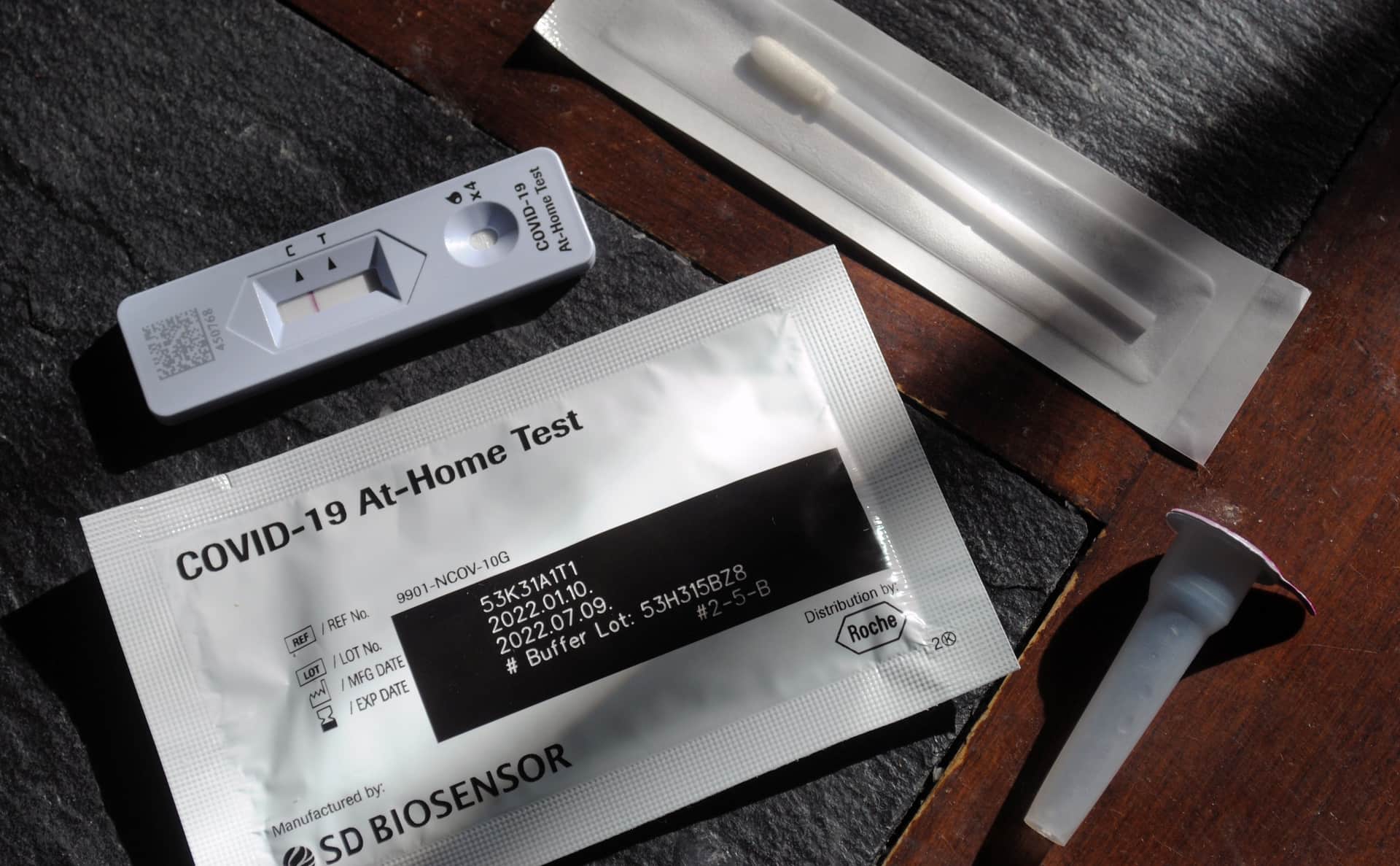
Test strips, TDS meters and certified laboratory panels are three different tools. Strips screen for hardness and pH, a TDS meter measures dissolved solids and nothing specific, and only a certified lab can give you a defensible number for lead, PFAS, nitrate or arsenic.
Quick picks
Tap any row to jump to the full write-up. The button goes straight to the retailer.
| # | Product | Best for | Price |
|---|---|---|---|
| 1 | 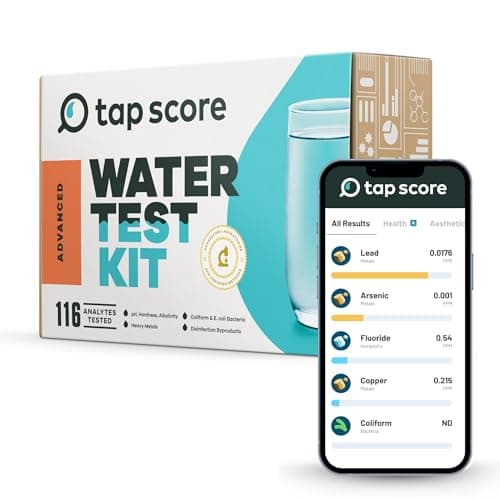 Tap Score Advanced Water Test (SimpleLab)ISO/IEC 17025 network laboratories with a report that explains the numbers. Tap Score Advanced Water Test (SimpleLab)ISO/IEC 17025 network laboratories with a report that explains the numbers. | Best certified lab test | $269.00 - View on Amazon #ad Price as of October 17, 2026. We may earn a commission. Disclosure. |
| 2 | SHno photoSafe Home Ultimate Drinking Water Test Kit200 parameters in one sample, including 130 volatile organic compounds. | Widest single panel | Check price on Amazon #ad We do not show a price we cannot verify today. We may earn a commission. Disclosure. |
Match the tool to the question
| Tool | What it genuinely tells you | What it cannot tell you | Use it when |
|---|---|---|---|
| Test strips | Rough hardness, pH, chlorine, sometimes nitrate | Anything at health-relevant trace levels — lead, PFAS, arsenic | You want a quick sense of hardness or pH |
| TDS meter | Total dissolved solids, as one number in ppm | What those solids ARE. Calcium and lead read identically. | Checking whether an RO membrane or ion-exchange filter is still working |
| Certified lab panel | Named contaminants at named concentrations, defensibly | Nothing relevant — this is the real answer | Anything health-related, and every private well |
The TDS meter deserves a note, because it is widely misunderstood. A TDS reading is the sum of everything dissolved in the water. High TDS is not dangerous — mineral water is high TDS — and low TDS is not proof of safety. Lead at a genuinely harmful concentration moves a TDS reading by an amount you would never notice. TDS is excellent for one job: confirming that an ion-exchange or RO filter is still doing what it did when it was new.
Collecting a lead sample: this is where home tests go wrong
Lead testing is the most valuable test most households can run, and it is the easiest to invalidate through collection error. The lead concentration depends on how long the water sat in contact with the pipe, so the protocol matters as much as the lab.
- Do not use the tap for at least six hours. Overnight is the standard approach. This is the contact time that makes the result meaningful.
- Collect the very first water out of the tap. This is the "first draw" sample and it is the one that shows what your plumbing is contributing.
- Do not remove or clean the aerator first. Instructions elsewhere sometimes say to; for a first-draw lead sample you want the tap in its normal state, because that is what you drink from.
- Use the cold tap. Hot water dissolves more lead and is not what you should be drinking or cooking with anyway.
- Follow the kit's hold time and ship promptly. Some analytes degrade; a sample sitting in a hot car over a weekend is a wasted test.
A useful second sample: run the tap for two minutes, then collect again. Comparing the two tells you whether the lead is coming from the fixture and immediate pipework (first draw much higher) or from the service line further out (both elevated).
What to test for, by situation
- Public supply, home built before 1986: lead, first-draw, at the tap you drink from. This is the single highest-value test available to most households.
- Public supply, newer home: read the annual report first. It is free and it may answer everything you wanted to know.
- Private well, first time: coliform bacteria, nitrate, iron, manganese, hardness, pH, and arsenic if it is geologically common in your area. The full well protocol.
- Anyone with a specific worry: a single-contaminant panel. It costs a fraction of a broad one and answers the actual question.
On "free" water tests
A free in-home test offered by a company that sells water treatment equipment measures hardness and total dissolved solids, because those are the two numbers that always look alarming and always point at a system they happen to sell. It is a sales tool, not a health test. Free testing offered by your utility or your county health department is a completely different thing and is usually worth taking.
What a test is worth
The arithmetic here is not cost per gallon, it is cost avoided. A certified panel costs less than the cheapest whole-house system on this site, and it is the only thing that tells you whether that system is the right purchase. Every well system sold is sized from ppm figures.
The failure mode this prevents is specific and common: buying equipment rated for 3 ppm iron for water carrying 9 ppm. The equipment does not fail dramatically — it just underperforms and blinds off early, and by the time that is obvious the return window has closed.
We show the arithmetic rather than a verdict so you can redo it with the price you actually pay. Filter prices move; the rated capacities above do not.
The picks in full
Best certified lab test
Tap Score Advanced Water Test (SimpleLab)
SimpleLab
Mail-in testing through certified laboratories, with a report that names contaminants, gives concentrations, and compares them against health guidelines. This is the number every system on this site is sized from.
Certification status
Samples are analyzed by laboratories in the SimpleLab network certified to ISO/IEC 17025, and Tap Score is recognized by the Water Quality Association.
Published specifications
| Method | Mail-in sample, certified laboratory analysis |
|---|---|
| Lab accreditation | ISO/IEC 17025 certified network laboratories |
| Panels available | City water, well water, and contaminant-specific tests |
| What you get | Concentrations plus health-guideline comparison |
What we like
- Certified-laboratory analysis, not a color-matching strip
- The report explains what each result means rather than dumping numbers
- Contaminant-specific panels exist when you only need one answer
What we do not
- Costs meaningfully more than a strip kit
- Turnaround is days, not minutes
- You have to actually collect the sample correctly, which is where home tests usually go wrong
Skip it if
Somebody whose entire complaint is a chlorine taste. That diagnosis is free — you can smell it — and a certified carbon filter costs less than the test.
#ad Price as of October 17, 2026. We may earn a commission. Disclosure.
Where these specifications came from
Widest single panel
Safe Home Ultimate Drinking Water Test Kit
Safe Home
A very broad mail-in laboratory panel: 200 parameters in one sample, including a large volatile-organic list most kits skip entirely. It costs what a broad panel costs.
Certification status
Analyzed at an EPA-certified laboratory operated by the manufacturer. The published panel covers 200 water-quality parameters.
Published specifications
| Parameters | 200 total |
|---|---|
| Breakdown | 12 physical, 7 inorganic, 31 metals, 20 semi-volatile organics, 130 volatile organics |
| Method | Mail-in sample, EPA-certified laboratory |
| Turnaround | 7-10 business days |
What we like
- The 130-compound volatile organic list is far broader than typical consumer panels
- One sample, one report, one shipment
- Physical properties and metals included alongside the organics
What we do not
- The laboratory is operated by the company selling the kit, rather than an independent network
- Priced as a professional panel, because that is what it is
- Broader than most households need — a targeted panel is usually the better buy
Skip it if
Anyone who already knows what they are looking for. A single-contaminant panel for lead or PFAS costs a fraction of this and answers the actual question.
#ad We do not show a price we cannot verify today. We may earn a commission. Disclosure.
Where these specifications came from
Questions people actually ask
How much does a good water test cost?
A single-contaminant lab panel for lead or PFAS is the cheapest useful option. A broad well panel covering bacteria, metals, nitrate and general chemistry costs several times that, and a very wide 200-parameter panel costs several times again. Test strips cost almost nothing and answer almost nothing at health-relevant levels.
Are home test strips accurate?
For hardness and pH, they are accurate enough to act on. For anything measured in parts per billion — lead, arsenic, most metals — they are not, because reading a color against a chart cannot resolve those concentrations. They are a screening tool, not a measurement.
How often should I test?
On a public supply, once for lead if the home is older, and again after any plumbing work. On a private well, coliform and nitrate annually, a fuller panel every three to five years, and immediately after flooding, nearby drilling, or any change in taste, smell or color.
My filter has a TDS meter. Is that a water test?
No. It measures whether your filter is still reducing dissolved solids, which is a genuinely useful maintenance check. It cannot identify a contaminant, and a low reading is not evidence that the water is safe — lead at a harmful concentration barely moves the number.