
Yes with the Brita Elite, which is certified to NSF/ANSI 53 for lead. No with the Brita Standard, which is certified to NSF/ANSI 42 for taste and odor only. Both fit the same pitcher, so which filter is in yours decides the answer entirely.
Quick picks
Tap any row to jump to the full write-up. The button goes straight to the retailer.
| # | Product | Best for | Price |
|---|---|---|---|
| 1 | 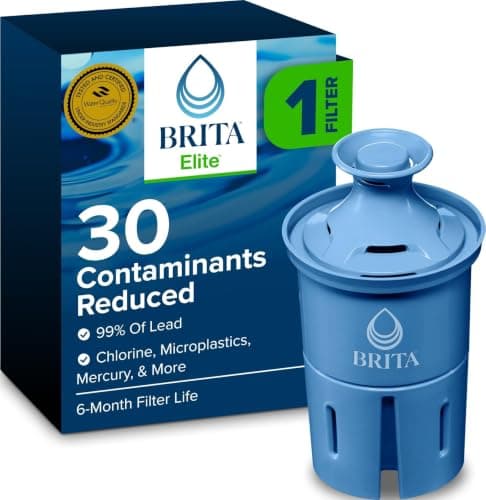 Brita Elite Filter (with any Brita pitcher)NSF/ANSI 53 for lead, at 120 rated gallons. Brita Elite Filter (with any Brita pitcher)NSF/ANSI 53 for lead, at 120 rated gallons. | The one that is certified | $19.88 - View on Amazon #ad Price as of October 17, 2026. We may earn a commission. Disclosure. |
| 2 | Pno photoPUR PLUS Pitcher with Lead-Reducing FilterAlso NSF/ANSI 53 for lead, at 40 rated gallons. | The equivalent alternative | Check price on Amazon #ad We do not show a price we cannot verify today. We may earn a commission. Disclosure. |
| 3 | 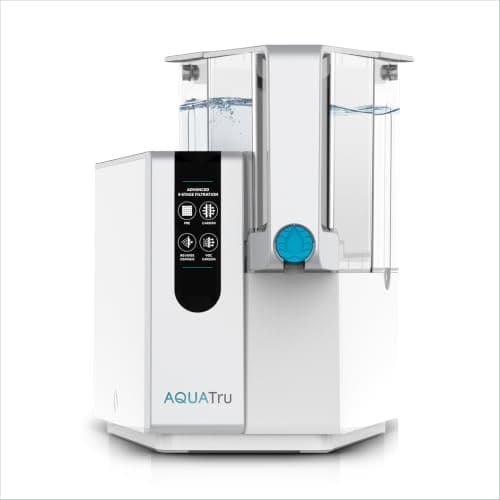 AquaTru Classic Countertop Reverse Osmosis PurifierCertified reverse osmosis with no plumbing, covering far more than lead. AquaTru Classic Countertop Reverse Osmosis PurifierCertified reverse osmosis with no plumbing, covering far more than lead. | If you want more than a pitcher | $451.25 - View on Amazon $475.00 — 5% off #ad Price as of October 17, 2026. We may earn a commission. Disclosure. |
The answer in one table
| Filter | Color | Lead | Standard | Rated life |
|---|---|---|---|---|
| Brita Elite | Blue | Certified | NSF/ANSI 42, 53, 401 | 120 gallons |
| Brita Standard | White | Not certified | NSF/ANSI 42 | 40 gallons |
NSF/ANSI 53 is the health-effects standard, and lead is within its scope. NSF/ANSI 42 is the aesthetic-effects standard — taste, odor and chlorine — and makes no health claim at all.
Why this catches people
The two filters fit the same pitcher, sit adjacent on the same shelf, and differ by a few dollars. Nothing about the shopping experience signals that one is a health product and the other is not.
The upside of that interchangeability is that the fix costs a cartridge rather than a pitcher: the Elite drops into any Brita pitcher or dispenser you already own. The full compatibility matrix covers which filters fit what, including the one Brita format that shares nothing with the others.
So a household that read something worrying about lead, bought a Brita, and grabbed whichever filter was cheapest has, quite reasonably, bought a taste filter. Checking the color of the filter in your pitcher takes five seconds.
Do you actually have lead?
Before spending anything, worth establishing. Lead does not arrive from the treatment plant — it dissolves in from the service line, from pre-1986 solder, or from brass fixtures. Your utility's annual report cannot tell you, because all of that is downstream of every sample it takes.
- Home built before 1950: a lead service line is plausible. Test.
- Home built 1950-1986: lead solder is plausible. Test.
- Home built after 1986: lower risk, though brass fixtures are possible.
- Recent street work on your service line: test regardless of age — disturbance releases lead.
How to collect a valid first-draw sample.
Using it correctly
- Track gallons, not months. Certification applies up to the rated capacity, and past 120 gallons the Elite is an uncertified filter. The indicator light is a timer.
- Filter cold water only. Hot water dissolves more lead and should not be used for drinking or cooking regardless.
- Soak the filter before first use. A dry filter channels water past the media instead of through it.
- Flush a stagnant tap first where practical. Contact time drives lead concentration, and a 30-second flush lowers what the filter has to deal with.
When a pitcher is not enough
A certified pitcher genuinely removes lead — it is not a compromise on capability. It is a compromise on convenience: gravity flow, refilling, fridge space.
If you are filtering more than a couple of gallons a day, or you also have PFAS or fluoride concerns, step up to the full lead roundup, which covers certified under-sink and countertop options.
The cost-per-gallon math
At 120 rated gallons and two gallons a day, an Elite filter lasts about two months — roughly six a year.
The PUR PLUS reaches the same lead certification at 40 rated gallons, so about eighteen a year. Multiply each by the shelf price to see which is genuinely cheaper on your consumption; the Elite usually wins on the strength of its rated life.
Against a certified under-sink system rated in the hundreds or thousands of gallons, both pitchers lose on cost per gallon within about a year for a family. They win on requiring nothing of the building, which is why they exist.
We show the arithmetic rather than a verdict so you can redo it with the price you actually pay. Filter prices move; the rated capacities above do not.
The picks in full
The one that is certified
Brita Elite Filter (with any Brita pitcher)
Brita
The cheapest route to an NSF/ANSI 53 lead certification. It drops into a pitcher most households already have, and it is emphatically not the same filter as the white Brita Standard.
Certification status
Certified to NSF/ANSI 42, 53 and 401. The lead certification belongs to the Elite (blue) filter only — the Standard (white) filter is certified to NSF/ANSI 42 for taste and odor and is not certified for lead. Per Brita's January 2026 performance data sheet the Elite is not certified for PFOA or PFOS, and no Brita pitcher filter is certified for fluoride.
Published specifications
| Rated filter life | 120 gallons / about 6 months |
|---|---|
| Standard filter life, for comparison | 40 gallons / about 2 months |
| Certified standards | NSF/ANSI 42, 53, 401 |
| Lead | Certified under NSF/ANSI 53 |
| PFOA / PFOS | Not certified (January 2026 performance data sheet) |
| Fluoride | Not certified, not claimed |
What we like
- Genuine NSF/ANSI 53 lead certification at the lowest entry price of anything on this site
- Fits Brita pitchers and dispensers already in millions of kitchens — no new hardware
- Three times the rated life of the Standard filter, which changes the cost-per-gallon math
What we do not
- Not certified for PFOA or PFOS, so it is the wrong answer to a PFAS worry
- No fluoride claim at all
- Slow gravity flow, like every pitcher
Skip it if
Anyone whose actual worry is PFAS or fluoride. The Elite is not certified for either, and buying it for those is buying the wrong thing.
#ad Price as of October 17, 2026. We may earn a commission. Disclosure.
Where these specifications came from
The equivalent alternative
PUR PLUS Pitcher with Lead-Reducing Filter
PUR
The direct competitor to the Brita Elite, and honestly close to a coin flip. It reaches the same lead certification with a shorter filter life, so the deciding factor is usually price per filter on the day.
Certification status
Ships with the PUR PLUS lead-reducing filter (PPF951K). PUR's July 2026 performance data sheet states the pitcher systems are certified by IAPMO R&T to NSF/ANSI 42, 53 and 401 for the claims listed, and the PPF951K column lists lead at 99.9% (pH 6.5) and 99.2% (pH 8.5), total PFAS at 99.75% against a seven-compound test mixture, and microplastics at 99.8%. No fluoride claim, and PUR states its filters do not remove microbes.
Published specifications
| Rated filter life | 40 gallons / about 2 months |
|---|---|
| Lead | Certified (IAPMO R&T, NSF/ANSI 53): 99.9% at pH 6.5, 99.2% at pH 8.5 |
| Total PFAS | 99.75% (July 2026 data sheet) |
| Microplastics | 99.8% |
| Filter | PPF951K lead-reducing |
| Pitcher capacity | 11 cups (PPT111) |
What we like
- Certified lead reduction at a mainstream-supermarket price
- Larger pitcher than the standard Brita 10-cup
- Widely stocked, so replacement filters are easy to find in person
What we do not
- 40-gallon filter life against the Brita Elite's 120 — three times the replacement cadence
- The filter must be pre-soaked, and skipping that step is the most common cause of slow flow
- No fluoride claim, and the basic PUR filter fits the same pitcher with no lead or PFAS figure at all — check which cartridge is in the box
Skip it if
Anyone who will resent changing a filter every two months. The Brita Elite reaches the same lead certification and lasts three times as long.
#ad We do not show a price we cannot verify today. We may earn a commission. Disclosure.
If you want more than a pitcher
AquaTru Classic Countertop Reverse Osmosis Purifier
AquaTru
Reverse osmosis performance with no plumbing, no drilling and no landlord conversation. You pay for that with counter space, a wait, and two tanks you fill and empty by hand.
Certification status
Certified by IAPMO to NSF/ANSI 53, 58, 401 and P473, covering lead, reverse-osmosis performance, emerging compounds and the PFOA/PFOS protocol.
Published specifications
| Filtration | 4-stage countertop reverse osmosis |
|---|---|
| Clean water tank | 0.75 gallons |
| Tap water tank | 1 gallon |
| Installation | None — no plumbing connection |
| Certified standards | NSF/ANSI 53, 58, 401, P473 (IAPMO) |
What we like
- Real reverse osmosis with a P473 PFOA/PFOS certification and zero installation
- The strongest answer available to a renter with a lead or PFAS problem
- No drilling, no drain saddle, no landlord permission needed
What we do not
- Takes up substantial counter space
- You refill and empty tanks by hand — it is not on-demand
- Highest purchase price in the no-plumbing tier by a wide margin
Skip it if
Anyone who can plumb in an under-sink system. A permanent under-sink RO is cheaper per gallon, on-demand, and out of sight. Buy this when you genuinely cannot install.
$475.00 — 5% off
#ad Price as of October 17, 2026. We may earn a commission. Disclosure.
Where these specifications came from
Questions people actually ask
Does the Brita Standard filter remove lead?
No. It is certified to NSF/ANSI 42, which covers taste, odor and chlorine and is not a health claim. Only the Brita Elite carries the NSF/ANSI 53 lead certification.
How much lead does the Brita Elite remove?
It is certified to NSF/ANSI 53 for lead, which means it met the standard's reduction requirement under test conditions up to its 120-gallon rated capacity. Past that capacity the certification no longer applies.
Can I tell which Brita filter I have?
By color. The Elite is blue and the Standard is white. It is the fastest check available and it decides whether you have a lead filter or a taste filter.
Should I test for lead before buying?
Yes, especially if your home predates 1986. Lead is tasteless and invisible, a first-draw test costs less than most filters, and many utilities run them free for residents. Testing also tells you whether a pitcher is sufficient or you need more.