For Cryptosporidium and Giardia, buy a filter certified to NSF/ANSI 53 or 58 for cyst reduction. The AquaTru Carafe is the strongest option with no plumbing — IAPMO lists it at 99.9% average cyst reduction, naming Cryptosporidium. An absolute 1-micron pore size is the alternative CDC accepts.
Quick picks
Tap any row to jump to the full write-up. The button goes straight to the retailer.
| # | Product | Best for | Price |
|---|---|---|---|
| 1 | 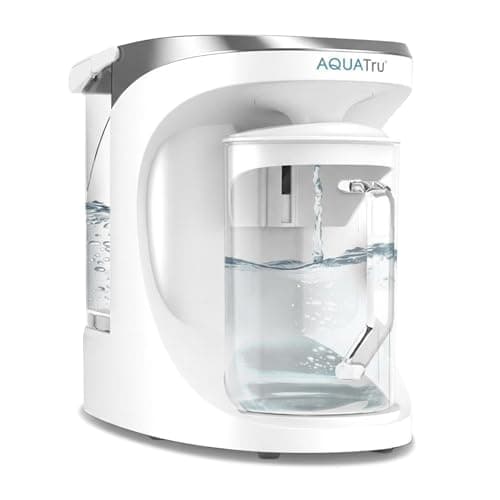 AquaTru Carafe Countertop Reverse Osmosis PurifierIAPMO lists 99.9% average cyst reduction under NSF/ANSI 58, naming Cryptosporidium, Giardia lamblia and Entamoeba histolytica. AquaTru Carafe Countertop Reverse Osmosis PurifierIAPMO lists 99.9% average cyst reduction under NSF/ANSI 58, naming Cryptosporidium, Giardia lamblia and Entamoeba histolytica. | Best certified cyst filter | $356.25 - View on Amazon $375.00 — 5% off #ad Price as of October 17, 2026. We may earn a commission. Disclosure. |
| 2 | 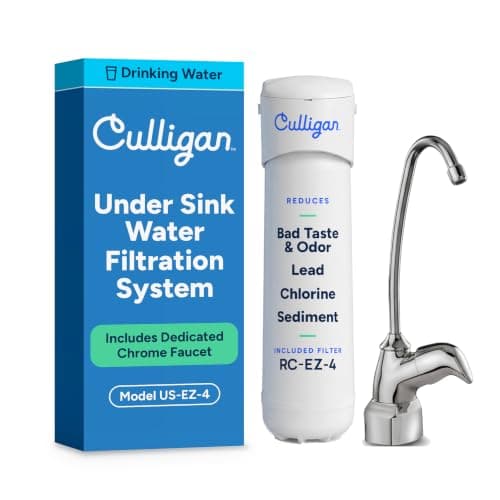 Culligan US-EZ-4 Under-Sink Filtration SystemIAPMO certified to NSF/ANSI 53 for cysts alongside lead, mercury and the PFOA/PFOS protocol. Culligan US-EZ-4 Under-Sink Filtration SystemIAPMO certified to NSF/ANSI 53 for cysts alongside lead, mercury and the PFOA/PFOS protocol. | Cheapest certified for cysts | $92.96 - View on Amazon #ad Price as of October 17, 2026. We may earn a commission. Disclosure. |
| 3 | 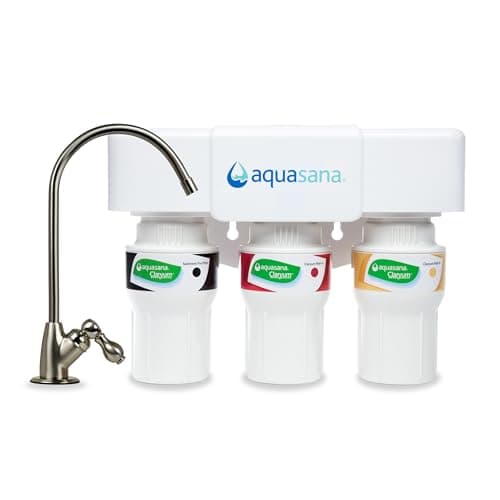 Aquasana Claryum 3-Stage Under-Sink Filter (AQ-5300)WQA certified to NSF/ANSI 42, 53 and 401, with 99.99% published for cysts across the Claryum 3-Stage line. Aquasana Claryum 3-Stage Under-Sink Filter (AQ-5300)WQA certified to NSF/ANSI 42, 53 and 401, with 99.99% published for cysts across the Claryum 3-Stage line. | Broadest claim list with a cyst number | $154.99 - View on Amazon $349.99 — 56% off #ad Price as of October 17, 2026. We may earn a commission. Disclosure. |
| 4 | 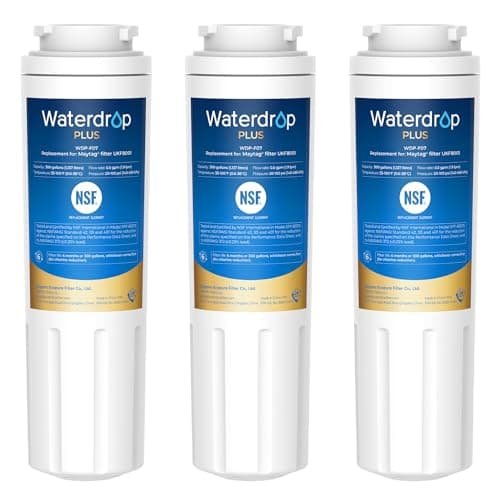 Waterdrop Plus UKF8001 Refrigerator Filter (WDP-F07)NSF's own listing names cyst reduction under NSF/ANSI 53 — most compatible fridge cartridges carry no 53 claim at all. Waterdrop Plus UKF8001 Refrigerator Filter (WDP-F07)NSF's own listing names cyst reduction under NSF/ANSI 53 — most compatible fridge cartridges carry no 53 claim at all. | Best cyst claim on a fridge filter | $34.99 - View on Amazon $36.99 — 5% off #ad Price as of October 17, 2026. We may earn a commission. Disclosure. |
| 5 | 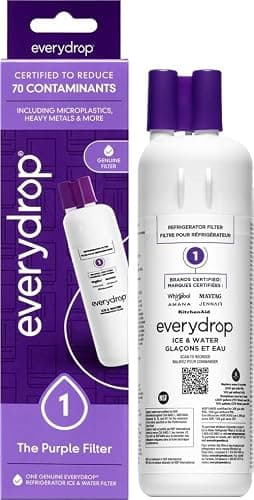 everydrop Filter 1 (EDR1RXD1) Refrigerator FilterNSF certified under 53 with cysts inside a nineteen-claim health list, listing held by Whirlpool. everydrop Filter 1 (EDR1RXD1) Refrigerator FilterNSF certified under 53 with cysts inside a nineteen-claim health list, listing held by Whirlpool. | The manufacturer's own fridge cartridge | $50.99 - View on Amazon $59.99 — 15% off #ad Price as of October 17, 2026. We may earn a commission. Disclosure. |
How we judged this, before any product appears
There is a published criterion for this purchase, which is unusual and makes the job easier. CDC tells people who need to remove Cryptosporidium to look for one of a short list of things, and the whole of this page is built on it.
The agency names filters certified to NSF standards 53 or 58 for cyst reduction or removal, filters with an absolute pore size of 1 micron or smaller, and the membrane processes — microfiltration, nanofiltration, ultrafiltration and reverse osmosis. Those are the four doors in. Everything on this page walks through one of them, and the ranking is by how checkable the claim is rather than by how large the number on the box is.
Two things that are not criteria, and which people reach for first: a carbon filter's contaminant count, and a "99.99% of bacteria" figure in marketing copy. Neither tells you the pore size, and neither is a cyst listing.
Absolute and nominal are different words, and the gap is large
This is the single most useful thing to understand before spending anything, because the two ratings print almost identically on a box.
With an absolute rating, CDC says, each one of the filter's pores is 1 micron or smaller, so anything larger is caught. A nominal or mean rating describes an average: pores vary, some are larger than the stated figure, and a mean-rated 1-micron filter may not catch a 1-micron organism.
CDC puts a number on the gap in its Cryptosporidium guide: some nominal 1-micron filters will allow 20% to 30% of 1-micron particles through. For a parasite with an infectious dose in the tens of organisms, a filter that passes a quarter of them is not a barrier.
| Absolute 1 micron | Nominal / mean 1 micron | |
|---|---|---|
| What the rating describes | Every pore | The average pore |
| Pores larger than 1 micron | None | Some, by definition |
| CDC accepts it for Cryptosporidium | Yes | No |
| Typical labelling | "Absolute 1 micron" | "1 micron", "1 micron nominal" |
| Safer alternative on the label | — | An NSF/ANSI 53 or 58 cyst claim |
Which is why the practical shortcut is the certification rather than the micron figure. A cyst listing has been tested against a live challenge at an accredited laboratory; "1 micron" on packaging has been measured by whoever printed the packaging.
What a cyst certification actually tests
The claim is narrower and more specific than most people assume, and reading one properly tells you what you are buying.
AquaTru's performance data sheet for the Carafe is a clean example because IAPMO publishes the whole table. The cyst row shows a challenge concentration of 50,000 organisms, a reduction requirement of 99%, a minimum measured reduction of 99.9% and an average of 99.9%. A footnote defines the organisms: includes Giardia Lamblia, Entamoeba Histolyca and Cryptosporidium. That is the sentence worth quoting at anyone who asks whether a filter handles Crypto — it names the organism rather than gesturing at "pathogens".
Note what the same sheet says about the limits of that claim, because it is the honest part: Systems certified for cyst reduction may be used on disinfected waters that may contain filterable cysts, and do not use with water that is microbiologically unsafe or of unknown quality without adequate disinfection before or after the system. A cyst filter is a second barrier on treated water. It is not a substitute for disinfection, and it is not a licence to drink from a stream.
Why cysts are the pathogen that gets through treatment
Cryptosporidium earns its own page rather than a line on another one because of a chlorine-resistance problem that makes it unlike almost everything else a utility treats.
EPA regulates it at a maximum contaminant level goal of zero with a treatment technique rather than a numeric limit, alongside Giardia lamblia, and describes the illness as gastrointestinal illness (such as diarrhea, vomiting, and cramps). A treatment technique rather than an MCL is the regulatory tell: this is an organism controlled by filtration and process control at the plant, not by a residual in the pipe.
That is also why your annual water quality report has a Cryptosporidium paragraph in it. EPA's Consumer Confidence Report rule requires community systems to include guidance for vulnerable groups on avoiding Cryptosporidium in the report they must send each year by July 1. If you have not read yours, that page is worth ten minutes before you buy anything — a system under a boil-water history reads very differently from one that has never had an event.
If you are immunocompromised, the advice changes
This is the group the CDC guidance is really written for, and the instructions are different in two ways people do not expect.
First, the agency says to involve clinicians rather than a shopping list: talk with a healthcare provider and a water disinfection specialist before getting a system. Second — and this one is genuinely counterintuitive — CDC advises against changing the filter yourself, because a spent cartridge holds the organisms it caught and handling it is an exposure route. If you are buying for a household member with a weakened immune system, plan who changes the cartridge at the same time as you plan which cartridge.
For that household the countertop reverse osmosis route has a practical advantage worth weighing: the certification is broader, and the cartridge changes are infrequent. The alternative CDC accepts without any filter at all is boiling, which is free and definitive.
Nasal rinsing is a separate question with a stricter answer
People arrive at cyst filters from two directions, and the second one is the neti pot. The answer there is not the same, so it needs saying plainly rather than by implication.
FDA lists three acceptable waters for sinus rinsing: distilled or sterile water from a store, boiled and cooled tap water, and water passed through a filter designed to trap potentially infectious organisms, referring readers to CDC for how to choose that filter. So a filter is permitted — but it has to be one of the filters on this page, not any filter you own.
CDC's own current sinus-rinsing guidance is tighter still and does not list filtration among its options at all. It names store-bought water labeled "distilled" or "sterile", tap water brought to a rolling boil for one minute — or boil for 3 minutes above 6,500 feet — and, as a last resort, bleach-disinfected water.
Read those two together and the honest conclusion is: for drinking, a certified cyst filter is the right purchase; for putting water up your nose, boil it or buy it sterile. The organism that makes nasal rinsing dangerous is not a cyst, and a cyst certification does not speak to it.
Reverse osmosis, and why it is the broad answer
If you want one purchase that covers cysts and everything else people worry about, this is the tier, and the reason is in the certification structure rather than the marketing.
NSF/ANSI 58 is the reverse osmosis standard, and a cyst claim sits inside it alongside lead, fluoride, arsenic, nitrate, hexavalent chromium and TDS. The AquaTru Carafe sheet shows all of those in one table. A carbon filter certified under 53 can hold a cyst claim too — the Culligan and Aquasana picks here do — but it cannot reach fluoride or nitrate, because carbon does not.
So the decision between the picks is mostly about what else is wrong with your water. Cysts alone, on city water, with no plumbing changes allowed: the countertop unit or the under-sink carbon filter. Cysts plus fluoride, nitrate or arsenic: reverse osmosis, and the worth-it question is answered on its own page.
The cost-per-gallon math
The cyst-certified options here span a wide range of cost per gallon, and the cheapest one is not the pitcher — there is no certified cyst pitcher on this list, which is the point.
Work it out from the rated capacity rather than the interval. The Culligan cartridge is rated at 500 gallons, the Waterdrop fridge cartridge at 300 and the everydrop at 200. A household drinking two gallons a day runs through 730 gallons a year, so the Culligan is roughly one and a half cartridges a year and the everydrop closer to four.
The AquaTru Carafe is three cartridges on three different clocks: pre/carbon every 300 gallons, VOC every 300 gallons and the reverse osmosis membrane every 24 months or roughly 600 gallons. Add the three annual costs together before comparing it to a single under-sink cartridge, because a per-filter price looks cheaper than the system is.
We do not print product prices in this text. The buy buttons carry the live figure and the date it was checked, which is the only price worth quoting.
We show the arithmetic rather than a verdict so you can redo it with the price you actually pay. Filter prices move; the rated capacities above do not.
The picks in full
Best certified cyst filter
AquaTru Carafe Countertop Reverse Osmosis Purifier
AquaTru
The Classic's certification table in two-thirds of the footprint, pouring into glass instead of a plastic tank. You give up capacity and gain a published 63% recovery rate, which is better than almost any plumbed system manages.
Certification status
IAPMO publishes a performance data sheet covering Carafe models AT100, AT110, AT120, AT130 and AT140, certified under NSF/ANSI 42, 53 and 58, with additional testing to NSF/ANSI 401 and NSF Protocol 53 for PFOA and PFOS. The NSF/ANSI 58 table records average reductions of 99.2% for lead, 99.9% for cysts, 96.4% for fluoride, 98.8% for pentavalent arsenic, 97.5% for hexavalent chromium, 98.3% for nitrate and 94.4% for TDS. PFOA and PFOS average 99% under NSF Protocol 53.
Published specifications
| Filtration | 4-stage countertop reverse osmosis |
|---|---|
| Carafe | 64 oz borosilicate glass |
| Clean water tank | 0.5 gallons (1.9 L) |
| Tap water tank | 0.66 gallons (2.5 L) |
| Daily production rate | 35 GPD |
| Efficiency rating | 63% (IAPMO) |
| Certified standards | NSF/ANSI 42, 53, 58 (IAPMO) |
| Dimensions | 13 in H x 14 in D x 7.5 in W |
| Power | 120 V, 60 Hz |
| Max inlet hardness | 10 gpg (171 mg/L) |
What we like
- A published 63% efficiency rating — most tank reverse osmosis systems send three or four gallons to drain per gallon produced
- The NSF/ANSI 58 claim list reaches lead, fluoride, nitrate, arsenic, chromium-6 and cysts, which carbon cannot
- Glass carafe rather than a plastic holding tank, and it goes in the fridge
- No plumbing, no drilling and no drain saddle — the whole certification travels with a renter
What we do not
- A 0.5 gallon clean tank against the Classic's 0.75 — you refill it more often for the same household
- Three cartridges on three different clocks, and the manufacturer's web page and the certifier's data sheet disagree on the pre/carbon interval
- Needs a counter outlet and 7.5 inches of width it does not share
- Not for water above 10 gpg hardness without softening first, or the membrane scales
Skip it if
A household that drinks a lot of water. The clean tank holds half a gallon and refills at 35 gallons a day, so a family of four will be waiting on it. Buy the Classic for its larger tanks, or a plumbed under-sink system if you can install one.
$375.00 — 5% off
#ad Price as of October 17, 2026. We may earn a commission. Disclosure.
Cheapest certified for cysts
Culligan US-EZ-4 Under-Sink Filtration System
Culligan
The cheapest certified under-sink filter on this site, and the claim list is better than the price suggests: chloramine under 42, and lead plus PFOA and PFOS under 53. The catch is a dedicated faucet and a 500-gallon cartridge.
Certification status
Certified by IAPMO R&T to NSF/ANSI 42 for chlorine taste and odor, chloramines and nominal particulate Class I, and to NSF/ANSI 53 for cysts, lead, mercury, VOCs, MTBE, turbidity, PFOA and PFOS. Rated at 500 gallons or about six months, at a 0.5 gpm service flow.
Published specifications
| Rated capacity | 500 gallons / about 6 months |
|---|---|
| Certified standards | NSF/ANSI 42 and 53 (IAPMO R&T) |
| Chloramine | Included in the NSF/ANSI 42 claim |
| PFOA / PFOS | Included in the NSF/ANSI 53 claim |
| Also certified for | Lead, mercury, cysts, VOCs, MTBE, turbidity |
| Service flow | 0.5 gpm |
| Operating pressure | 30-100 psi |
| Replacement cartridge | RC-EZ-4 |
| Faucet | Dedicated faucet included — needs a hole |
What we like
- A certified chloramine claim, which most filters do not carry and most chloraminated supplies need
- PFOA and PFOS named in the 53 certification on an inexpensive cartridge
- Twist-on, twist-off cartridge change with quick-connect fittings and a double shut-off
What we do not
- Needs a dedicated faucet, which means drilling the counter or using a spare hole
- 500 gallons is a modest cartridge life next to direct-connect inline filters
- No fluoride, nitrate or arsenic claim — the limit of carbon, not of this product
- Proprietary RC-EZ-4 cartridge
Skip it if
Fluoride, nitrate or hardness, and anyone who cannot drill or spare a hole in the sink deck for the faucet.
#ad Price as of October 17, 2026. We may earn a commission. Disclosure.
Where these specifications came from
Broadest claim list with a cyst number
Aquasana Claryum 3-Stage Under-Sink Filter (AQ-5300)
Aquasana
Carbon-block filtration rather than reverse osmosis: it keeps the minerals, wastes nothing, and fits where a reverse-osmosis system will not. It also cannot do what RO does for fluoride or nitrate.
Certification status
WQA tested and certified to NSF/ANSI 42, 53 — which includes the P473 protocol for PFOA and PFOS — and 401, for the reduction of 78 contaminants. Aquasana publishes 99.6% for lead and microplastics, 99.7% for PFOA and PFOS, 99.99% for cysts and 97% for chlorine across the Claryum 3-Stage line.
Published specifications
| Filter life | 600 gallons / up to 6 months |
|---|---|
| Certified standards | NSF/ANSI 42, 53 (includes P473), 401 (WQA) |
| Flow rate | 0.5 gpm |
| Wastewater | None |
| Format | 3-stage carbon block with a dedicated faucet |
| Contaminants claimed | 78 |
| Lead / PFOA and PFOS | 99.6% / 99.7% |
What we like
- No drain line, no wastewater, no tank — much easier to install than reverse osmosis
- NSF/ANSI 401 certification covers pharmaceutical-class trace compounds
- Full flow rate, unlike reverse osmosis, so filling a pot is not a project
What we do not
- Not reverse osmosis: no meaningful fluoride, nitrate or TDS reduction
- 600-gallon filter life is short next to an inline system's tens of thousands
- Proprietary cartridges
Skip it if
Anyone whose problem is fluoride, nitrate or total dissolved solids. Carbon block does not remove those; you need reverse osmosis for that job.
$349.99 — 56% off
#ad Price as of October 17, 2026. We may earn a commission. Disclosure.
Best cyst claim on a fridge filter
Waterdrop Plus UKF8001 Refrigerator Filter (WDP-F07)
Waterdrop
The compatible refrigerator filter that holds the certification people assume all of them have. NSF lists this cartridge under 42, 53 and 401 — lead, cysts, mercury and six emerging compounds — which is a broader certified list than any faucet mount on this site. The catch is that the near-identical cartridge codes beside it are not listed the same way.
Certification status
Listed by NSF under system model EFF-6007S with element WDP-F07 (also sold as WDP-UKF8001): NSF/ANSI 42 for chlorine, taste and odor; NSF/ANSI 53 for cyst, lead, benzene, carbofuran, endrin and mercury; NSF/ANSI 401 for phenytoin, ibuprofen, naproxen, estrone, bisphenol A and nonylphenol. Rated at 300 gallons and 0.5 gpm. The plain WD-F07 cartridge in the same family is listed under NSF/ANSI 42 only, and the WDS-F07 drops mercury and the 401 claims.
Published specifications
| Replaces | Maytag UKF8001, Whirlpool Filter 4, EDR4RXD1, 4396395, PUR Puriclean II, Kenmore 46-9005 / 46-9006 |
|---|---|
| Rated life | 300 gallons / about 6 months |
| Certified standards | NSF/ANSI 42, 53 and 401 (NSF listing) |
| Lead | 99.6% reduction |
| Cysts | 99.99% |
| Chlorine, taste and odor | 97.3% |
| Bisphenol A / nonyl phenol | 99.2% / 97.2% |
| Pharmaceutical residues | Naproxen 96.2%, estrone 96.6%, phenytoin 95.2%, ibuprofen 94.4% |
| Service flow | 0.5 gpm |
What we like
- A checkable NSF listing that names lead, cysts and mercury — most compatibles carry an NSF/ANSI 42 taste claim or nothing
- The NSF/ANSI 401 listing adds six emerging compounds, which even some OEM filters do not carry
- Sold in multipacks, so the cost per certified gallon is among the lowest on this site
What we do not
- Only the WDP (Plus) code carries this listing — the WD and WDS versions of the same filter are certified for less, and the listings look nearly identical
- 300 gallons is a shorter rated life than an under-sink cartridge by a wide margin
- A compatible, not an OEM part, so fit tolerances and appliance warranties are your call to make
- Refrigerator filters are the most counterfeited product in home water filtration — buy from a seller you can identify
Skip it if
Fluoride, arsenic or PFAS, none of which appears in the listing, and anyone whose fridge takes a different filter — these are model-specific parts and the compatibility list is the first thing to check.
$36.99 — 5% off
#ad Price as of October 17, 2026. We may earn a commission. Disclosure.
The manufacturer's own fridge cartridge
everydrop Filter 1 (EDR1RXD1) Refrigerator Filter
everydrop by Whirlpool
The OEM filter, certified to three NSF standards, sold beside a wall of cheaper compatibles that are certified to none of them. That gap is the whole decision in this category.
Certification status
Certified by NSF International to NSF/ANSI 42, 53 and 401, with the listing held by Whirlpool Corporation. NSF's entry for the EDR1RXD1 element records 200 gallons at a 0.5 gpm service flow, with chlorine, taste, odor and particulate claims under 42; a nineteen-claim health list under 53 including lead, cysts, asbestos, turbidity, benzene, atrazine and the VOC group; and ten emerging compounds under 401 including microplastics and bisphenol A. everydrop's own '70 contaminants' figure counts the individual compounds inside that VOC group.
Published specifications
| Certified standards | NSF/ANSI 42, 53 and 401 (NSF listing) |
|---|---|
| Rated life | 200 gallons / 6 months |
| Service flow | 0.5 gpm |
| Media | Coconut shell carbon |
| Fits | Whirlpool, Maytag, KitchenAid, Amana, JennAir — check your model |
| Also sold as | W10295370A, WHR1RXD1 |
| Lead / cysts / asbestos | All three in the NSF/ANSI 53 claim list |
| Microplastics | In the NSF/ANSI 401 claim list |
| No claim for | Fluoride, nitrate, arsenic, PFAS |
What we like
- Three certified standards, including 53 for lead and 401 for emerging compounds
- Designed for the housing it goes in, so the bypass and seal behave as the fridge expects
- Certification status is checkable in NSF's own listings rather than taken on trust
What we do not
- Several times the price of the compatibles sitting next to it in search results
- 200 rated gallons is the shortest certified filter life most households own
- Only fits the Whirlpool family — the wrong filter for an LG, Samsung or GE fridge
Skip it if
Anyone whose refrigerator is not in the Whirlpool family. Fridge filters are model-specific hardware, and the right answer is whichever certified filter fits your housing.
$59.99 — 15% off
#ad Price as of October 17, 2026. We may earn a commission. Disclosure.
Where these specifications came from
Questions people actually ask
Which water filters are certified to remove Cryptosporidium?
Filters certified to NSF/ANSI 53 or NSF/ANSI 58 for cyst reduction. On this page the AquaTru Carafe holds the clearest listing — IAPMO publishes 99.9% average cyst reduction under NSF/ANSI 58, with a footnote naming Cryptosporidium, Giardia lamblia and Entamoeba histolytica. The Culligan US-EZ-4 and Aquasana Claryum 3-Stage hold cyst claims under NSF/ANSI 53, and the Waterdrop and everydrop refrigerator cartridges carry 53 cyst claims as well.
Does a Brita or similar pitcher remove Cryptosporidium?
No mainstream water filter pitcher holds a cyst certification, so the honest answer is that you cannot verify it. CDC's criterion is an NSF/ANSI 53 or 58 cyst claim or an absolute 1-micron pore size, and standard pitcher cartridges are certified under NSF/ANSI 42 and 53 for chemical claims rather than for cysts. If a parasite is the reason you are filtering, buy from the certified list instead.
What is the difference between absolute and nominal 1 micron?
An absolute rating means every pore in the filter is 1 micron or smaller. A nominal or mean rating describes the average pore size, so some pores are larger — CDC notes that some nominal 1-micron filters allow 20% to 30% of 1-micron particles through. Only the absolute rating is accepted for Cryptosporidium, and a box that says '1 micron' without the word absolute should be read as nominal.
Can I use a water filter for a neti pot or sinus rinse?
Only a filter specifically designed to trap infectious organisms. FDA lists three safe options: store-bought distilled or sterile water, boiled and cooled tap water, and water passed through a filter designed to trap potentially infectious organisms. CDC's current sinus-rinsing guidance is stricter and lists only distilled or sterile water, water boiled for one minute — three minutes above 6,500 feet — or bleach-disinfected water. For nasal rinsing, boiling or buying sterile water is the safer route.
Does boiling water kill Cryptosporidium?
Yes. Boiling is the method that needs no certification and no purchase, which is why it is the instruction during a boil-water advisory. A rolling boil for one minute is CDC's figure, extended to three minutes above 6,500 feet. The reason people buy a filter instead is convenience over months rather than a gap in effectiveness.
Is a cyst filter enough on water that might be unsafe?
No, and the certification itself says so. AquaTru's performance data sheet states that systems certified for cyst reduction may be used on disinfected waters that may contain filterable cysts, and warns against use with water that is microbiologically unsafe or of unknown quality without adequate disinfection before or after the system. A cyst filter is a second barrier on treated water, not a primary treatment.
Why does my water quality report mention Cryptosporidium?
Because EPA requires it. The Consumer Confidence Report rule obliges community water systems to include guidance for vulnerable groups on avoiding Cryptosporidium in the report they send each year by July 1. EPA regulates the organism with a treatment technique and a maximum contaminant level goal of zero rather than a numeric limit, because it is controlled by filtration at the plant rather than by disinfectant residual in the pipes.
Sources
- CDC — A Guide to Water Filters (Cryptosporidium)
- CDC — Choosing a home water filter, pore size and NSF certification
- CDC — Sinus rinsing: safe water for nasal irrigation
- FDA — Rinsing your sinuses with neti pots: is it safe?
- AquaTru / IAPMO — Performance Data Sheet, Carafe models AT100-AT140
- EPA — National Primary Drinking Water Regulations
- EPA — Consumer Confidence Reports: information for consumers
- NSF — Certified Products and Systems