Aquasana's Claryum drinking-water filters are certified to NSF/ANSI 42, 53 (including P473) and 401 for 78 contaminants — one of the widest certified lists in the carbon tier. The whole-house and shower filters carry only NSF/ANSI 42 and 177 chlorine claims, and most are described as tested to rather than certified under.
Quick picks
Tap any row to jump to the full write-up. The button goes straight to the retailer.
| # | Product | Best for | Price |
|---|---|---|---|
| 1 | 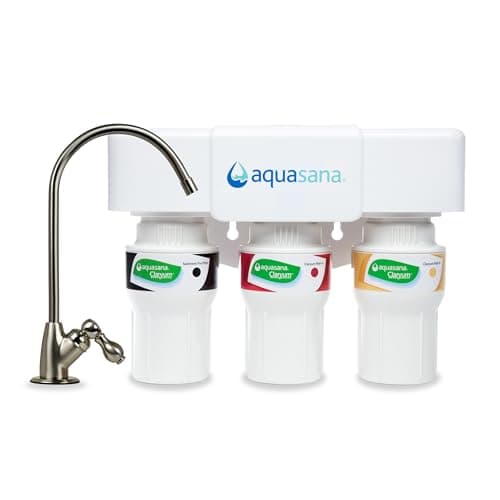 Aquasana Claryum 3-Stage Under-Sink Filter (AQ-5300)Claryum 3-Stage: WQA certified to NSF/ANSI 42, 53 with P473, and 401. 78 contaminants, no wastewater. Aquasana Claryum 3-Stage Under-Sink Filter (AQ-5300)Claryum 3-Stage: WQA certified to NSF/ANSI 42, 53 with P473, and 401. 78 contaminants, no wastewater. | The one to buy | $154.99 - View on Amazon $349.99 — 56% off #ad Price as of October 7, 2026. We may earn a commission. Disclosure. |
| 2 | 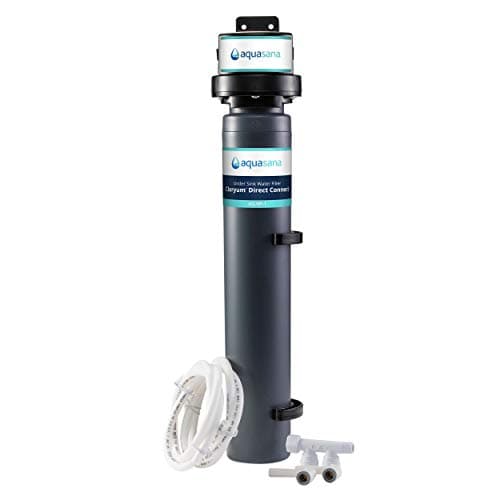 Aquasana Claryum Direct Connect (AQ-MF-1)The same 78-contaminant claim, IAPMO certified, plumbed to the faucet you already have. Aquasana Claryum Direct Connect (AQ-MF-1)The same 78-contaminant claim, IAPMO certified, plumbed to the faucet you already have. | If you cannot drill | $99.99 - View on Amazon $249.99 — 60% off #ad Price as of October 7, 2026. We may earn a commission. Disclosure. |
| 3 | 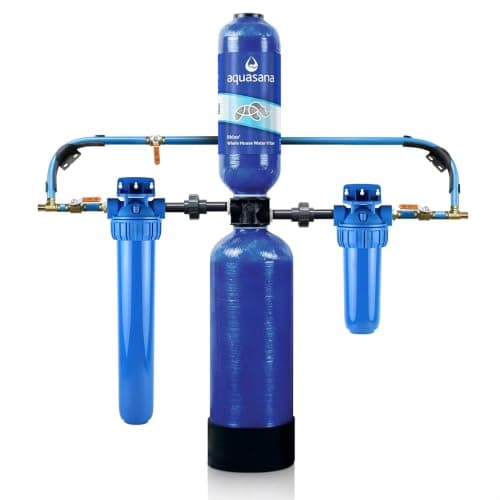 Aquasana Rhino EQ-1000 Whole-House FilterA million gallons of chlorine reduction — and NSF/ANSI 42 is the only health-relevant standard it holds. Aquasana Rhino EQ-1000 Whole-House FilterA million gallons of chlorine reduction — and NSF/ANSI 42 is the only health-relevant standard it holds. | For the whole house | $939.55 - View on Amazon $1,123.00 — 16% off #ad Price as of October 7, 2026. We may earn a commission. Disclosure. |
| 4 | 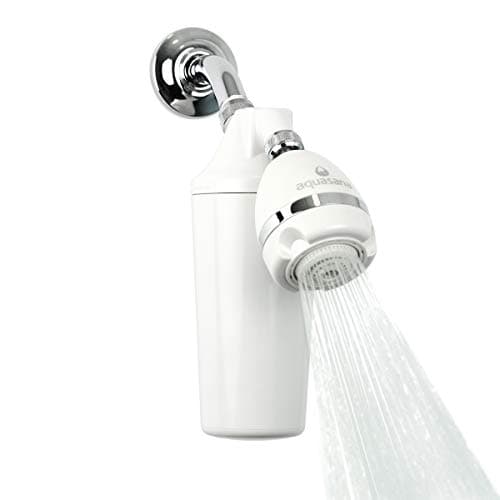 Aquasana AQ-4100 Shower Filter with Shower HeadTested to NSF/ANSI 177 for over 90% of chlorine. That standard covers chlorine and nothing else. Aquasana AQ-4100 Shower Filter with Shower HeadTested to NSF/ANSI 177 for over 90% of chlorine. That standard covers chlorine and nothing else. | For the shower | $64.59 - View on Amazon $79.99 — 19% off #ad Price as of October 7, 2026. We may earn a commission. Disclosure. |
The brand is really one technology and three afterthoughts
Aquasana sells filters for every tier — shower heads, whole-house tanks, under-sink units, a countertop machine, reverse osmosis. Almost all of the certification weight sits in one of them: Claryum, the carbon-block and ion-exchange stack used in the drinking water filters.
The company publishes its own certification table, which is the most useful page it has, and it is worth reading line by line before buying anything.
| Product line | Certifying body | Standards | Claim |
|---|---|---|---|
| Claryum 3-Stage and 2-Stage (under-sink) | WQA | NSF/ANSI 42, 53 (includes P473), 401 | 78 contaminants |
| Claryum Direct Connect | IAPMO | NSF/ANSI 42, 53 (includes P473), 401 | 78 contaminants |
| Clean Water Machine (countertop) | WQA | NSF/ANSI 42, 53, 401 | 78 contaminants |
| SmartFlow reverse osmosis | WQA | NSF/ANSI 42, 53, 58, 401 and CSA B483.1 | 90 contaminants |
| Rhino whole-house | NSF, WQA | NSF/ANSI 42; tank to NSF/ANSI/CAN 61 | Up to 97% of chlorine |
| Rhino Chloramines | NSF, WQA | NSF/ANSI 42 | Up to 83% of chloramines, 97% of chlorine |
| OptimH2O | IAPMO, NSF | NSF/ANSI 53 and 42 | Up to 99% of lead and cysts, 98% of PFOA/PFOS |
| Shower filters | NSF | NSF/ANSI 177 | Up to 90% of chlorine |
Two things jump out of that table, and both matter more than any marketing copy on the product pages.
One: the drinking water filters are genuinely well certified
A claim list of 78 contaminants across NSF/ANSI 42, 53 and 401 is at the top of what carbon block achieves. The 53 listing includes P473, the protocol written specifically for PFOA and PFOS — which is a claim most carbon filters do not hold at all. Aquasana publishes percentages to go with it: 99.6% of lead and microplastics, 99.7% of PFOA and PFOS, 99.995% of cysts, 97.3% of chlorine and 91% of chloramines on the Max Flow version of the 3-Stage.
For context on where that sits: a certified pitcher filter typically holds 42, 53 and 401 for a handful of named contaminants, and the under-sink roundup compares Claryum directly against the alternatives at this tier. The trade is the cartridge: 600 rated gallons on the 3-Stage, which is a short interval by under-sink standards.
Two: the whole-house and shower filters are chlorine products
The Rhino is a large, well-built tank that will run for years, and the only health-relevant standard on its certification line is NSF/ANSI 42 — the aesthetic-effects standard covering chlorine, taste and odor. The tank itself is certified to NSF/ANSI/CAN 61 for material safety, which is a statement about the plastic, not about filtration.
That is not a criticism of the product; it is what point-of-entry carbon does. It is a criticism of how people buy it. If you install a Rhino because you read something about lead or PFAS, you have bought a chlorine filter. The whole-house roundup makes the same point across the category, and the whole-house PFAS page explains why the certified PFAS claims live at the tap instead.
The shower filters are the same shape of claim: tested to NSF/ANSI 177 for over 90% of chlorine, over 10,000 gallons. Standard 177 is the only shower-filter standard that exists and it covers free chlorine only — nothing on a shower arm softens water, whatever the packaging implies.
Tested to, or certified under?
Aquasana's certification page is unusually candid about this, and it is worth quoting the difference rather than paraphrasing it. The Claryum filters are "WQA tested and certified to NSF/ANSI Standards 42, 53 (includes P473), and 401". The base Rhino is "independently tested to NSF/ANSI Standard 42 to remove up to 97% of chlorine". The OptimH2O is "IAPMO tested to NSF/ANSI Standard 53".
A certification means a listing body stands behind the claim with ongoing surveillance and a public listing. Tested to means the product was measured against the standard's method. Both are real evidence; only one is a listing you can look up. What each standard covers is the companion page, and this site applies the same reading to every brand — PUR's faucet sheet has exactly the same wording problem.
Why Aquasana is not in NSF's database
Search NSF's public listings for the trade name Aquasana and you get nothing. We ran that search on the date at the top of this page and it returned no matching products.
That is not a red flag. It is a filing cabinet. Aquasana's drinking water certifications sit with WQA and, for the Direct Connect, with IAPMO R&T — three bodies certify to the same NSF/ANSI standards and each keeps its own directory. The Rhino line does appear under NSF for Standard 42. If you are checking a claim, check the body named on the product, not the one whose initials are in the standard's name. The same thing catches people out with Waterdrop's reverse osmosis systems, which are IAPMO-certified and equally absent from NSF's list.
Which Aquasana product answers which problem
| Your problem | The Aquasana answer | The catch |
|---|---|---|
| Lead, PFAS, chlorine at the kitchen tap | Claryum 3-Stage | 600-gallon cartridges, and a hole in the counter for the faucet |
| The same, but you cannot drill | Claryum Direct Connect | Slightly shorter rated life; it feeds your existing faucet |
| Chlorine everywhere in the house | Rhino whole-house | NSF/ANSI 42 only — not a lead or PFAS product |
| Chloramine, not chlorine | Rhino Chloramines | Up to 83%, which is lower than the chlorine figure |
| Dry skin and hair in the shower | AQ-4100 shower filter | Chlorine only; it does nothing about hardness |
| Fluoride, nitrate or dissolved solids | Not a Claryum product | Aquasana points you at reverse osmosis, and it is right |
What it costs to keep running
This is where Aquasana is expensive, and it is worth knowing before rather than after. The Claryum cartridge set is proprietary and rated at 600 gallons — about six months for a household that drinks and cooks with filtered water. The Rhino replacement is a large annual or multi-year part. Nothing here uses a standard ten-inch cartridge you can shop around for.
What reverse osmosis actually costs runs the same arithmetic for the RO tier, and the whole-house cost page does it for point-of-entry systems including the Rhino.
The cost-per-gallon math
A household drinking and cooking with two gallons a day uses about 730 gallons a year.
At 600 rated gallons, the Claryum 3-Stage set is a little over one change a year on drinking water alone — and considerably more if the filtered tap is also used for washing produce and filling pots, which is the usual pattern once the tap is there. Divide the cartridge price by 600 and compare that to the certified alternatives before you commit, because the purchase price is the smaller number over five years.
We show the arithmetic rather than a verdict so you can redo it with the price you actually pay. Filter prices move; the rated capacities above do not.
The picks in full
The one to buy
Aquasana Claryum 3-Stage Under-Sink Filter (AQ-5300)
Aquasana
Carbon-block filtration rather than reverse osmosis: it keeps the minerals, wastes nothing, and fits where a reverse-osmosis system will not. It also cannot do what RO does for fluoride or nitrate.
Certification status
WQA tested and certified to NSF/ANSI 42, 53 — which includes the P473 protocol for PFOA and PFOS — and 401, for the reduction of 78 contaminants. Aquasana publishes 99.6% for lead and microplastics, 99.7% for PFOA and PFOS, 99.99% for cysts and 97% for chlorine across the Claryum 3-Stage line.
Published specifications
| Filter life | 600 gallons / up to 6 months |
|---|---|
| Certified standards | NSF/ANSI 42, 53 (includes P473), 401 (WQA) |
| Flow rate | 0.5 gpm |
| Wastewater | None |
| Format | 3-stage carbon block with a dedicated faucet |
| Contaminants claimed | 78 |
| Lead / PFOA and PFOS | 99.6% / 99.7% |
What we like
- No drain line, no wastewater, no tank — much easier to install than reverse osmosis
- NSF/ANSI 401 certification covers pharmaceutical-class trace compounds
- Full flow rate, unlike reverse osmosis, so filling a pot is not a project
What we do not
- Not reverse osmosis: no meaningful fluoride, nitrate or TDS reduction
- 600-gallon filter life is short next to an inline system's tens of thousands
- Proprietary cartridges
Skip it if
Anyone whose problem is fluoride, nitrate or total dissolved solids. Carbon block does not remove those; you need reverse osmosis for that job.
$349.99 — 56% off
#ad Price as of October 7, 2026. We may earn a commission. Disclosure.
If you cannot drill
Aquasana Claryum Direct Connect (AQ-MF-1)
Aquasana
The same filtration Aquasana sells in its dedicated-faucet systems, plumbed into the cold line feeding the tap you already have. No counter drilling, no extra spout, and the certification list stays intact — which is rare in the direct-connect category, where most products are taste filters.
Certification status
Aquasana states the Claryum Direct Connect is IAPMO certified to NSF/ANSI Standards 42, 53 (which includes the P473 PFOA and PFOS protocol) and 401, for the reduction of 78 contaminants. Note the certifying body: the dedicated-faucet Claryum systems are certified by WQA, and this one by IAPMO R&T, so neither appears in NSF's own listing database.
Published specifications
| Rated filter life | 784 gallons / up to 6 months |
|---|---|
| Certified standards | NSF/ANSI 42, 53 (includes P473) and 401 (IAPMO) |
| Contaminants claimed | 78 |
| Flow rate | 1.5 gpm |
| Format | Direct connect to the existing cold line — no separate faucet |
| Dimensions | 3" wide x 20" tall |
| Wastewater | None |
| Fluoride | No claim — Aquasana points to reverse osmosis instead |
What we like
- A 78-contaminant certified claim list, including PFOA and PFOS under P473, without a second faucet
- 1.5 gpm is fast for a filter of this size, so filling a pot is not a wait
- No drain line and no wastewater, unlike reverse osmosis in the same cabinet
What we do not
- Every drop through the kitchen tap runs through the cartridge, including water for washing up, which uses up the 784 gallons faster than the six-month figure suggests
- Proprietary cartridge, so Aquasana sets the replacement price for the life of the unit
- No fluoride, nitrate or dissolved-solids reduction — carbon block cannot reach them
- At 20 inches tall it needs real clearance under the sink
Skip it if
Fluoride, nitrate or hardness, and anyone who wants a filtered tap separate from the one they wash dishes at — a dedicated-faucet system uses its cartridge far more slowly.
$249.99 — 60% off
#ad Price as of October 7, 2026. We may earn a commission. Disclosure.
For the whole house
Aquasana Rhino EQ-1000 Whole-House Filter
Aquasana
A million-gallon point-of-entry filter for chlorinated municipal supply. It fixes the shower and the laundry as well as the kitchen tap, and it does not pretend to be a health-contaminant system.
Certification status
Certified by NSF International to NSF/ANSI 42, with the tank certified to NSF/ANSI 61 for material safety. NSF/ANSI 42 is an aesthetic-effects standard — taste, odor and chlorine — not a health-effects claim.
Published specifications
| Rated capacity | 1,000,000 gallons / up to 10 years |
|---|---|
| Rated flow | 7.0 gpm |
| Max operating pressure | 100 psi |
| Operating temperature | 40-90 degrees F |
| Dimensions | 46" L x 9" W x 44" H, 44.1 lb |
| Certified standards | NSF/ANSI 42; tank to NSF/ANSI 61 |
| Published chlorine reduction | Greater than 97% |
What we like
- Ten years or a million gallons before the main media is due — effectively no maintenance routine
- Treats every tap, so showers and laundry benefit, not just drinking water
- NSF/ANSI 61 material certification on the tank
What we do not
- NSF/ANSI 42 only — this is a chlorine and aesthetics system, not a lead or PFAS system
- Needs a main-line install, usually a plumber, and space where the water enters
- Does nothing for hardness
Skip it if
Anyone buying it to solve lead, PFAS or hard water. It is certified for aesthetic effects. Pair it with an under-sink system for drinking-water health contaminants, and a softener for hardness.
$1,123.00 — 16% off
#ad Price as of October 7, 2026. We may earn a commission. Disclosure.
Where these specifications came from
For the shower
Aquasana AQ-4100 Shower Filter with Shower Head
Aquasana
The only shower filter we found with a published figure against the only standard that exists for the category. It is also slower than the shower you have now, and that is the trade nobody mentions.
Certification status
Aquasana states the AQ-4100 is independently tested to NSF/ANSI Standard 177 to reduce over 90% of chlorine for 10,000 gallons or up to six months, and that its filtration media is NSF/ANSI certified to Standard 61 for materials safety. Tested to, not certified under — and Standard 61 covers what the media is made of, not what it removes.
Published specifications
| Rated capacity | 10,000 gallons / up to 6 months |
|---|---|
| Chlorine reduction | Over 90% (NSF/ANSI 177 test) |
| Rated flow | 1.75 gpm |
| Operating pressure | 30-80 psi |
| Maximum water temperature | 115 degrees F |
| Media | KDF-55 plus coconut shell carbon |
| Fitting | Standard 1/2 inch shower arm |
What we like
- A published chlorine figure against NSF/ANSI 177 — more evidence than most of this category offers
- KDF-55 works at shower temperatures, where plain carbon performs poorly
- Sold with a head, without a head, or as a handheld wand, so it fits whatever you already have
What we do not
- Tested to the standard rather than certified under it, and Aquasana is clear about the wording
- 1.75 gpm rated flow is below a standard US shower head, and some owners notice
- No claim for chloramine, which is what many utilities actually use
- Nothing here softens water — hardness passes straight through
Skip it if
Anyone whose complaint is scale on the glass or a squeaky-clean drag on the skin. That is hardness, and no shower filter removes calcium and magnesium.
$79.99 — 19% off
#ad Price as of October 7, 2026. We may earn a commission. Disclosure.
Questions people actually ask
Is Aquasana NSF certified?
Its drinking water filters are certified by WQA and IAPMO R&T to NSF/ANSI standards, not by NSF itself — searching NSF's own listings for the trade name Aquasana returns no matching products. The Rhino whole-house line is listed by NSF for Standard 42. All three bodies certify to the same standards; the certificate names which one did the work.
What does Claryum actually remove?
Aquasana states the Claryum filters are WQA tested and certified to NSF/ANSI 42, 53 (including the P473 PFOA/PFOS protocol) and 401 for 78 contaminants, with published figures of 99.6% for lead and microplastics, 99.7% for PFOA and PFOS, and 97.3% for chlorine. It does not remove fluoride, and Aquasana says so.
Does the Aquasana whole-house filter remove lead?
No. The Rhino's certification line covers NSF/ANSI 42 — chlorine, taste and odor — with the tank certified to NSF/ANSI/CAN 61 for materials. If lead is your reason for filtering, the certified answer is a point-of-use filter at the kitchen tap, not a tank in the garage.
How long do Aquasana filters last?
The Claryum 3-Stage cartridge set is rated at 600 gallons or up to six months; the Direct Connect at 784 gallons or six months; the shower filter at 10,000 gallons or six months; the Rhino at 1,000,000 gallons or up to ten years. Rated gallons is the number that matters — the month figure assumes average use.
Is Aquasana better than Brita?
For claim breadth at the kitchen tap, yes: 78 certified contaminants including a P473 PFOA/PFOS claim, against a Brita Elite pitcher certified for a much shorter list. It is also a plumbed system at several times the price, with a 600-gallon cartridge. If chlorine taste is the whole problem, the pitcher is the rational purchase.
Does Aquasana remove fluoride?
No Claryum filter does, and Aquasana's own product pages say so, pointing to its reverse osmosis line instead. Fluoride is a small dissolved ion that carbon does not adsorb, which is a limit of the technology rather than of this brand.
Sources
- Aquasana — certified products, body and standards by product line
- Aquasana — Claryum 3-Stage under-sink water filter specifications
- Aquasana — Claryum Direct Connect under-sink water filter (AQ-MF-1)
- NSF — certified drinking water treatment units, trade name Aquasana (no matching products)
- NSF — Certified Products and Systems