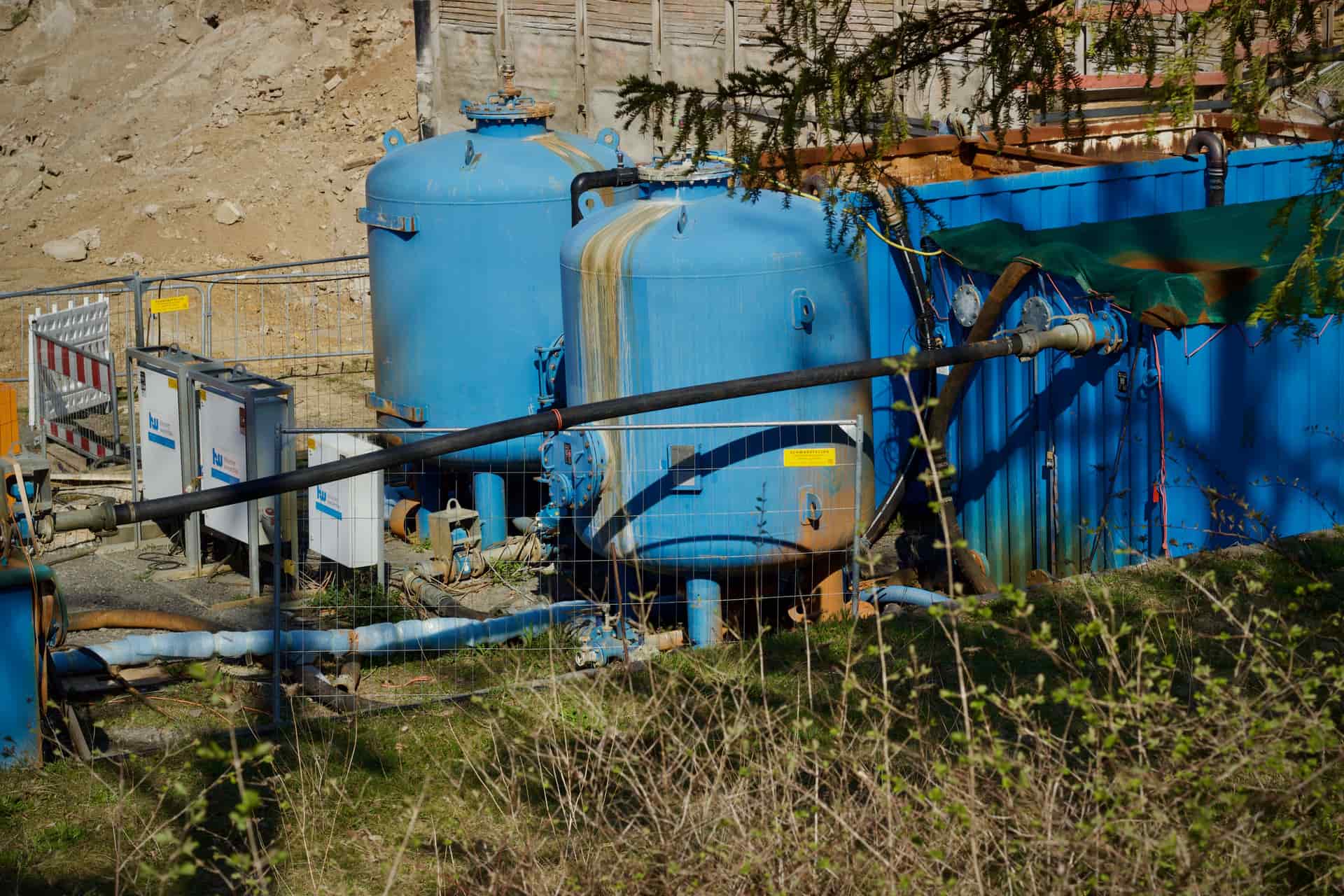
Whole-house carbon does reduce PFAS to a degree, but almost nothing at this tier carries an NSF/ANSI 53 or P473 certification naming PFOA and PFOS. The certified options are point-of-use. If PFAS is your reason for filtering, that is where the evidence is.
Quick picks
Tap any row to jump to the full write-up. The button goes straight to the retailer.
| # | Product | Best for | Price |
|---|---|---|---|
| 1 | 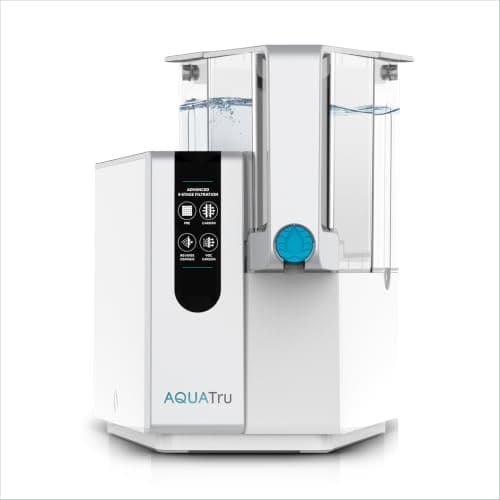 AquaTru Classic Countertop Reverse Osmosis PurifierIAPMO certified to NSF/ANSI 53, 58, 401 and P473 — the protocol written for PFOA and PFOS. AquaTru Classic Countertop Reverse Osmosis PurifierIAPMO certified to NSF/ANSI 53, 58, 401 and P473 — the protocol written for PFOA and PFOS. | Best certified answer | $403.75 - View on Amazon $475.00 — 15% off #ad Price as of October 7, 2026. We may earn a commission. Disclosure. |
| 2 | 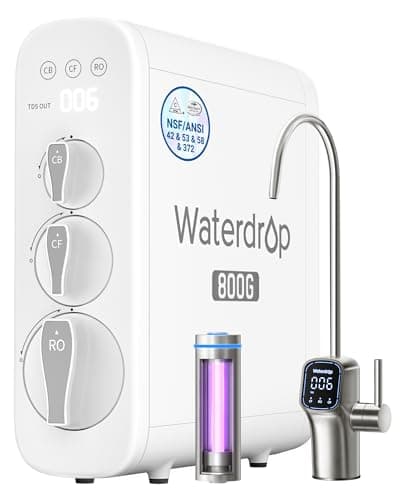 Waterdrop G3P800 Tankless Reverse Osmosis SystemReverse osmosis certified by IAPMO R&T to NSF/ANSI 42, 53 and 58, under the sink you drink from. Waterdrop G3P800 Tankless Reverse Osmosis SystemReverse osmosis certified by IAPMO R&T to NSF/ANSI 42, 53 and 58, under the sink you drink from. | Best plumbed-in option | $699.00 - View on Amazon $999.00 — 30% off #ad Price as of October 7, 2026. We may earn a commission. Disclosure. |
| 3 | Sno photoSpringWell CF1 Whole-House Carbon FilterCatalytic carbon and KDF with published lab data — but no system-level PFAS certification. | Best whole-house carbon | Sold direct by SpringWell Water. No affiliate link, so nothing to click and nothing for us to earn. The maker's page is in the sources below. Disclosure. |
| 4 | 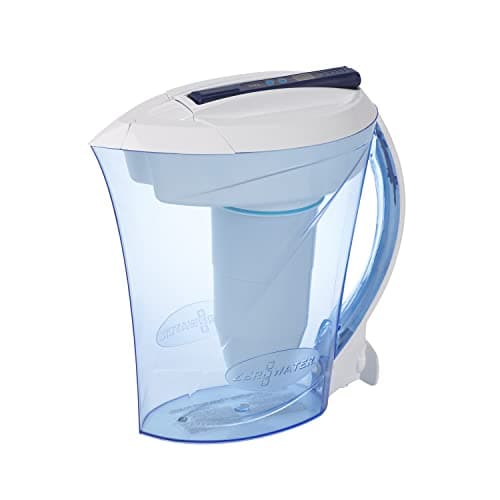 ZeroWater 10-Cup Ready-Pour PitcherIAPMO certified for PFOA and PFOS at 99%, with a TDS meter to tell you when it is done. ZeroWater 10-Cup Ready-Pour PitcherIAPMO certified for PFOA and PFOS at 99%, with a TDS meter to tell you when it is done. | Cheapest certified route | $28.99 - View on Amazon $59.98 — 52% off #ad Price as of October 7, 2026. We may earn a commission. Disclosure. |
The certification problem, stated plainly
PFAS reduction is certifiable. Two routes exist: NSF/ANSI 53 with a specific PFOA and PFOS claim, and NSF/ANSI P473, the protocol written for those two compounds. Both are point-of-use standards, and the products that hold them are pitchers, countertop units and under-sink systems.
At the point of entry, the picture is thin. The big carbon tanks on this site publish media specifications and, in some cases, their own laboratory results — which is real information — but not a system-level certification naming PFOA and PFOS. That is the difference between a number a manufacturer measured and a claim a listing body audits.
| Product | PFAS evidence | Tier |
|---|---|---|
| AquaTru Classic | IAPMO certified, includes NSF/ANSI P473 | Countertop |
| ZeroWater 5-stage | IAPMO certified under NSF/ANSI 53, 99% PFOA/PFOS | Pitcher |
| Waterdrop G3P800 | IAPMO R&T certified to 42, 53 and 58 | Under-sink RO |
| SpringWell CF1 | Manufacturer media specs and published lab data, no system certification | Whole-house |
| Aquasana Rhino EQ-1000 | Independently tested to NSF/ANSI 42 for chlorine — no PFAS claim | Whole-house |
What whole-house carbon does and does not do about PFAS
Granular activated carbon does adsorb PFOA and PFOS — that is established treatment chemistry, and it is what municipal utilities use at scale. The complications at household scale are contact time and breakthrough.
A point-of-entry tank is sized for household flow rates, which means water moves through the bed quickly. Long-chain PFAS like PFOA and PFOS adsorb reasonably well; short-chain compounds adsorb poorly and break through earlier. And because nothing tells you when breakthrough has happened, a tank rated at a million gallons for chlorine has no corresponding number for PFAS.
That is the honest summary: a whole-house carbon system probably reduces some PFAS for some period, and neither of those quantities is published for any system we could verify.
Where the certified answers are
All at the tap, and cheaper than the tank.
- Countertop reverse osmosis — the AquaTru carries NSF/ANSI P473 in its certification list and needs no plumbing at all.
- Under-sink reverse osmosis — a membrane rejects PFAS by size and charge rather than adsorbing it, so there is no saturated-bed failure mode.
- A certified pitcher — ZeroWater publishes 99% for PFOA and PFOS under an IAPMO certification, for the price of a few cartridges.
The PFAS roundup compares those three routes properly, and the PFAS explainer covers what the 2024 EPA rule actually requires of your utility, which is the context most of this shopping happens without.
When a whole-house system is still the right buy
Plenty of reasons, just not this one. Chlorine and chloramine at every fixture, sediment, taste and odor throughout the house, protecting appliances, a shower that smells like a pool — those are exactly what point-of-entry carbon is for, and the whole-house roundup ranks the systems on them.
The sensible configuration for a household worried about PFAS is both: a point-of-entry system for the house-wide aesthetics, and a certified point-of-use system on the drinking tap where the evidence and the exposure both are. Buying only the tank, for PFAS, is the combination that spends the most and proves the least.
The cost-per-gallon math
This is one of the few places on the site where the cheaper product is also the better evidence.
A whole-house carbon tank is the largest single purchase in home filtration, plus installation, and for PFAS specifically it buys you an unquantified reduction with no certification and no breakthrough indicator.
A certified pitcher is a fraction of that, a countertop RO unit a fraction again of a tank, and both carry PFAS claims audited by a listing body. Whatever you conclude about how much PFAS matters to you, the cost-per-unit-of-evidence runs the opposite way to the price tag.
We show the arithmetic rather than a verdict so you can redo it with the price you actually pay. Filter prices move; the rated capacities above do not.
The picks in full
Best certified answer
AquaTru Classic Countertop Reverse Osmosis Purifier
AquaTru
Reverse osmosis performance with no plumbing, no drilling and no landlord conversation. You pay for that with counter space, a wait, and two tanks you fill and empty by hand.
Certification status
Certified by IAPMO to NSF/ANSI 53, 58, 401 and P473, covering lead, reverse-osmosis performance, emerging compounds and the PFOA/PFOS protocol.
Published specifications
| Filtration | 4-stage countertop reverse osmosis |
|---|---|
| Clean water tank | 0.75 gallons |
| Tap water tank | 1 gallon |
| Installation | None — no plumbing connection |
| Certified standards | NSF/ANSI 53, 58, 401, P473 (IAPMO) |
What we like
- Real reverse osmosis with a P473 PFOA/PFOS certification and zero installation
- The strongest answer available to a renter with a lead or PFAS problem
- No drilling, no drain saddle, no landlord permission needed
What we do not
- Takes up substantial counter space
- You refill and empty tanks by hand — it is not on-demand
- Highest purchase price in the no-plumbing tier by a wide margin
Skip it if
Anyone who can plumb in an under-sink system. A permanent under-sink RO is cheaper per gallon, on-demand, and out of sight. Buy this when you genuinely cannot install.
$475.00 — 15% off
#ad Price as of October 7, 2026. We may earn a commission. Disclosure.
Where these specifications came from
Best plumbed-in option
Waterdrop G3P800 Tankless Reverse Osmosis System
Waterdrop
Tankless reverse osmosis that gives back the cupboard a pressure tank would eat, fills a glass without the pause, and sends markedly less water down the drain than a classic tank system.
Certification status
Certified to NSF/ANSI 42 for chlorine reduction, NSF/ANSI 53 and 58 for TDS, fluoride, cadmium, hexavalent chromium and selenium, and NSF/ANSI 372 for lead-free materials.
Published specifications
| Output | 800 GPD |
|---|---|
| Pure-to-drain ratio | 3:1 |
| Format | Tankless — no pressure tank |
| Certified standards | NSF/ANSI 42, 53, 58, 372 |
| Installation | Two holes: smart LED faucet and drain |
| Faucet | Included, with TDS display |
What we like
- No pressure tank, so it fits cabinets a tank system cannot
- 3:1 pure-to-drain is far better than the ratio typical of older reverse osmosis
- 800 GPD means no waiting for a tank to refill
What we do not
- Needs a power outlet under the sink — a real constraint in older kitchens
- Proprietary filter cartridges, so you are tied to Waterdrop's pricing
- Requires drilling for the included faucet unless you have a spare hole
Skip it if
Renters, and anyone with no outlet under the sink. It is a permanent, powered installation — a countertop unit is the answer if you cannot commit to that.
$999.00 — 30% off
#ad Price as of October 7, 2026. We may earn a commission. Disclosure.
Where these specifications came from
Best whole-house carbon
SpringWell CF1 Whole-House Carbon Filter
SpringWell
Catalytic carbon and KDF rather than plain carbon, which is the meaningful difference on chloraminated supply. Sold direct rather than through Amazon, and we earn nothing when you buy it.
Certification status
SpringWell publishes its own media specifications rather than a system-level NSF certification listing for the CF1. Treat the contaminant list as manufacturer claim, not certified performance, and weigh it accordingly.
Published specifications
| Sizing | CF1 covers 1-3 bathrooms |
|---|---|
| Rated capacity | 1,000,000 gallons / about 10 years of media life |
| Service flow | 9 gpm |
| Tank | 9" diameter x 48" (52" with the head) |
| Connection size | 1" |
| Operating pressure | 25-80 psi |
| Media | 4-stage catalytic carbon and KDF |
| Warranty | Lifetime on tanks and valves |
What we like
- Catalytic carbon handles chloramine, which standard activated carbon struggles with
- Lifetime warranty on tanks and valves
- Works down to 25 psi, lower than most point-of-entry systems
What we do not
- No system-level NSF certification listing published — the contaminant list is manufacturer claim
- Direct-sale only; not reliably available on Amazon
- We earn no commission on this link, which is worth knowing when you read the recommendation
Skip it if
Well water. The CF1 is a city-water filter — a well with iron or sulfur needs an oxidizing system, not a carbon tank, and putting one in front of untreated well water fouls the media.
Sold direct by SpringWell Water. No affiliate link, so nothing to click and nothing for us to earn. The maker's page is in the sources below. Disclosure.
Where these specifications came from
Cheapest certified route
ZeroWater 10-Cup Ready-Pour Pitcher
ZeroWater
The only mainstream pitcher that hands you a TDS meter and invites you to check its work. It buys you a PFOA/PFOS certification the Brita Elite does not have, and it costs you filter life.
Certification status
The 5-stage filter is system-certified by IAPMO against NSF/ANSI 42 for chlorine taste and odor and NSF/ANSI 53 for lead, hexavalent chromium, mercury and PFOA/PFOS.
Published specifications
| Filtration | 5-stage, including ion-exchange resin |
|---|---|
| Rated filter life | About 15-20 gallons, varying with source TDS |
| Certified standards | NSF/ANSI 42 and 53 (IAPMO) |
| PFOA / PFOS | Certified under NSF/ANSI 53 |
| Published reduction — PFOA/PFOS | 99% |
| Published reduction — lead | 95% |
| Published reduction — chromium 6 | 99% |
| Included | Handheld TDS meter |
What we like
- Carries a PFOA/PFOS certification, which the Brita Elite does not
- The bundled TDS meter turns 'is it still working' from a guess into a reading
- Ion exchange drives total dissolved solids far lower than carbon alone
What we do not
- Filter life is the shortest of any pitcher here, and it collapses further on hard or high-TDS water
- Cost per gallon is the highest in the pitcher tier as a result
- Some owners find the taste flat or faintly sour at very low TDS — a real preference issue, not a defect
Skip it if
Anyone on hard, high-TDS water who will not tolerate changing a filter every few weeks. On 400+ ppm supply the running cost is genuinely painful and an under-sink system is cheaper inside a year.
$59.98 — 52% off
#ad Price as of October 7, 2026. We may earn a commission. Disclosure.
Where these specifications came from
Questions people actually ask
Does a whole house water filter remove PFAS?
Granular activated carbon adsorbs PFOA and PFOS to a degree, but no point-of-entry system we could verify carries an NSF/ANSI 53 or P473 certification naming them, and none publishes a capacity figure for PFAS. Treat whole-house PFAS reduction as plausible and unquantified.
What is NSF/ANSI P473?
It is the protocol written specifically to test drinking water treatment units for PFOA and PFOS reduction. Products holding it have been verified by a listing body against those two compounds — the AquaTru Classic is the certified option on this page.
Should I filter PFAS at the whole house or just the tap?
The tap, if PFAS is your reason. Ingestion is the exposure route the standards and the regulation are built around, the certified products are all point-of-use, and treating every gallon entering the building to change the two liters you drink is the most expensive way to buy the least evidence.
Is the SpringWell CF1 certified for PFAS?
No. SpringWell publishes media specifications and its own laboratory results rather than a system-level certification listing for the CF1, which is why this page ranks it as the best whole-house carbon option and not as a certified PFAS answer.
Does showering in PFAS water matter?
The regulatory limits and the certification protocols are built around ingestion, and that is where the evidence is. We are not going to tell you dermal exposure is zero risk, and we are not going to pretend a certification exists for it — if you want to reduce what you drink, that is the claim these products can actually support.