Aquasana's Claryum 3-Stage is WQA certified to NSF/ANSI 42, 53 and 401 for 78 contaminants including PFOA and PFOS, with no wastewater. Waterdrop's G3P800 is IAPMO certified to 42, 53 and 58 and reaches fluoride and dissolved solids, which carbon cannot. The technology decides it, not the brand.
Quick picks
Tap any row to jump to the full write-up. The button goes straight to the retailer.
| # | Product | Best for | Price |
|---|---|---|---|
| 1 | 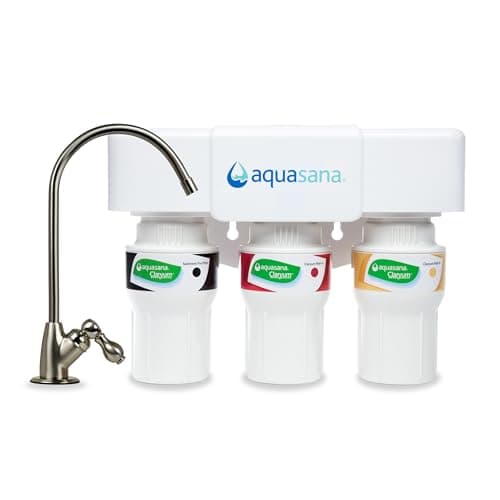 Aquasana Claryum 3-Stage Under-Sink Filter (AQ-5300)WQA certified to 42, 53 with P473 and 401 — 78 contaminants, full flow, no wastewater. Aquasana Claryum 3-Stage Under-Sink Filter (AQ-5300)WQA certified to 42, 53 with P473 and 401 — 78 contaminants, full flow, no wastewater. | If carbon is enough | $154.99 - View on Amazon $349.99 — 56% off #ad Price as of October 6, 2026. We may earn a commission. Disclosure. |
| 2 | 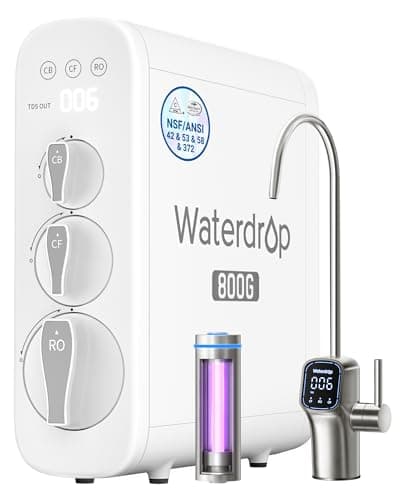 Waterdrop G3P800 Tankless Reverse Osmosis SystemIAPMO certified to 42, 53 and 58, tankless at 800 GPD with a 3:1 pure-to-drain ratio. Waterdrop G3P800 Tankless Reverse Osmosis SystemIAPMO certified to 42, 53 and 58, tankless at 800 GPD with a 3:1 pure-to-drain ratio. | If you need fluoride or TDS | $699.00 - View on Amazon $999.00 — 30% off #ad Price as of October 6, 2026. We may earn a commission. Disclosure. |
| 3 | 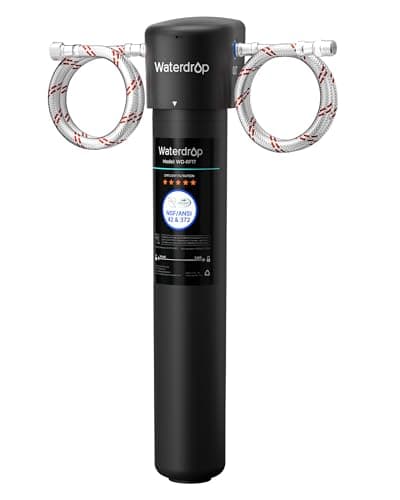 Waterdrop 17UA Direct-Connect Under-Sink Filter24,000 rated gallons for taste and odor — an NSF/ANSI 42 claim level and nothing more. Waterdrop 17UA Direct-Connect Under-Sink Filter24,000 rated gallons for taste and odor — an NSF/ANSI 42 claim level and nothing more. | The cheap long-life option | Check price on Amazon #ad We do not show a price we cannot verify today. We may earn a commission. Disclosure. |
This is a technology comparison wearing two brand names
Aquasana's reputation rests on Claryum, a carbon block and ion-exchange stack. Waterdrop's rests on tankless reverse osmosis. Comparing the brands without naming the technology produces nonsense, because the honest answer changes with the contaminant on your report.
| Aquasana Claryum 3-Stage | Waterdrop G3P800 | |
|---|---|---|
| Technology | Carbon block plus ion exchange | Tankless reverse osmosis |
| Certified by | WQA | IAPMO R&T |
| Standards | NSF/ANSI 42, 53 (includes P473), 401 | NSF/ANSI 42, 53, 58, plus 372 for materials |
| Headline claim | 78 contaminants | TDS reduction, with fluoride among the named claims |
| Fluoride | No claim | Named in the claim list |
| PFOA / PFOS | Certified under P473 | Covered by the 53 listing |
| Wastewater | None | Yes, published at 3:1 in the product's favor |
| Minerals left in | Yes | No, unless remineralized |
| Cartridge life | 600 gallons | 550 / 1,100 / 2,200 gallons across three stages |
| Power needed | No | Yes |
What carbon block does better
- No wastewater. Every gallon you filter is a gallon you drink. Reverse osmosis sends some to the drain by design.
- Full flow. A carbon block delivers at tap speed; a tank system delivers at tank speed and then refills.
- Minerals stay in. No flat taste, no remineralizing cartridge to buy.
- Simpler install. No drain saddle, no tank, no power.
What reverse osmosis does better
- Fluoride. Carbon does not adsorb it at any price — this is the clearest dividing line between the two technologies.
- Nitrate, arsenic and dissolved solids. The same physics: these are dissolved ions, and a membrane rejects what carbon cannot hold.
- Breadth. An RO system with a 58 certification covers a different and generally wider class of contaminant than any carbon block.
Which brand, if you have already decided on the technology
For carbon block: Aquasana's Claryum line is the stronger product. Waterdrop's direct-connect carbon filters are listed under NSF/ANSI 42 — taste and odor — against Claryum's 42, 53 and 401. If the claim list is what you are buying, Aquasana wins this half outright.
For reverse osmosis: Waterdrop. Aquasana does sell reverse osmosis, but Waterdrop's tankless line is the better-developed product with the better published drain ratio, and the G3P800 review covers the installation constraints.
For cheapest running cost: neither flagship. The Waterdrop 17UA direct-connect filter is rated at 24,000 gallons, which is dozens of times either flagship's cartridge life — at a taste-and-odor claim level, which is the catch.
The honest decision procedure
Read your water report first. It is published annually and it names the contaminants your utility measured.
- Fluoride, nitrate, arsenic or high TDS on the report — reverse osmosis, so Waterdrop.
- Lead, PFAS, chlorine, pharmaceuticals — certified carbon block is enough, so Aquasana, with no wastewater and full flow.
- Nothing specific, just taste — the cheapest certified filter in either range, or a pitcher.
The cost-per-gallon math
A household drinking two gallons a day uses about 730 gallons a year. The Claryum cartridge set is rated at 600 gallons, so that is a little over one set a year. The G3P800 runs three cartridges on 6, 12 and 24-month intervals plus the wastewater it sends to the drain.
Neither is expensive per gallon next to a pitcher. The real cost difference is the purchase price and the install, and the real decision is the contaminant — which is why this comparison keeps returning to the report rather than the price tag.
We show the arithmetic rather than a verdict so you can redo it with the price you actually pay. Filter prices move; the rated capacities above do not.
The picks in full
If carbon is enough
Aquasana Claryum 3-Stage Under-Sink Filter (AQ-5300)
Aquasana
Carbon-block filtration rather than reverse osmosis: it keeps the minerals, wastes nothing, and fits where a reverse-osmosis system will not. It also cannot do what RO does for fluoride or nitrate.
Certification status
WQA tested and certified to NSF/ANSI 42, 53 — which includes the P473 protocol for PFOA and PFOS — and 401, for the reduction of 78 contaminants. Aquasana publishes 99.6% for lead and microplastics, 99.7% for PFOA and PFOS, 99.99% for cysts and 97% for chlorine across the Claryum 3-Stage line.
Published specifications
| Filter life | 600 gallons / up to 6 months |
|---|---|
| Certified standards | NSF/ANSI 42, 53 (includes P473), 401 (WQA) |
| Flow rate | 0.5 gpm |
| Wastewater | None |
| Format | 3-stage carbon block with a dedicated faucet |
| Contaminants claimed | 78 |
| Lead / PFOA and PFOS | 99.6% / 99.7% |
What we like
- No drain line, no wastewater, no tank — much easier to install than reverse osmosis
- NSF/ANSI 401 certification covers pharmaceutical-class trace compounds
- Full flow rate, unlike reverse osmosis, so filling a pot is not a project
What we do not
- Not reverse osmosis: no meaningful fluoride, nitrate or TDS reduction
- 600-gallon filter life is short next to an inline system's tens of thousands
- Proprietary cartridges
Skip it if
Anyone whose problem is fluoride, nitrate or total dissolved solids. Carbon block does not remove those; you need reverse osmosis for that job.
$349.99 — 56% off
#ad Price as of October 6, 2026. We may earn a commission. Disclosure.
If you need fluoride or TDS
Waterdrop G3P800 Tankless Reverse Osmosis System
Waterdrop
Tankless reverse osmosis that gives back the cupboard a pressure tank would eat, fills a glass without the pause, and sends markedly less water down the drain than a classic tank system.
Certification status
Certified to NSF/ANSI 42 for chlorine reduction, NSF/ANSI 53 and 58 for TDS, fluoride, cadmium, hexavalent chromium and selenium, and NSF/ANSI 372 for lead-free materials.
Published specifications
| Output | 800 GPD |
|---|---|
| Pure-to-drain ratio | 3:1 |
| Format | Tankless — no pressure tank |
| Certified standards | NSF/ANSI 42, 53, 58, 372 |
| Installation | Two holes: smart LED faucet and drain |
| Faucet | Included, with TDS display |
What we like
- No pressure tank, so it fits cabinets a tank system cannot
- 3:1 pure-to-drain is far better than the ratio typical of older reverse osmosis
- 800 GPD means no waiting for a tank to refill
What we do not
- Needs a power outlet under the sink — a real constraint in older kitchens
- Proprietary filter cartridges, so you are tied to Waterdrop's pricing
- Requires drilling for the included faucet unless you have a spare hole
Skip it if
Renters, and anyone with no outlet under the sink. It is a permanent, powered installation — a countertop unit is the answer if you cannot commit to that.
$999.00 — 30% off
#ad Price as of October 6, 2026. We may earn a commission. Disclosure.
Where these specifications came from
The cheap long-life option
Waterdrop 17UA Direct-Connect Under-Sink Filter
Waterdrop
The answer to the most common under-sink objection: it plumbs into the cold line feeding the faucet you already have, so there is no extra tap, no drilled counter and nothing visible.
Certification status
The 17 series is certified against NSF/ANSI 42 for chlorine reduction and NSF/ANSI 372 for lead-free materials. Verify the listing for the specific variant before buying — the 17UB (dedicated faucet) and 17UA (direct connect) are listed separately.
Published specifications
| Rated capacity | 24,000 gallons / about 3 years |
|---|---|
| Format | Direct connect to the existing cold line — no separate faucet |
| Certified standards | NSF/ANSI 42, 372 |
| Connection | Quick-connect fittings, no threading |
What we like
- No counter drilling and no second tap — the single biggest objection to under-sink filtration, removed
- 24,000-gallon rated capacity means a filter change roughly every three years
- Quick-connect install is a genuinely realistic first-time DIY job
What we do not
- NSF/ANSI 42 is an aesthetic standard — chlorine, taste and odor, not a health claim
- Filters everything the tap delivers, including draws for cooking, which shortens life
- Not a lead or PFAS answer at this certification level
Skip it if
Anyone with a health-driven contaminant worry. NSF/ANSI 42 covers taste and odor. If lead or PFAS is the reason you are shopping, this is the wrong tier of certification.
#ad We do not show a price we cannot verify today. We may earn a commission. Disclosure.
Where these specifications came from
Questions people actually ask
Is Aquasana or Waterdrop better?
For carbon block filtration, Aquasana: its Claryum line is WQA certified to NSF/ANSI 42, 53 including P473 and 401 for 78 contaminants, against Waterdrop's NSF/ANSI 42 listings on its direct-connect filters. For reverse osmosis, Waterdrop: its tankless G3P800 is IAPMO certified to 42, 53 and 58 and reaches fluoride, which no carbon block does.
Does Aquasana remove fluoride?
No. Aquasana states its Claryum filters do not remove fluoride and points buyers to its reverse osmosis line. That is a limit of carbon block rather than of the brand — fluoride is a small dissolved ion that carbon does not adsorb.
Which wastes less water?
Aquasana, by definition: a carbon block produces no wastewater at all. Waterdrop's G3P800 publishes a 3:1 pure-to-drain ratio, which is good for reverse osmosis but still means water goes to the drain for every gallon produced.
Which has the longer filter life?
Within these two flagships, the Waterdrop's three cartridges run 550, 1,100 and 2,200 gallons against the Claryum set's 600. The longest-lived product either brand sells is the Waterdrop 17UA direct-connect filter at 24,000 gallons, which carries only a taste and odor claim.
Do I need both?
Some households do run a carbon block at one tap and reverse osmosis at another, but it is unusual. The more common pairing is a whole-house filter or softener plus one point-of-use system, matched to whatever the water report actually shows.