There is exactly one NSF/ANSI standard for shower filtration — 177 — and it covers free available chlorine and nothing else. Two mainstream filters publish figures against it. The rest of the category, including the best-sellers, publishes marketing. None of them softens water.
Quick picks
Tap any row to jump to the full write-up. The button goes straight to the retailer.
| # | Product | Best for | Price |
|---|---|---|---|
| 1 | 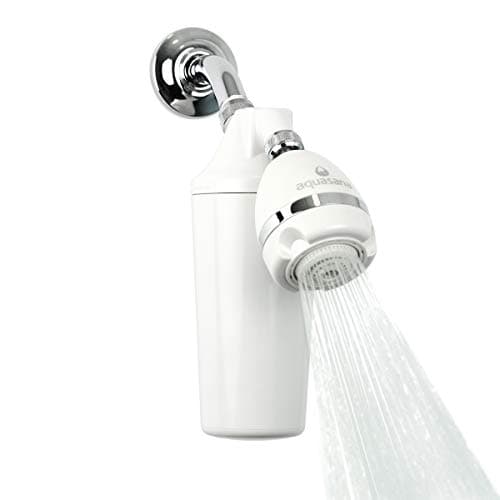 Aquasana AQ-4100 Shower Filter with Shower HeadOver 90% chlorine on an NSF/ANSI 177 test, 10,000 gallons, KDF-55 plus coconut carbon. Aquasana AQ-4100 Shower Filter with Shower HeadOver 90% chlorine on an NSF/ANSI 177 test, 10,000 gallons, KDF-55 plus coconut carbon. | Best overall | $64.59 - View on Amazon $79.99 — 19% off #ad Price as of October 6, 2026. We may earn a commission. Disclosure. |
| 2 | 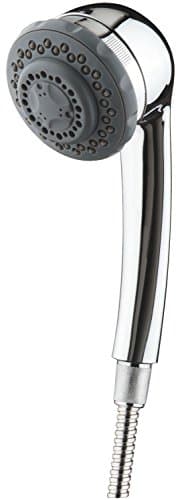 Culligan HSH-C135 Filtered Handheld ShowerheadNSF/ANSI 177 tested, 2.5 gpm rated flow, and a data sheet that admits the chloramine gap. Culligan HSH-C135 Filtered Handheld ShowerheadNSF/ANSI 177 tested, 2.5 gpm rated flow, and a data sheet that admits the chloramine gap. | Best handheld | $65.43 - View on Amazon #ad Price as of October 6, 2026. We may earn a commission. Disclosure. |
| 3 | 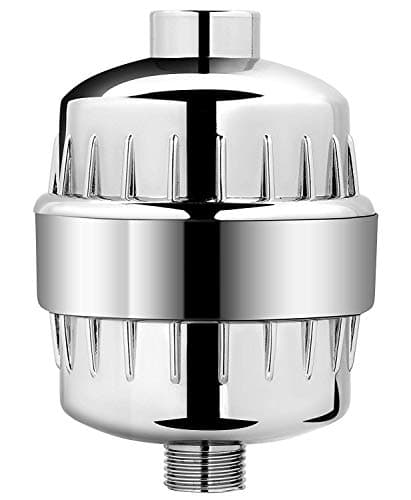 AquaBliss SF220 Multi-Stage Shower FilterMulti-stage cartridge, lowest price, and no third-party certification of any kind. AquaBliss SF220 Multi-Stage Shower FilterMulti-stage cartridge, lowest price, and no third-party certification of any kind. | The best-seller, read honestly | $35.99 - View on Amazon #ad Price as of October 6, 2026. We may earn a commission. Disclosure. |
| 4 | 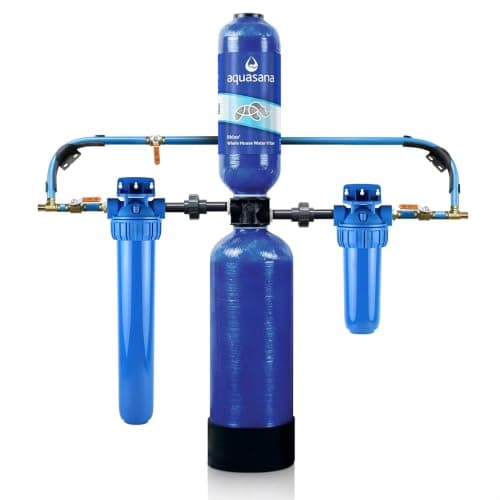 Aquasana Rhino EQ-1000 Whole-House FilterPoint of entry: chlorine removed before it reaches any shower, tap or appliance. Aquasana Rhino EQ-1000 Whole-House FilterPoint of entry: chlorine removed before it reaches any shower, tap or appliance. | If you want it gone everywhere | $939.55 - View on Amazon $1,123.00 — 16% off #ad Price as of October 6, 2026. We may earn a commission. Disclosure. |
The criteria, in the order that decides it
- Does it hold NSF/ANSI 177, or does it just talk? This is the only standard written for shower filtration, and it covers the reduction of free available chlorine. A product with a published 177 figure has been measured. A product without one has been described.
- Free chlorine, or chloramine? The standard covers free chlorine. Chloramine is a different, more stubborn compound, and EPA says more than one in five Americans drinks chloraminated water. Check your utility before you buy anything here.
- What media, and does it work hot? Activated carbon adsorbs poorly at shower temperatures and with a contact time measured in fractions of a second. KDF-55 and calcium sulfite are the media that work in that environment, which is why nearly every serious shower filter contains one of them.
- Flow rate. A filter adds resistance. Rated flows in this category run below a standard US shower head, and on a low-pressure supply the difference is the thing you will actually notice every morning.
- Capacity in gallons, not months. Same rule as every other tier on this site. Gallons are measured; months are an assumption about your household.
What the three picks actually publish
| Aquasana AQ-4100 | Culligan HSH-C135 | AquaBliss SF220 | |
|---|---|---|---|
| NSF/ANSI 177 | Tested to, over 90% chlorine | Tested according to | No claim |
| Published percentage | Over 90% | None published | None published |
| Rated capacity | 10,000 gallons / 6 months | 10,000 gallons / about 6 months | Quoted in months only |
| Rated flow | 1.75 gpm | 2.5 gpm | Not published |
| Media | KDF-55 plus coconut carbon | KDF plus activated carbon | Multi-stage, per the maker |
| Chloramine | No claim | Explicitly not evaluated | No claim |
| Hardness | No | No | No |
| Format | Head, wand or filter only | Handheld head with filter | Inline, keeps your head |
Two things stand out. The first is how little of this category publishes anything at all: the best-selling filter on the largest retailer in the world has no third-party certification and no test report, and it is not unusual — it is typical.
The second is the chloramine line. Culligan's data sheet states plainly that the system has not been evaluated for chlorine reduction in the presence of chloramines. That is a manufacturer volunteering a limitation, which is rarer and more useful than another percentage.
Why the media matters more here than anywhere else on this site
A drinking-water filter has gravity or line pressure and seconds of contact time with cool water. A shower filter has hot water moving at two gallons a minute through a cartridge the size of a fist. Activated carbon, which does almost all the work in a pitcher, performs badly in exactly those conditions — heat reduces adsorption, and there is barely any dwell time.
KDF-55 works differently. It is a copper-zinc alloy that removes chlorine by a redox reaction rather than by adsorption, and the reaction is not hampered by heat. Calcium sulfite does the same job chemically and is common in the hard-water-marketed filters. That is why a shower cartridge and a pitcher cartridge look nothing alike inside, and why a pitcher filter spliced onto a shower arm would be useless.
What a shower filter genuinely changes
Chlorine is the honest claim, and it is not a small one if your supply is heavily chlorinated. Removing it removes the pool smell in a hot, enclosed room, and readers who were bothered by that generally report the change immediately.
Skin and hair claims are where the category gets loose. It is plausible that removing a disinfectant residual helps skin that reacts to it, and there is no certification anywhere that measures dermatological outcomes. We are not going to invent one. If your skin improves, that is a real outcome for you; it is not a specification.
Hardness: the claim to disbelieve
Search the category and you will find filter after filter sold for hard water. A shower filter cannot remove calcium and magnesium. There is no ion-exchange bed in a cartridge that size, nothing to regenerate it with, and no standard that certifies it. The mineral content of the water leaving the filter is materially the same as the water entering it.
The full version of that argument, and what does work, is on the hard-water shower page. The short version: a softener is the only thing that changes the mineral content of your shower water.
When the right answer is the whole house instead
A shower filter treats one fixture. If the chlorine smell bothers you in the shower, it is also in the water going to the laundry, the bath and the kitchen tap, and a point-of-entry carbon system deals with all of it at once, with a media life measured in years rather than months.
That is a far larger purchase and an install, and the whole-house roundup covers what it involves. The honest comparison: two shower filters and their cartridges over five years is real money against a system that also fixes every other fixture in the house.
The cost-per-gallon math
Shower filters are cheap to buy and expensive to maintain, and the marketing hides that behind month-based intervals.
The two picks with published capacities are both rated at 10,000 gallons. A ten-minute shower at two gallons a minute is twenty gallons, so two people showering daily reach 10,000 gallons in roughly ten months — near enough to the six-month claim to be fair, and a long way from it for a single occupant.
Divide the cartridge price by 10,000 gallons and compare it to a point-of-entry system rated at a million gallons. The per-gallon gap is enormous. That does not make the shower filter wrong — it is a fraction of the purchase price and needs no plumber — but it is the number nobody puts in the comparison.
We show the arithmetic rather than a verdict so you can redo it with the price you actually pay. Filter prices move; the rated capacities above do not.
The picks in full
Best overall
Aquasana AQ-4100 Shower Filter with Shower Head
Aquasana
The only shower filter we found with a published figure against the only standard that exists for the category. It is also slower than the shower you have now, and that is the trade nobody mentions.
Certification status
Aquasana states the AQ-4100 is independently tested to NSF/ANSI Standard 177 to reduce over 90% of chlorine for 10,000 gallons or up to six months, and that its filtration media is NSF/ANSI certified to Standard 61 for materials safety. Tested to, not certified under — and Standard 61 covers what the media is made of, not what it removes.
Published specifications
| Rated capacity | 10,000 gallons / up to 6 months |
|---|---|
| Chlorine reduction | Over 90% (NSF/ANSI 177 test) |
| Rated flow | 1.75 gpm |
| Operating pressure | 30-80 psi |
| Maximum water temperature | 115 degrees F |
| Media | KDF-55 plus coconut shell carbon |
| Fitting | Standard 1/2 inch shower arm |
What we like
- A published chlorine figure against NSF/ANSI 177 — more evidence than most of this category offers
- KDF-55 works at shower temperatures, where plain carbon performs poorly
- Sold with a head, without a head, or as a handheld wand, so it fits whatever you already have
What we do not
- Tested to the standard rather than certified under it, and Aquasana is clear about the wording
- 1.75 gpm rated flow is below a standard US shower head, and some owners notice
- No claim for chloramine, which is what many utilities actually use
- Nothing here softens water — hardness passes straight through
Skip it if
Anyone whose complaint is scale on the glass or a squeaky-clean drag on the skin. That is hardness, and no shower filter removes calcium and magnesium.
$79.99 — 19% off
#ad Price as of October 6, 2026. We may earn a commission. Disclosure.
Best handheld
Culligan HSH-C135 Filtered Handheld Showerhead
Culligan
Culligan's filtered showerheads are the category's old guard, and the performance data sheet says what the marketing usually will not: tested for free chlorine, and not evaluated against chloramine.
Certification status
Culligan's performance data sheet for its WSH-C125 and HSH-C135 filtered showerheads states the system was tested according to NSF/ANSI 177 for reduction of free available chlorine. The same sheet states the system has not been evaluated for free available chlorine reduction performance in the presence of chloramines.
Published specifications
| Rated capacity | 10,000 gallons / about 6 months |
|---|---|
| Rated service flow | 2.5 gpm |
| Operating pressure | 40-100 psi |
| Water temperature | 40-120 degrees F |
| Standard | NSF/ANSI 177, free available chlorine |
| Chloramine | Not evaluated |
| Replacement cartridge | WHR-140 |
What we like
- Handheld head and filter in a single fitting, which is the format most people actually want
- Higher rated flow than the Aquasana, so it feels closer to an unfiltered shower
- Replacement cartridges are stocked by general retailers, not just the manufacturer
What we do not
- The data sheet's chloramine exclusion is explicit, and chloramine is common on US municipal supply
- Culligan publishes no percentage reduction figure alongside the NSF/ANSI 177 statement
- Plastic housing at a price where metal fittings exist
- Like every shower filter, it does nothing about hardness
Skip it if
Households on chloraminated water who want a documented answer. The sheet says the system was not evaluated for that case, and we are not going to pretend otherwise.
#ad Price as of October 6, 2026. We may earn a commission. Disclosure.
Where these specifications came from
The best-seller, read honestly
AquaBliss SF220 Multi-Stage Shower Filter
AquaBliss
The filter most people in this category actually buy, and the one with the least paperwork behind it. It is in here because pretending it does not exist would be dishonest, not because we can verify what it does.
Certification status
No NSF/ANSI 177 certification and no third-party test report we could find. AquaBliss describes a multi-stage cartridge — KDF-55, calcium sulfite, activated carbon and mineral stages — and publishes no independently verified reduction figures. Treat every number in its marketing as a manufacturer claim.
Published specifications
| Format | Inline, fits between the shower arm and any head |
|---|---|
| Media, per the manufacturer | KDF-55, calcium sulfite, activated carbon, mineral stages |
| Third-party certification | None published |
| Published reduction figures | None we could verify |
| Replacement cartridge | SFC220 |
What we like
- Inline design keeps whatever shower head you already chose
- Calcium sulfite works at hot-water temperatures, which is the right chemistry for a shower
- By far the cheapest of the three, and stocked everywhere
What we do not
- No certification and no published test data — the claims are unverified
- Cartridge life is quoted in months rather than gallons, so it cannot be compared honestly
- Adds length to the shower arm, which drops the head lower than you expect
- Does not soften water, whatever the reviews say about hard water
Skip it if
Anyone who needs evidence rather than popularity. If the reason you are filtering is a specific contaminant you can name, buy the one with the data sheet.
#ad Price as of October 6, 2026. We may earn a commission. Disclosure.
Where these specifications came from
If you want it gone everywhere
Aquasana Rhino EQ-1000 Whole-House Filter
Aquasana
A million-gallon point-of-entry filter for chlorinated municipal supply. It fixes the shower and the laundry as well as the kitchen tap, and it does not pretend to be a health-contaminant system.
Certification status
Certified by NSF International to NSF/ANSI 42, with the tank certified to NSF/ANSI 61 for material safety. NSF/ANSI 42 is an aesthetic-effects standard — taste, odor and chlorine — not a health-effects claim.
Published specifications
| Rated capacity | 1,000,000 gallons / up to 10 years |
|---|---|
| Rated flow | 7.0 gpm |
| Max operating pressure | 100 psi |
| Operating temperature | 40-90 degrees F |
| Dimensions | 46" L x 9" W x 44" H, 44.1 lb |
| Certified standards | NSF/ANSI 42; tank to NSF/ANSI 61 |
| Published chlorine reduction | Greater than 97% |
What we like
- Ten years or a million gallons before the main media is due — effectively no maintenance routine
- Treats every tap, so showers and laundry benefit, not just drinking water
- NSF/ANSI 61 material certification on the tank
What we do not
- NSF/ANSI 42 only — this is a chlorine and aesthetics system, not a lead or PFAS system
- Needs a main-line install, usually a plumber, and space where the water enters
- Does nothing for hardness
Skip it if
Anyone buying it to solve lead, PFAS or hard water. It is certified for aesthetic effects. Pair it with an under-sink system for drinking-water health contaminants, and a softener for hardness.
$1,123.00 — 16% off
#ad Price as of October 6, 2026. We may earn a commission. Disclosure.
Where these specifications came from
Questions people actually ask
Do shower filters actually work?
For chlorine, yes, and that is measurable: NSF/ANSI 177 is the standard written for it, and the Aquasana AQ-4100 publishes over 90% reduction against it. For anything else — chloramine, hardness, skin conditions — there is either no claim or no standard, and any product implying otherwise is ahead of its own evidence.
Do shower filters soften hard water?
No. Removing calcium and magnesium requires ion exchange with a resin bed that gets regenerated with salt, which no shower cartridge contains. Filters sold for hard water are reducing chlorine and sometimes metals; the hardness leaves the shower head exactly as it arrived.
What is NSF/ANSI 177?
It is the NSF standard for shower filtration systems, and it certifies the reduction of free available chlorine. It is the only standard in the category, it does not cover chloramine, and it does not cover hardness or any health-effects claim.
How often do you replace a shower filter cartridge?
Both picks with published data are rated at 10,000 gallons, which manufacturers translate to about six months. Work it in gallons: a ten-minute shower uses roughly twenty gallons, so a two-person household reaches the rated capacity in about ten months and a busy family reaches it much sooner.
Will a shower filter help my hair and skin?
Possibly, if chlorine was the irritant — that is the mechanism people describe, and removing chlorine is the one thing these filters are tested to do. No certification measures hair or skin outcomes, so we report the chlorine figure and leave the rest as the anecdote it is.