A shower filter cannot soften water. Softening means removing calcium and magnesium by ion exchange, and no cartridge that screws onto a shower arm can do it. What a shower filter does remove is chlorine, and on hard water that distinction decides whether you buy a filter or a softener.
Quick picks
Tap any row to jump to the full write-up. The button goes straight to the retailer.
| # | Product | Best for | Price |
|---|---|---|---|
| 1 | Wno photoWhirlpool WHES40E 40,000-Grain Water SoftenerIon exchange at the point of entry — the only thing that removes calcium and magnesium. | The actual fix for hardness | Check price on Amazon #ad We do not show a price we cannot verify today. We may earn a commission. Disclosure. |
| 2 | 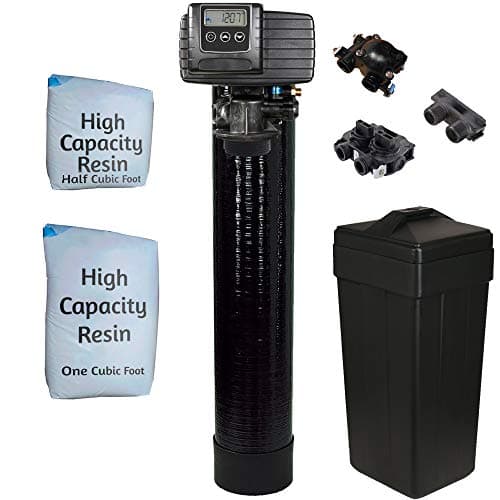 AFWFilters Fleck 5600SXT 48,000-Grain Metered SoftenerFleck 5600SXT control head, 48,000 grains, regenerates on demand rather than on a clock. AFWFilters Fleck 5600SXT 48,000-Grain Metered SoftenerFleck 5600SXT control head, 48,000 grains, regenerates on demand rather than on a clock. | Best metered softener | $791.00 - View on Amazon #ad Price as of October 6, 2026. We may earn a commission. Disclosure. |
| 3 | 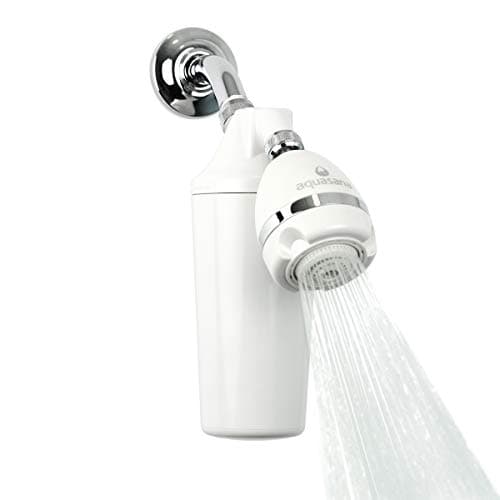 Aquasana AQ-4100 Shower Filter with Shower HeadOver 90% chlorine on an NSF/ANSI 177 test — the claim a shower filter can actually make. Aquasana AQ-4100 Shower Filter with Shower HeadOver 90% chlorine on an NSF/ANSI 177 test — the claim a shower filter can actually make. | If the problem is chlorine | $64.59 - View on Amazon $79.99 — 19% off #ad Price as of October 6, 2026. We may earn a commission. Disclosure. |
| 4 | 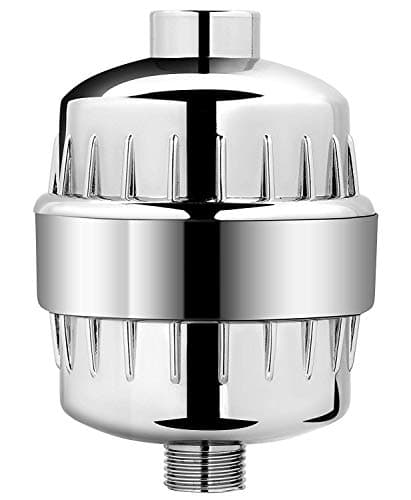 AquaBliss SF220 Multi-Stage Shower FilterMarketed for hard water, certified for nothing. Cheap, popular, and honest about none of it. AquaBliss SF220 Multi-Stage Shower FilterMarketed for hard water, certified for nothing. Cheap, popular, and honest about none of it. | The hard-water best-seller | $35.99 - View on Amazon #ad Price as of October 6, 2026. We may earn a commission. Disclosure. |
Two different complaints, sold one product
| What you notice | What it is | What fixes it |
|---|---|---|
| White crust on the glass, the head, the tiles | Hardness — calcium and magnesium | A softener, at the point of entry |
| Soap will not lather, skin feels filmy | Hardness | A softener |
| Pool smell in a hot room | Chlorine | A shower filter, or whole-house carbon |
| Skin tight and itchy after showering | Could be either | Test the water before buying |
| Hair dull, straw-like, color fading fast | Usually hardness, sometimes chlorine | Softener first, filter second |
| Orange or brown staining | Iron | Neither — an iron filter |
The reason this page exists is that the category refuses to separate those rows. Search for a shower filter for hard water and you will get dozens of products whose listings use the words softening, hard water and limescale, none of which remove a single grain of hardness.
Why a shower filter cannot soften water
Softening is not filtration. It is ion exchange: water passes through a resin bed loaded with sodium ions, the resin swaps them for the calcium and magnesium in the water, and when the resin is full it is flushed with brine to reload it. That requires a resin tank, a brine tank, a control valve and a drain connection.
A shower cartridge has none of those. It has KDF-55, sometimes calcium sulfite, sometimes a little carbon, and no way to hold or release ions on that scale. Even if the media could exchange a small quantity, there is no regeneration — it would be exhausted within days and then be inert.
This is the same argument as filter versus softener, applied to the one fixture where the marketing is most misleading. Physics does not change because the product is smaller.
So what does a shower filter do on hard water?
Two real things, neither of which is softening.
- It removes chlorine. Which matters on hard water for a specific reason: people frequently blame hardness for what chlorine is doing. Hot chlorinated water in an enclosed room is an irritant, and removing it is a measurable change with a standard behind it — NSF/ANSI 177.
- It can reduce some dissolved metals. KDF-55 is a redox medium and acts on some metals as well as chlorine. Manufacturers rarely publish figures for this, so treat it as a plausible secondary benefit rather than a claim.
What it does not do is change how soap lathers, stop scale forming on the glass, or alter the grains-per-gallon reading of the water hitting your hair.
How to tell which problem you actually have
- Look at a dried surface. White, chalky residue that returns after every shower is hardness. Chlorine leaves no residue.
- Smell the hot water. A pool smell that is strongest in a steamy bathroom is a disinfectant residual, not minerals.
- Check the annual water quality report, or test. Hardness is reported in grains per gallon or milligrams per liter; reading that report takes ten minutes and settles it. On a well, only a test tells you.
- Try the cheap one first, if both are plausible. A shower filter costs a fraction of a softener. If it fixes the complaint, it was chlorine.
If it is hardness, the answer is a softener
That is a point-of-entry appliance with a salt tank, and it changes every fixture in the house rather than one shower head. It is the only technology on this site that removes hardness, and the hard water roundup covers the sizing and the running cost.
If a softener is out of reach — a rental, an apartment, no drain access — the honest position is that you cannot soften your shower water, and you can still remove the chlorine from it. Descalers and conditioners are the other thing people try here, and that page explains what they change and what they do not.
The cost-per-gallon math
The two purchases are not in the same category, and comparing them fairly means comparing what each one fixes.
A shower filter is a small purchase with a cartridge every six to ten months, and it treats one fixture for chlorine.
A softener is a large purchase plus installation, plus salt for the life of the unit, and it treats every fixture, protects the water heater, and stops scale on every surface in the house.
If the complaint is scale, the filter is not a cheaper version of the softener. It is a purchase that does not address the problem at all, which is the most expensive kind.
We show the arithmetic rather than a verdict so you can redo it with the price you actually pay. Filter prices move; the rated capacities above do not.
The picks in full
The actual fix for hardness
Whirlpool WHES40E 40,000-Grain Water Softener
Whirlpool
A demand-regenerating softener sized for most houses, sold in a single carton with a manual anyone can follow. It is a softener, not a filter, and that is exactly the point — nothing else on this site touches hardness.
Certification status
NSF certified. Softening capacity and iron tolerance are published by the manufacturer.
Published specifications
| Capacity | 40,000 grains |
|---|---|
| Hardness handled | Up to 125 grains per gallon |
| Clear-water iron tolerance | Up to 10 ppm |
| Service flow | 8.5 gpm |
| Dimensions | 19" D x 18" W x 47 7/8" H |
| Regeneration | Demand — regenerates on usage, not a timer |
| Power | 110/120 V AC, transformer included |
| Warranty | 10 years on salt and resin tanks; 3 years on the control board |
What we like
- Demand regeneration uses noticeably less salt and water than a timer-based unit
- One carton, one manual, no dealer visit required
- Handles up to 10 ppm clear-water iron, which many softeners in this class do not
What we do not
- Softening only — it does nothing for chlorine, lead or PFAS
- Adds sodium to the softened water, which matters on a sodium-restricted diet
- Needs a drain and a power outlet at the install point
Skip it if
Anyone whose problem is taste, odor or a health contaminant. A softener swaps calcium and magnesium for sodium; it is not a purifier and it is not marketed as one.
#ad We do not show a price we cannot verify today. We may earn a commission. Disclosure.
Where these specifications came from
Best metered softener
AFWFilters Fleck 5600SXT 48,000-Grain Metered Softener
AFWFilters
The Fleck 5600SXT is the valve independent water-treatment dealers have used for decades, which means parts, manuals and people who know it are everywhere. Assembled rather than boxed as an appliance.
Certification status
Manufacturer-published capacity and flow figures. The valve is an industry-standard component with widely available service parts.
Published specifications
| Capacity | 48,000 grains |
|---|---|
| Resin | 1.5 cubic feet, 8% cross-linked |
| Resin tank | 10" x 54" |
| Brine tank | 14" |
| Service flow | Up to 12 gpm |
| Control | Fleck 5600SXT digital metered valve |
| Connection | 1" male threaded yoke, bypass valve included |
| Warranty | 5 years on the valve, 10 years on the tank |
What we like
- Fleck valves are the industry standard, so service parts and expertise are genuinely available
- Higher capacity and flow than most consumer-boxed softeners
- Metered regeneration rather than a clock
What we do not
- Ships as components — you assemble and load the resin yourself
- Larger physical footprint than an appliance-style unit
- No help at all with anything other than hardness
Skip it if
Anyone who wants an appliance experience. If loading a resin tank and programming a valve sounds like a bad Saturday, buy a boxed softener or hire a dealer.
#ad Price as of October 6, 2026. We may earn a commission. Disclosure.
Where these specifications came from
If the problem is chlorine
Aquasana AQ-4100 Shower Filter with Shower Head
Aquasana
The only shower filter we found with a published figure against the only standard that exists for the category. It is also slower than the shower you have now, and that is the trade nobody mentions.
Certification status
Aquasana states the AQ-4100 is independently tested to NSF/ANSI Standard 177 to reduce over 90% of chlorine for 10,000 gallons or up to six months, and that its filtration media is NSF/ANSI certified to Standard 61 for materials safety. Tested to, not certified under — and Standard 61 covers what the media is made of, not what it removes.
Published specifications
| Rated capacity | 10,000 gallons / up to 6 months |
|---|---|
| Chlorine reduction | Over 90% (NSF/ANSI 177 test) |
| Rated flow | 1.75 gpm |
| Operating pressure | 30-80 psi |
| Maximum water temperature | 115 degrees F |
| Media | KDF-55 plus coconut shell carbon |
| Fitting | Standard 1/2 inch shower arm |
What we like
- A published chlorine figure against NSF/ANSI 177 — more evidence than most of this category offers
- KDF-55 works at shower temperatures, where plain carbon performs poorly
- Sold with a head, without a head, or as a handheld wand, so it fits whatever you already have
What we do not
- Tested to the standard rather than certified under it, and Aquasana is clear about the wording
- 1.75 gpm rated flow is below a standard US shower head, and some owners notice
- No claim for chloramine, which is what many utilities actually use
- Nothing here softens water — hardness passes straight through
Skip it if
Anyone whose complaint is scale on the glass or a squeaky-clean drag on the skin. That is hardness, and no shower filter removes calcium and magnesium.
$79.99 — 19% off
#ad Price as of October 6, 2026. We may earn a commission. Disclosure.
The hard-water best-seller
AquaBliss SF220 Multi-Stage Shower Filter
AquaBliss
The filter most people in this category actually buy, and the one with the least paperwork behind it. It is in here because pretending it does not exist would be dishonest, not because we can verify what it does.
Certification status
No NSF/ANSI 177 certification and no third-party test report we could find. AquaBliss describes a multi-stage cartridge — KDF-55, calcium sulfite, activated carbon and mineral stages — and publishes no independently verified reduction figures. Treat every number in its marketing as a manufacturer claim.
Published specifications
| Format | Inline, fits between the shower arm and any head |
|---|---|
| Media, per the manufacturer | KDF-55, calcium sulfite, activated carbon, mineral stages |
| Third-party certification | None published |
| Published reduction figures | None we could verify |
| Replacement cartridge | SFC220 |
What we like
- Inline design keeps whatever shower head you already chose
- Calcium sulfite works at hot-water temperatures, which is the right chemistry for a shower
- By far the cheapest of the three, and stocked everywhere
What we do not
- No certification and no published test data — the claims are unverified
- Cartridge life is quoted in months rather than gallons, so it cannot be compared honestly
- Adds length to the shower arm, which drops the head lower than you expect
- Does not soften water, whatever the reviews say about hard water
Skip it if
Anyone who needs evidence rather than popularity. If the reason you are filtering is a specific contaminant you can name, buy the one with the data sheet.
#ad Price as of October 6, 2026. We may earn a commission. Disclosure.
Where these specifications came from
Questions people actually ask
Does a shower filter help with hard water?
Not with the hardness itself. It cannot remove calcium or magnesium, so scale, soap-lathering and the filmy feeling are unchanged. It removes chlorine, which people often mistake for a hardness symptom, so it helps some households and does nothing for others.
What is the best shower filter for hard water?
The question contains the error. The best-documented shower filter is the Aquasana AQ-4100 on its NSF/ANSI 177 chlorine figure, but no shower filter addresses hardness. If hardness is the problem, the product you want is a softener at the point of entry.
Why do shower filters advertise hard water then?
Because the words sell and there is no standard stopping them — NSF/ANSI 177 covers free chlorine only, so there is nothing to fail. Read any hard-water claim in this category as marketing until a manufacturer publishes a hardness figure, which none of them does.
Will a shower filter stop limescale on the shower glass?
No. Limescale is calcium and magnesium coming out of solution as water evaporates, and the filter does not remove either. Only softening, or a conditioner that changes how the minerals crystallize, affects that.
Can I soften just the shower?
Practically, no. Softeners are installed where water enters the building because they need a drain, a brine tank and enough capacity to handle household flow. There is no shower-sized version, which is why the honest answer for renters is chlorine removal only.