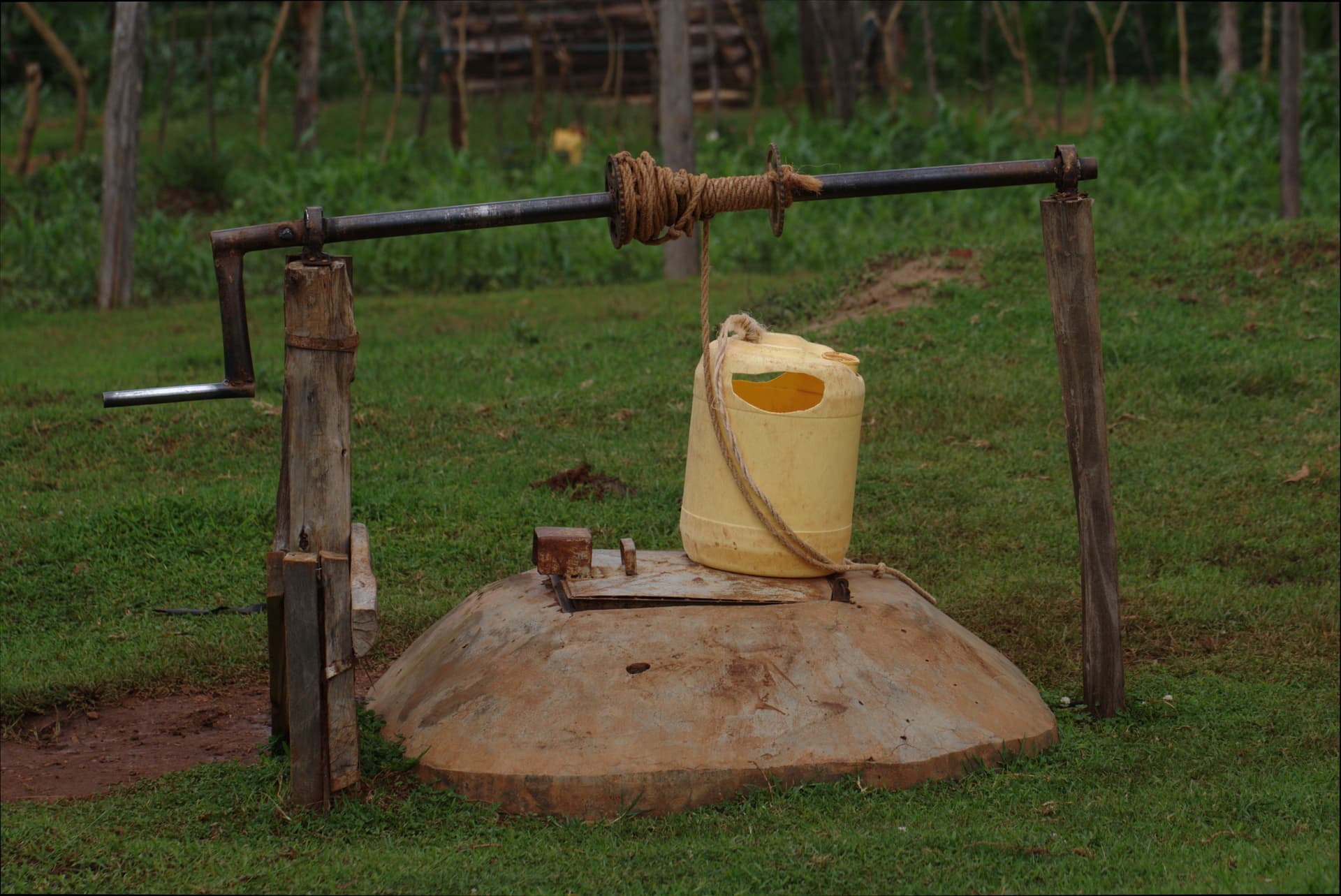
City water arrives disinfected, so a whole-house system's job is removing the disinfectant with carbon. Well water arrives untreated, so the job is oxidizing and removing iron, manganese and sulfide first — and putting carbon in front of raw well water fouls it quickly.
Quick picks
Tap any row to jump to the full write-up. The button goes straight to the retailer.
| # | Product | Best for | Price |
|---|---|---|---|
| 1 | 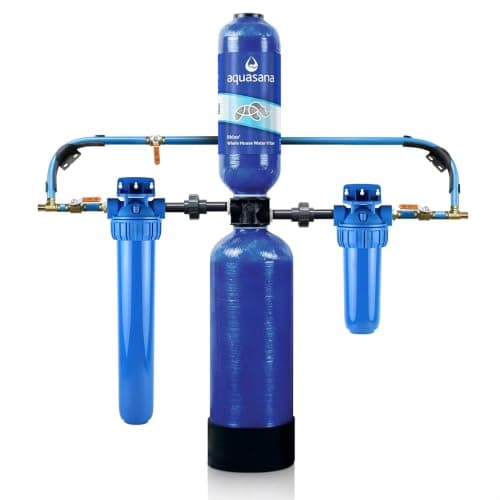 Aquasana Rhino EQ-1000 Whole-House FilterNSF/ANSI 42 certified carbon for chlorinated municipal supply. Aquasana Rhino EQ-1000 Whole-House FilterNSF/ANSI 42 certified carbon for chlorinated municipal supply. | For city water | $1,123.00 - View on Amazon #ad Price as of October 17, 2026. We may earn a commission. Disclosure. |
| 2 | Sno photoSpringWell WS1 Well Water Iron Filter (Air Injection)Air-injection oxidation for iron, sulfide and manganese. We earn nothing on it. | For well water | Sold direct by SpringWell Water. No affiliate link, so nothing to click and nothing for us to earn. The maker's page is in the sources below. Disclosure. |
| 3 | 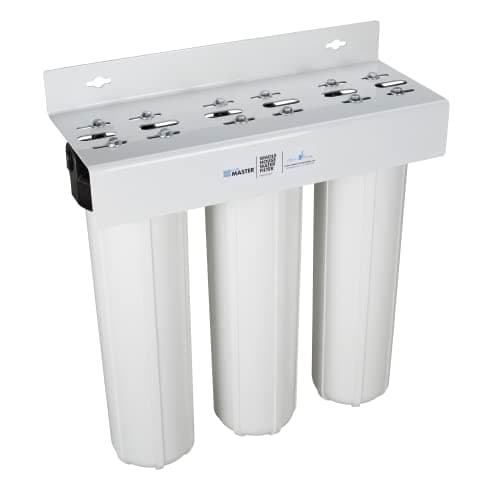 Home Master HMF3SdgFeC 3-Stage Well Water Filter3 ppm combined ceiling, radial flow, no drain connection needed. Home Master HMF3SdgFeC 3-Stage Well Water Filter3 ppm combined ceiling, radial flow, no drain connection needed. | For mild well water | $503.85 - View on Amazon #ad Price as of October 17, 2026. We may earn a commission. Disclosure. |
The difference in one sentence
City water arrives having been treated, so your system removes what was added. Well water arrives as it left the ground, so your system removes what nature put in.
Everything else follows from that, including the single most expensive mistake in this tier: putting a carbon tank in front of raw well water.
Side by side
| City water | Well water | |
|---|---|---|
| Disinfected before it arrives | Yes | No |
| Someone tests it routinely | Yes, the utility | No — only you |
| Annual report published | Yes | No |
| Typical problems | Chlorine, chloramine, by-products, hardness | Iron, manganese, sulfide, bacteria, nitrate, low pH |
| Primary technology | Carbon | Oxidation, then filtration |
| Bacteria risk | Low — a residual is maintained | Real, and your responsibility |
| Regulated under the SDWA | Yes | No — private wells are excluded |
Why carbon fails on raw well water
Activated carbon is a porous media with an enormous internal surface area, and that surface is what does the work. Two things in well water destroy it:
- Iron. Dissolved ferrous iron oxidizes on contact with the media and coats the surface with iron oxide. The pores blind off, the surface area is gone, and the media is finished long before its rated capacity.
- Hydrogen sulfide. Carbon adsorbs a small amount and saturates almost immediately at any meaningful concentration.
So on a well, carbon comes last — after oxidation and filtration have removed the iron and sulfide, as a polishing stage for taste. Putting it first is a system that appears to fail for no reason within months.
The city water system
Straightforward. Sediment pre-filter, carbon (catalytic if you are on chloramine), and a softener afterwards if the water is hard. Nothing needs to be tested first beyond reading your annual report, because someone else is already measuring.
The main decision is tank versus cartridge, which is covered in the whole-house roundup.
The well water system
Sequenced, and sized from a lab test rather than a category:
- Sediment — grit from the well, which city water does not carry
- Neutralizer — if pH is below about 6.8, because oxidation is pH-dependent
- Oxidation and filtration — iron, manganese and sulfide
- Softener — hardness, after iron removal because iron fouls resin
- UV — bacteria, last, because it needs clear water to work
- Carbon — polishing, if wanted
Every stage is optional depending on your numbers, and the order is not. Full detail on the well hub.
The one thing well owners must do that city customers need not
Test. Nobody is testing your water and nobody will tell you if something changes. The testing guide covers what to test for and how to collect a sample that has not been contaminated by your own faucet.
City customers can skip that step for most purposes, because the utility publishes its results annually and for free — with the one significant exception of lead, which enters downstream of every sample the utility takes.
The cost-per-gallon math
Well systems cost more, and the reason is stages rather than markup.
A city system is commonly one tank. A well system is frequently three or four vessels plus a UV unit, each sized from a number on a lab report, plus a drain for backwash. Every stage is a purchase and an install.
The counterweight: you are not paying a water bill. Over a decade that offsets a substantial amount of treatment equipment, which is worth remembering when a well quote looks alarming next to a city one.
We show the arithmetic rather than a verdict so you can redo it with the price you actually pay. Filter prices move; the rated capacities above do not.
The picks in full
For city water
Aquasana Rhino EQ-1000 Whole-House Filter
Aquasana
A million-gallon point-of-entry filter for chlorinated municipal supply. It fixes the shower and the laundry as well as the kitchen tap, and it does not pretend to be a health-contaminant system.
Certification status
Certified by NSF International to NSF/ANSI 42, with the tank certified to NSF/ANSI 61 for material safety. NSF/ANSI 42 is an aesthetic-effects standard — taste, odor and chlorine — not a health-effects claim.
Published specifications
| Rated capacity | 1,000,000 gallons / up to 10 years |
|---|---|
| Rated flow | 7.0 gpm |
| Max operating pressure | 100 psi |
| Operating temperature | 40-90 degrees F |
| Dimensions | 46" L x 9" W x 44" H, 44.1 lb |
| Certified standards | NSF/ANSI 42; tank to NSF/ANSI 61 |
| Published chlorine reduction | Greater than 97% |
What we like
- Ten years or a million gallons before the main media is due — effectively no maintenance routine
- Treats every tap, so showers and laundry benefit, not just drinking water
- NSF/ANSI 61 material certification on the tank
What we do not
- NSF/ANSI 42 only — this is a chlorine and aesthetics system, not a lead or PFAS system
- Needs a main-line install, usually a plumber, and space where the water enters
- Does nothing for hardness
Skip it if
Anyone buying it to solve lead, PFAS or hard water. It is certified for aesthetic effects. Pair it with an under-sink system for drinking-water health contaminants, and a softener for hardness.
#ad Price as of October 17, 2026. We may earn a commission. Disclosure.
Where these specifications came from
For well water
SpringWell WS1 Well Water Iron Filter (Air Injection)
SpringWell
Air injection oxidation rather than chemical dosing: it draws in air, oxidizes iron and sulfide into particles, and backwashes them out. The published limits are unusually specific, which makes them easy to check against your own water test.
Certification status
SpringWell publishes performance limits by contaminant rather than a system NSF certification listing. Match those limits against your own lab test before buying — this is a system you size from data, not from a category.
Published specifications
| Iron | Up to 7 ppm |
|---|---|
| Hydrogen sulfide | Up to 8 ppm |
| Manganese | Up to 1 ppm |
| Service flow | 12 gpm |
| Process | Air injection oxidation, chemical-free |
| Regeneration | Automatic backwash |
| Warranty | Lifetime |
What we like
- Handles iron, sulfur and manganese in one system, which is the actual well-water problem set
- No chemical dosing and no chlorine tank to refill
- Published ppm limits you can check against a lab report before you buy
What we do not
- Needs a drain for backwash, which constrains where it can go
- Not sold through Amazon, so we earn nothing on this recommendation
- Does nothing for bacteria — that is a UV job
Skip it if
Anyone who has not tested their well. Buying an iron filter without a lab result is how people end up with a system rated for 7 ppm sitting on 12 ppm water, and it fails within months.
Sold direct by SpringWell Water. No affiliate link, so nothing to click and nothing for us to earn. The maker's page is in the sources below. Disclosure.
Where these specifications came from
For mild well water
Home Master HMF3SdgFeC 3-Stage Well Water Filter
Home Master
Radial-flow media in oversized housings, built specifically to avoid the pressure loss that makes most cartridge systems miserable on a well. The published limit is combined, not per contaminant, which is the detail people miss.
Certification status
Published performance figures rather than a system certification listing. The 3 ppm ceiling is combined across iron, manganese and sulfur.
Published specifications
| Iron + manganese + sulfur | Up to 3 ppm COMBINED |
|---|---|
| Max filtered flow | 15 gpm |
| Feed pressure | 20-90 psi |
| Feed temperature | 40-100 degrees F |
| Rated capacity | 100,000 gallons |
| Stage 1 | 4-layer sediment, 25 / 10 / 5 / 1 micron |
| Stage 2 | Radial-flow iron reduction, under 1 psi pressure drop |
| Stage 3 | Radial-flow coconut-shell granular carbon |
What we like
- Radial flow keeps pressure drop under 1 psi — the usual complaint about cartridge systems, addressed
- Graded 4-layer sediment stage handles the grit a well actually delivers
- Works down to 20 psi feed pressure, lower than most competitors
What we do not
- 3 ppm is a COMBINED ceiling, so 2 ppm iron plus 2 ppm manganese is already over it
- No bacteria treatment
- Cartridge changes on a well are messier than on city water
Skip it if
Wells whose combined iron, manganese and sulfur exceeds 3 ppm. Add your lab numbers together before you decide, not separately.
#ad Price as of October 17, 2026. We may earn a commission. Disclosure.
Where these specifications came from
Questions people actually ask
Can I use a city water filter on my well?
Not as the first stage. Carbon media fouls quickly on untreated well water containing iron or hydrogen sulfide. On a well, carbon goes last as a polishing stage, after oxidation and filtration have removed those contaminants.
Do I need to test city water before buying a whole-house filter?
Usually not — your utility publishes an annual report listing what it detected and at what level, which is enough to choose between chlorine and chloramine systems. The exception is lead, which enters from your own plumbing downstream of every utility sample.
Why do well systems have so many stages?
Because untreated groundwater carries several unrelated problems and each needs a different mechanism. Oxidation for iron and sulfide, ion exchange for hardness, UV for bacteria, neutralization for low pH. No single vessel does all of that.
Is well water worse than city water?
Not inherently — plenty of wells produce excellent water. It is unmonitored, which is the real difference. City water has somebody testing it continuously and publishing results; a well has whatever you choose to measure and nothing else.