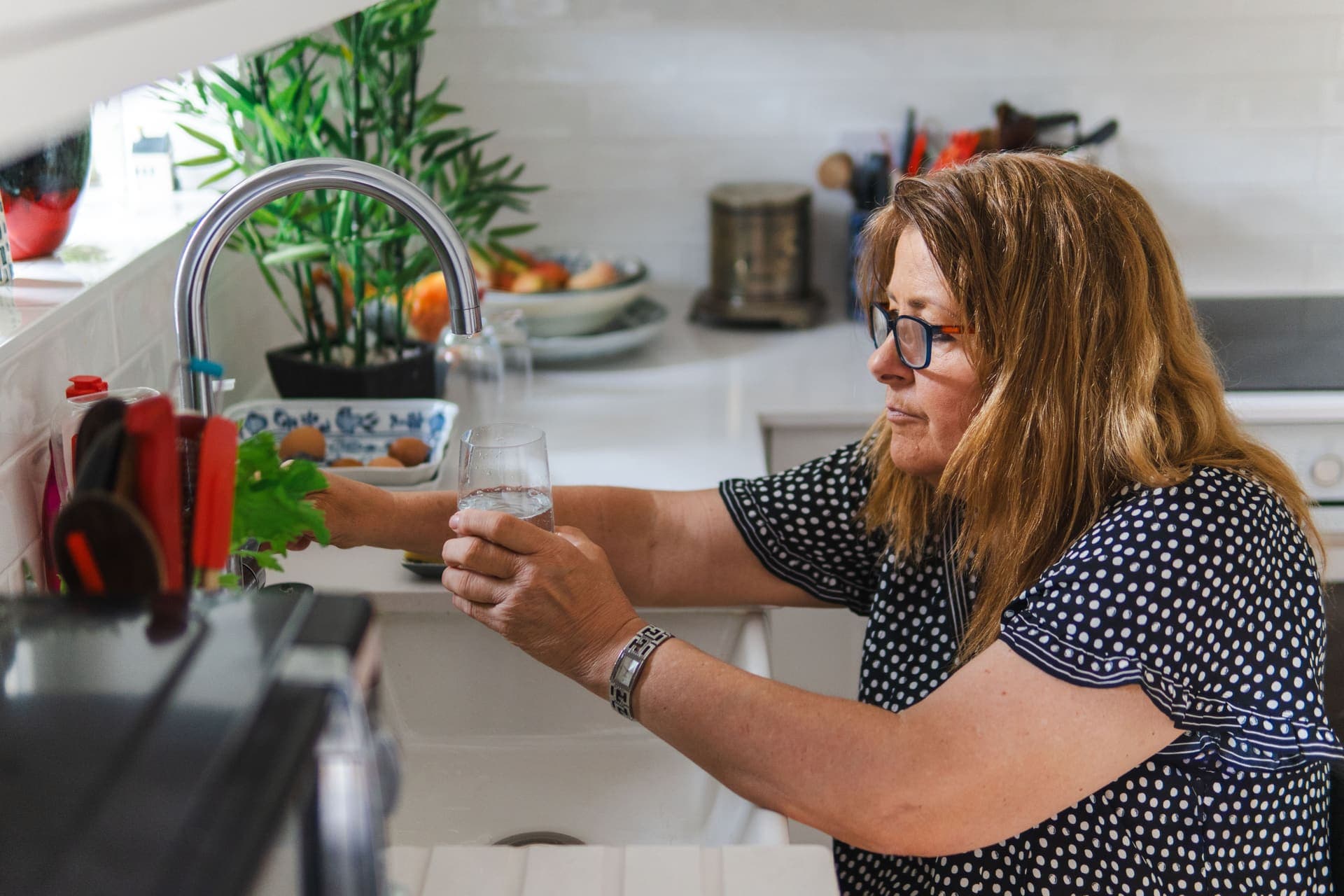
For coffee you want chlorine gone and some mineral content left behind. The Specialty Coffee Association targets 150 mg/L of total dissolved solids, 68 mg/L calcium hardness and zero chlorine — which a certified carbon filter hits and unblended reverse osmosis undershoots badly.
Quick picks
Tap any row to jump to the full write-up. The button goes straight to the retailer.
| # | Product | Best for | Price |
|---|---|---|---|
| 1 | 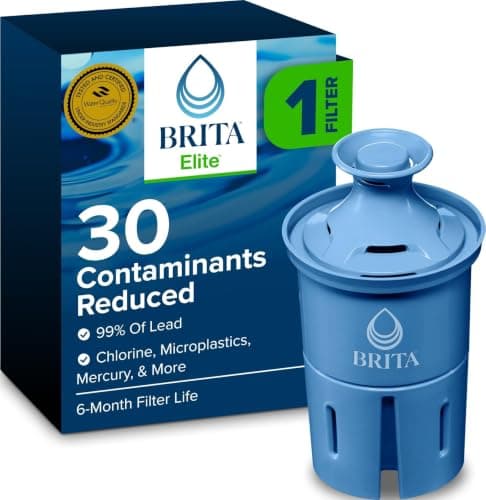 Brita Elite Filter (with any Brita pitcher)Certified carbon takes the chlorine out and leaves the minerals that extraction needs. Brita Elite Filter (with any Brita pitcher)Certified carbon takes the chlorine out and leaves the minerals that extraction needs. | Best for most brewers | $19.88 - View on Amazon #ad Price as of October 6, 2026. We may earn a commission. Disclosure. |
| 2 | 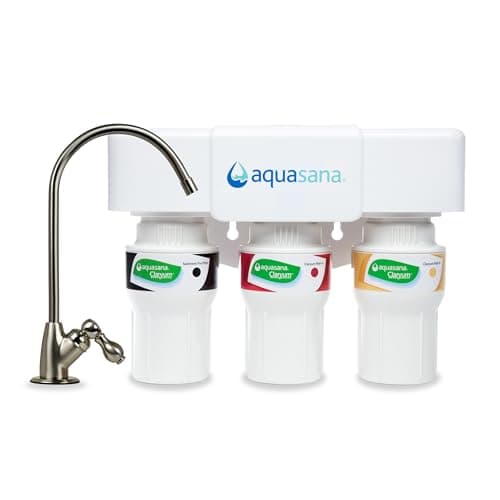 Aquasana Claryum 3-Stage Under-Sink Filter (AQ-5300)Claryum three-stage under the sink: full flow, no wastewater, minerals left in. Aquasana Claryum 3-Stage Under-Sink Filter (AQ-5300)Claryum three-stage under the sink: full flow, no wastewater, minerals left in. | Best at the tap | $154.99 - View on Amazon $349.99 — 56% off #ad Price as of October 6, 2026. We may earn a commission. Disclosure. |
| 3 | 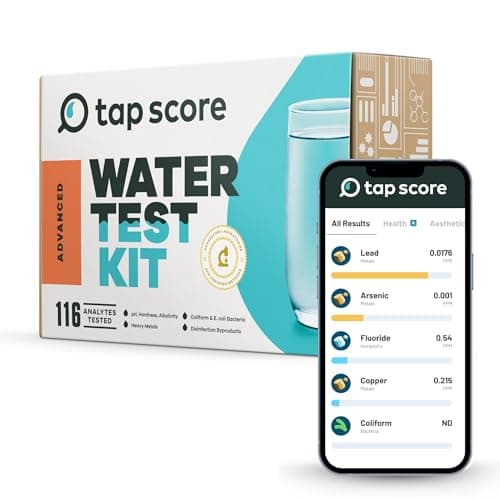 Tap Score Advanced Water Test (SimpleLab)Hardness, alkalinity and TDS on one report — the three numbers the coffee standard is written in. Tap Score Advanced Water Test (SimpleLab)Hardness, alkalinity and TDS on one report — the three numbers the coffee standard is written in. | Start here | $215.20 - View on Amazon $269.00 — 20% off #ad Price as of October 6, 2026. We may earn a commission. Disclosure. |
| 4 | 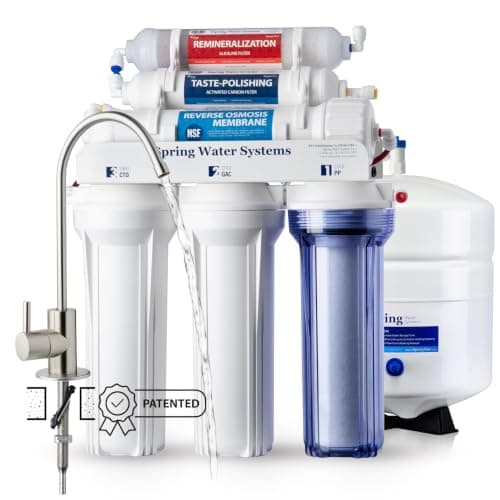 iSpring RCC7AK 6-Stage Reverse Osmosis SystemReverse osmosis with a remineralizing stage, which puts back what espresso machines need. iSpring RCC7AK 6-Stage Reverse Osmosis SystemReverse osmosis with a remineralizing stage, which puts back what espresso machines need. | If your water is very hard | $198.75 - View on Amazon $234.99 — 15% off #ad Price as of October 6, 2026. We may earn a commission. Disclosure. |
The published targets
Brewed coffee is about 98% water, so the water is an ingredient rather than a solvent. The Specialty Coffee Association of America published a standard for it, and it is short enough to reproduce in full.
| Characteristic | Target | Acceptable range |
|---|---|---|
| Odor | Clean, fresh, odor free | — |
| Color | Clear | — |
| Total chlorine | 0 mg/L | 0 mg/L |
| Total dissolved solids | 150 mg/L | 75-250 mg/L |
| Calcium hardness | 4 grains, or 68 mg/L | 1-5 grains, or 17-85 mg/L |
| Total alkalinity | 40 mg/L | At or near 40 mg/L |
| pH | 7.0 | 6.5-7.5 |
| Sodium | 10 mg/L | At or near 10 mg/L |
Read those rows as a shopping list and the filtration answer falls out of it. You want chlorine at zero. You want to keep roughly half the dissolved solids most municipal water carries. You want some calcium. That is a carbon filter, not a purifier.
Why chlorine is the one that ruins coffee
Chlorine and chloramine are added on purpose to keep water safe to the tap, and they are the single most common reason brewed coffee tastes flat or faintly medicinal. Carbon removes them cheaply and completely: it is the oldest and best-understood claim in home filtration, covered by NSF/ANSI 42, and every certified pitcher on this site holds it.
If your coffee tastes like a swimming pool smells, you do not have a coffee problem. You have a chlorine problem, and it is the cheapest one on this site to fix.
Why reverse osmosis is usually the wrong filter here
This is the part that surprises people who have spent money on filtration. Reverse osmosis strips dissolved solids down to nearly nothing — often under 20 mg/L. The coffee standard asks for 75 to 250 mg/L, with 150 as the target. Unblended RO water sits far below the bottom of that range.
The result in the cup is usually described as flat, thin or hollow: without minerals to bind flavor compounds, extraction changes and the coffee loses body. It is also why espresso machines with boiler probes can misread very pure water, and why manufacturers warn against running unremineralized RO through them.
If your tap water is genuinely too hard or too high in dissolved solids for good coffee — and on very hard water it can be — the fix is reverse osmosis with a remineralizing stage, which lands the water back in a sensible range. Those systems are here.
Hardness: the scale problem, and the extraction problem
Calcium does two opposite things to a coffee setup. In the cup it helps extraction, which is why the standard asks for some. In the machine it precipitates as scale on the heating element, which is what eventually kills espresso machines and kettles.
The standard's target of about 4 grains — 68 mg/L — is comfortably below the point at which scale becomes aggressive. If your water is well above that, you are choosing between descaling more often and treating the water. The hard water page covers the whole-house answer, and a softener is not a coffee filter — it swaps calcium for sodium, and the standard asks for sodium at around 10 mg/L.
What to buy, by situation
| Your water | What to buy | Why |
|---|---|---|
| Tastes of chlorine, otherwise fine | Certified carbon pitcher | Removes the one thing wrecking the cup, leaves the minerals |
| Fine, but you brew a lot | Under-sink carbon | Same filtration at full flow, no jug to refill |
| Very hard, scaling the machine | Remineralizing reverse osmosis | Strips hardness, then puts a controlled amount back |
| Already soft and clean | Nothing | You are at the standard already; spend the money on beans |
| Unknown | A laboratory test | Hardness, alkalinity and TDS are what the standard is written in |
Measuring it yourself
A cheap TDS meter tells you one of the four numbers and is worth owning if you brew seriously. It does not tell you hardness, alkalinity or chlorine, and it cannot tell you which dissolved solids you have — the testing guide explains what each tool actually measures. A laboratory panel gives you all four, which is why it leads the picks above for anyone chasing the standard rather than guessing at it.
The cost-per-gallon math
A certified pitcher cartridge is the cheapest meaningful improvement available to a home brewer, and on a 120-gallon rating it covers a lot of coffee: at two pots a day you are changing it a few times a year.
An under-sink carbon system costs more up front and less per gallon, and it removes the refill step, which matters more than it sounds if you brew every morning. A reverse osmosis system is the most expensive route and the one that needs a remineralizing stage to be right for coffee at all — buy it for a contaminant problem, and treat better coffee as a side effect rather than the reason.
We show the arithmetic rather than a verdict so you can redo it with the price you actually pay. Filter prices move; the rated capacities above do not.
The picks in full
Best for most brewers
Brita Elite Filter (with any Brita pitcher)
Brita
The cheapest route to an NSF/ANSI 53 lead certification. It drops into a pitcher most households already have, and it is emphatically not the same filter as the white Brita Standard.
Certification status
Certified to NSF/ANSI 42, 53 and 401. The lead certification belongs to the Elite (blue) filter only — the Standard (white) filter is certified to NSF/ANSI 42 for taste and odor and is not certified for lead. Per Brita's January 2026 performance data sheet the Elite is not certified for PFOA or PFOS, and no Brita pitcher filter is certified for fluoride.
Published specifications
| Rated filter life | 120 gallons / about 6 months |
|---|---|
| Standard filter life, for comparison | 40 gallons / about 2 months |
| Certified standards | NSF/ANSI 42, 53, 401 |
| Lead | Certified under NSF/ANSI 53 |
| PFOA / PFOS | Not certified (January 2026 performance data sheet) |
| Fluoride | Not certified, not claimed |
What we like
- Genuine NSF/ANSI 53 lead certification at the lowest entry price of anything on this site
- Fits Brita pitchers and dispensers already in millions of kitchens — no new hardware
- Three times the rated life of the Standard filter, which changes the cost-per-gallon math
What we do not
- Not certified for PFOA or PFOS, so it is the wrong answer to a PFAS worry
- No fluoride claim at all
- Slow gravity flow, like every pitcher
Skip it if
Anyone whose actual worry is PFAS or fluoride. The Elite is not certified for either, and buying it for those is buying the wrong thing.
#ad Price as of October 6, 2026. We may earn a commission. Disclosure.
Where these specifications came from
Best at the tap
Aquasana Claryum 3-Stage Under-Sink Filter (AQ-5300)
Aquasana
Carbon-block filtration rather than reverse osmosis: it keeps the minerals, wastes nothing, and fits where a reverse-osmosis system will not. It also cannot do what RO does for fluoride or nitrate.
Certification status
WQA tested and certified to NSF/ANSI 42, 53 — which includes the P473 protocol for PFOA and PFOS — and 401, for the reduction of 78 contaminants. Aquasana publishes 99.6% for lead and microplastics, 99.7% for PFOA and PFOS, 99.99% for cysts and 97% for chlorine across the Claryum 3-Stage line.
Published specifications
| Filter life | 600 gallons / up to 6 months |
|---|---|
| Certified standards | NSF/ANSI 42, 53 (includes P473), 401 (WQA) |
| Flow rate | 0.5 gpm |
| Wastewater | None |
| Format | 3-stage carbon block with a dedicated faucet |
| Contaminants claimed | 78 |
| Lead / PFOA and PFOS | 99.6% / 99.7% |
What we like
- No drain line, no wastewater, no tank — much easier to install than reverse osmosis
- NSF/ANSI 401 certification covers pharmaceutical-class trace compounds
- Full flow rate, unlike reverse osmosis, so filling a pot is not a project
What we do not
- Not reverse osmosis: no meaningful fluoride, nitrate or TDS reduction
- 600-gallon filter life is short next to an inline system's tens of thousands
- Proprietary cartridges
Skip it if
Anyone whose problem is fluoride, nitrate or total dissolved solids. Carbon block does not remove those; you need reverse osmosis for that job.
$349.99 — 56% off
#ad Price as of October 6, 2026. We may earn a commission. Disclosure.
Start here
Tap Score Advanced Water Test (SimpleLab)
SimpleLab
Mail-in testing through certified laboratories, with a report that names contaminants, gives concentrations, and compares them against health guidelines. This is the number every system on this site is sized from.
Certification status
Samples are analyzed by laboratories in the SimpleLab network certified to ISO/IEC 17025, and Tap Score is recognized by the Water Quality Association.
Published specifications
| Method | Mail-in sample, certified laboratory analysis |
|---|---|
| Lab accreditation | ISO/IEC 17025 certified network laboratories |
| Panels available | City water, well water, and contaminant-specific tests |
| What you get | Concentrations plus health-guideline comparison |
What we like
- Certified-laboratory analysis, not a color-matching strip
- The report explains what each result means rather than dumping numbers
- Contaminant-specific panels exist when you only need one answer
What we do not
- Costs meaningfully more than a strip kit
- Turnaround is days, not minutes
- You have to actually collect the sample correctly, which is where home tests usually go wrong
Skip it if
Somebody whose entire complaint is a chlorine taste. That diagnosis is free — you can smell it — and a certified carbon filter costs less than the test.
$269.00 — 20% off
#ad Price as of October 6, 2026. We may earn a commission. Disclosure.
Where these specifications came from
If your water is very hard
iSpring RCC7AK 6-Stage Reverse Osmosis System
iSpring
The value pick of the reverse-osmosis tier: a WQA Gold Seal system with an alkaline stage, usually at the lowest price of anything here that carries a real certification.
Certification status
Certified against NSF/ANSI 58 for TDS reduction and carries the WQA Gold Seal, with 97.2% TDS removal certified.
Published specifications
| Output | 75 GPD |
|---|---|
| Stages | 6, including alkaline remineralization |
| Certified TDS reduction | 97.2% |
| Feed pressure | 45-70 psi |
| Feed temperature | 40-100 degrees F |
| Assembled size | 15.5" deep x 19.5" high, 25 lb |
| Certification | NSF/ANSI 58, WQA Gold Seal |
What we like
- Certified performance at the lowest price in the tier
- Push-fit tubing makes a first-time install genuinely manageable
- Alkaline stage included rather than sold as an upgrade
What we do not
- Narrow 45-70 psi feed window — low-pressure homes may need a booster pump
- Tank plus housing needs real cabinet depth
- Conventional reverse-osmosis drain ratio
Skip it if
Homes with feed pressure below 45 psi that will not add a booster pump, and anyone who wants a tankless footprint.
$234.99 — 15% off
#ad Price as of October 6, 2026. We may earn a commission. Disclosure.
Where these specifications came from
Questions people actually ask
What is the best water filter for coffee?
A certified carbon filter — a pitcher or an under-sink carbon system. It removes chlorine, which is the most common reason coffee tastes flat, while leaving the dissolved minerals that extraction needs. The Specialty Coffee Association's standard targets 150 mg/L of total dissolved solids, and carbon filtration leaves that largely intact.
Is reverse osmosis water good for coffee?
Not on its own. Reverse osmosis typically brings total dissolved solids under 20 mg/L, far below the 75-250 mg/L range the specialty standard asks for, and coffee brewed with it tends to taste thin. Reverse osmosis with a remineralizing stage lands back in range and is a sensible choice on very hard water.
Does filtered water make coffee taste better?
If your water has chlorine in it, yes, and the difference is obvious. If your water is already chlorine-free and moderately mineralized, filtration changes very little and the grind, dose, temperature and bean freshness matter far more.
What TDS should water be for coffee?
The SCAA standard targets 150 mg/L with an acceptable range of 75 to 250 mg/L. Below that range coffee tends to taste hollow; well above it the cup gets muddy and the machine scales up faster.
Will a water softener help my espresso machine?
It will reduce scale, which is the main thing that kills espresso machines, but it exchanges calcium for sodium and the brewing standard asks for sodium at about 10 mg/L. For an espresso setup the usual answer is treating the machine's feed water specifically rather than softening the whole house.