It is worth it if your water is genuinely hard — roughly 7 grains per gallon and up — because scale shortens the life and efficiency of everything that heats water. It is not a drinking-water purchase: a softener exchanges hardness for sodium and removes no contaminants at all.
Quick picks
Tap any row to jump to the full write-up. The button goes straight to the retailer.
| # | Product | Best for | Price |
|---|---|---|---|
| 1 | 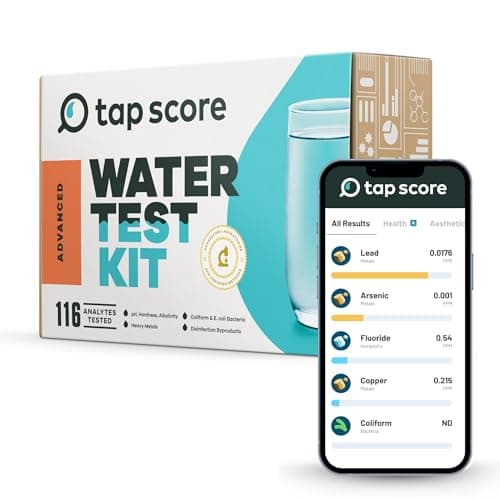 Tap Score Advanced Water Test (SimpleLab)Hardness in grains per gallon, plus the contaminant panel that tells you if you need a filter too. Tap Score Advanced Water Test (SimpleLab)Hardness in grains per gallon, plus the contaminant panel that tells you if you need a filter too. | Before anything | $215.20 - View on Amazon $269.00 — 20% off #ad Price as of October 6, 2026. We may earn a commission. Disclosure. |
| 2 | 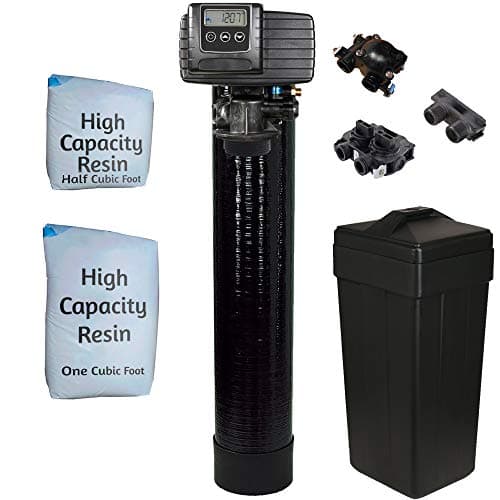 AFWFilters Fleck 5600SXT 48,000-Grain Metered Softener48,000 grains, demand-metered, on the Fleck valve independent dealers and parts suppliers stock. AFWFilters Fleck 5600SXT 48,000-Grain Metered Softener48,000 grains, demand-metered, on the Fleck valve independent dealers and parts suppliers stock. | The softener to buy | $791.00 - View on Amazon #ad Price as of October 6, 2026. We may earn a commission. Disclosure. |
| 3 | 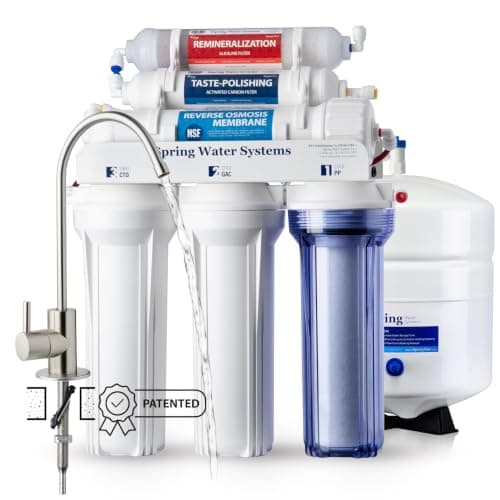 iSpring RCC7AK 6-Stage Reverse Osmosis SystemA softener does not clean drinking water. This does, at one tap, with the minerals put back. iSpring RCC7AK 6-Stage Reverse Osmosis SystemA softener does not clean drinking water. This does, at one tap, with the minerals put back. | The other half of the job | $198.75 - View on Amazon $234.99 — 15% off #ad Price as of October 6, 2026. We may earn a commission. Disclosure. |
What you are actually buying
A water softener is an appliance-protection device that happens to live in your plumbing. It is not a filter, it does not make water safer to drink, and the single most common disappointment with one comes from buying it expecting that.
Penn State Extension puts the limit plainly: water softeners will not necessarily remove any of the more serious drinking water contamination problems. What a softener does is exchange calcium and magnesium for sodium, which stops scale forming — and scale is the thing that quietly destroys everything in your house that heats water.
The evidence on scale, and who paid for it
The most-quoted research here is a study of thirty water heaters run at Battelle under an accelerated scaling protocol. Its headline findings, as published by the trade body that commissioned it, are that units fed softened water maintained their original factory efficiency rating for as long as fifteen years, while hard water cut efficiency by up to 48 percent.
Two honest caveats, because this site does not launder industry research as neutral science. First, the work was commissioned by the Water Quality Association's research foundation — the water treatment industry's own body — and that is worth knowing when reading the size of the effect. Second, "up to 48 percent" is a ceiling under accelerated laboratory scaling, not a prediction for your house.
What survives those caveats is the direction, which is not controversial: scale insulates heating elements, scale narrows pipes, and water heaters on hard water fail earlier than water heaters on soft water. That is the thing you are buying.
The number that decides it
Hardness is measured in grains per gallon, and it is the only input that matters for this decision.
| Hardness | What you will notice | Is a softener worth it? |
|---|---|---|
| Under 3 gpg (soft) | Nothing | No |
| 3-7 gpg (moderate) | Some spotting, occasional kettle scale | Rarely — a descaler or nothing |
| 7-10 gpg (hard) | Film on glass, scale on fixtures, more soap | Usually yes |
| 10-15 gpg (very hard) | Visible scale, stiff laundry, shortened heater life | Yes |
| Over 15 gpg (extremely hard) | Constant scale, appliances failing early | Yes, and the payback is fast |
If you are on a private well, test rather than assume: well hardness varies enormously and often comes with iron, which fouls softener resin and changes which unit you should buy.
What it costs to run
A softener is not a one-time purchase, and the running costs are the part people underestimate.
- Salt. Bags of it, several times a year, carried down to the basement. Consumption scales with hardness and water use.
- Water. Penn State Extension puts regeneration at about 50 gallons per cycle. A demand-initiated unit regenerates only when it needs to, which is why timer-based units are the wrong purchase in 2026.
- Sodium in the water. The exchange adds 7.5 milligrams of sodium per quart for each grain of hardness removed. On 15-grain water that is about 112 mg per quart — the reason many households leave the kitchen cold tap unsoftened or put reverse osmosis on it.
- Resin, eventually. Ten to fifteen years is typical; iron and chlorine both shorten it.
Where the money actually comes back
Be realistic about this. The savings are not a line on a bill; they are failures that do not happen and efficiency that does not drift.
| Where softening helps | How much | How confident |
|---|---|---|
| Water heater efficiency and life | Large on hard water | Strong — the mechanism is undisputed |
| Dishwasher and washing machine life | Moderate | Reasonable |
| Less soap, detergent and descaler | Small but continuous | Reasonable |
| Fixtures, glass and tile cleaning time | Noticeable day to day | Subjective, and the thing owners mention first |
| Drinking water quality | None | Certain — it is not a filter |
The alternatives, honestly
A salt-free conditioner. Template-assisted crystallization changes how minerals crystallize rather than removing them. No salt, no brine, no sodium — and less effect. We compared the two here.
Nothing at all. On moderately hard water, descaling the kettle and the shower screen occasionally is a rational choice, and it costs nothing.
Reverse osmosis at the kitchen tap. Not an alternative — it solves a different problem, and the two are frequently installed together. Softener or reverse osmosis sets out which does what, and why the softener goes first when you have both.
The honest summary
On genuinely hard water, a softener is one of the few home water purchases with a mechanical payback rather than a reassurance payback: it protects equipment you already own and will otherwise replace early. On soft or moderate water it is a salt habit with a monthly cost and no benefit.
And on any water, it is not a drinking-water product. If your reason for being here is lead, PFAS or taste, the tier guide will point you at the machine that actually addresses it.
The cost-per-gallon math
The purchase is the small number. Over ten years a softener costs its purchase price plus salt several times a year, plus roughly 50 gallons of water per regeneration, plus a resin bed at the end.
Set that against one water heater replaced early, a dishwasher element scaled solid, and a decade of descaler — on 15-grain water, the arithmetic usually favors the softener. On 5-grain water it does not, and no amount of dealer modeling changes that.
We show the arithmetic rather than a verdict so you can redo it with the price you actually pay. Filter prices move; the rated capacities above do not.
The picks in full
Before anything
Tap Score Advanced Water Test (SimpleLab)
SimpleLab
Mail-in testing through certified laboratories, with a report that names contaminants, gives concentrations, and compares them against health guidelines. This is the number every system on this site is sized from.
Certification status
Samples are analyzed by laboratories in the SimpleLab network certified to ISO/IEC 17025, and Tap Score is recognized by the Water Quality Association.
Published specifications
| Method | Mail-in sample, certified laboratory analysis |
|---|---|
| Lab accreditation | ISO/IEC 17025 certified network laboratories |
| Panels available | City water, well water, and contaminant-specific tests |
| What you get | Concentrations plus health-guideline comparison |
What we like
- Certified-laboratory analysis, not a color-matching strip
- The report explains what each result means rather than dumping numbers
- Contaminant-specific panels exist when you only need one answer
What we do not
- Costs meaningfully more than a strip kit
- Turnaround is days, not minutes
- You have to actually collect the sample correctly, which is where home tests usually go wrong
Skip it if
Somebody whose entire complaint is a chlorine taste. That diagnosis is free — you can smell it — and a certified carbon filter costs less than the test.
$269.00 — 20% off
#ad Price as of October 6, 2026. We may earn a commission. Disclosure.
Where these specifications came from
The softener to buy
AFWFilters Fleck 5600SXT 48,000-Grain Metered Softener
AFWFilters
The Fleck 5600SXT is the valve independent water-treatment dealers have used for decades, which means parts, manuals and people who know it are everywhere. Assembled rather than boxed as an appliance.
Certification status
Manufacturer-published capacity and flow figures. The valve is an industry-standard component with widely available service parts.
Published specifications
| Capacity | 48,000 grains |
|---|---|
| Resin | 1.5 cubic feet, 8% cross-linked |
| Resin tank | 10" x 54" |
| Brine tank | 14" |
| Service flow | Up to 12 gpm |
| Control | Fleck 5600SXT digital metered valve |
| Connection | 1" male threaded yoke, bypass valve included |
| Warranty | 5 years on the valve, 10 years on the tank |
What we like
- Fleck valves are the industry standard, so service parts and expertise are genuinely available
- Higher capacity and flow than most consumer-boxed softeners
- Metered regeneration rather than a clock
What we do not
- Ships as components — you assemble and load the resin yourself
- Larger physical footprint than an appliance-style unit
- No help at all with anything other than hardness
Skip it if
Anyone who wants an appliance experience. If loading a resin tank and programming a valve sounds like a bad Saturday, buy a boxed softener or hire a dealer.
#ad Price as of October 6, 2026. We may earn a commission. Disclosure.
Where these specifications came from
The other half of the job
iSpring RCC7AK 6-Stage Reverse Osmosis System
iSpring
The value pick of the reverse-osmosis tier: a WQA Gold Seal system with an alkaline stage, usually at the lowest price of anything here that carries a real certification.
Certification status
Certified against NSF/ANSI 58 for TDS reduction and carries the WQA Gold Seal, with 97.2% TDS removal certified.
Published specifications
| Output | 75 GPD |
|---|---|
| Stages | 6, including alkaline remineralization |
| Certified TDS reduction | 97.2% |
| Feed pressure | 45-70 psi |
| Feed temperature | 40-100 degrees F |
| Assembled size | 15.5" deep x 19.5" high, 25 lb |
| Certification | NSF/ANSI 58, WQA Gold Seal |
What we like
- Certified performance at the lowest price in the tier
- Push-fit tubing makes a first-time install genuinely manageable
- Alkaline stage included rather than sold as an upgrade
What we do not
- Narrow 45-70 psi feed window — low-pressure homes may need a booster pump
- Tank plus housing needs real cabinet depth
- Conventional reverse-osmosis drain ratio
Skip it if
Homes with feed pressure below 45 psi that will not add a booster pump, and anyone who wants a tankless footprint.
$234.99 — 15% off
#ad Price as of October 6, 2026. We may earn a commission. Disclosure.
Where these specifications came from
Questions people actually ask
Is a water softener worth the money?
On genuinely hard water — roughly 7 grains per gallon and above — yes, because scale shortens the life and efficiency of every appliance that heats water. Under about 3 grains it buys nothing. The deciding input is your hardness figure, not the size of your house.
Does a water softener make water safer to drink?
No. Penn State Extension states that softeners will not necessarily remove any of the more serious drinking water contamination problems. A softener exchanges calcium and magnesium for sodium; lead, PFAS, nitrate and chlorine pass straight through it.
How much sodium does softened water add?
About 7.5 milligrams per quart for each grain per gallon of hardness removed, per Penn State Extension — roughly 112 milligrams per quart on 15-grain water. Households on sodium-restricted diets commonly leave the kitchen cold tap unsoftened or install reverse osmosis on it.
How much water does a softener waste?
About 50 gallons per regeneration cycle, per Penn State Extension. A demand-initiated unit regenerates only when the resin is actually exhausted, which is why demand control rather than a timer is worth paying for.
Is a salt-free conditioner as good as a softener?
It does less. A template-assisted crystallization conditioner changes how hardness minerals crystallize so they are less likely to stick; it does not remove hardness, so the grains are still in the water. It adds no sodium and needs no brine, which for some households is the right trade.