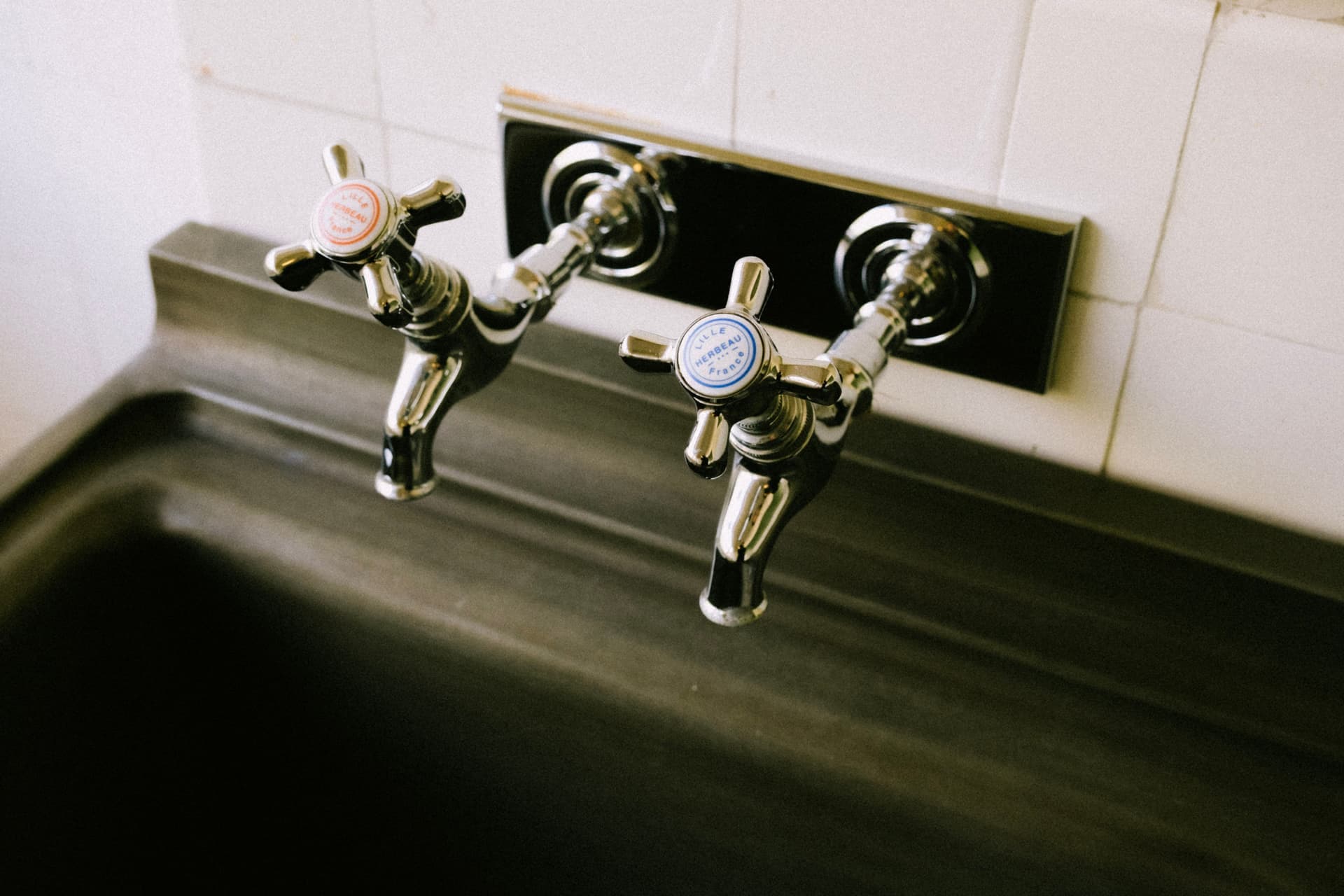
White crust, spotted glassware and soap that will not lather are hardness: dissolved calcium and magnesium. No filter removes hardness. Ion exchange does, which is a softener, and it is a different machine with a different job from everything else on this site.
Quick picks
Tap any row to jump to the full write-up. The button goes straight to the retailer.
| # | Product | Best for | Price |
|---|---|---|---|
| 1 | Wno photoWhirlpool WHES40E 40,000-Grain Water Softener40,000 grains, demand regeneration, and it tolerates up to 10 ppm clear-water iron. | Best for most houses | Check price on Amazon #ad We do not show a price we cannot verify today. We may earn a commission. Disclosure. |
| 2 | 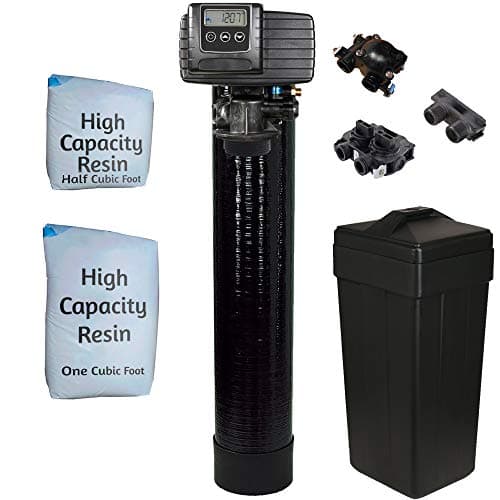 AFWFilters Fleck 5600SXT 48,000-Grain Metered Softener48,000 grains on the Fleck valve every water-treatment dealer knows how to service. AFWFilters Fleck 5600SXT 48,000-Grain Metered Softener48,000 grains on the Fleck valve every water-treatment dealer knows how to service. | Best for larger homes | $793.00 - View on Amazon #ad Price as of October 17, 2026. We may earn a commission. Disclosure. |
Hardness is not contamination
Hard water contains dissolved calcium and magnesium picked up from limestone and chalk in the ground. It is not a contaminant, it is not a treatment failure, and the EPA does not regulate it as a health matter. Some evidence points mildly the other way — there is nothing wrong with drinking it.
The cost is mechanical, and it is real. Every gallon of hard water heated in your water heater leaves a little more scale on the element. Scale is an insulator, so the heater works harder each year to deliver the same hot water, and eventually fails early. The same deposits accumulate in the dishwasher, the washing machine, the coffee maker and the shower head.
How to know how hard your water is
| Grains per gallon | mg/L (ppm) | Classification | Worth softening? |
|---|---|---|---|
| 0 - 3.5 | 0 - 60 | Soft | No |
| 3.5 - 7 | 60 - 120 | Moderately hard | Rarely — a rinse aid is enough |
| 7 - 10.5 | 120 - 180 | Hard | Usually yes |
| Over 10.5 | Over 180 | Very hard | Yes — the appliance cost is real |
Why no filter fixes this
This is the single most common wasted purchase in home water treatment, so it is worth being blunt about the mechanism. Filters work by adsorption (carbon holding organic molecules), by size exclusion (sediment filters, RO membranes), or by oxidation. Calcium and magnesium ions are small, dissolved and chemically stable — carbon does not adsorb them and a sediment filter does not catch them.
A softener works differently. Water passes through a resin bed that swaps calcium and magnesium ions for sodium ions, and periodically flushes the accumulated hardness to drain with a brine solution. That ion swap is the mechanism, and no filter performs it. The full comparison is on filter versus softener.
Reverse osmosis is the one partial exception, and only at the tap it serves. An RO membrane does reject hardness ions, which is why RO water leaves no spots. It does nothing for your water heater, your shower or your laundry, because it treats one tap.
What about salt-free conditioners?
Template-assisted crystallization and similar "salt-free" systems do not remove hardness. They change its form so it is less likely to adhere as scale. That is a real and useful effect for protecting pipework and heaters, and it is not the same as softening: your glassware will still spot, your soap will still not lather, and a hardness test will read exactly the same afterwards.
Whether that trade is worth it depends on what you actually want. If the goal is protecting the water heater without salt, a conditioner is a legitimate choice. If the goal is soft water on your skin and in your laundry, it is not, and buying one for that reason ends in disappointment.
What scale actually costs
The arithmetic worth doing before deciding is the appliance one. Hard water shortens water-heater life, and a heater replacement is a four-figure job. Set the installed cost of a softener against the salt you will buy every year and the years of heater life you are protecting, using your own local prices — not against the vague promise of "better water."
Do the same for the dishwasher and the washing machine. If your water is very hard, the case builds quickly. If it is moderately hard, it frequently does not, and that is a legitimate reason not to buy.
We show the arithmetic rather than a verdict so you can redo it with the price you actually pay. Filter prices move; the rated capacities above do not.
The picks in full
Best for most houses
Whirlpool WHES40E 40,000-Grain Water Softener
Whirlpool
A demand-regenerating softener sized for most houses, sold in a single carton with a manual anyone can follow. It is a softener, not a filter, and that is exactly the point — nothing else on this site touches hardness.
Certification status
NSF certified. Softening capacity and iron tolerance are published by the manufacturer.
Published specifications
| Capacity | 40,000 grains |
|---|---|
| Hardness handled | Up to 125 grains per gallon |
| Clear-water iron tolerance | Up to 10 ppm |
| Service flow | 8.5 gpm |
| Dimensions | 19" D x 18" W x 47 7/8" H |
| Regeneration | Demand — regenerates on usage, not a timer |
| Power | 110/120 V AC, transformer included |
| Warranty | 10 years on salt and resin tanks; 3 years on the control board |
What we like
- Demand regeneration uses noticeably less salt and water than a timer-based unit
- One carton, one manual, no dealer visit required
- Handles up to 10 ppm clear-water iron, which many softeners in this class do not
What we do not
- Softening only — it does nothing for chlorine, lead or PFAS
- Adds sodium to the softened water, which matters on a sodium-restricted diet
- Needs a drain and a power outlet at the install point
Skip it if
Anyone whose problem is taste, odor or a health contaminant. A softener swaps calcium and magnesium for sodium; it is not a purifier and it is not marketed as one.
#ad We do not show a price we cannot verify today. We may earn a commission. Disclosure.
Where these specifications came from
Best for larger homes
AFWFilters Fleck 5600SXT 48,000-Grain Metered Softener
AFWFilters
The Fleck 5600SXT is the valve independent water-treatment dealers have used for decades, which means parts, manuals and people who know it are everywhere. Assembled rather than boxed as an appliance.
Certification status
Manufacturer-published capacity and flow figures. The valve is an industry-standard component with widely available service parts.
Published specifications
| Capacity | 48,000 grains |
|---|---|
| Resin | 1.5 cubic feet, 8% cross-linked |
| Resin tank | 10" x 54" |
| Brine tank | 14" |
| Service flow | Up to 12 gpm |
| Control | Fleck 5600SXT digital metered valve |
| Connection | 1" male threaded yoke, bypass valve included |
| Warranty | 5 years on the valve, 10 years on the tank |
What we like
- Fleck valves are the industry standard, so service parts and expertise are genuinely available
- Higher capacity and flow than most consumer-boxed softeners
- Metered regeneration rather than a clock
What we do not
- Ships as components — you assemble and load the resin yourself
- Larger physical footprint than an appliance-style unit
- No help at all with anything other than hardness
Skip it if
Anyone who wants an appliance experience. If loading a resin tank and programming a valve sounds like a bad Saturday, buy a boxed softener or hire a dealer.
#ad Price as of October 17, 2026. We may earn a commission. Disclosure.
Where these specifications came from
Questions people actually ask
Is hard water bad for your health?
No. The calcium and magnesium in hard water are dietary minerals, and the EPA regulates hardness as a secondary, aesthetic matter rather than a health one. The damage is to appliances and plumbing, not to people.
Does softened water taste salty?
Not at normal hardness levels. Ion exchange adds sodium in proportion to the hardness removed, which for typical supplies is a small amount — far less than most people expect. If you are on a sodium-restricted diet, potassium chloride can be used instead of salt, at a higher running cost.
Can I put a filter on my shower to stop hard water?
Shower filters that claim to soften water do not. Some remove chlorine, which genuinely helps skin and hair, and that improvement often gets attributed to softening. Real softening requires an ion-exchange bed and a regeneration cycle, neither of which fits in a shower head.
Will vinegar descaling fix my kettle permanently?
It removes the scale that has formed and does nothing to stop the next batch. Descaling is maintenance for hard water, not treatment. If you are descaling every few weeks, that is your hardness telling you what it is doing everywhere you cannot see.