
ZeroWater's 5-stage filter is IAPMO certified to reduce PFOA/PFOS, lead, chlorine, chromium and mercury. NSF lists the Clearly Filtered pitcher for chlorine and taste and odor only; its wider 386-contaminant list is laboratory test data. ZeroWater has the stronger paperwork, Clearly Filtered the longer filter life.
Quick picks
Tap any row to jump to the full write-up. The button goes straight to the retailer.
| # | Product | Best for | Price |
|---|---|---|---|
| 1 | 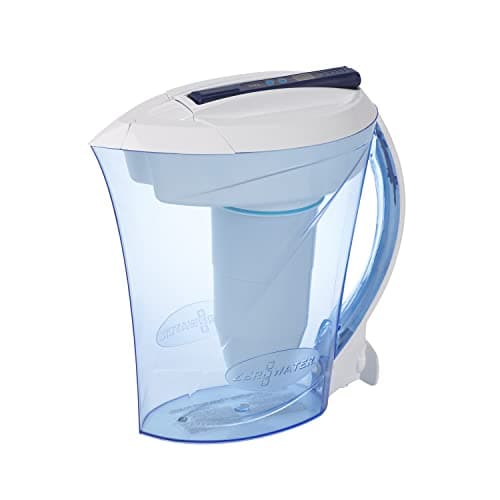 ZeroWater 10-Cup Ready-Pour PitcherIAPMO certified for PFOA/PFOS at a published 99%, which Clearly Filtered's NSF listing does not cover. ZeroWater 10-Cup Ready-Pour PitcherIAPMO certified for PFOA/PFOS at a published 99%, which Clearly Filtered's NSF listing does not cover. | If PFAS is why you are shopping | $28.99 - View on Amazon $59.98 — 52% off #ad Price as of October 10, 2026. We may earn a commission. Disclosure. |
| 2 | 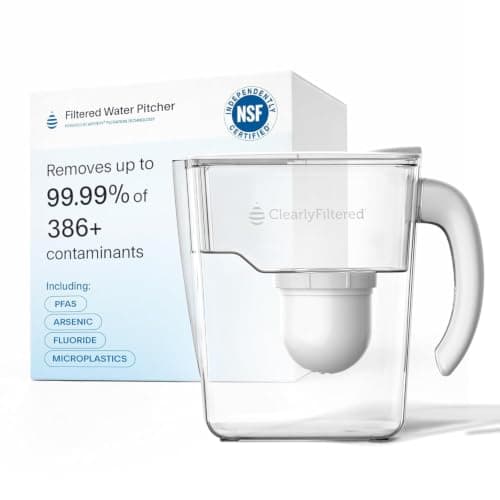 Clearly Filtered Water Pitcher (Affinity)100 rated gallons and a tested fluoride figure. No ZeroWater filter claims fluoride at all. Clearly Filtered Water Pitcher (Affinity)100 rated gallons and a tested fluoride figure. No ZeroWater filter claims fluoride at all. | If fluoride is why you are shopping | $109.99 - View on Amazon #ad Price as of October 10, 2026. We may earn a commission. Disclosure. |
| 3 | 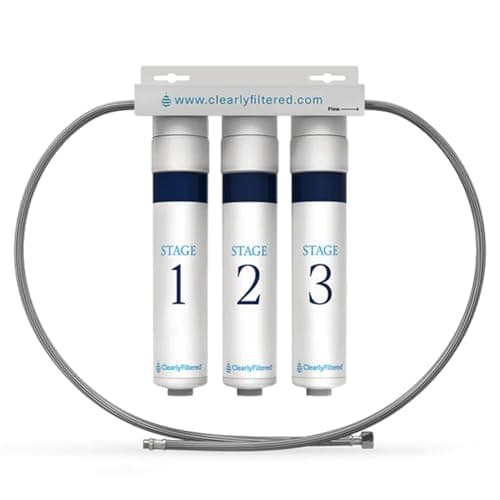 Clearly Filtered 3-Stage Under-Sink System (CF-UTSF)2,000 rated gallons instead of 100. Same media, twenty times the water between changes. Clearly Filtered 3-Stage Under-Sink System (CF-UTSF)2,000 rated gallons instead of 100. Same media, twenty times the water between changes. | The Clearly Filtered claim list, sanely | $550.00 - View on Amazon #ad Price as of October 10, 2026. We may earn a commission. Disclosure. |
| 4 | 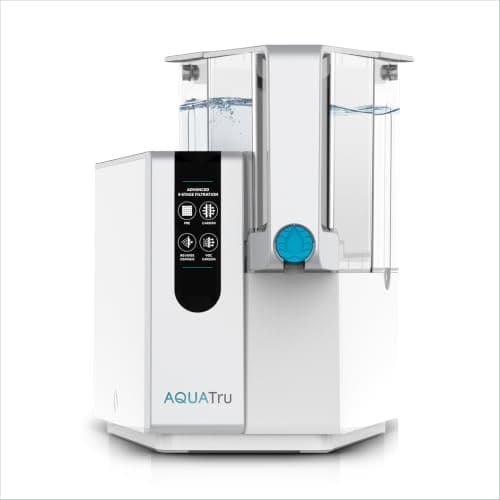 AquaTru Classic Countertop Reverse Osmosis PurifierCountertop reverse osmosis certified by IAPMO to NSF/ANSI 53, 58, 401 and P473. AquaTru Classic Countertop Reverse Osmosis PurifierCountertop reverse osmosis certified by IAPMO to NSF/ANSI 53, 58, 401 and P473. | If you want certified and broad | $451.25 - View on Amazon $475.00 — 5% off #ad Price as of October 10, 2026. We may earn a commission. Disclosure. |
The inversion that makes this comparison worth reading
These two pitchers occupy the same shelf position in a buyer's head: the thing you move to after deciding a Brita is not enough. They are also the rare pair where the price and the strength of the evidence point in opposite directions.
The cheaper pitcher holds a certification for the contaminant class people are most frightened of. The more expensive one holds a much longer claim list, almost all of it resting on test reports rather than a certification listing. Nearly every other comparison on this site runs the other way, which is why this one is easy to get wrong.
| ZeroWater 10-Cup | Clearly Filtered Pitcher | |
|---|---|---|
| Certifying body | IAPMO | NSF (plus the company's own 42/372 statement) |
| What the certification covers | PFOA/PFOS, lead, chlorine, chromium, mercury | Chlorine reduction, taste and odor reduction |
| Materials standard | — | NSF/ANSI/CAN 372 |
| PFOA / PFOS | Certified, published 99% | Tested, not in the NSF listing |
| Lead | Certified, published 95% | Tested at 99.34% |
| Chromium-6 | Certified, published 99% | Tested |
| Mercury | Certified, published 96% | Tested |
| Fluoride | Not claimed | Tested, above 99.54% |
| Contaminants claimed | The five certified above | Up to 99.99% of 386+ |
| Rated filter life | 15 gallons | 100 gallons |
| TDS meter | Included in the box | Not included |
| Price bracket | Entry | Top of the pitcher bracket |
What each one is actually certified for
We check this in the certifiers' own databases rather than on the box, because the box is marketing and the database is the record.
ZeroWater states it plainly on its own results page: the 5-stage filter is IAPMO certified to reduce PFOA/PFOS, lead, chlorine, chromium and mercury, with published reductions of 99% for PFOA/PFOS, 95% for lead, 99% for chromium-6 and 96% for mercury. Five named contaminants, one certifying body, numbers attached.
Clearly Filtered appears in NSF's own certified product listing, and what is in there is narrower than most buyers assume. Searching NSF's database under the company name returns one product — the Filtered Water Pitcher — at 100 gallons, under NSF/ANSI 42 and NSF/ANSI/CAN 372, and the reduction claims recorded against it are "Chlorine Reduction" and "Taste and Odor Reduction". That is the whole certified claim. The 372 listing certifies lead-free materials, which is about what the pitcher is made of rather than what it removes.
Everything else Clearly Filtered publishes — fluoride, PFAS, arsenic, chromium-6 and the rest of the 386-contaminant list — comes from testing at an ISO 17025 accredited laboratory working to NSF/ANSI protocols. That is real evidence produced by real chemists, and we are not going to sneer at it. It is simply a different instrument than a certification listing: a test report is a snapshot of submitted samples, while a listing carries ongoing surveillance and a public directory entry a third party maintains.
We cover the general distinction in what the standards actually mean, and the brand-level version on the Clearly Filtered page.
PFAS: the cheaper pitcher has the stronger paperwork
If PFAS is the reason you are shopping — and for a large share of people buying a premium pitcher in 2026, it is — this is the whole comparison and it resolves against the expensive option.
ZeroWater's PFOA/PFOS reduction is inside its IAPMO certification. Clearly Filtered's PFOA and PFOS figures are excellent on paper, at 99.64% and above 99.80%, and they are not in the NSF listing. Both products will very likely reduce PFAS in your kitchen. Only one of them has a certifier standing behind that specific claim.
That matters more than it sounds for one practical reason: if you ever have to justify the choice to somebody else — a landlord, a pediatrician, a spouse who wants the receipt — a directory entry is checkable and a manufacturer PDF is an argument. For a decision about your own household and nobody else's, the test data may be all you need.
Fluoride: the one genuine capability gap
This is the axis that runs the other way, and it is not close. No ZeroWater filter claims fluoride reduction. Clearly Filtered publishes a tested figure above 99.54%.
Fluoride is a small, charged ion that ordinary carbon does not touch, which is why so few pitchers claim it at all — the fluoride roundup goes through the handful of mechanisms that work. If fluoride is your reason for shopping, ZeroWater is not a candidate and the decision is made. Just go in knowing you are buying that figure on test data, and that reverse osmosis gets you the same outcome with a certification behind it.
Filter life, and the cost reversal nobody mentions
Here is where the price comparison stops being simple. ZeroWater's rated capacity is 15 gallons. The Clearly Filtered pitcher is rated at 100 gallons in NSF's own listing. That is close to seven times the water between cartridge changes.
ZeroWater's life also moves with your water. The 5-stage filter is an ion-exchange resin that strips dissolved solids until it is exhausted, so a household on high-TDS supply burns through cartridges dramatically faster than one on soft municipal water. On genuinely hard water the pitcher can need a new filter every couple of weeks, and ZeroWater's own instruction is to replace it when the meter reads 006 rather than on a calendar.
So the entry-price pitcher is not reliably the cheaper pitcher. On low-TDS city water it probably is. On hard or high-TDS water the running cost can invert the comparison inside a year, and at that point you are no longer choosing between two pitchers — you are choosing between a pitcher and an under-sink system whose cartridges last thousands of gallons. That is why the Clearly Filtered under-sink unit is a pick on this page: same media as the pitcher, 2,000 rated gallons instead of 100.
If you do not know your TDS, you cannot predict ZeroWater's running cost, which is its own argument for testing first.
Two different philosophies of trust
The TDS meter in the ZeroWater box is a genuine design decision and worth taking seriously. It hands you an instrument and invites you to check the product's work — the only mainstream pitcher that does.
It is also easy to over-read, and we should say so. A TDS meter measures total dissolved solids as a bulk number. It does not measure lead, PFAS or fluoride. A reading of 000 tells you the ion-exchange resin is still working on dissolved solids generally; it is not a certificate that any specific contaminant is gone. Treated as a filter-life gauge, which is what ZeroWater actually tells you to use it for, it is excellent. Treated as a safety readout, it overstates what it knows.
Clearly Filtered takes the opposite approach: no instrument, a long published test report, and a four-month cartridge you fit and forget. Which of those you prefer is partly a question about contaminants and partly a question about temperament.
Which one to buy
- PFAS, lead, chromium-6 or mercury, and you want a certification: ZeroWater. It is the cheaper pitcher and it holds the listing for exactly those.
- Fluoride: Clearly Filtered, or reverse osmosis. ZeroWater does not claim it.
- A long contaminant list and you accept test data: Clearly Filtered, and buy the under-sink version rather than the pitcher if your household drinks more than a few gallons a week.
- Hard or high-TDS water: not the ZeroWater pitcher. The cartridge economics do not survive it. Price an under-sink system instead.
- Certified and broad: neither pitcher. Reverse osmosis is the only format that delivers both, and the AquaTru countertop unit does it without plumbing — compared here.
If neither is right
Both of these are answers to "my Brita is not enough." If you have not got that far, Clearly Filtered against Brita and ZeroWater against Brita are the comparisons to read first, and the pitcher roundup covers the full field. If your water has a problem a pitcher cannot solve — hardness, iron, bacteria — a pitcher is the wrong tier entirely and the tier guide says which one is not.
The cost-per-gallon math
The arithmetic that decides this is gallons per cartridge against your own water, not the sticker on the pitcher.
Work it out in the order that matters. Find your TDS, either from a meter or your utility's report. Estimate how much water your household actually drinks and cooks with in a week. Divide that into 15 gallons for the ZeroWater and 100 gallons for the Clearly Filtered, and you have the real replacement interval for each. Then multiply by the cartridge price on the day you buy.
On soft municipal water and light use, ZeroWater usually stays the cheaper of the two. On hard water or a thirsty household, the seven-fold life difference closes the gap and frequently reverses it — and an under-sink cartridge rated in thousands of gallons beats both.
We do not print product prices in this text. The buy buttons carry the live figure and the date it was checked, which is the only price worth quoting.
We show the arithmetic rather than a verdict so you can redo it with the price you actually pay. Filter prices move; the rated capacities above do not.
The picks in full
If PFAS is why you are shopping
ZeroWater 10-Cup Ready-Pour Pitcher
ZeroWater
The only mainstream pitcher that hands you a TDS meter and invites you to check its work. It buys you a PFOA/PFOS certification the Brita Elite does not have, and it costs you filter life.
Certification status
The 5-stage filter is system-certified by IAPMO against NSF/ANSI 42 for chlorine taste and odor and NSF/ANSI 53 for lead, hexavalent chromium, mercury and PFOA/PFOS.
Published specifications
| Filtration | 5-stage, including ion-exchange resin |
|---|---|
| Rated filter life | About 15-20 gallons, varying with source TDS |
| Certified standards | NSF/ANSI 42 and 53 (IAPMO) |
| PFOA / PFOS | Certified under NSF/ANSI 53 |
| Published reduction — PFOA/PFOS | 99% |
| Published reduction — lead | 95% |
| Published reduction — chromium 6 | 99% |
| Included | Handheld TDS meter |
What we like
- Carries a PFOA/PFOS certification, which the Brita Elite does not
- The bundled TDS meter turns 'is it still working' from a guess into a reading
- Ion exchange drives total dissolved solids far lower than carbon alone
What we do not
- Filter life is the shortest of any pitcher here, and it collapses further on hard or high-TDS water
- Cost per gallon is the highest in the pitcher tier as a result
- Some owners find the taste flat or faintly sour at very low TDS — a real preference issue, not a defect
Skip it if
Anyone on hard, high-TDS water who will not tolerate changing a filter every few weeks. On 400+ ppm supply the running cost is genuinely painful and an under-sink system is cheaper inside a year.
$59.98 — 52% off
#ad Price as of October 10, 2026. We may earn a commission. Disclosure.
Where these specifications came from
If fluoride is why you are shopping
Clearly Filtered Water Pitcher (Affinity)
Clearly Filtered
The broadest claim list of any pitcher we list, and the one that needs the most careful reading: it is independently tested to NSF standards, not certified by a listing body. That distinction is the whole decision.
Certification status
Two different kinds of evidence sit on this pitcher. NSF's own listing records the Filtered Water Pitcher under NSF/ANSI 42 at 100 gallons for chlorine reduction and taste and odor reduction, and Clearly Filtered states it holds NSF/ANSI 42 and 372 certifications and is pursuing 53 and 401. Everything beyond that — the 386+ contaminant list, including fluoride, PFAS, arsenic and chromium-6 — comes from testing at QFT, now IAPMO New Jersey, an ISO 17025 laboratory working to NSF/ANSI protocols. Test data, not a certification listing.
Published specifications
| Capacity | 80 oz / 10 cups |
|---|---|
| Rated filter life | 100 gallons / about 4 months |
| Filtration | 3-stage: stainless mesh, coconut carbon, Affinity composite shell |
| Certified | NSF/ANSI 42 and 372 (chlorine, taste and odor; lead-free materials) |
| Tested, not certified | NSF/ANSI 53, 401 and P473 methods |
| Manufacturer claim | Up to 99.99% of 386+ contaminants |
| Fluoride / lead | >99.54% / 99.34% (laboratory data) |
| PFOA / PFOS | 99.64% / >99.80% (laboratory data) |
| Housing | Tritan, BPA-free |
What we like
- Addresses PFAS and fluoride, which most certified pitchers do not touch
- 100-gallon rated life is far longer than ZeroWater's
- Published test data covers an unusually wide contaminant list
What we do not
- Outside chlorine and materials, every claim is test data rather than a certification listing
- Highest sticker price in the pitcher tier
- Flow is slow even by pitcher standards
Skip it if
Anyone who needs a certification listing for a specific contaminant — for a landlord, a lender, a health directive, or their own peace of mind. If the listing is what you need, buy a certified product instead.
#ad Price as of October 10, 2026. We may earn a commission. Disclosure.
Where these specifications came from
The Clearly Filtered claim list, sanely
Clearly Filtered 3-Stage Under-Sink System (CF-UTSF)
Clearly Filtered
The same Affinity media as the pitcher, plumbed in and rated for twenty times as much water. It publishes fluoride, arsenic and PFAS figures that no certified carbon system on this site claims — and, like everything else this brand sells beyond chlorine, those figures are laboratory test data rather than a certification listing.
Certification status
Clearly Filtered publishes performance data for the CF-UTSF measured by QFT, now operating as IAPMO New Jersey, an ISO 17025 accredited laboratory testing to NSF/ANSI protocols. It is not a certified system: only the company's pitcher appears in NSF's certified product listing, and that listing covers NSF/ANSI 42 for chlorine, taste and odor. Read the claim list as test data.
Published specifications
| Rated capacity | 2,000 gallons / about 12 months |
|---|---|
| Contaminants claimed | Up to 99.99% of 232+ |
| Evidence | Laboratory testing to NSF/ANSI protocols (IAPMO New Jersey) |
| Fluoride | >90.65% |
| Lead | >99.34% |
| PFOA / PFOS | >99.62% / >99.81% |
| Chromium-6 | >99.67% |
| Arsenic | 94.27% |
| Faucet | Connects to the existing kitchen faucet; no second tap required |
What we like
- 2,000 rated gallons — twenty times the pitcher cartridge, which transforms the cost per gallon
- Fluoride and arsenic figures that no certified carbon system publishes
- No dedicated faucet and no drain line, so the install is far simpler than reverse osmosis
What we do not
- Not certified: the published claim list is test data, and only the company's pitcher holds an NSF listing
- Highest purchase price of any carbon under-sink system on this site by a wide margin
- Proprietary cartridges on an annual cadence, priced accordingly
- Flow rate is not published, and dense composite media is slow by design
Skip it if
Anyone who needs a certification listing for the contaminant they are worried about. If the claim has to be checkable in a public directory, buy a certified carbon system or reverse osmosis instead.
#ad Price as of October 10, 2026. We may earn a commission. Disclosure.
Where these specifications came from
If you want certified and broad
AquaTru Classic Countertop Reverse Osmosis Purifier
AquaTru
Reverse osmosis performance with no plumbing, no drilling and no landlord conversation. You pay for that with counter space, a wait, and two tanks you fill and empty by hand.
Certification status
Certified by IAPMO to NSF/ANSI 53, 58, 401 and P473, covering lead, reverse-osmosis performance, emerging compounds and the PFOA/PFOS protocol.
Published specifications
| Filtration | 4-stage countertop reverse osmosis |
|---|---|
| Clean water tank | 0.75 gallons |
| Tap water tank | 1 gallon |
| Installation | None — no plumbing connection |
| Certified standards | NSF/ANSI 53, 58, 401, P473 (IAPMO) |
What we like
- Real reverse osmosis with a P473 PFOA/PFOS certification and zero installation
- The strongest answer available to a renter with a lead or PFAS problem
- No drilling, no drain saddle, no landlord permission needed
What we do not
- Takes up substantial counter space
- You refill and empty tanks by hand — it is not on-demand
- Highest purchase price in the no-plumbing tier by a wide margin
Skip it if
Anyone who can plumb in an under-sink system. A permanent under-sink RO is cheaper per gallon, on-demand, and out of sight. Buy this when you genuinely cannot install.
$475.00 — 5% off
#ad Price as of October 10, 2026. We may earn a commission. Disclosure.
Where these specifications came from
Questions people actually ask
Is ZeroWater or Clearly Filtered better?
They are better at different things. ZeroWater holds an IAPMO certification covering PFOA/PFOS, lead, chlorine, chromium and mercury, and costs less. Clearly Filtered publishes a far wider tested claim list including fluoride, and its cartridge is rated at 100 gallons against ZeroWater's 15. Certified and narrow against tested and broad.
Does Clearly Filtered remove PFAS?
Its published laboratory data says yes — 99.64% for PFOA and above 99.80% for PFOS. But that is test data, not certification: NSF's listing for the Clearly Filtered pitcher records chlorine reduction and taste and odor reduction only. If you want a certified PFAS claim in a pitcher, ZeroWater's 5-stage filter carries one at a published 99%.
Does ZeroWater remove fluoride?
ZeroWater does not claim fluoride reduction on any filter, so treat the answer as no for buying purposes. Clearly Filtered publishes a tested figure above 99.54%, and reverse osmosis achieves it with a certification behind it.
Why does the ZeroWater filter run out so fast?
Because it is ion-exchange resin rather than plain carbon, and it strips dissolved solids until it is exhausted. Rated capacity is about 15 gallons and the real figure moves with your water: the higher your TDS, the faster it goes. On hard water a cartridge can last a couple of weeks, which is why ZeroWater tells you to replace it when the meter reads 006 rather than on a schedule.
Is the TDS meter proof my water is safe?
No, and this is the most common misreading of it. A TDS meter reports total dissolved solids as a single bulk number. It does not measure lead, PFAS or fluoride, so a reading of 000 does not certify that any particular contaminant is gone. It is an excellent filter-life gauge, which is what it is actually for.
Should I buy the Clearly Filtered pitcher or its under-sink system?
The under-sink system if your household drinks more than a few gallons a week. It uses the same Affinity media and is rated at 2,000 gallons against the pitcher's 100, so the cartridge interval goes from months to about a year. The pitcher makes sense for renters and small households who cannot or will not plumb anything in.
Sources
- NSF — certified drinking water treatment units, company name Clearly Filtered
- ZeroWater — filter performance and certification results
- Clearly Filtered — pitcher performance data and laboratory
- NSF — certified drinking water treatment units, searchable by reduction claim
- NSF — Certified Products and Systems