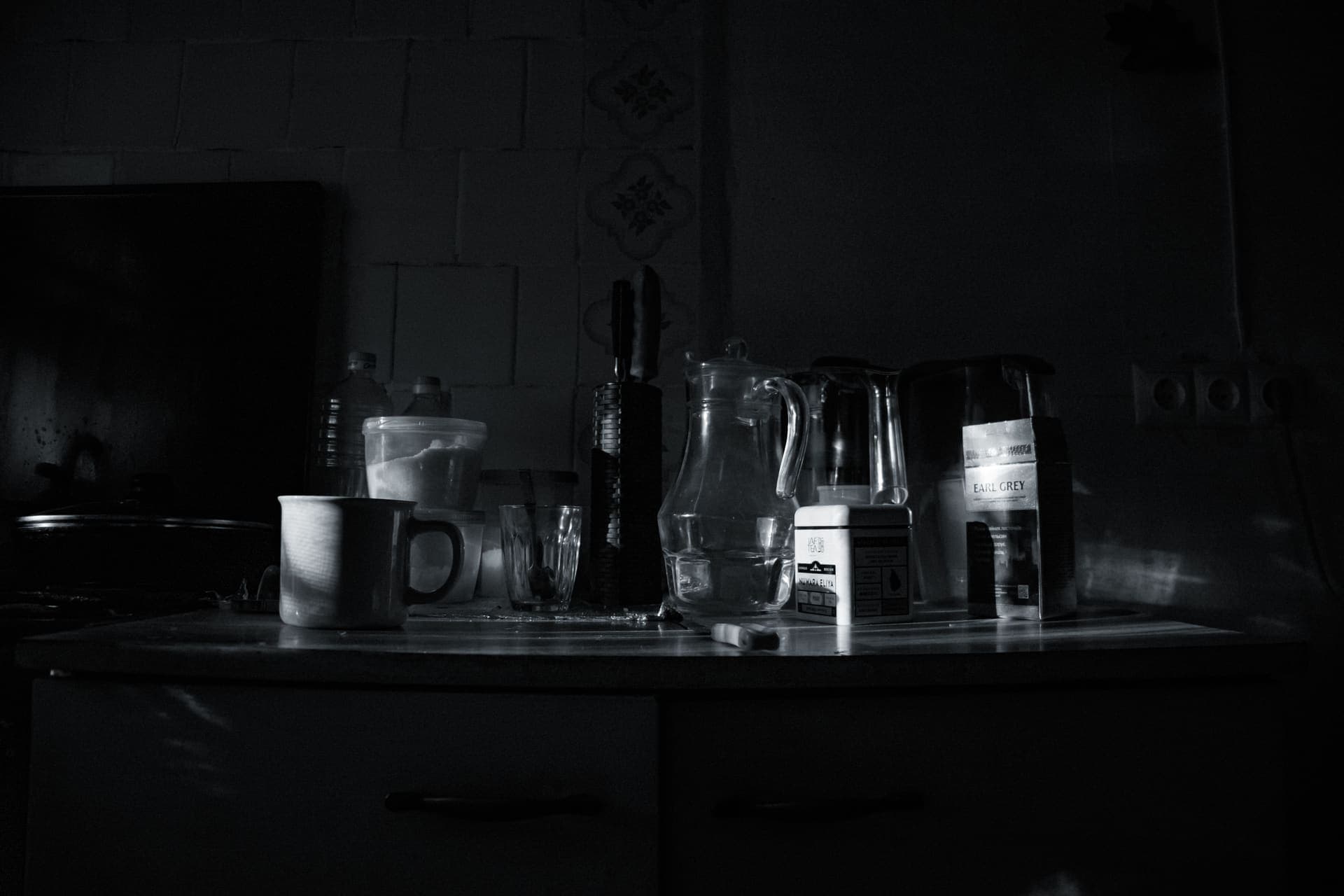
Glass pitchers are usually bought to keep water away from plastic, and almost none of them do that: the body is glass, the reservoir and lid are not. What glass genuinely buys you is a surface that does not scratch, stain or hold odors. One mainstream glass pitcher carries real filter certifications.
Quick picks
Tap any row to jump to the full write-up. The button goes straight to the retailer.
| # | Product | Best for | Price |
|---|---|---|---|
| 1 | 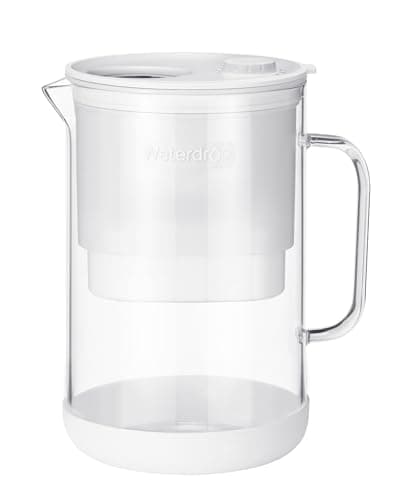 Waterdrop PT-09W 10-Cup Glass Filter Pitcher10 cups, a cartridge certified for chlorine and mercury, with PFOA/PFOS from lab testing. Waterdrop PT-09W 10-Cup Glass Filter Pitcher10 cups, a cartridge certified for chlorine and mercury, with PFOA/PFOS from lab testing. | Best glass pitcher | $58.89 - View on Amazon $73.99 — 20% off #ad Price as of October 6, 2026. We may earn a commission. Disclosure. |
| 2 | 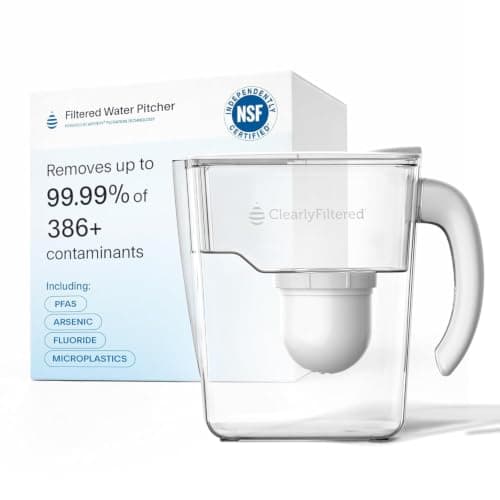 Clearly Filtered Water Pitcher (Affinity)Tested against four NSF standards across 386+ contaminants. Tritan body, not glass. Clearly Filtered Water Pitcher (Affinity)Tested against four NSF standards across 386+ contaminants. Tritan body, not glass. | Best claim list, in plastic | $87.99 - View on Amazon $109.99 — 20% off #ad Price as of October 6, 2026. We may earn a commission. Disclosure. |
| 3 | 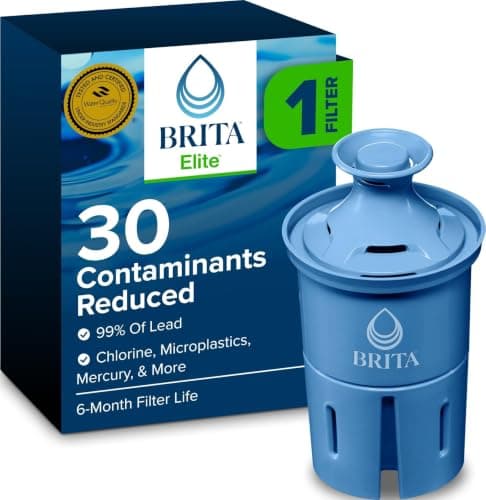 Brita Elite Filter (with any Brita pitcher)Certified to NSF/ANSI 42, 53 and 401 at 120 rated gallons — the cheapest real certification. Brita Elite Filter (with any Brita pitcher)Certified to NSF/ANSI 42, 53 and 401 at 120 rated gallons — the cheapest real certification. | Best certified filter, in plastic | $19.88 - View on Amazon #ad Price as of October 6, 2026. We may earn a commission. Disclosure. |
| 4 | 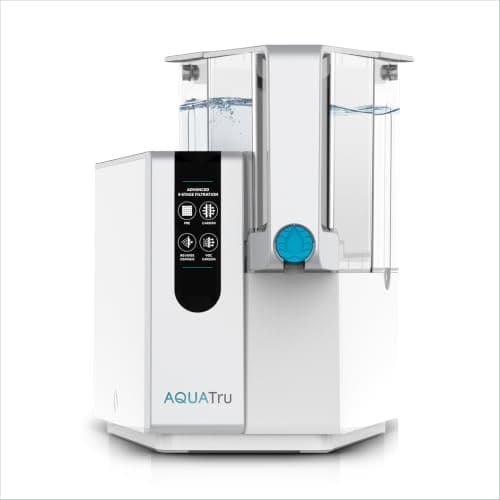 AquaTru Classic Countertop Reverse Osmosis PurifierCountertop reverse osmosis, certified across 53, 58, 401 and P473, with a glass carafe option. AquaTru Classic Countertop Reverse Osmosis PurifierCountertop reverse osmosis, certified across 53, 58, 401 and P473, with a glass carafe option. | If the goal is fewer contaminants, not glass | $403.75 - View on Amazon $475.00 — 15% off #ad Price as of October 6, 2026. We may earn a commission. Disclosure. |
The criteria, in the order that decides it
- What does the filter actually hold? A pitcher is a cartridge with a jug around it. Certification lives with the cartridge, and in this category many of them have none at all.
- Which parts are actually glass? Body, reservoir, lid, filter housing — ask about all four, because the answer for almost every product is glass for the first and plastic for the rest.
- Rated gallons. Glass pitchers tend to use shorter-life cartridges than the best plastic ones, which changes the cost per gallon more than the purchase price does.
- Weight and breakage. A full 10-cup glass pitcher is heavy, and it is going in and out of a fridge several times a day.
- Cleaning. This is the one place glass wins outright, and it is a better reason to buy than the one most people give.
The plastic that stays in a glass pitcher
Waterdrop describes the PT-09 as glass with a plastic inner liner. That is typical for the format rather than a criticism of this product: the upper reservoir has to hold a cartridge in a sealed seat, and glass is a poor material for a part that needs threads, clips and a watertight fit.
So the water sits in plastic while it filters, passes through a plastic cartridge shell, and lands in a glass jug. Buy it for the jug. If your concern is microplastic shedding or leaching from a scratched reservoir, the microplastics page covers what is actually measured and what is not.
What glass genuinely buys you
- It does not scratch. A plastic reservoir accumulates fine scratches that hold biofilm, and biofilm is the most common cause of filtered water tasting stale.
- It does not stain or hold odors. Coffee, tea, a forgotten slice of lemon — glass forgives all of it and a plastic jug does not.
- It goes in the dishwasher without clouding. Which is what makes the weekly clean actually happen, and the vessel is a bigger cause of bad-tasting filtered water than most people believe.
The certification picture in this category
| Waterdrop PT-09W | Clearly Filtered | Brita Elite | |
|---|---|---|---|
| Body | Glass with plastic liner | Tritan plastic | Plastic |
| Standards | 42 (chlorine), 53 (mercury), 372 (materials) | Tested to 42, 53, 401, P473 | Certified 42, 53, 401 |
| PFOA / PFOS | Lab-tested, not certified | Tested, not certified | Not certified |
| Per-contaminant figures | Not published | Published | Published |
| Rated life | 100 gallons / about 2 months | 100 gallons | 120 gallons / about 6 months |
| Capacity | 10 cups | 10 cups | Fits most Brita pitchers |
The Waterdrop is the only mainstream glass pitcher we could find whose cartridge is listed against NSF standards at all, which is why it leads. Read that listing precisely, though: the 53 certification covers mercury, and the copper, cadmium and PFOA/PFOS figures come from third-party laboratory testing rather than from the certification. The Waterdrop brand page sets out what the rest of the range is and is not certified for. There is no per-contaminant reduction table either, so the claim list is broader than the evidence behind it, and that is worth knowing before you pay a premium over the Brita.
Waterdrop against Brita is the same trade in one comparison: longer cartridge life on one side, a lead certification on the other.
If certification matters more to you than material, the honest ranking flips: the Brita Elite is certified under all three of its standards with published figures, at a fraction of the cost per gallon. Glass is a preference, not a filtration upgrade.
The design-led pitchers, and why none of them is a pick
The premium end of this category — the stainless-and-glass objects that cost several times a Brita — publishes no certification we could verify. They are beautiful and they are filters of unknown performance. This site does not rank a product above a certified one because it looks better on a counter, so they are not here.
If that is what you want, buy it knowingly: you are buying an object, and the filtration is unquantified.
The alternative nobody suggests
If glass is about storage rather than filtration, decouple the two. Filter with whatever is certified for the contaminant you care about — a certified pitcher, a faucet mount, or an under-sink system — and store the result in a glass carafe in the fridge.
That gets you certified filtration and glass storage for less than most glass pitchers cost, and the water spends its longest stretch in glass rather than its shortest.
The cost-per-gallon math
Glass carries a price premium at purchase and a second one in cartridges.
The Waterdrop glass pitcher is rated at 100 gallons per cartridge; the Brita Elite is rated at 120. On the same household consumption the Waterdrop asks for more cartridges per year, and its replacements are not cheaper.
Work it as cartridge price divided by rated gallons, add the purchase price spread over three years, and the glass option costs meaningfully more per gallon. That is a legitimate thing to pay for a jug you enjoy using — it is not a filtration improvement, and nobody should sell it to you as one.
We show the arithmetic rather than a verdict so you can redo it with the price you actually pay. Filter prices move; the rated capacities above do not.
The picks in full
Best glass pitcher
Waterdrop PT-09W 10-Cup Glass Filter Pitcher
Waterdrop
The one mainstream glass pitcher whose cartridge is listed against NSF standards. Read the body description carefully though: the pitcher is glass with a plastic inner liner, which is not the same as plastic-free.
Certification status
Waterdrop lists the PT-09 cartridge as certified against NSF/ANSI 42 for chlorine, taste and odor, against NSF/ANSI 53 for mercury, and to NSF/ANSI 372 for lead-free materials. Copper, cadmium and PFOA/PFOS are covered by third-party laboratory testing rather than by that certification, which is a different kind of evidence. The PT-09 does not appear in NSF's own listing database under any standard, so the certification presumably sits with another body. Waterdrop states the rated life is 100 gallons, and it publishes no per-contaminant reduction table the way Brita and PUR do.
Published specifications
| Capacity | 10 cups |
|---|---|
| Body | Glass, with a plastic inner liner |
| Rated filter life | 100 gallons / about 2 months |
| Flow | About 8.5 oz per minute |
| Standards claimed | NSF/ANSI 42 (chlorine, taste, odor), 53 (mercury), 372 (materials) |
| Certified claims | Chlorine, taste and odor, mercury |
| Lab-tested claims | Copper, cadmium, PFOA/PFOS |
| Filtration | 5-stage: carbon fiber, ion exchange resin, carbon block |
What we like
- A PFOA/PFOS reduction claim from third-party laboratory testing, which almost no glass pitcher carries at all
- Glass body does not hold odors or stain the way a scratched plastic reservoir does
- Dishwasher-friendly body, which is the practical reason people want glass
What we do not
- The plastic inner liner means water still contacts plastic — buy it for cleaning and odor, not for a plastic-free claim
- 100 rated gallons is short, and about two months for most households
- No published per-contaminant reduction table to check the claims against, and the 53 certification covers mercury rather than lead
- Glass is heavy when full, and it breaks
Skip it if
Anyone buying glass specifically to keep water away from every plastic surface. This pitcher does not do that, and no pitcher we could verify does it completely.
$73.99 — 20% off
#ad Price as of October 6, 2026. We may earn a commission. Disclosure.
Best claim list, in plastic
Clearly Filtered Water Pitcher (Affinity)
Clearly Filtered
The broadest claim list of any pitcher we list, and the one that needs the most careful reading: it is independently tested to NSF standards, not certified by a listing body. That distinction is the whole decision.
Certification status
Two different kinds of evidence sit on this pitcher. NSF's own listing records the Filtered Water Pitcher under NSF/ANSI 42 at 100 gallons for chlorine reduction and taste and odor reduction, and Clearly Filtered states it holds NSF/ANSI 42 and 372 certifications and is pursuing 53 and 401. Everything beyond that — the 386+ contaminant list, including fluoride, PFAS, arsenic and chromium-6 — comes from testing at QFT, now IAPMO New Jersey, an ISO 17025 laboratory working to NSF/ANSI protocols. Test data, not a certification listing.
Published specifications
| Capacity | 80 oz / 10 cups |
|---|---|
| Rated filter life | 100 gallons / about 4 months |
| Filtration | 3-stage: stainless mesh, coconut carbon, Affinity composite shell |
| Certified | NSF/ANSI 42 and 372 (chlorine, taste and odor; lead-free materials) |
| Tested, not certified | NSF/ANSI 53, 401 and P473 methods |
| Manufacturer claim | Up to 99.99% of 386+ contaminants |
| Fluoride / lead | >99.54% / 99.34% (laboratory data) |
| PFOA / PFOS | 99.64% / >99.80% (laboratory data) |
| Housing | Tritan, BPA-free |
What we like
- Addresses PFAS and fluoride, which most certified pitchers do not touch
- 100-gallon rated life is far longer than ZeroWater's
- Published test data covers an unusually wide contaminant list
What we do not
- Outside chlorine and materials, every claim is test data rather than a certification listing
- Highest sticker price in the pitcher tier
- Flow is slow even by pitcher standards
Skip it if
Anyone who needs a certification listing for a specific contaminant — for a landlord, a lender, a health directive, or their own peace of mind. If the listing is what you need, buy a certified product instead.
$109.99 — 20% off
#ad Price as of October 6, 2026. We may earn a commission. Disclosure.
Where these specifications came from
Best certified filter, in plastic
Brita Elite Filter (with any Brita pitcher)
Brita
The cheapest route to an NSF/ANSI 53 lead certification. It drops into a pitcher most households already have, and it is emphatically not the same filter as the white Brita Standard.
Certification status
Certified to NSF/ANSI 42, 53 and 401. The lead certification belongs to the Elite (blue) filter only — the Standard (white) filter is certified to NSF/ANSI 42 for taste and odor and is not certified for lead. Per Brita's January 2026 performance data sheet the Elite is not certified for PFOA or PFOS, and no Brita pitcher filter is certified for fluoride.
Published specifications
| Rated filter life | 120 gallons / about 6 months |
|---|---|
| Standard filter life, for comparison | 40 gallons / about 2 months |
| Certified standards | NSF/ANSI 42, 53, 401 |
| Lead | Certified under NSF/ANSI 53 |
| PFOA / PFOS | Not certified (January 2026 performance data sheet) |
| Fluoride | Not certified, not claimed |
What we like
- Genuine NSF/ANSI 53 lead certification at the lowest entry price of anything on this site
- Fits Brita pitchers and dispensers already in millions of kitchens — no new hardware
- Three times the rated life of the Standard filter, which changes the cost-per-gallon math
What we do not
- Not certified for PFOA or PFOS, so it is the wrong answer to a PFAS worry
- No fluoride claim at all
- Slow gravity flow, like every pitcher
Skip it if
Anyone whose actual worry is PFAS or fluoride. The Elite is not certified for either, and buying it for those is buying the wrong thing.
#ad Price as of October 6, 2026. We may earn a commission. Disclosure.
Where these specifications came from
If the goal is fewer contaminants, not glass
AquaTru Classic Countertop Reverse Osmosis Purifier
AquaTru
Reverse osmosis performance with no plumbing, no drilling and no landlord conversation. You pay for that with counter space, a wait, and two tanks you fill and empty by hand.
Certification status
Certified by IAPMO to NSF/ANSI 53, 58, 401 and P473, covering lead, reverse-osmosis performance, emerging compounds and the PFOA/PFOS protocol.
Published specifications
| Filtration | 4-stage countertop reverse osmosis |
|---|---|
| Clean water tank | 0.75 gallons |
| Tap water tank | 1 gallon |
| Installation | None — no plumbing connection |
| Certified standards | NSF/ANSI 53, 58, 401, P473 (IAPMO) |
What we like
- Real reverse osmosis with a P473 PFOA/PFOS certification and zero installation
- The strongest answer available to a renter with a lead or PFAS problem
- No drilling, no drain saddle, no landlord permission needed
What we do not
- Takes up substantial counter space
- You refill and empty tanks by hand — it is not on-demand
- Highest purchase price in the no-plumbing tier by a wide margin
Skip it if
Anyone who can plumb in an under-sink system. A permanent under-sink RO is cheaper per gallon, on-demand, and out of sight. Buy this when you genuinely cannot install.
$475.00 — 15% off
#ad Price as of October 6, 2026. We may earn a commission. Disclosure.
Where these specifications came from
Questions people actually ask
Are glass water filter pitchers actually plastic-free?
No. Every one we could verify has a plastic reservoir, lid and cartridge housing — the glass is the outer jug. Waterdrop describes the PT-09 as glass with a plastic inner liner, which is the honest description for the whole category.
What is the best glass water filter pitcher?
The Waterdrop PT-09W, on the basis that its cartridge is the only one in the mainstream glass category listed against NSF standards at all — 42 for chlorine, taste and odor, 53 for mercury, 372 for materials, with PFOA/PFOS covered by third-party lab testing rather than the certification. It is rated at 100 gallons, which is shorter than the best plastic pitchers.
Is a glass pitcher better than a plastic one?
For cleaning, yes — it does not scratch, stain or hold odors, and a clean vessel is a common cause of filtered water tasting better. For filtration, no: the filter does that work, and the best-certified cartridges are in plastic pitchers.
Do glass pitchers filter microplastics?
That depends on the cartridge, not the jug. A glass body does not add a microplastics claim — the claim comes from an NSF/ANSI 401 listing on the filter, which the mainstream glass options do not publish.
What if I only want glass for storing water?
Then separate the jobs: filter with whatever is certified for your contaminant and pour the result into a glass carafe for the fridge. It costs less than most glass pitchers and the water spends far longer in glass.