A water softener removes calcium and magnesium from the whole house so scale stops damaging appliances; it adds sodium and removes no contaminants. Reverse osmosis treats one tap and removes dissolved contaminants including lead, fluoride, nitrate and PFAS. They are not alternatives — they fix different problems.
Quick picks
Tap any row to jump to the full write-up. The button goes straight to the retailer.
| # | Product | Best for | Price |
|---|---|---|---|
| 1 | Wno photoWhirlpool WHES40E 40,000-Grain Water Softener40,000 grains, demand regeneration, and it tolerates 10 ppm of clear-water iron. | For the scale problem | Check price on Amazon #ad We do not show a price we cannot verify today. We may earn a commission. Disclosure. |
| 2 | 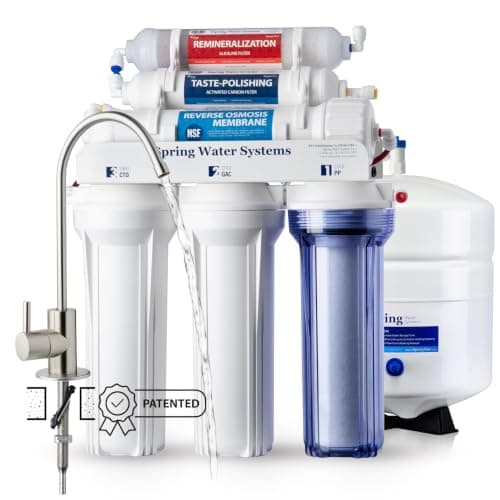 iSpring RCC7AK 6-Stage Reverse Osmosis SystemNSF/ANSI 58 certified six-stage RO with a remineralizing cartridge, at one tap. iSpring RCC7AK 6-Stage Reverse Osmosis SystemNSF/ANSI 58 certified six-stage RO with a remineralizing cartridge, at one tap. | For the drinking problem | $188.81 - View on Amazon $234.99 — 20% off #ad Price as of October 7, 2026. We may earn a commission. Disclosure. |
| 3 | 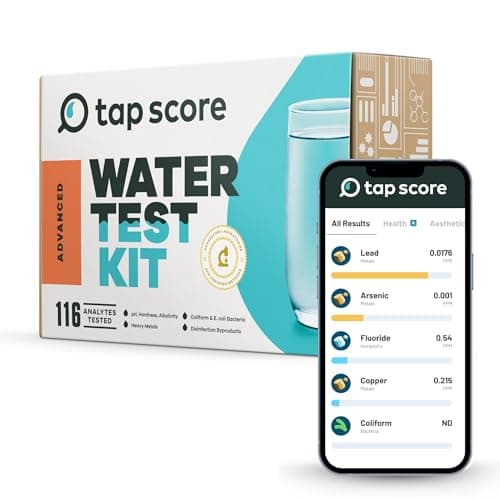 Tap Score Advanced Water Test (SimpleLab)Hardness in grains, plus the contaminant panel that decides whether you need the second machine. Tap Score Advanced Water Test (SimpleLab)Hardness in grains, plus the contaminant panel that decides whether you need the second machine. | Before either | $215.20 - View on Amazon $269.00 — 20% off #ad Price as of October 7, 2026. We may earn a commission. Disclosure. |
They are not competitors
This comparison gets searched constantly, and the framing is usually wrong. A softener and a reverse osmosis system are not two ways to do the same job. They are two machines that fix two unrelated problems, installed in two different places, at two very different prices.
| Water softener | Reverse osmosis | |
|---|---|---|
| Installed | Where water enters the house | Under one sink, or on a counter |
| Treats | Every gallon in the building | The water from one tap |
| Removes hardness | Yes, that is its entire job | Yes, at that one tap |
| Removes lead, fluoride, nitrate, PFAS | No | Yes, with the right certified claims |
| Adds anything | Sodium, in exchange for hardness | Nothing; a remineralizing stage can add minerals back |
| Running cost | Salt and regeneration water | Cartridges, a membrane and wastewater |
| Protects appliances | Yes — the main reason to buy one | No, it is downstream of all of them |
What a softener actually does
A softener is an ion exchange column. Water passes over resin beads that hold sodium ions; calcium and magnesium stick to the resin and sodium goes into the water instead. When the resin is full it regenerates with brine and flushes the hardness to the drain.
Two consequences follow, and Penn State Extension states both plainly. The exchange adds 7.5 milligrams of sodium per quart for each grain of hardness removed, and about 50 gallons of water go down the drain for each regeneration cycle. On 15-grain water that is roughly 112 mg of sodium per quart — worth knowing if someone in the house is on a sodium-restricted diet, which is the standard reason to leave the kitchen cold tap unsoftened or to put reverse osmosis on it.
The same source is blunt about the limits: water softeners will not necessarily remove any of the more serious drinking water contamination problems. A softener is a scale machine. It is not a filter. Hard water is not contamination makes the same point from the other direction.
What reverse osmosis actually does
Reverse osmosis pushes water through a membrane that rejects most dissolved material. That includes hardness minerals, which is why RO water is soft — but it treats only the tap it is plumbed to, so it does nothing for the water heater, the dishwasher or the shower glass.
What it does do is the contaminant list nothing else at household scale touches: fluoride, PFAS, nitrate, arsenic and lead, each subject to the specific claims on the specific system. Whether it is worth it depends entirely on whether any of those are on your report.
Which one your symptoms point to
| What you have noticed | The machine that fixes it |
|---|---|
| White crust on taps, kettles and shower glass | Softener |
| Soap that will not lather; stiff laundry | Softener |
| Water heater failing early, appliance scale | Softener |
| Lead, nitrate, arsenic or fluoride on your report | Reverse osmosis at the kitchen tap |
| PFAS in your utility's monitoring results | Reverse osmosis, or a certified pitcher |
| Chlorine taste only | Neither — a certified carbon filter |
| Hard water and a contaminant on the report | Both, softener first |
Why the order matters when you buy both
Plenty of houses need both, and the sequence is not arbitrary. The softener goes in first, where the water enters. The reverse osmosis system goes under the kitchen sink, downstream of it.
That order helps the membrane. Hardness is what fouls reverse osmosis membranes fastest, and a membrane fed softened water lasts longer between replacements. It also means the drinking tap is not delivering the extra sodium the softener added, because the RO membrane rejects sodium along with everything else — which neatly answers the most common objection to softening in the first place.
Filter plus softener covers the whole-house end of that decision, and filter or softener is the version of this comparison for people who do not yet know which category their problem is in.
What about a salt-free conditioner?
A template-assisted crystallization conditioner does not remove hardness; it changes how the minerals crystallize so they are less likely to stick. It adds no sodium and needs no brine, and it does less than a softener does. We compared the two here. It is not an alternative to reverse osmosis either — it treats scale, not contaminants.
The cost-per-gallon math
A softener is a larger purchase, an installation, and then salt and regeneration water for as long as you own it. A reverse osmosis system is a smaller purchase, a cartridge set once or twice a year, a membrane every two to three years, and wastewater.
The softener pays for itself in appliances that do not fail early and heating elements that do not scale up — a real saving on genuinely hard water, and nothing at all on soft water. The RO system does not pay for itself in money; it buys a contaminant reduction you either need or do not. That asymmetry is why testing first is not a stalling tactic. It is the cheapest part of the project.
We show the arithmetic rather than a verdict so you can redo it with the price you actually pay. Filter prices move; the rated capacities above do not.
The picks in full
For the scale problem
Whirlpool WHES40E 40,000-Grain Water Softener
Whirlpool
A demand-regenerating softener sized for most houses, sold in a single carton with a manual anyone can follow. It is a softener, not a filter, and that is exactly the point — nothing else on this site touches hardness.
Certification status
NSF certified. Softening capacity and iron tolerance are published by the manufacturer.
Published specifications
| Capacity | 40,000 grains |
|---|---|
| Hardness handled | Up to 125 grains per gallon |
| Clear-water iron tolerance | Up to 10 ppm |
| Service flow | 8.5 gpm |
| Dimensions | 19" D x 18" W x 47 7/8" H |
| Regeneration | Demand — regenerates on usage, not a timer |
| Power | 110/120 V AC, transformer included |
| Warranty | 10 years on salt and resin tanks; 3 years on the control board |
What we like
- Demand regeneration uses noticeably less salt and water than a timer-based unit
- One carton, one manual, no dealer visit required
- Handles up to 10 ppm clear-water iron, which many softeners in this class do not
What we do not
- Softening only — it does nothing for chlorine, lead or PFAS
- Adds sodium to the softened water, which matters on a sodium-restricted diet
- Needs a drain and a power outlet at the install point
Skip it if
Anyone whose problem is taste, odor or a health contaminant. A softener swaps calcium and magnesium for sodium; it is not a purifier and it is not marketed as one.
#ad We do not show a price we cannot verify today. We may earn a commission. Disclosure.
Where these specifications came from
For the drinking problem
iSpring RCC7AK 6-Stage Reverse Osmosis System
iSpring
The value pick of the reverse-osmosis tier: a WQA Gold Seal system with an alkaline stage, usually at the lowest price of anything here that carries a real certification.
Certification status
Certified against NSF/ANSI 58 for TDS reduction and carries the WQA Gold Seal, with 97.2% TDS removal certified.
Published specifications
| Output | 75 GPD |
|---|---|
| Stages | 6, including alkaline remineralization |
| Certified TDS reduction | 97.2% |
| Feed pressure | 45-70 psi |
| Feed temperature | 40-100 degrees F |
| Assembled size | 15.5" deep x 19.5" high, 25 lb |
| Certification | NSF/ANSI 58, WQA Gold Seal |
What we like
- Certified performance at the lowest price in the tier
- Push-fit tubing makes a first-time install genuinely manageable
- Alkaline stage included rather than sold as an upgrade
What we do not
- Narrow 45-70 psi feed window — low-pressure homes may need a booster pump
- Tank plus housing needs real cabinet depth
- Conventional reverse-osmosis drain ratio
Skip it if
Homes with feed pressure below 45 psi that will not add a booster pump, and anyone who wants a tankless footprint.
$234.99 — 20% off
#ad Price as of October 7, 2026. We may earn a commission. Disclosure.
Where these specifications came from
Before either
Tap Score Advanced Water Test (SimpleLab)
SimpleLab
Mail-in testing through certified laboratories, with a report that names contaminants, gives concentrations, and compares them against health guidelines. This is the number every system on this site is sized from.
Certification status
Samples are analyzed by laboratories in the SimpleLab network certified to ISO/IEC 17025, and Tap Score is recognized by the Water Quality Association.
Published specifications
| Method | Mail-in sample, certified laboratory analysis |
|---|---|
| Lab accreditation | ISO/IEC 17025 certified network laboratories |
| Panels available | City water, well water, and contaminant-specific tests |
| What you get | Concentrations plus health-guideline comparison |
What we like
- Certified-laboratory analysis, not a color-matching strip
- The report explains what each result means rather than dumping numbers
- Contaminant-specific panels exist when you only need one answer
What we do not
- Costs meaningfully more than a strip kit
- Turnaround is days, not minutes
- You have to actually collect the sample correctly, which is where home tests usually go wrong
Skip it if
Somebody whose entire complaint is a chlorine taste. That diagnosis is free — you can smell it — and a certified carbon filter costs less than the test.
$269.00 — 20% off
#ad Price as of October 7, 2026. We may earn a commission. Disclosure.
Where these specifications came from
Questions people actually ask
Is reverse osmosis better than a water softener?
Neither is better; they do different jobs. A softener removes calcium and magnesium from the whole house so scale stops damaging plumbing and appliances. Reverse osmosis removes dissolved contaminants — lead, fluoride, nitrate, PFAS — from one tap. If you have hard water and a contaminant on your report, you want both.
Does reverse osmosis soften water?
At the tap it is plumbed to, yes: the membrane rejects calcium and magnesium along with everything else. It does nothing for the rest of the house, so your water heater, dishwasher and shower glass still see hard water and still scale up.
Does a water softener remove contaminants?
No. Penn State Extension puts it plainly: water softeners will not necessarily remove any of the more serious drinking water contamination problems. A softener exchanges hardness for sodium. Lead, nitrate, PFAS and fluoride pass straight through it.
How much sodium does a water softener add?
About 7.5 milligrams per quart for each grain per gallon of hardness removed, per Penn State Extension. On 15-grain water that is roughly 112 milligrams per quart. It is why many households leave the kitchen cold tap unsoftened or put reverse osmosis on it.
Should the softener go before or after the reverse osmosis system?
Before. The softener treats the whole house at the point of entry; the RO system sits under the kitchen sink downstream. Feeding softened water to the membrane extends its life, because hardness is what fouls membranes fastest.