A softener removes calcium and magnesium by ion exchange. A descaler or conditioner leaves them in the water and changes their form so they are less likely to stick as scale. Both are legitimate; they achieve different things and are not interchangeable.
Quick picks
Tap any row to jump to the full write-up. The button goes straight to the retailer.
| # | Product | Best for | Price |
|---|---|---|---|
| 1 | Wno photoWhirlpool WHES40E 40,000-Grain Water SoftenerIon exchange, 40,000 grains, demand regeneration. Hardness is actually removed. | If you want soft water | Check price on Amazon #ad We do not show a price we cannot verify today. We may earn a commission. Disclosure. |
| 2 | 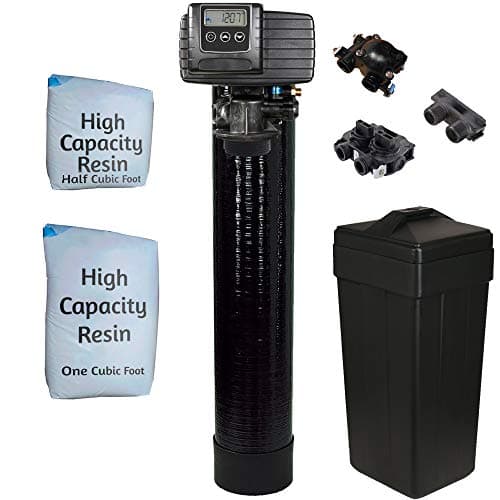 AFWFilters Fleck 5600SXT 48,000-Grain Metered Softener48,000 grains at 12 gpm on the industry-standard Fleck valve. AFWFilters Fleck 5600SXT 48,000-Grain Metered Softener48,000 grains at 12 gpm on the industry-standard Fleck valve. | If you want soft water, larger home | $793.00 - View on Amazon #ad Price as of October 17, 2026. We may earn a commission. Disclosure. |
| 3 | 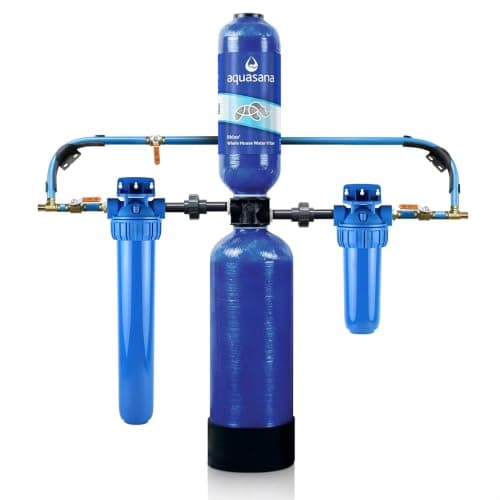 Aquasana Rhino EQ-1000 Whole-House FilterNSF/ANSI 42 certified chlorine reduction. Neither softens, and this one is honest about it. Aquasana Rhino EQ-1000 Whole-House FilterNSF/ANSI 42 certified chlorine reduction. Neither softens, and this one is honest about it. | If the goal is taste, not scale | $1,123.00 - View on Amazon #ad Price as of October 17, 2026. We may earn a commission. Disclosure. |
Two different goals
People shopping for "soft water" usually want one of two things, and they are not the same:
- Protect the plumbing and the water heater from scale. Both technologies address this.
- The experience of soft water — soap lathering, no spots, different feel on the skin. Only a softener delivers this.
Almost every disappointed descaler owner wanted the second thing and bought a product that only does the first.
Side by side
| Ion exchange softener | Descaler / conditioner | |
|---|---|---|
| Removes hardness | Yes | No |
| Hardness test after treatment | Reads low | Reads exactly the same |
| Reduces scale adhesion | Yes | Yes |
| Soap lathers better | Yes | No |
| Spot-free glassware | Yes | No |
| Different feel on skin | Yes | No |
| Needs salt | Yes, continuously | No |
| Needs a drain | Yes | No |
| Needs power | Yes | Usually not |
| Wastewater from regeneration | Yes | None |
| Adds sodium | Yes, in proportion to hardness removed | No |
How a descaler works
The mainstream technology is template-assisted crystallization. Water passes over a media bed whose surface encourages dissolved hardness to form microscopic crystals. Those crystals stay suspended in the water rather than depositing on hot surfaces, so scale adhesion is reduced.
The hardness has not gone anywhere. It is in the water, in a different physical form, behaving differently. That is a real effect with reasonable supporting evidence for scale reduction — and it is emphatically not softening.
Choosing by goal
| Your goal | Buy |
|---|---|
| Stop the water heater scaling | Either — a descaler is the lower-hassle option |
| Soap that lathers, no spots on glassware | A softener. Nothing else does this. |
| Avoid salt, or a sodium-restricted diet | A descaler, or a softener on potassium chloride |
| No drain available at the install point | A descaler — softeners must discharge brine |
| Septic system with brine discharge concerns | A descaler |
| Very hard water and appliance protection | A softener; the case builds with hardness |
What we will not claim
Descaler marketing sometimes goes further than the evidence — claiming existing scale is removed, or that the water is somehow "conditioned" beyond the crystallization effect. We are not going to endorse those claims.
What is defensible: reduced scale adhesion on hot surfaces, with no salt, no drain and no regeneration water. That is a genuinely useful product with genuine advantages. It is just not a softener, and the honest way to sell it is on its own merits rather than as a substitute.
Magnetic and electronic devices
A separate category, usually clamping onto the outside of a pipe. The evidence base is weak and inconsistent, and independent verification is thin. We do not recommend them, and we would rather say that plainly than list one to fill a slot.
The cost-per-gallon math
A softener costs salt and regeneration water, forever. A descaler costs a media replacement on a long cycle and nothing else — no salt, no drain, no power.
So the descaler is cheaper to own. The question is whether it does what you wanted, which for anyone whose complaint includes soap, glassware or skin is no.
Set both against your water heater. Scale insulates the element, so a hard-water heater consumes more energy each year and fails earlier. Both technologies address that; only one addresses everything else. Price accordingly.
We show the arithmetic rather than a verdict so you can redo it with the price you actually pay. Filter prices move; the rated capacities above do not.
The picks in full
If you want soft water
Whirlpool WHES40E 40,000-Grain Water Softener
Whirlpool
A demand-regenerating softener sized for most houses, sold in a single carton with a manual anyone can follow. It is a softener, not a filter, and that is exactly the point — nothing else on this site touches hardness.
Certification status
NSF certified. Softening capacity and iron tolerance are published by the manufacturer.
Published specifications
| Capacity | 40,000 grains |
|---|---|
| Hardness handled | Up to 125 grains per gallon |
| Clear-water iron tolerance | Up to 10 ppm |
| Service flow | 8.5 gpm |
| Dimensions | 19" D x 18" W x 47 7/8" H |
| Regeneration | Demand — regenerates on usage, not a timer |
| Power | 110/120 V AC, transformer included |
| Warranty | 10 years on salt and resin tanks; 3 years on the control board |
What we like
- Demand regeneration uses noticeably less salt and water than a timer-based unit
- One carton, one manual, no dealer visit required
- Handles up to 10 ppm clear-water iron, which many softeners in this class do not
What we do not
- Softening only — it does nothing for chlorine, lead or PFAS
- Adds sodium to the softened water, which matters on a sodium-restricted diet
- Needs a drain and a power outlet at the install point
Skip it if
Anyone whose problem is taste, odor or a health contaminant. A softener swaps calcium and magnesium for sodium; it is not a purifier and it is not marketed as one.
#ad We do not show a price we cannot verify today. We may earn a commission. Disclosure.
Where these specifications came from
If you want soft water, larger home
AFWFilters Fleck 5600SXT 48,000-Grain Metered Softener
AFWFilters
The Fleck 5600SXT is the valve independent water-treatment dealers have used for decades, which means parts, manuals and people who know it are everywhere. Assembled rather than boxed as an appliance.
Certification status
Manufacturer-published capacity and flow figures. The valve is an industry-standard component with widely available service parts.
Published specifications
| Capacity | 48,000 grains |
|---|---|
| Resin | 1.5 cubic feet, 8% cross-linked |
| Resin tank | 10" x 54" |
| Brine tank | 14" |
| Service flow | Up to 12 gpm |
| Control | Fleck 5600SXT digital metered valve |
| Connection | 1" male threaded yoke, bypass valve included |
| Warranty | 5 years on the valve, 10 years on the tank |
What we like
- Fleck valves are the industry standard, so service parts and expertise are genuinely available
- Higher capacity and flow than most consumer-boxed softeners
- Metered regeneration rather than a clock
What we do not
- Ships as components — you assemble and load the resin yourself
- Larger physical footprint than an appliance-style unit
- No help at all with anything other than hardness
Skip it if
Anyone who wants an appliance experience. If loading a resin tank and programming a valve sounds like a bad Saturday, buy a boxed softener or hire a dealer.
#ad Price as of October 17, 2026. We may earn a commission. Disclosure.
Where these specifications came from
If the goal is taste, not scale
Aquasana Rhino EQ-1000 Whole-House Filter
Aquasana
A million-gallon point-of-entry filter for chlorinated municipal supply. It fixes the shower and the laundry as well as the kitchen tap, and it does not pretend to be a health-contaminant system.
Certification status
Certified by NSF International to NSF/ANSI 42, with the tank certified to NSF/ANSI 61 for material safety. NSF/ANSI 42 is an aesthetic-effects standard — taste, odor and chlorine — not a health-effects claim.
Published specifications
| Rated capacity | 1,000,000 gallons / up to 10 years |
|---|---|
| Rated flow | 7.0 gpm |
| Max operating pressure | 100 psi |
| Operating temperature | 40-90 degrees F |
| Dimensions | 46" L x 9" W x 44" H, 44.1 lb |
| Certified standards | NSF/ANSI 42; tank to NSF/ANSI 61 |
| Published chlorine reduction | Greater than 97% |
What we like
- Ten years or a million gallons before the main media is due — effectively no maintenance routine
- Treats every tap, so showers and laundry benefit, not just drinking water
- NSF/ANSI 61 material certification on the tank
What we do not
- NSF/ANSI 42 only — this is a chlorine and aesthetics system, not a lead or PFAS system
- Needs a main-line install, usually a plumber, and space where the water enters
- Does nothing for hardness
Skip it if
Anyone buying it to solve lead, PFAS or hard water. It is certified for aesthetic effects. Pair it with an under-sink system for drinking-water health contaminants, and a softener for hardness.
#ad Price as of October 17, 2026. We may earn a commission. Disclosure.
Where these specifications came from
Questions people actually ask
Do salt-free water softeners work?
They reduce scale adhesion, which is real. They do not soften water — hardness is still present after treatment, so soap will not lather any better and glassware will still spot. Calling them softeners is the source of most of the disappointment in this category.
Which is better for my water heater?
Both help. A softener removes the hardness so scale cannot form; a descaler changes its form so it is less likely to stick. If protecting the heater is your only goal, a descaler is the lower-hassle option with no salt and no drain.
Will a descaler remove existing scale?
Some manufacturers claim gradual removal over time. The evidence for that is weaker than the evidence for preventing new adhesion, and we would not buy one on that basis. Descale mechanically or chemically first if you have existing buildup.
Do magnetic water conditioners work?
The evidence base is weak and inconsistent, and independent verification is thin. We do not recommend them. Template-assisted crystallization is the salt-free technology with reasonable supporting evidence.