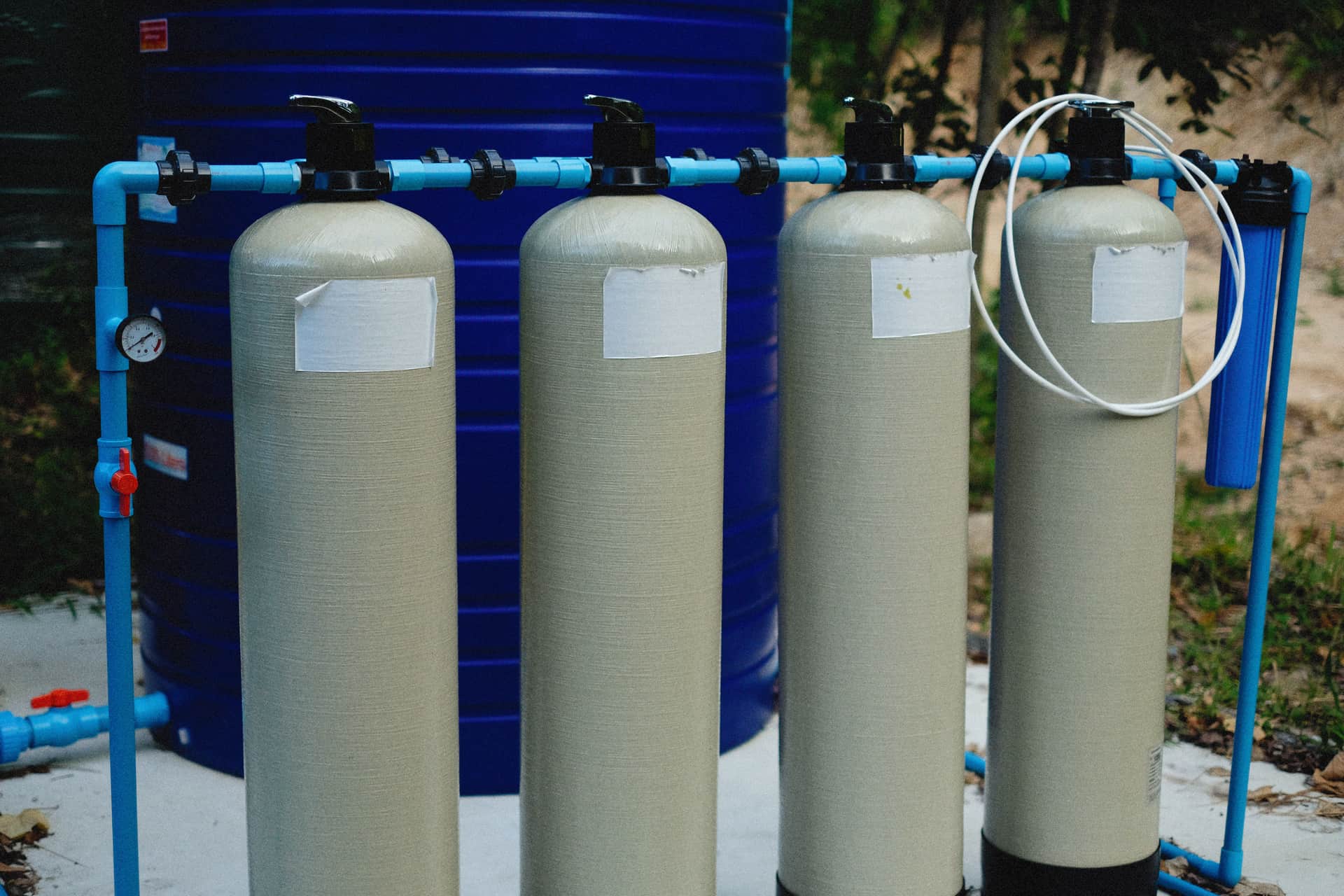
It is worth it if your water contains fluoride, nitrate, arsenic or high dissolved solids, because nothing else at household scale removes them. If your complaint is chlorine taste or lead, a certified carbon filter does the job for less money, no wastewater and no lost minerals.
Quick picks
Tap any row to jump to the full write-up. The button goes straight to the retailer.
| # | Product | Best for | Price |
|---|---|---|---|
| 1 | 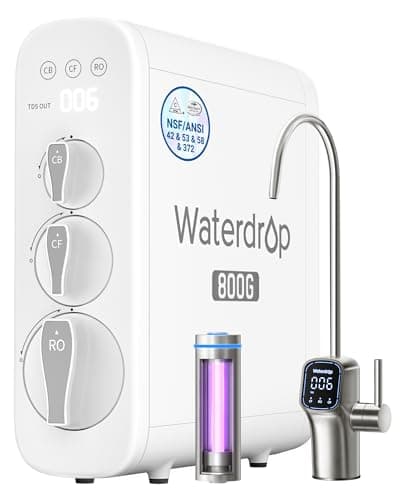 Waterdrop G3P800 Tankless Reverse Osmosis SystemTankless, 800 GPD, 3:1 published pure-to-drain, certified to NSF/ANSI 42, 53 and 58. Waterdrop G3P800 Tankless Reverse Osmosis SystemTankless, 800 GPD, 3:1 published pure-to-drain, certified to NSF/ANSI 42, 53 and 58. | If the answer is yes | $699.00 - View on Amazon $999.00 — 30% off #ad Price as of October 6, 2026. We may earn a commission. Disclosure. |
| 2 | 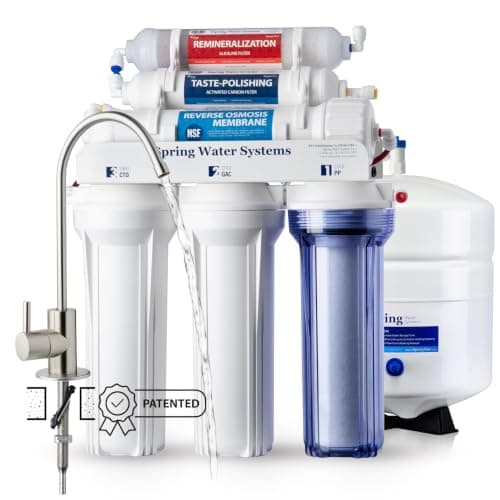 iSpring RCC7AK 6-Stage Reverse Osmosis SystemNSF/ANSI 58 certified with published figures, alkaline stage included, tank format. iSpring RCC7AK 6-Stage Reverse Osmosis SystemNSF/ANSI 58 certified with published figures, alkaline stage included, tank format. | Best value yes | $198.75 - View on Amazon $234.99 — 15% off #ad Price as of October 6, 2026. We may earn a commission. Disclosure. |
| 3 | 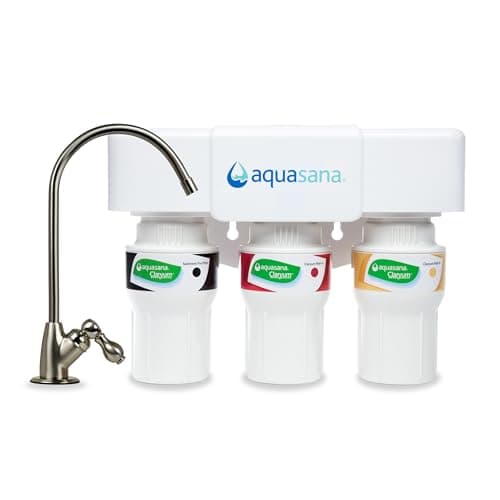 Aquasana Claryum 3-Stage Under-Sink Filter (AQ-5300)Certified carbon block for lead and chlorine: no wastewater, no tank, minerals intact. Aquasana Claryum 3-Stage Under-Sink Filter (AQ-5300)Certified carbon block for lead and chlorine: no wastewater, no tank, minerals intact. | If the answer is no | $154.99 - View on Amazon $349.99 — 56% off #ad Price as of October 6, 2026. We may earn a commission. Disclosure. |
| 4 | 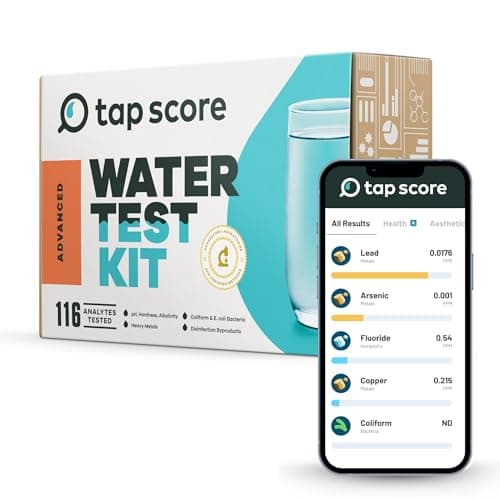 Tap Score Advanced Water Test (SimpleLab)A laboratory panel turns this question from a preference into a decision. Tap Score Advanced Water Test (SimpleLab)A laboratory panel turns this question from a preference into a decision. | How to find out which | $215.20 - View on Amazon $269.00 — 20% off #ad Price as of October 6, 2026. We may earn a commission. Disclosure. |
What you are actually buying
Reverse osmosis pushes water against a semipermeable membrane. Water passes; most dissolved contaminants are rejected by size and charge and flushed to the drain. That mechanism is the reason RO reaches things carbon cannot, and the reason it comes with the drawbacks it does — the rejected material has to go somewhere, and the membrane cannot tell a useful mineral from a contaminant.
So the question is not whether RO works. It is whether the things only RO removes are in your water.
The four cases where it is worth it
| Contaminant | Carbon block | Reverse osmosis | Where it comes from |
|---|---|---|---|
| Fluoride | No | Yes | Added by the utility, or natural in groundwater |
| Nitrate | No | Yes | Fertilizer, manure, septic systems |
| Arsenic | No | Yes, under NSF/ANSI 58 | Geology, mostly in the West and Midwest |
| Total dissolved solids | No | Yes | Salty or brackish supply, high-mineral wells |
| Lead | Yes, certified under 53 | Yes | Your own service line and solder |
| Chlorine and taste | Yes | Yes | Disinfection, on purpose |
The top four rows are the argument. If a test or your water quality report puts any of them in your water at a level you care about, reverse osmosis is the household answer and there is no cheaper technology that does the same job.
The bottom two rows are where the money gets wasted. Lead and chlorine are both handled by a carbon block certified to NSF/ANSI 53, which costs less, wastes no water and needs no drain connection.
The three real costs
Wastewater. Every RO system sends some water to the drain. The published pure-to-drain ratio is the number to compare and it varies by a factor of several between systems — tankless units publish figures like 3:1 or 2.5:1 in the product's favor, while conventional tank systems commonly run the other way. On a well, on a septic system, or anywhere water is expensive, this is a real line item.
Minerals. The membrane removes calcium and magnesium along with everything else. USDA's nationally representative survey of US tap water found that at two liters a day, only four minerals supply more than 1% of the Daily Value — copper at 10%, calcium 6%, magnesium 5%, sodium 3%. That is the honest size of what you lose: real, small, and easily replaced by food. Taste is the more common complaint, and remineralization stages exist for it.
Maintenance. Pre-filters roughly annually, a membrane every few years, and proprietary cartridges on most systems. This is not a buy-once purchase, and the full cost page lays out the arithmetic over a decade.
The objections that are overstated
- "RO water is acidic and bad for you." Reverse osmosis water does sit slightly lower on the pH scale, and the evidence that this matters for a person with a normal diet is not there. If it bothers you, an alkaline or calcite stage is a cartridge, not a reason to avoid the technology.
- "It strips everything, so it is dead water." It removes most dissolved solids, which is the entire point when the dissolved solids include arsenic. The mineral loss is quantified above and it is small.
- "It wastes gallons for every gallon." True of older conventional systems, and much less true of modern tankless ones with published ratios. Compare the number rather than the reputation.
The objections that are real
- It needs space, and possibly a drilled counter. A tank system plus housing takes most of a cabinet. Direct-connect variants avoid the drilling; tankless ones avoid the tank and need a power outlet instead.
- It is slow, unless you buy output. A 75 GPD tank system refills at a pace you will notice when filling a stockpot.
- It is not a disinfection barrier. On a private well, bacteria are a separate problem needing UV or chlorination.
A three-question test
- Do you have a number for fluoride, nitrate, arsenic or TDS? If yes, and it concerns you, buy reverse osmosis.
- Is your only concern lead, chlorine, or taste? Buy a certified carbon block and keep the money.
- Do you not know? Test. It costs a fraction of either system and it is the only step that converts this into a decision rather than a preference.
Filtration versus reverse osmosis goes through the technology comparison in more depth, and the tier guide handles the broader question of where in the house to treat.
The cost-per-gallon math
Run the comparison over five years, per gallon of water you actually drink.
A household of four drinking and cooking with filtered water uses roughly 200 gallons a year. Against that, an under-sink RO system is purchase plus pre-filters annually plus a membrane every few years, and a certified carbon block is purchase plus a cartridge set on its own rated schedule.
The carbon block wins on cost, every time. It only loses when the water contains something it cannot remove — at which point its price stops being relevant, because it is not solving the problem. That is the whole decision, and it is settled by a test rather than by a preference.
We show the arithmetic rather than a verdict so you can redo it with the price you actually pay. Filter prices move; the rated capacities above do not.
The picks in full
If the answer is yes
Waterdrop G3P800 Tankless Reverse Osmosis System
Waterdrop
Tankless reverse osmosis that gives back the cupboard a pressure tank would eat, fills a glass without the pause, and sends markedly less water down the drain than a classic tank system.
Certification status
Certified to NSF/ANSI 42 for chlorine reduction, NSF/ANSI 53 and 58 for TDS, fluoride, cadmium, hexavalent chromium and selenium, and NSF/ANSI 372 for lead-free materials.
Published specifications
| Output | 800 GPD |
|---|---|
| Pure-to-drain ratio | 3:1 |
| Format | Tankless — no pressure tank |
| Certified standards | NSF/ANSI 42, 53, 58, 372 |
| Installation | Two holes: smart LED faucet and drain |
| Faucet | Included, with TDS display |
What we like
- No pressure tank, so it fits cabinets a tank system cannot
- 3:1 pure-to-drain is far better than the ratio typical of older reverse osmosis
- 800 GPD means no waiting for a tank to refill
What we do not
- Needs a power outlet under the sink — a real constraint in older kitchens
- Proprietary filter cartridges, so you are tied to Waterdrop's pricing
- Requires drilling for the included faucet unless you have a spare hole
Skip it if
Renters, and anyone with no outlet under the sink. It is a permanent, powered installation — a countertop unit is the answer if you cannot commit to that.
$999.00 — 30% off
#ad Price as of October 6, 2026. We may earn a commission. Disclosure.
Where these specifications came from
Best value yes
iSpring RCC7AK 6-Stage Reverse Osmosis System
iSpring
The value pick of the reverse-osmosis tier: a WQA Gold Seal system with an alkaline stage, usually at the lowest price of anything here that carries a real certification.
Certification status
Certified against NSF/ANSI 58 for TDS reduction and carries the WQA Gold Seal, with 97.2% TDS removal certified.
Published specifications
| Output | 75 GPD |
|---|---|
| Stages | 6, including alkaline remineralization |
| Certified TDS reduction | 97.2% |
| Feed pressure | 45-70 psi |
| Feed temperature | 40-100 degrees F |
| Assembled size | 15.5" deep x 19.5" high, 25 lb |
| Certification | NSF/ANSI 58, WQA Gold Seal |
What we like
- Certified performance at the lowest price in the tier
- Push-fit tubing makes a first-time install genuinely manageable
- Alkaline stage included rather than sold as an upgrade
What we do not
- Narrow 45-70 psi feed window — low-pressure homes may need a booster pump
- Tank plus housing needs real cabinet depth
- Conventional reverse-osmosis drain ratio
Skip it if
Homes with feed pressure below 45 psi that will not add a booster pump, and anyone who wants a tankless footprint.
$234.99 — 15% off
#ad Price as of October 6, 2026. We may earn a commission. Disclosure.
Where these specifications came from
If the answer is no
Aquasana Claryum 3-Stage Under-Sink Filter (AQ-5300)
Aquasana
Carbon-block filtration rather than reverse osmosis: it keeps the minerals, wastes nothing, and fits where a reverse-osmosis system will not. It also cannot do what RO does for fluoride or nitrate.
Certification status
WQA tested and certified to NSF/ANSI 42, 53 — which includes the P473 protocol for PFOA and PFOS — and 401, for the reduction of 78 contaminants. Aquasana publishes 99.6% for lead and microplastics, 99.7% for PFOA and PFOS, 99.99% for cysts and 97% for chlorine across the Claryum 3-Stage line.
Published specifications
| Filter life | 600 gallons / up to 6 months |
|---|---|
| Certified standards | NSF/ANSI 42, 53 (includes P473), 401 (WQA) |
| Flow rate | 0.5 gpm |
| Wastewater | None |
| Format | 3-stage carbon block with a dedicated faucet |
| Contaminants claimed | 78 |
| Lead / PFOA and PFOS | 99.6% / 99.7% |
What we like
- No drain line, no wastewater, no tank — much easier to install than reverse osmosis
- NSF/ANSI 401 certification covers pharmaceutical-class trace compounds
- Full flow rate, unlike reverse osmosis, so filling a pot is not a project
What we do not
- Not reverse osmosis: no meaningful fluoride, nitrate or TDS reduction
- 600-gallon filter life is short next to an inline system's tens of thousands
- Proprietary cartridges
Skip it if
Anyone whose problem is fluoride, nitrate or total dissolved solids. Carbon block does not remove those; you need reverse osmosis for that job.
$349.99 — 56% off
#ad Price as of October 6, 2026. We may earn a commission. Disclosure.
How to find out which
Tap Score Advanced Water Test (SimpleLab)
SimpleLab
Mail-in testing through certified laboratories, with a report that names contaminants, gives concentrations, and compares them against health guidelines. This is the number every system on this site is sized from.
Certification status
Samples are analyzed by laboratories in the SimpleLab network certified to ISO/IEC 17025, and Tap Score is recognized by the Water Quality Association.
Published specifications
| Method | Mail-in sample, certified laboratory analysis |
|---|---|
| Lab accreditation | ISO/IEC 17025 certified network laboratories |
| Panels available | City water, well water, and contaminant-specific tests |
| What you get | Concentrations plus health-guideline comparison |
What we like
- Certified-laboratory analysis, not a color-matching strip
- The report explains what each result means rather than dumping numbers
- Contaminant-specific panels exist when you only need one answer
What we do not
- Costs meaningfully more than a strip kit
- Turnaround is days, not minutes
- You have to actually collect the sample correctly, which is where home tests usually go wrong
Skip it if
Somebody whose entire complaint is a chlorine taste. That diagnosis is free — you can smell it — and a certified carbon filter costs less than the test.
$269.00 — 20% off
#ad Price as of October 6, 2026. We may earn a commission. Disclosure.
Where these specifications came from
Questions people actually ask
Is reverse osmosis worth the money?
It is if your water contains fluoride, nitrate, arsenic or high dissolved solids — nothing cheaper removes them at household scale. If your concerns are lead and chlorine, a certified carbon block reaches both for less money, with no wastewater and no mineral loss.
How much water does reverse osmosis waste?
It varies by a factor of several, which is why the published pure-to-drain ratio is the number to compare. Modern tankless systems publish figures like 3:1 and 2.5:1 in the product's favor; conventional tank systems commonly run the other way.
Does RO water lack minerals I need?
It removes them, and the amount lost is small: USDA's national survey of US tap water found that at two liters a day, calcium supplies about 6% of the Daily Value and magnesium about 5%. Food covers that easily, and remineralization stages exist if the flat taste bothers you.
Is reverse osmosis better than a carbon filter?
Better at a different job. RO reaches fluoride, nitrate, arsenic and dissolved solids that carbon cannot. Carbon keeps the minerals, wastes no water, needs no drain and runs at full tap flow. Neither is an upgrade of the other — they are answers to different test results.
Do I need reverse osmosis if my water is already fine?
No, and this is the most common over-purchase in home filtration. If the annual report shows no violations and nothing tastes wrong, reverse osmosis buys you a running cost and a wastewater stream to solve a problem you do not have.