
A salty taste is almost always chloride, which EPA identifies as noticeable at around 250 mg/L. The four usual sources are road salt reaching groundwater, a water softener stuck in or mis-set on regeneration, seawater intrusion near the coast, and naturally salty geology. No carbon filter removes it — this is a reverse osmosis problem.
Quick picks
Tap any row to jump to the full write-up. The button goes straight to the retailer.
| # | Product | Best for | Price |
|---|---|---|---|
| 1 | 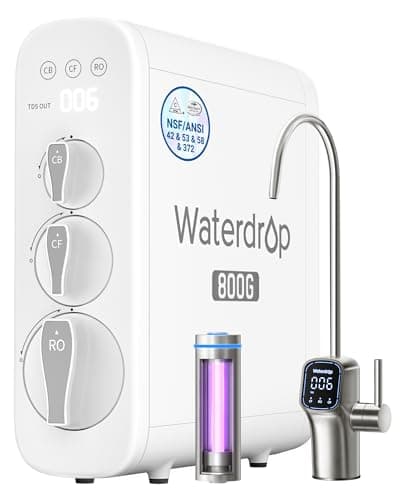 Waterdrop G3P800 Tankless Reverse Osmosis SystemTankless RO certified for TDS reduction, which is the category salty-tasting ions belong to. Waterdrop G3P800 Tankless Reverse Osmosis SystemTankless RO certified for TDS reduction, which is the category salty-tasting ions belong to. | Best overall | $699.00 - View on Amazon $999.00 — 30% off #ad Price as of October 6, 2026. We may earn a commission. Disclosure. |
| 2 | 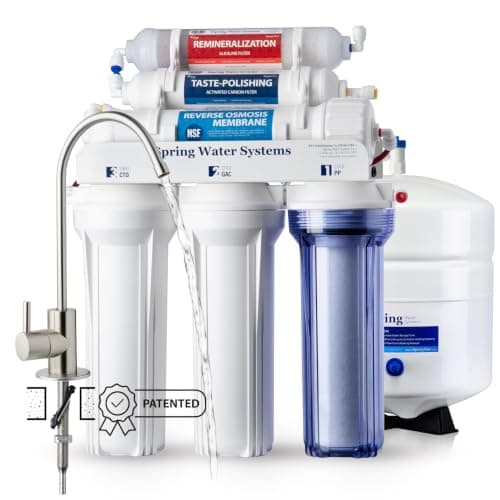 iSpring RCC7AK 6-Stage Reverse Osmosis SystemNSF/ANSI 58 certified with 97.9% TDS reduction published, plus an alkaline stage. iSpring RCC7AK 6-Stage Reverse Osmosis SystemNSF/ANSI 58 certified with 97.9% TDS reduction published, plus an alkaline stage. | Best value | $198.75 - View on Amazon $234.99 — 15% off #ad Price as of October 6, 2026. We may earn a commission. Disclosure. |
| 3 | 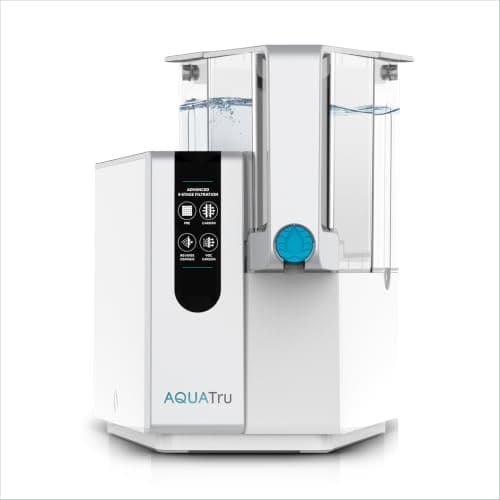 AquaTru Classic Countertop Reverse Osmosis PurifierCountertop RO certified by IAPMO, for renters and anyone who cannot install. AquaTru Classic Countertop Reverse Osmosis PurifierCountertop RO certified by IAPMO, for renters and anyone who cannot install. | Best with no plumbing | $403.75 - View on Amazon $475.00 — 15% off #ad Price as of October 6, 2026. We may earn a commission. Disclosure. |
What tastes salty, specifically
Two ions do most of the work, and EPA lists both under its secondary standards — the non-enforceable guidelines for nuisance effects rather than health.
| Substance | EPA secondary standard | Listed noticeable effect |
|---|---|---|
| Chloride | 250 mg/L | Salty taste |
| Sulfate | 250 mg/L | Salty taste |
| Total dissolved solids | 500 mg/L | Hardness, deposits, colored water, staining, salty taste |
Sodium is the other half of table salt, and it is treated differently: it is not a secondary standard, but EPA has issued guidance that sodium in drinking water should not exceed 20 mg/L for people on low-sodium diets for health reasons. That is a medical threshold rather than a taste one — most people cannot taste sodium anywhere near 20 mg/L, and individual taste thresholds vary enormously.
Which means the taste and the health question are separate. If someone in the household is on a physician-directed sodium restriction, you want a number from a laboratory, not an opinion from a tongue.
The four sources, in the order to check them
Virginia Tech's household water quality program names the realistic list: sodium and chloride occur naturally as groundwater dissolves minerals, but higher household levels often come from manmade sources such as road salt, industrial wastes, sewage, fertilizers, or water softeners, and in coastal areas from saltwater intrusion into fresh aquifers.
- Your own water softener. Check this first because it is the only source you control, and it is the most common one in a house that suddenly tastes salty. An ion-exchange softener works by swapping calcium and magnesium for sodium, so softened water always carries more sodium than the water going in — proportionally more the harder the raw water was. That is normal and usually unnoticeable. What is not normal is brine reaching the taps, which happens when a regeneration cycle is interrupted, a drain line is restricted, or the salt dose is set far above what the hardness needs.
- Road salt. Seasonal, regional and slow. Chloride from winter de-icing migrates into shallow groundwater and shows up months later, so a well near a treated road can taste saltiest in spring rather than in January.
- Seawater intrusion. Coastal aquifers over-pumped in summer draw salt water inland. The signature is a taste that worsens through the dry season and improves after sustained rain, and it can eventually render a well unusable for drinking.
- Natural geology. Some formations are simply salty — connate water, marine sedimentary rock, deep wells drilled past a fresher zone. This one does not change with the season and does not go away.
The test that costs nothing
If you have a softener, put it in bypass and drink from the tap for a day or two. Softened water leaves the system; raw water reaches the taps.
- Taste disappears in bypass: the softener is the cause. Book a service call or check the salt setting against your measured hardness before buying anything else.
- Taste persists in bypass: the salt is in your source water, and you are choosing between living with it and treating it.
On a private well, follow that with an actual test. Chloride, sodium and total dissolved solids are inexpensive parameters on any general panel, and the well testing guide covers ordering one. Municipal customers can start with their annual water quality report, though chloride is often not on it — reading that report properly tells you what it does and does not cover.
What actually removes it
This is the part people get wrong, and it is expensive to get wrong.
| Technology | Removes chloride and sodium? | Notes |
|---|---|---|
| Carbon pitcher or under-sink block | No | Carbon adsorbs organics and chlorine. Dissolved salts pass straight through |
| Water softener | No — it adds sodium | It exchanges hardness for sodium. Using one against salty water makes it worse |
| Reverse osmosis | Yes | A membrane rejects dissolved ions. This is the household answer |
| Distillation | Yes | Effective, slow, energy-hungry, and rarely the practical choice |
| Whole-house desalination | In principle | Not a realistic residential purchase. Treat the drinking tap instead |
Reverse osmosis is the only sensible route, and it is a drinking-water solution rather than a whole-house one: you treat the tap you drink and cook from, and accept salty water in the shower and the laundry, where it does no harm. The reverse osmosis roundup compares the systems in detail, and filtration versus reverse osmosis explains why the distinction matters so much here.
One warning specific to this problem: high dissolved solids shorten membrane life and slow output. A system rated for city water on a genuinely brackish well will disappoint you. If a test comes back with TDS in the thousands, that is a conversation with a local water treatment professional, not a cart on a website.
The cost-per-gallon math
The cheap outcome here is diagnosis, not equipment.
A softener service call costs a fraction of a reverse osmosis system, and if the softener is the cause it is the whole fix. A general well panel that reports chloride, sodium and TDS costs less again, and it turns the decision from a guess into arithmetic.
If reverse osmosis is genuinely the answer, price it per gallon rather than per system: membrane and cartridge replacements on a schedule, plus the wastewater the system sends to the drain. On salty feed water both numbers move in the wrong direction, which is exactly why the test comes first.
We show the arithmetic rather than a verdict so you can redo it with the price you actually pay. Filter prices move; the rated capacities above do not.
The picks in full
Best overall
Waterdrop G3P800 Tankless Reverse Osmosis System
Waterdrop
Tankless reverse osmosis that gives back the cupboard a pressure tank would eat, fills a glass without the pause, and sends markedly less water down the drain than a classic tank system.
Certification status
Certified to NSF/ANSI 42 for chlorine reduction, NSF/ANSI 53 and 58 for TDS, fluoride, cadmium, hexavalent chromium and selenium, and NSF/ANSI 372 for lead-free materials.
Published specifications
| Output | 800 GPD |
|---|---|
| Pure-to-drain ratio | 3:1 |
| Format | Tankless — no pressure tank |
| Certified standards | NSF/ANSI 42, 53, 58, 372 |
| Installation | Two holes: smart LED faucet and drain |
| Faucet | Included, with TDS display |
What we like
- No pressure tank, so it fits cabinets a tank system cannot
- 3:1 pure-to-drain is far better than the ratio typical of older reverse osmosis
- 800 GPD means no waiting for a tank to refill
What we do not
- Needs a power outlet under the sink — a real constraint in older kitchens
- Proprietary filter cartridges, so you are tied to Waterdrop's pricing
- Requires drilling for the included faucet unless you have a spare hole
Skip it if
Renters, and anyone with no outlet under the sink. It is a permanent, powered installation — a countertop unit is the answer if you cannot commit to that.
$999.00 — 30% off
#ad Price as of October 6, 2026. We may earn a commission. Disclosure.
Where these specifications came from
Best value
iSpring RCC7AK 6-Stage Reverse Osmosis System
iSpring
The value pick of the reverse-osmosis tier: a WQA Gold Seal system with an alkaline stage, usually at the lowest price of anything here that carries a real certification.
Certification status
Certified against NSF/ANSI 58 for TDS reduction and carries the WQA Gold Seal, with 97.2% TDS removal certified.
Published specifications
| Output | 75 GPD |
|---|---|
| Stages | 6, including alkaline remineralization |
| Certified TDS reduction | 97.2% |
| Feed pressure | 45-70 psi |
| Feed temperature | 40-100 degrees F |
| Assembled size | 15.5" deep x 19.5" high, 25 lb |
| Certification | NSF/ANSI 58, WQA Gold Seal |
What we like
- Certified performance at the lowest price in the tier
- Push-fit tubing makes a first-time install genuinely manageable
- Alkaline stage included rather than sold as an upgrade
What we do not
- Narrow 45-70 psi feed window — low-pressure homes may need a booster pump
- Tank plus housing needs real cabinet depth
- Conventional reverse-osmosis drain ratio
Skip it if
Homes with feed pressure below 45 psi that will not add a booster pump, and anyone who wants a tankless footprint.
$234.99 — 15% off
#ad Price as of October 6, 2026. We may earn a commission. Disclosure.
Where these specifications came from
Best with no plumbing
AquaTru Classic Countertop Reverse Osmosis Purifier
AquaTru
Reverse osmosis performance with no plumbing, no drilling and no landlord conversation. You pay for that with counter space, a wait, and two tanks you fill and empty by hand.
Certification status
Certified by IAPMO to NSF/ANSI 53, 58, 401 and P473, covering lead, reverse-osmosis performance, emerging compounds and the PFOA/PFOS protocol.
Published specifications
| Filtration | 4-stage countertop reverse osmosis |
|---|---|
| Clean water tank | 0.75 gallons |
| Tap water tank | 1 gallon |
| Installation | None — no plumbing connection |
| Certified standards | NSF/ANSI 53, 58, 401, P473 (IAPMO) |
What we like
- Real reverse osmosis with a P473 PFOA/PFOS certification and zero installation
- The strongest answer available to a renter with a lead or PFAS problem
- No drilling, no drain saddle, no landlord permission needed
What we do not
- Takes up substantial counter space
- You refill and empty tanks by hand — it is not on-demand
- Highest purchase price in the no-plumbing tier by a wide margin
Skip it if
Anyone who can plumb in an under-sink system. A permanent under-sink RO is cheaper per gallon, on-demand, and out of sight. Buy this when you genuinely cannot install.
$475.00 — 15% off
#ad Price as of October 6, 2026. We may earn a commission. Disclosure.
Where these specifications came from
Questions people actually ask
Is salty-tasting water dangerous?
The taste itself is a nuisance rather than a health effect — chloride and sulfate are secondary standards, not health-based limits. The exception is anyone on a physician-directed low-sodium diet, for whom EPA has guidance that drinking water sodium should not exceed 20 mg/L. That case needs a laboratory number rather than a taste judgment.
Can a water softener make my water taste salty?
Yes, in two ways. Softening always adds sodium in proportion to the hardness it removes, and a softener that is mis-set or stuck in regeneration can send brine to the taps. Put the unit in bypass for a day: if the taste goes with it, the softener is the cause.
Will a Brita or any carbon filter remove salt?
No. Carbon adsorbs chlorine and organic compounds; dissolved chloride and sodium pass through it untouched. No pitcher, faucet mount or carbon block on this site will change a salty taste.
Does reverse osmosis remove sodium and chloride?
Yes. An RO membrane rejects dissolved ions, which is why the certified performance claim to look for is total dissolved solids reduction under NSF/ANSI 58. It is the practical household answer to salty water, applied at the drinking tap rather than the whole house.
Why does my water taste saltier in spring?
Road salt. Chloride applied to roads in winter takes months to migrate into shallow groundwater, so a well near a treated road often tastes worst well after the snow has gone. A seasonal pattern is a strong clue about the source.