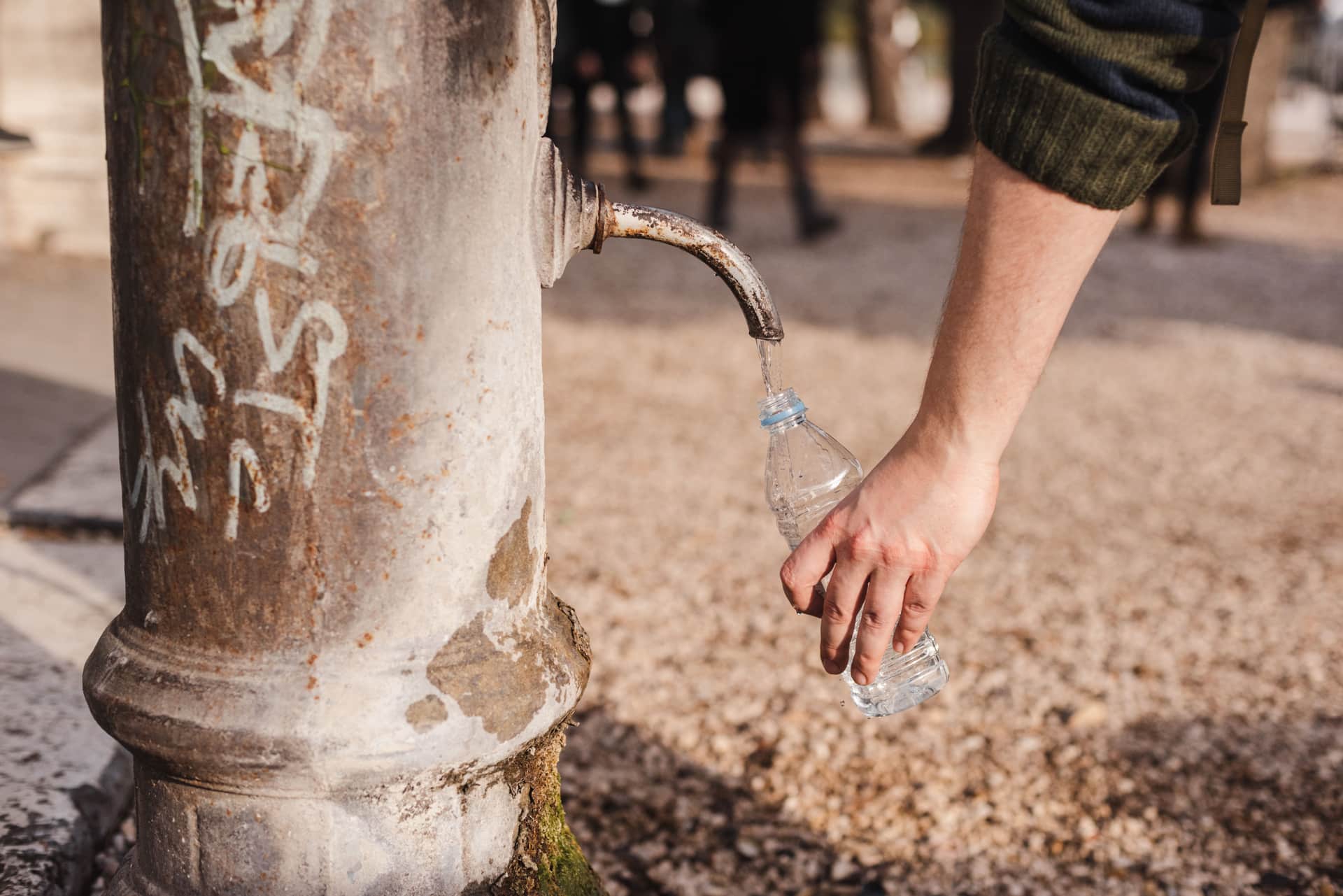
Under-sink reverse osmosis is the right way to make well water drinkable, but it is the final stage rather than the whole answer. Iron, hardness, sediment and hydrogen sulfide have to be handled before the membrane, and bacteria have to be handled separately — an RO system is not a disinfection barrier.
Quick picks
Tap any row to jump to the full write-up. The button goes straight to the retailer.
| # | Product | Best for | Price |
|---|---|---|---|
| 1 | 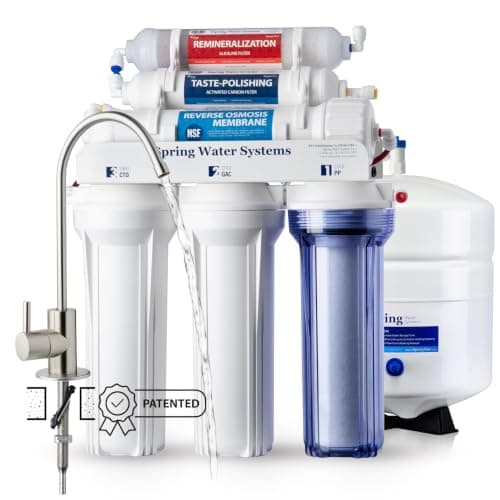 iSpring RCC7AK 6-Stage Reverse Osmosis SystemNSF/ANSI 58 certified with published reductions across the contaminants wells actually carry. iSpring RCC7AK 6-Stage Reverse Osmosis SystemNSF/ANSI 58 certified with published reductions across the contaminants wells actually carry. | Best overall | $188.81 - View on Amazon $234.99 — 20% off #ad Price as of October 7, 2026. We may earn a commission. Disclosure. |
| 2 | 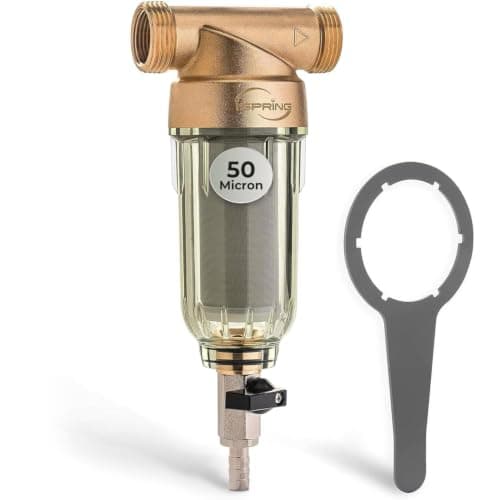 iSpring WSP-50 Spin-Down Sediment PrefilterA flushable 50-micron spin-down ahead of everything, so grit never reaches the membrane. iSpring WSP-50 Spin-Down Sediment PrefilterA flushable 50-micron spin-down ahead of everything, so grit never reaches the membrane. | Buy this first | $50.97 - View on Amazon $59.99 — 15% off #ad Price as of October 7, 2026. We may earn a commission. Disclosure. |
| 3 | 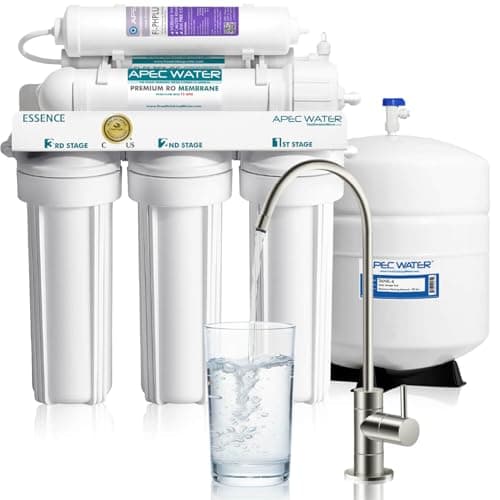 APEC ROES-PH75 Essence 6-Stage Alkaline RO SystemTank system on standard 10-inch cartridges — nothing to plug in, cheap to re-stock. APEC ROES-PH75 Essence 6-Stage Alkaline RO SystemTank system on standard 10-inch cartridges — nothing to plug in, cheap to re-stock. | Best with no power | $189.99 - View on Amazon $294.99 — 36% off #ad Price as of October 7, 2026. We may earn a commission. Disclosure. |
| 4 | 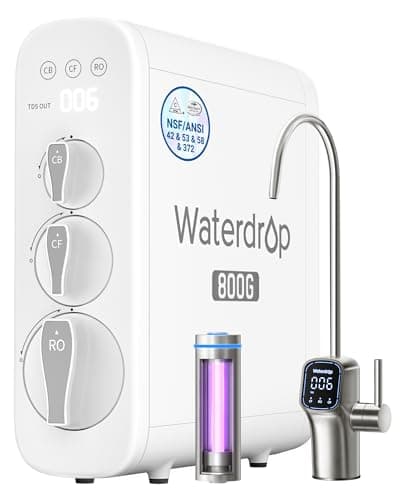 Waterdrop G3P800 Tankless Reverse Osmosis SystemPumped and tankless at 800 GPD with a published 3:1 pure-to-drain ratio. Waterdrop G3P800 Tankless Reverse Osmosis SystemPumped and tankless at 800 GPD with a published 3:1 pure-to-drain ratio. | Best output | $699.00 - View on Amazon $999.00 — 30% off #ad Price as of October 7, 2026. We may earn a commission. Disclosure. |
| 5 | 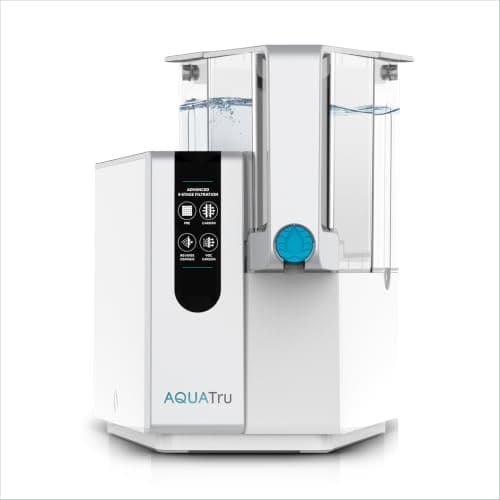 AquaTru Classic Countertop Reverse Osmosis PurifierCountertop RO certified by IAPMO, no drain line and no cabinet work. AquaTru Classic Countertop Reverse Osmosis PurifierCountertop RO certified by IAPMO, no drain line and no cabinet work. | Best if you cannot plumb it | $403.75 - View on Amazon $475.00 — 15% off #ad Price as of October 7, 2026. We may earn a commission. Disclosure. |
The order of operations, because it is the whole page
City water arrives treated, disinfected and filtered to a regulated turbidity. Well water arrives as whatever the aquifer contains, and an under-sink system is a small filter at the end of a long chain of things nobody treated. Get the order wrong and you replace membranes on a schedule that has nothing to do with the manufacturer's ratings.
| Step | What it handles | Where it goes |
|---|---|---|
| 1. Test | Everything. You cannot design around unknowns | A laboratory, before any purchase |
| 2. Disinfection, if needed | Coliform and E. coli | Point of entry — UV or chlorination |
| 3. Sediment | Sand, silt, rust, grit | Point of entry, first physical stage |
| 4. Iron, manganese, sulfur | The things that foul and stain | Point of entry — oxidation or air injection |
| 5. Hardness, if extreme | Scale that fouls a membrane | Point of entry — softener before RO |
| 6. Under-sink RO | Nitrate, arsenic, fluoride, dissolved solids | The drinking tap, last |
Steps two through five are the well water tier, and this page is step six. If you skip straight here, you are asking a cartridge under the kitchen sink to do a job the whole-house tier exists to do.
What a membrane needs from your feed water
Reverse osmosis membranes are specified for feed water inside a range, and well water frequently sits outside it. The parameters that matter most are iron, manganese, hardness, hydrogen sulfide and turbidity — iron and manganese because they oxidize and precipitate onto the membrane surface, hardness because it scales it, sulfide because it attacks it, and turbidity because it blinds the pre-filters in weeks rather than months.
Manufacturers state their own tolerances, and they are worth reading before you buy rather than after. APEC, for example, describes its systems as having high allowances for variations in pH (2-11), in water pressure (0 to 100 psi), in sediments and maximum dissolved solids (up to 2000 ppm). Those are generous numbers by consumer standards, and they are still numbers — a well outside them needs pretreatment, not a different brand.
The practical version: if your well test shows iron or manganese above trace levels, a rotten-egg smell, or hardness in the high teens of grains, treat those at the point of entry and come back to this page afterward. The iron and sulfur guide covers that half of the problem.
Reverse osmosis is not a disinfection barrier
This is the misunderstanding that matters most on a private well, because the consequence is not a fouled cartridge.
An RO membrane physically rejects a great deal, but consumer systems are not certified as microbiological purifiers, and their own documentation says so — the standard language on these products is that the system is not intended to purify water and must not be used on water that is microbiologically unsafe or of unknown quality without adequate disinfection before or after it. APEC's own guidance for well owners is to add ultraviolet treatment: if you are on well water, or if you suspect your water source is unsafe and want to have extra protection, then you can add a UV light to ensure safe drinking water.
If your well has ever tested positive for total coliform, the disinfection question is settled before the filtration question starts. Bacteria and UV treatment covers what that involves and where the lamp goes.
The criteria, in the order that decides it
- Is the water already stable? Disinfected if it needs it, iron and sulfur handled, sediment removed. Everything below assumes yes.
- Is there a sediment stage ahead of it? On a well this is not optional. A flushable spin-down screen at the point of entry is the cheapest component in the whole chain and it protects every filter downstream.
- Does the certification name your contaminant? Nitrate from agriculture, arsenic from geology, fluoride from the aquifer — these are the reasons a well household buys RO, and the claims are certified individually under NSF/ANSI 58.
- Pressure and power. Well pressure tanks typically cycle in a band rather than holding a steady municipal pressure, and RO output falls as inlet pressure falls. A pumped tankless system is less sensitive to that, and needs an outlet under the sink that older kitchens often do not have.
- Cartridge availability. Standard 10-inch cartridges can be bought from many manufacturers. Proprietary pods can only be bought from one, at their price, for as long as they choose to make them.
What each pick is actually for
| Your situation | The pick | Why |
|---|---|---|
| Nitrate, arsenic or fluoride in the test | iSpring RCC7AK | NSF/ANSI 58 certified with published per-contaminant reductions |
| Visible grit, or any well at all | iSpring WSP-50 | Flushable 50-micron screen ahead of everything else |
| No outlet under the sink | APEC ROES-PH75 | Tank system, no power, standard cartridges |
| A large household, or low well pressure | Waterdrop G3P800 | Pumped, tankless, 800 GPD, 3:1 published pure-to-drain |
| Renting the property, or no cabinet space | AquaTru Classic | Certified countertop RO with no plumbing at all |
The spin-down deserves the emphasis it gets here. It is a stainless mesh in a clear housing with a flush valve: you open the valve, the trapped grit leaves, and you never buy a cartridge for it. The sediment prefilter guide covers micron ratings and where it belongs in the line.
Where wells differ from city water, in one table
| City water | Well water | |
|---|---|---|
| Disinfected before it reaches you | Yes | No |
| Turbidity regulated at the source | Yes | No |
| Someone is testing it | The utility, on a schedule | You, or nobody |
| Typical pre-filter life | Months to a year | Weeks to months on a dirty well |
| What fouls the membrane | Hardness, chlorine if unfiltered | Iron, manganese, sulfide, sediment |
| Who is responsible | The utility to the property line | You, entirely |
City water versus well water works through those differences for the whole-house tier. The short version for this page is that every consumable runs shorter on a well, and the systems that survive are the ones with something in front of them.
Re-test after you install
Wells change. Water levels move seasonally, agricultural nitrate peaks after application and heavy rain, and iron can appear years after a well was drilled clean. A single test before purchase tells you what to buy; a repeat test tells you whether it is still working.
Annual testing for coliform and nitrate is the widely recommended baseline for private wells, with a broader panel less often. The nitrate guide covers why that particular contaminant is worth a place on every annual panel in farming country.
The cost-per-gallon math
On a well, the number that decides your running cost is pre-filter life, not membrane price.
A membrane rated for years on municipal water can be finished in months behind untreated well water, and the sediment cartridges in front of it can be finished in weeks. Both are avoidable, and the avoidance is cheap: a flushable spin-down screen is a one-time purchase with no consumable at all.
Price the chain rather than the system. Spin-down screen, sediment cartridges, carbon pre-filters, membrane, post-filter — the totals over five years vary far more between well setups than between the systems themselves, and almost all of that variance is decided upstream of the cabinet.
We show the arithmetic rather than a verdict so you can redo it with the price you actually pay. Filter prices move; the rated capacities above do not.
The picks in full
Best overall
iSpring RCC7AK 6-Stage Reverse Osmosis System
iSpring
The value pick of the reverse-osmosis tier: a WQA Gold Seal system with an alkaline stage, usually at the lowest price of anything here that carries a real certification.
Certification status
Certified against NSF/ANSI 58 for TDS reduction and carries the WQA Gold Seal, with 97.2% TDS removal certified.
Published specifications
| Output | 75 GPD |
|---|---|
| Stages | 6, including alkaline remineralization |
| Certified TDS reduction | 97.2% |
| Feed pressure | 45-70 psi |
| Feed temperature | 40-100 degrees F |
| Assembled size | 15.5" deep x 19.5" high, 25 lb |
| Certification | NSF/ANSI 58, WQA Gold Seal |
What we like
- Certified performance at the lowest price in the tier
- Push-fit tubing makes a first-time install genuinely manageable
- Alkaline stage included rather than sold as an upgrade
What we do not
- Narrow 45-70 psi feed window — low-pressure homes may need a booster pump
- Tank plus housing needs real cabinet depth
- Conventional reverse-osmosis drain ratio
Skip it if
Homes with feed pressure below 45 psi that will not add a booster pump, and anyone who wants a tankless footprint.
$234.99 — 20% off
#ad Price as of October 7, 2026. We may earn a commission. Disclosure.
Where these specifications came from
Buy this first
iSpring WSP-50 Spin-Down Sediment Prefilter
iSpring
The only filter on this site with no consumable at all: a stainless mesh in a clear housing that you flush with a valve instead of replacing. On a well it protects every cartridge and membrane downstream, which is the entire argument for it.
Certification status
No NSF/ANSI performance certification, and none is applicable — this is a mechanical screen for suspended solids rather than a contaminant-reduction device. iSpring specifies a 316L food-grade stainless steel screen and a lead-free brass head. Treat it as plumbing hardware, not as treatment.
Published specifications
| Filtration | 50 micron stainless steel mesh screen |
|---|---|
| Screen material | 316L food-grade stainless steel |
| Head material | Lead-free brass |
| Ports | 1" MNPT and 3/4" FNPT on both ends |
| Housing | Transparent, so the load is visible without opening it |
| Consumable | None — the screen is flushed and reused |
| Maintenance | Open the flush valve; frequency depends on sediment load |
What we like
- No cartridge to buy, ever — you flush the screen and reuse it
- The clear housing makes maintenance something you can see rather than schedule blindly
- Protects softeners, carbon tanks, cartridges and RO membranes downstream, which is where the money is
What we do not
- 50 micron is coarse: it catches grit and rust flakes, not fine silt or turbidity
- It is a prefilter, not a treatment — it reduces no contaminant of any kind
- Needs a spot in the line with room underneath for the flush valve and a drain or bucket
- Requires actual maintenance; a neglected screen becomes a pressure restriction
Skip it if
Anyone on clean municipal water with no downstream equipment to protect. There is nothing for it to catch, and an unserviced housing is worse than no housing.
$59.99 — 15% off
#ad Price as of October 7, 2026. We may earn a commission. Disclosure.
Where these specifications came from
Best with no power
APEC ROES-PH75 Essence 6-Stage Alkaline RO System
APEC Water Systems
A conventional tank system that uses ordinary 10-inch cartridges rather than proprietary pods, which keeps the ten-year running cost sane. The sixth stage puts minerals back for people who dislike RO's flat taste.
Certification status
WQA Gold Seal certified.
Published specifications
| Output | 75 GPD at 60 psi and 77 degrees F |
|---|---|
| Tank capacity | 4 gallons |
| Stages | 6, including a calcite remineralization stage |
| Feed pressure | 40-85 psi |
| Max feed TDS | 2,000 ppm |
| System dimensions | 15.5" L x 5.25" W x 17.5" H, plus a separate tank |
| Certification | WQA Gold Seal |
What we like
- Standard-size cartridges, so replacements are cheap and sourceable from many brands
- Calcite stage restores minerals and lifts the pH of reverse-osmosis water
- No electricity required
What we do not
- The 4-gallon tank plus housing takes most of an under-sink cabinet
- Slower than tankless systems, and it pauses while the tank refills
- Conventional wastewater ratio, well short of the G3P800's 3:1
Skip it if
Small cabinets. Measure before you buy — the tank alone is roughly 11 x 11 x 15 inches, and people discover this after delivery.
$294.99 — 36% off
#ad Price as of October 7, 2026. We may earn a commission. Disclosure.
Where these specifications came from
Best output
Waterdrop G3P800 Tankless Reverse Osmosis System
Waterdrop
Tankless reverse osmosis that gives back the cupboard a pressure tank would eat, fills a glass without the pause, and sends markedly less water down the drain than a classic tank system.
Certification status
Certified to NSF/ANSI 42 for chlorine reduction, NSF/ANSI 53 and 58 for TDS, fluoride, cadmium, hexavalent chromium and selenium, and NSF/ANSI 372 for lead-free materials.
Published specifications
| Output | 800 GPD |
|---|---|
| Pure-to-drain ratio | 3:1 |
| Format | Tankless — no pressure tank |
| Certified standards | NSF/ANSI 42, 53, 58, 372 |
| Installation | Two holes: smart LED faucet and drain |
| Faucet | Included, with TDS display |
What we like
- No pressure tank, so it fits cabinets a tank system cannot
- 3:1 pure-to-drain is far better than the ratio typical of older reverse osmosis
- 800 GPD means no waiting for a tank to refill
What we do not
- Needs a power outlet under the sink — a real constraint in older kitchens
- Proprietary filter cartridges, so you are tied to Waterdrop's pricing
- Requires drilling for the included faucet unless you have a spare hole
Skip it if
Renters, and anyone with no outlet under the sink. It is a permanent, powered installation — a countertop unit is the answer if you cannot commit to that.
$999.00 — 30% off
#ad Price as of October 7, 2026. We may earn a commission. Disclosure.
Where these specifications came from
Best if you cannot plumb it
AquaTru Classic Countertop Reverse Osmosis Purifier
AquaTru
Reverse osmosis performance with no plumbing, no drilling and no landlord conversation. You pay for that with counter space, a wait, and two tanks you fill and empty by hand.
Certification status
Certified by IAPMO to NSF/ANSI 53, 58, 401 and P473, covering lead, reverse-osmosis performance, emerging compounds and the PFOA/PFOS protocol.
Published specifications
| Filtration | 4-stage countertop reverse osmosis |
|---|---|
| Clean water tank | 0.75 gallons |
| Tap water tank | 1 gallon |
| Installation | None — no plumbing connection |
| Certified standards | NSF/ANSI 53, 58, 401, P473 (IAPMO) |
What we like
- Real reverse osmosis with a P473 PFOA/PFOS certification and zero installation
- The strongest answer available to a renter with a lead or PFAS problem
- No drilling, no drain saddle, no landlord permission needed
What we do not
- Takes up substantial counter space
- You refill and empty tanks by hand — it is not on-demand
- Highest purchase price in the no-plumbing tier by a wide margin
Skip it if
Anyone who can plumb in an under-sink system. A permanent under-sink RO is cheaper per gallon, on-demand, and out of sight. Buy this when you genuinely cannot install.
$475.00 — 15% off
#ad Price as of October 7, 2026. We may earn a commission. Disclosure.
Where these specifications came from
Questions people actually ask
Can you use an under-sink reverse osmosis system on well water?
Yes, provided the water reaching it is already stable: disinfected if the well has tested positive for bacteria, with iron, manganese, hydrogen sulfide and sediment handled at the point of entry. RO is the last stage on a well, not the whole treatment train.
Does reverse osmosis remove bacteria from well water?
Do not rely on it. Consumer RO systems are not certified as microbiological purifiers, and their own documentation says they are not intended to purify water or to be used on water of unknown microbiological quality without adequate disinfection. APEC's own advice to well owners is to add UV.
What ruins an RO membrane on well water?
Iron and manganese, which oxidize and coat the membrane; hardness, which scales it; hydrogen sulfide, which attacks it; and sediment, which blinds the pre-filters ahead of it. All four are point-of-entry problems with point-of-entry solutions.
Do I need a sediment filter before an under-sink system on a well?
Yes. A flushable spin-down screen at the point of entry costs a fraction of the system it protects and has no consumable — you flush it rather than replace it. It is the highest-value component in the chain for a well household.
Will an under-sink system fix my well's rotten egg smell?
No. Hydrogen sulfide is a whole-house problem that shows up in every shower and every tap, and it needs oxidation or aeration at the point of entry. Treating one tap leaves the smell everywhere else in the house.