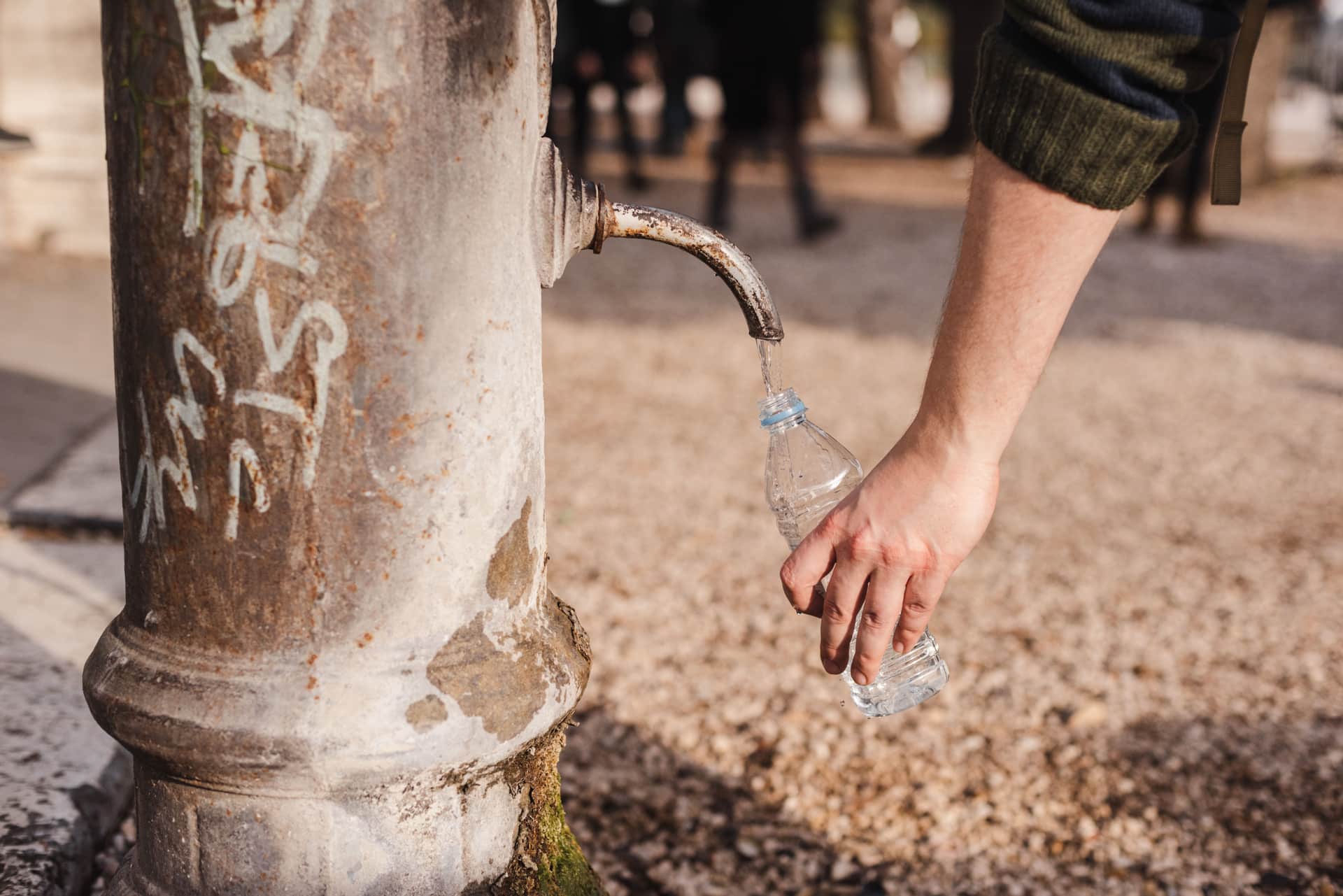
A first well test should cover total coliform and E. coli, nitrate, iron, manganese, hydrogen sulfide, pH, hardness and — where geologically relevant — arsenic. Use a certified laboratory, not strips, for anything you intend to spend money against.
Quick picks
Tap any row to jump to the full write-up. The button goes straight to the retailer.
| # | Product | Best for | Price |
|---|---|---|---|
| 1 | 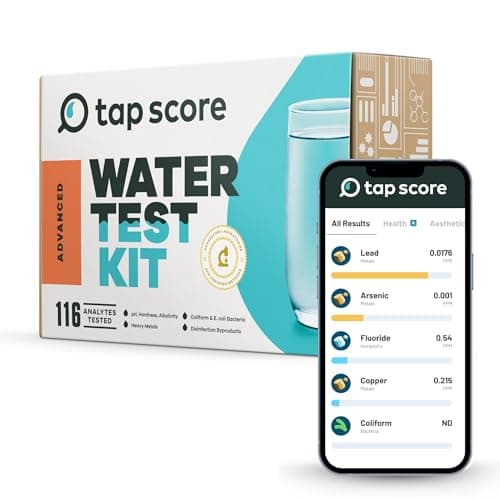 Tap Score Advanced Water Test (SimpleLab)ISO/IEC 17025 network laboratories, with a report that explains the numbers. Tap Score Advanced Water Test (SimpleLab)ISO/IEC 17025 network laboratories, with a report that explains the numbers. | Best certified lab test | $269.00 - View on Amazon #ad Price as of October 17, 2026. We may earn a commission. Disclosure. |
| 2 | SHno photoSafe Home Ultimate Drinking Water Test Kit200 parameters including 130 volatile organic compounds, in one sample. | Widest single panel | Check price on Amazon #ad We do not show a price we cannot verify today. We may earn a commission. Disclosure. |
Why this is your job
The Safe Drinking Water Act regulates public water systems. Private wells are excluded. There is no utility, no annual report, no monitoring schedule and no notification if something changes. Whatever is in the aquifer, plus whatever your casing, pump and plumbing contribute, arrives at your tap unexamined unless you examine it.
The first-test panel
| Test | Why | What it changes |
|---|---|---|
| Total coliform and E. coli | Indicates surface water reaching the well | A safety question. Shock chlorinate, find the breach, then UV. |
| Nitrate | Agricultural and septic influence; specifically dangerous for infants | Reverse osmosis at the drinking tap. Filters do not remove it. |
| Iron | Staining and taste; sizes the treatment system | Decides between cartridge and air injection |
| Manganese | Black staining, plus a health advisory level | Part of the same sizing decision |
| Hydrogen sulfide | Rotten-egg smell, corrosive | Requires oxidation; degrades in transit so needs the right kit |
| pH | Below 6.5 the water is corrosive and leaches metals from plumbing | A neutralizer, BEFORE any oxidizing filter |
| Hardness | Scale, soap use, appliance life | Softener sizing, in grains per gallon |
| Arsenic | Geological and regional; no taste, smell or color | Reverse osmosis or specialist adsorptive media |
Arsenic is worth a note: it is entirely regional. If it is known in your area — your county health department or state geological survey will say — include it. If it is not, you can reasonably skip it on a first panel.
Collecting a sample that means something
- Use an outside spigot or a tap before any treatment, unless you are deliberately testing what comes out after treatment. Sampling downstream of a filter tells you about the filter, not the well.
- Remove the aerator and any hose, which harbor bacteria that will contaminate a coliform sample and produce a false positive.
- Run the tap for several minutes to clear standing water from the plumbing — unless you are running a lead test, where you want the first draw after stagnation instead.
- Do not touch the inside of the bottle or the cap. For bacterial samples this is the difference between a result and a re-test.
- Fill to the line and ship promptly. Coliform samples have a short hold time, and sulfide degrades — a bottle sitting in a hot car over a weekend is a wasted test.
Collection error, not laboratory error, is the usual reason a well test produces a confusing result. Read the kit's instructions before you start rather than while holding a full bottle.
How often
- Annually: coliform bacteria and nitrate.
- Every three to five years: the fuller panel — metals, arsenic, hardness, pH, and on a drilled bedrock well uranium, which is invisible and tasteless at any concentration that matters.
- Immediately after: flooding, any work on the well, nearby drilling or excavation, a new septic system nearby, or any sudden change in taste, smell or color.
Reading the results into a purchase
The report is the specification document for everything you buy afterwards. Take the iron, manganese and sulfide figures to the systems roundup and check them against each system's published ceilings. Take the hardness figure in grains per gallon to softener sizing. Take a coliform positive to UV treatment, after shock chlorination.
What the test is worth
The relevant arithmetic is not cost per gallon, it is cost avoided.
A certified panel costs a fraction of the cheapest treatment system on this hub, and it is the only thing that tells you which system to buy. The failure it prevents is specific: installing equipment rated for 3 ppm iron on water carrying 9 ppm. That equipment does not fail dramatically — it underperforms and blinds off early, and by the time it is obvious the return window has closed.
One test, once, before anything else. It is the cheapest insurance in this entire category.
We show the arithmetic rather than a verdict so you can redo it with the price you actually pay. Filter prices move; the rated capacities above do not.
The picks in full
Best certified lab test
Tap Score Advanced Water Test (SimpleLab)
SimpleLab
Mail-in testing through certified laboratories, with a report that names contaminants, gives concentrations, and compares them against health guidelines. This is the number every system on this site is sized from.
Certification status
Samples are analyzed by laboratories in the SimpleLab network certified to ISO/IEC 17025, and Tap Score is recognized by the Water Quality Association.
Published specifications
| Method | Mail-in sample, certified laboratory analysis |
|---|---|
| Lab accreditation | ISO/IEC 17025 certified network laboratories |
| Panels available | City water, well water, and contaminant-specific tests |
| What you get | Concentrations plus health-guideline comparison |
What we like
- Certified-laboratory analysis, not a color-matching strip
- The report explains what each result means rather than dumping numbers
- Contaminant-specific panels exist when you only need one answer
What we do not
- Costs meaningfully more than a strip kit
- Turnaround is days, not minutes
- You have to actually collect the sample correctly, which is where home tests usually go wrong
Skip it if
Somebody whose entire complaint is a chlorine taste. That diagnosis is free — you can smell it — and a certified carbon filter costs less than the test.
#ad Price as of October 17, 2026. We may earn a commission. Disclosure.
Where these specifications came from
Widest single panel
Safe Home Ultimate Drinking Water Test Kit
Safe Home
A very broad mail-in laboratory panel: 200 parameters in one sample, including a large volatile-organic list most kits skip entirely. It costs what a broad panel costs.
Certification status
Analyzed at an EPA-certified laboratory operated by the manufacturer. The published panel covers 200 water-quality parameters.
Published specifications
| Parameters | 200 total |
|---|---|
| Breakdown | 12 physical, 7 inorganic, 31 metals, 20 semi-volatile organics, 130 volatile organics |
| Method | Mail-in sample, EPA-certified laboratory |
| Turnaround | 7-10 business days |
What we like
- The 130-compound volatile organic list is far broader than typical consumer panels
- One sample, one report, one shipment
- Physical properties and metals included alongside the organics
What we do not
- The laboratory is operated by the company selling the kit, rather than an independent network
- Priced as a professional panel, because that is what it is
- Broader than most households need — a targeted panel is usually the better buy
Skip it if
Anyone who already knows what they are looking for. A single-contaminant panel for lead or PFAS costs a fraction of this and answers the actual question.
#ad We do not show a price we cannot verify today. We may earn a commission. Disclosure.
Where these specifications came from
Questions people actually ask
How often should I test my well water?
Coliform and nitrate annually. The fuller panel — metals, arsenic, hardness and pH — every three to five years. And immediately after flooding, well work, nearby excavation, or any sudden change in how the water looks, tastes or smells.
Can I use test strips for well water?
For hardness and pH, yes. For coliform, arsenic and metals at health-relevant concentrations, no — strips cannot resolve parts per billion, and bacterial detection needs a laboratory culture. If a purchase or a safety decision depends on the answer, use a certified lab.
What does a positive coliform result mean?
That surface water is reaching your well, which means a physical breach somewhere — a cracked casing, a failed cap, or a septic field too close. Shock chlorinate, find and fix the breach, retest, and then consider UV as ongoing protection.
Where should I take the sample from?
An outside spigot or a tap upstream of any treatment, with the aerator removed and after running the water for several minutes. Sampling after a filter tells you about the filter. The exception is lead, which needs a first-draw sample after stagnation.