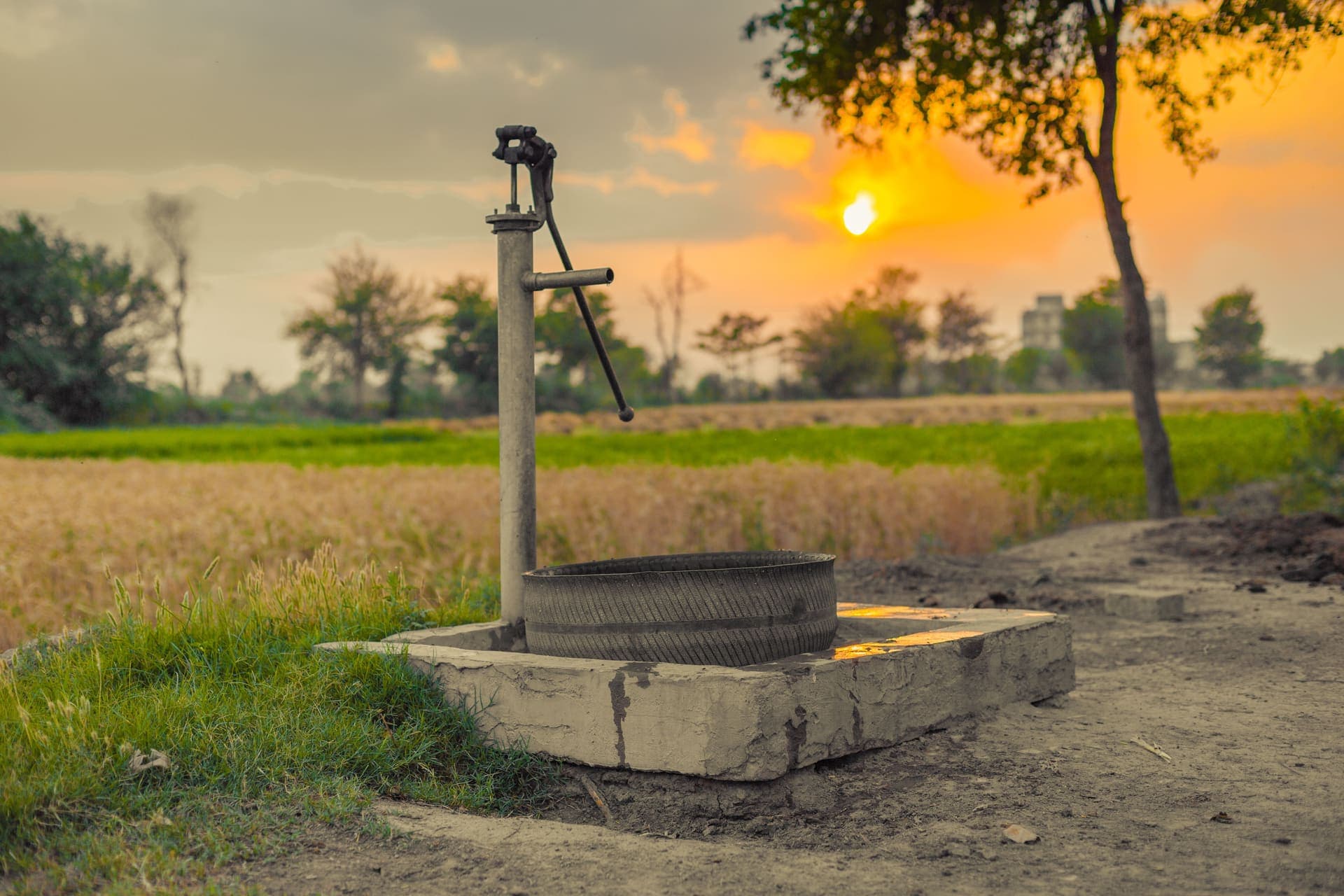
Arsenic occurs as arsenite and arsenate, and the difference decides your filter. Reverse osmosis and adsorptive media remove the oxidized form well; the other form has to be oxidized first or it passes through. EPA's limit is 10 micrograms per liter, and it is invisible and tasteless.
Quick picks
Tap any row to jump to the full write-up. The button goes straight to the retailer.
| # | Product | Best for | Price |
|---|---|---|---|
| 1 | 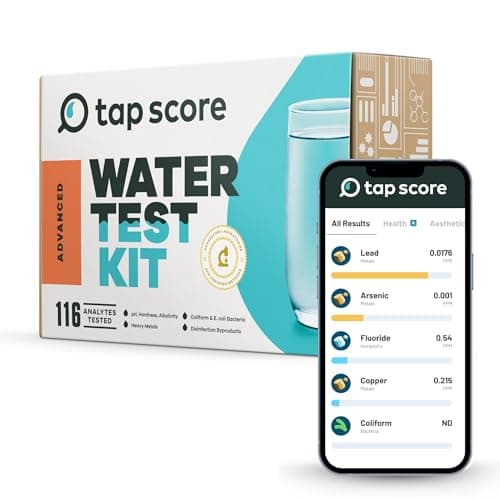 Tap Score Advanced Water Test (SimpleLab)Arsenic is invisible and tasteless. A laboratory number is the only way to know you have it. Tap Score Advanced Water Test (SimpleLab)Arsenic is invisible and tasteless. A laboratory number is the only way to know you have it. | Buy this first | $215.20 - View on Amazon $269.00 — 20% off #ad Price as of October 6, 2026. We may earn a commission. Disclosure. |
| 2 | 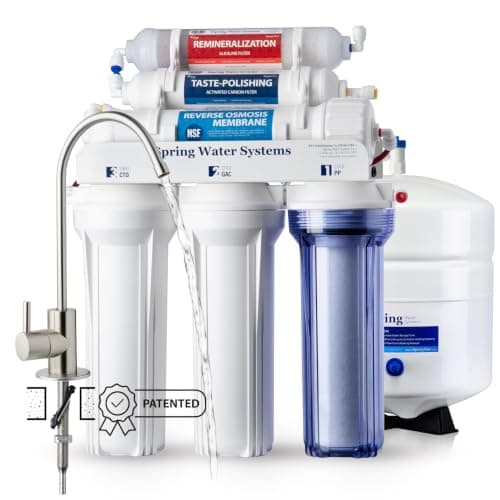 iSpring RCC7AK 6-Stage Reverse Osmosis SystemNSF/ANSI 58 certified reverse osmosis with published per-contaminant figures. iSpring RCC7AK 6-Stage Reverse Osmosis SystemNSF/ANSI 58 certified reverse osmosis with published per-contaminant figures. | Best overall | $198.75 - View on Amazon $234.99 — 15% off #ad Price as of October 6, 2026. We may earn a commission. Disclosure. |
| 3 | 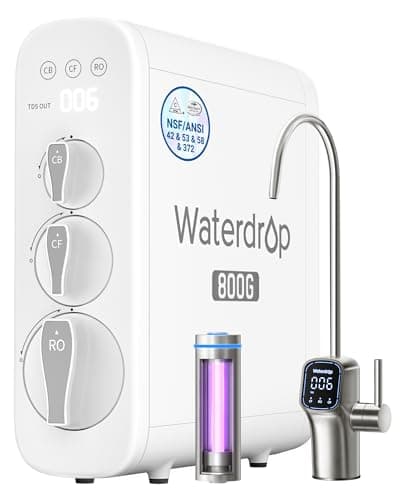 Waterdrop G3P800 Tankless Reverse Osmosis System800 GPD tankless RO, IAPMO R&T certified to NSF/ANSI 42, 53 and 58. Waterdrop G3P800 Tankless Reverse Osmosis System800 GPD tankless RO, IAPMO R&T certified to NSF/ANSI 42, 53 and 58. | Best for a busy household | $699.00 - View on Amazon $999.00 — 30% off #ad Price as of October 6, 2026. We may earn a commission. Disclosure. |
| 4 | 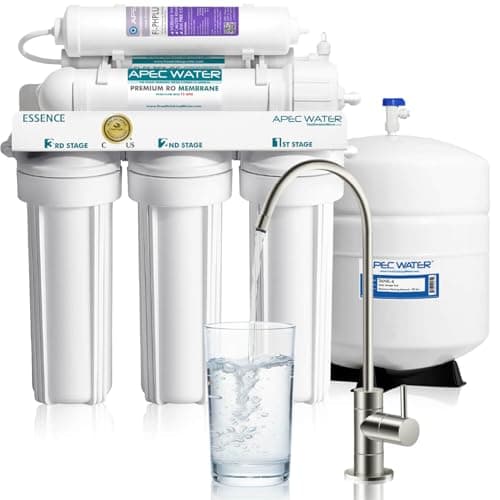 APEC ROES-PH75 Essence 6-Stage Alkaline RO SystemTank system on standard cartridges, WQA Gold Seal, arsenic named in APEC's claim list. APEC ROES-PH75 Essence 6-Stage Alkaline RO SystemTank system on standard cartridges, WQA Gold Seal, arsenic named in APEC's claim list. | Best no-power option | $189.99 - View on Amazon $294.99 — 36% off #ad Price as of October 6, 2026. We may earn a commission. Disclosure. |
| 5 | 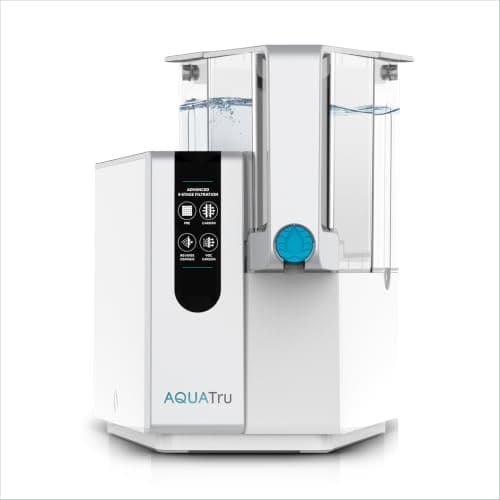 AquaTru Classic Countertop Reverse Osmosis PurifierCountertop reverse osmosis certified across NSF/ANSI 53, 58, 401 and P473. AquaTru Classic Countertop Reverse Osmosis PurifierCountertop reverse osmosis certified across NSF/ANSI 53, 58, 401 and P473. | Best without plumbing | $403.75 - View on Amazon $475.00 — 15% off #ad Price as of October 6, 2026. We may earn a commission. Disclosure. |
The fact that decides everything: there are two arsenics
Arsenic in groundwater exists in two oxidation states, and household treatment behaves completely differently toward them. Arsenate — arsenic V — carries a negative charge at normal drinking water pH, which is what lets a membrane reject it and an adsorptive medium grab it. Arsenite — arsenic III — is uncharged at those same pH values, and it slips through both.
Penn State Extension puts it plainly: arsenite is the greater health concern and the harder one to remove, arsenate is easier, and arsenic removal usually starts by adding an oxidant to convert all the arsenic to the more easily removed arsenate form.
Minnesota's Department of Health builds its whole consumer treatment table around the same point: every effective option in it is listed as reverse osmosis with pre-oxidation, adsorptive media with pre-oxidation, or anion exchange with pre-oxidation, and the footnote explains why — there are two types of arsenic in the groundwater, and including pre-oxidation ensures the treatment reduces both.
Almost no consumer listing mentions this. That is the single biggest gap between what this category sells and what the state health departments actually recommend.
The criteria, in the order that decides it
- Test, because you cannot detect it. Arsenic has no taste, no smell and no color at any concentration that matters. Maine's CDC reports that 1 in 10 wells in Maine contains too much arsenic, and the households in that tenth found out from a laboratory.
- Ask whether the unit is certified for arsenic specifically. MDH's advice is blunt: make sure the treatment unit you select is certified by NSF, Underwriters Laboratories or the Water Quality Association for arsenic reduction. That is a higher bar than it sounds — see the next section.
- Find out whether you need pre-oxidation. If your water is anaerobic — deep well, no chlorine, iron present — assume arsenite is in the mix and plan for oxidation ahead of the filter.
- Point of use, not point of entry. Arsenic matters through ingestion. MDH's own cost table puts a point-of-entry reverse osmosis install at roughly an order of magnitude above a point-of-use one, for water you will mostly flush and wash with.
- Retest after installation. MDH says it explicitly, and it is the step nobody does: the only proof a unit is working on your water is a second laboratory result.
The certification problem, stated honestly
We searched NSF's certified drinking water treatment unit listings for an arsenic reduction claim under NSF/ANSI 53 and 58 on the verification date above, under three different claim names, and got no matching products each time. The identical search for fluoride returns dozens of companies and well over a hundred models.
We are not going to over-read that. Certifications also sit with WQA, IAPMO and UL, and a listing database can be searched with the wrong string. What we can say is what we found: arsenic-specific certification in consumer filtration is rare enough that we could not surface a single listed product, while the same tool returns a crowded list for other contaminants.
The practical consequence is that most arsenic claims on product pages are manufacturer statements. APEC, for example, lists arsenic among the contaminants its systems remove, while its own page describes the WQA Gold Seal as covering testing for TDS reduction. That is not dishonest — reverse osmosis genuinely rejects arsenate — but it is a claim resting on the physics rather than on a listing that names arsenic.
What each technology actually does
| Technology | What MDH says it reduces | The catch |
|---|---|---|
| Reverse osmosis with pre-oxidation | Arsenic, chloride, lead, manganese, nitrate, nitrite, dissolved solids | Creates a lot of wastewater |
| Adsorptive media with pre-oxidation | Arsenic; activated alumina also fluoride, selenite, uranium | Cartridges change faster above pH 8 |
| Anion exchange with pre-oxidation | Arsenic, nitrate, fluoride, sulfate, uranium | Treated water can be acidic and corrosive |
| Oxidation filtration | Arsenic only where iron is above 100 micrograms per liter | Media regeneration is messy and must be handled carefully |
| Distillation | Arsenic, bacteria, iron, lead, manganese, nitrate, dissolved solids | Slow, energy-hungry, and the water tastes flat |
| Carbon filtration | Nothing relevant here | No mechanism for a dissolved ion |
For a household, reverse osmosis is the default for the same reason it is on the nitrate page: it is common, it is certified against a standard you can check for other contaminants, and it deals with the rest of what tends to travel with arsenic in groundwater.
Note the two rows above that also name uranium. That is not a coincidence — uranium is another dissolved, invisible, geological contaminant that the same technologies reach, and on a hard-rock well it is worth putting on the same laboratory panel. The uranium page covers the limit, what reverse osmosis actually removes, and why no consumer filter is certified for it.
Anion exchange deserves the warning MDH gives it. If the bed is not maintained, high concentrations of arsenic can be dumped back into the water. A system that can deliver a worse result than no system is not a weekend purchase.
How well reverse osmosis actually performs
Maine's CDC calls reverse osmosis the most cost-effective method and says it is up to 95% effective at removing the most common form of arsenic routinely found in Maine well water. Penn State Extension gives a similar figure: under ideal operating pressures, RO will remove more than 95% of arsenic.
Read both of those carefully. "The most common form" and "ideal operating pressures" are doing real work in those sentences. Low household pressure lowers rejection, and a membrane facing arsenite rather than arsenate performs far worse than either number suggests. That is the case for testing first and for pre-oxidation where the chemistry calls for it.
Why the health stakes justify the fuss
EPA set the maximum contaminant level at 10 micrograms per liter in the 2001 Arsenic Rule, replacing a standard of 50. Maine's CDC lists the effects of exposure as stomach pain, nausea, diarrhea and vomiting, thickening and discoloration of the skin, numbness in the hands and feet, partial paralysis and blindness, and notes arsenic has been linked to cancer of the bladder, lungs, skin, kidney, nasal passages, liver and prostate.
That list is why we open this page with a test kit rather than a filter. Arsenic is not a taste complaint you can decide to live with, and it is not something a pitcher was ever going to fix.
If you are on a well, arsenic belongs on the panel
Arsenic is geological. It leaches from bedrock, which means the risk map follows geology rather than farming — New England, parts of the Upper Midwest, the Southwest and pockets elsewhere. Neighbors matter more than counties: two wells on the same road can differ by a factor of ten.
Put it on the panel when you test the well, and ask the laboratory whether it can report the species as well as the total. Most general panels report total arsenic only, and knowing the split between arsenite and arsenate is what tells you whether pre-oxidation is optional or essential.
Municipal customers are in a different position: arsenic is regulated and reported, so your annual report carries the measured range and your utility is required to stay under the limit.
Where this fits in a well treatment train
Arsenic treatment is the last stage, not the first. Sediment, iron and manganese come out ahead of it — partly because they foul everything downstream, and partly because an iron filter can double as the oxidation step that converts arsenite to arsenate. The order of operations for a well runs through that sequence, and the iron and sulfur guide covers the stage most arsenic households need anyway.
The cost-per-gallon math
The state guidance is unusually direct about the economics, and it is worth repeating.
MDH's published estimates put a point-of-use reverse osmosis system and its maintenance far below a point-of-entry install, and both far below the running cost of bottled water for a family — its estimate for a household of four buying bottled water spans several hundred to a few thousand dollars a year depending on format, every year, forever.
Against that, the arithmetic is not close for any household that has tested positive. Price the system you are considering, add the cartridges on their published schedule, add a second laboratory test to confirm it works, and compare it to a decade of bottled water.
We do not print product prices here. The buy buttons carry the live figure and the date it was checked, which is the only price worth quoting.
We show the arithmetic rather than a verdict so you can redo it with the price you actually pay. Filter prices move; the rated capacities above do not.
The picks in full
Buy this first
Tap Score Advanced Water Test (SimpleLab)
SimpleLab
Mail-in testing through certified laboratories, with a report that names contaminants, gives concentrations, and compares them against health guidelines. This is the number every system on this site is sized from.
Certification status
Samples are analyzed by laboratories in the SimpleLab network certified to ISO/IEC 17025, and Tap Score is recognized by the Water Quality Association.
Published specifications
| Method | Mail-in sample, certified laboratory analysis |
|---|---|
| Lab accreditation | ISO/IEC 17025 certified network laboratories |
| Panels available | City water, well water, and contaminant-specific tests |
| What you get | Concentrations plus health-guideline comparison |
What we like
- Certified-laboratory analysis, not a color-matching strip
- The report explains what each result means rather than dumping numbers
- Contaminant-specific panels exist when you only need one answer
What we do not
- Costs meaningfully more than a strip kit
- Turnaround is days, not minutes
- You have to actually collect the sample correctly, which is where home tests usually go wrong
Skip it if
Somebody whose entire complaint is a chlorine taste. That diagnosis is free — you can smell it — and a certified carbon filter costs less than the test.
$269.00 — 20% off
#ad Price as of October 6, 2026. We may earn a commission. Disclosure.
Where these specifications came from
Best overall
iSpring RCC7AK 6-Stage Reverse Osmosis System
iSpring
The value pick of the reverse-osmosis tier: a WQA Gold Seal system with an alkaline stage, usually at the lowest price of anything here that carries a real certification.
Certification status
Certified against NSF/ANSI 58 for TDS reduction and carries the WQA Gold Seal, with 97.2% TDS removal certified.
Published specifications
| Output | 75 GPD |
|---|---|
| Stages | 6, including alkaline remineralization |
| Certified TDS reduction | 97.2% |
| Feed pressure | 45-70 psi |
| Feed temperature | 40-100 degrees F |
| Assembled size | 15.5" deep x 19.5" high, 25 lb |
| Certification | NSF/ANSI 58, WQA Gold Seal |
What we like
- Certified performance at the lowest price in the tier
- Push-fit tubing makes a first-time install genuinely manageable
- Alkaline stage included rather than sold as an upgrade
What we do not
- Narrow 45-70 psi feed window — low-pressure homes may need a booster pump
- Tank plus housing needs real cabinet depth
- Conventional reverse-osmosis drain ratio
Skip it if
Homes with feed pressure below 45 psi that will not add a booster pump, and anyone who wants a tankless footprint.
$234.99 — 15% off
#ad Price as of October 6, 2026. We may earn a commission. Disclosure.
Where these specifications came from
Best for a busy household
Waterdrop G3P800 Tankless Reverse Osmosis System
Waterdrop
Tankless reverse osmosis that gives back the cupboard a pressure tank would eat, fills a glass without the pause, and sends markedly less water down the drain than a classic tank system.
Certification status
Certified to NSF/ANSI 42 for chlorine reduction, NSF/ANSI 53 and 58 for TDS, fluoride, cadmium, hexavalent chromium and selenium, and NSF/ANSI 372 for lead-free materials.
Published specifications
| Output | 800 GPD |
|---|---|
| Pure-to-drain ratio | 3:1 |
| Format | Tankless — no pressure tank |
| Certified standards | NSF/ANSI 42, 53, 58, 372 |
| Installation | Two holes: smart LED faucet and drain |
| Faucet | Included, with TDS display |
What we like
- No pressure tank, so it fits cabinets a tank system cannot
- 3:1 pure-to-drain is far better than the ratio typical of older reverse osmosis
- 800 GPD means no waiting for a tank to refill
What we do not
- Needs a power outlet under the sink — a real constraint in older kitchens
- Proprietary filter cartridges, so you are tied to Waterdrop's pricing
- Requires drilling for the included faucet unless you have a spare hole
Skip it if
Renters, and anyone with no outlet under the sink. It is a permanent, powered installation — a countertop unit is the answer if you cannot commit to that.
$999.00 — 30% off
#ad Price as of October 6, 2026. We may earn a commission. Disclosure.
Where these specifications came from
Best no-power option
APEC ROES-PH75 Essence 6-Stage Alkaline RO System
APEC Water Systems
A conventional tank system that uses ordinary 10-inch cartridges rather than proprietary pods, which keeps the ten-year running cost sane. The sixth stage puts minerals back for people who dislike RO's flat taste.
Certification status
WQA Gold Seal certified.
Published specifications
| Output | 75 GPD at 60 psi and 77 degrees F |
|---|---|
| Tank capacity | 4 gallons |
| Stages | 6, including a calcite remineralization stage |
| Feed pressure | 40-85 psi |
| Max feed TDS | 2,000 ppm |
| System dimensions | 15.5" L x 5.25" W x 17.5" H, plus a separate tank |
| Certification | WQA Gold Seal |
What we like
- Standard-size cartridges, so replacements are cheap and sourceable from many brands
- Calcite stage restores minerals and lifts the pH of reverse-osmosis water
- No electricity required
What we do not
- The 4-gallon tank plus housing takes most of an under-sink cabinet
- Slower than tankless systems, and it pauses while the tank refills
- Conventional wastewater ratio, well short of the G3P800's 3:1
Skip it if
Small cabinets. Measure before you buy — the tank alone is roughly 11 x 11 x 15 inches, and people discover this after delivery.
$294.99 — 36% off
#ad Price as of October 6, 2026. We may earn a commission. Disclosure.
Where these specifications came from
Best without plumbing
AquaTru Classic Countertop Reverse Osmosis Purifier
AquaTru
Reverse osmosis performance with no plumbing, no drilling and no landlord conversation. You pay for that with counter space, a wait, and two tanks you fill and empty by hand.
Certification status
Certified by IAPMO to NSF/ANSI 53, 58, 401 and P473, covering lead, reverse-osmosis performance, emerging compounds and the PFOA/PFOS protocol.
Published specifications
| Filtration | 4-stage countertop reverse osmosis |
|---|---|
| Clean water tank | 0.75 gallons |
| Tap water tank | 1 gallon |
| Installation | None — no plumbing connection |
| Certified standards | NSF/ANSI 53, 58, 401, P473 (IAPMO) |
What we like
- Real reverse osmosis with a P473 PFOA/PFOS certification and zero installation
- The strongest answer available to a renter with a lead or PFAS problem
- No drilling, no drain saddle, no landlord permission needed
What we do not
- Takes up substantial counter space
- You refill and empty tanks by hand — it is not on-demand
- Highest purchase price in the no-plumbing tier by a wide margin
Skip it if
Anyone who can plumb in an under-sink system. A permanent under-sink RO is cheaper per gallon, on-demand, and out of sight. Buy this when you genuinely cannot install.
$475.00 — 15% off
#ad Price as of October 6, 2026. We may earn a commission. Disclosure.
Where these specifications came from
Questions people actually ask
What filter removes arsenic from water?
Reverse osmosis is the usual household answer, with adsorptive media such as activated alumina and anion exchange as alternatives. All three are listed by state health departments with pre-oxidation, because the arsenite form has to be converted to arsenate before any of them removes it reliably. Carbon filters remove none of it.
Does reverse osmosis remove arsenic?
It removes arsenate well — Maine CDC describes RO as up to 95% effective against the most common form found in Maine wells, and Penn State Extension cites more than 95% under ideal operating pressures. Arsenite is a different story: it is uncharged at normal pH and passes through unless it is oxidized first.
Does boiling water remove arsenic?
No, it concentrates it. Arsenic is not volatile, so the water leaves as steam and the arsenic stays behind. Boiling is the right response to bacteria and the wrong response to arsenic.
What is a safe level of arsenic in drinking water?
EPA's enforceable maximum contaminant level is 10 micrograms per liter, set in the 2001 Arsenic Rule and replacing the previous standard of 50. Private wells are not covered by that rule — nobody is testing yours but you.
How do I know if my filter is actually removing arsenic?
Retest the treated water. Minnesota's health department gives that instruction directly, and it is the only proof that applies to your water, your pressure and your arsenic species rather than to a laboratory challenge test.
Sources
- Minnesota Department of Health — Water Treatment Units for Arsenic Reduction
- Maine CDC — Arsenic in Drinking Water
- Penn State Extension — Removal of Arsenic from Wells in Pennsylvania
- APEC Water — ROES-PH75 product specification and certification wording
- NSF — Certified Products and Systems
- Tap Score — laboratory certifications