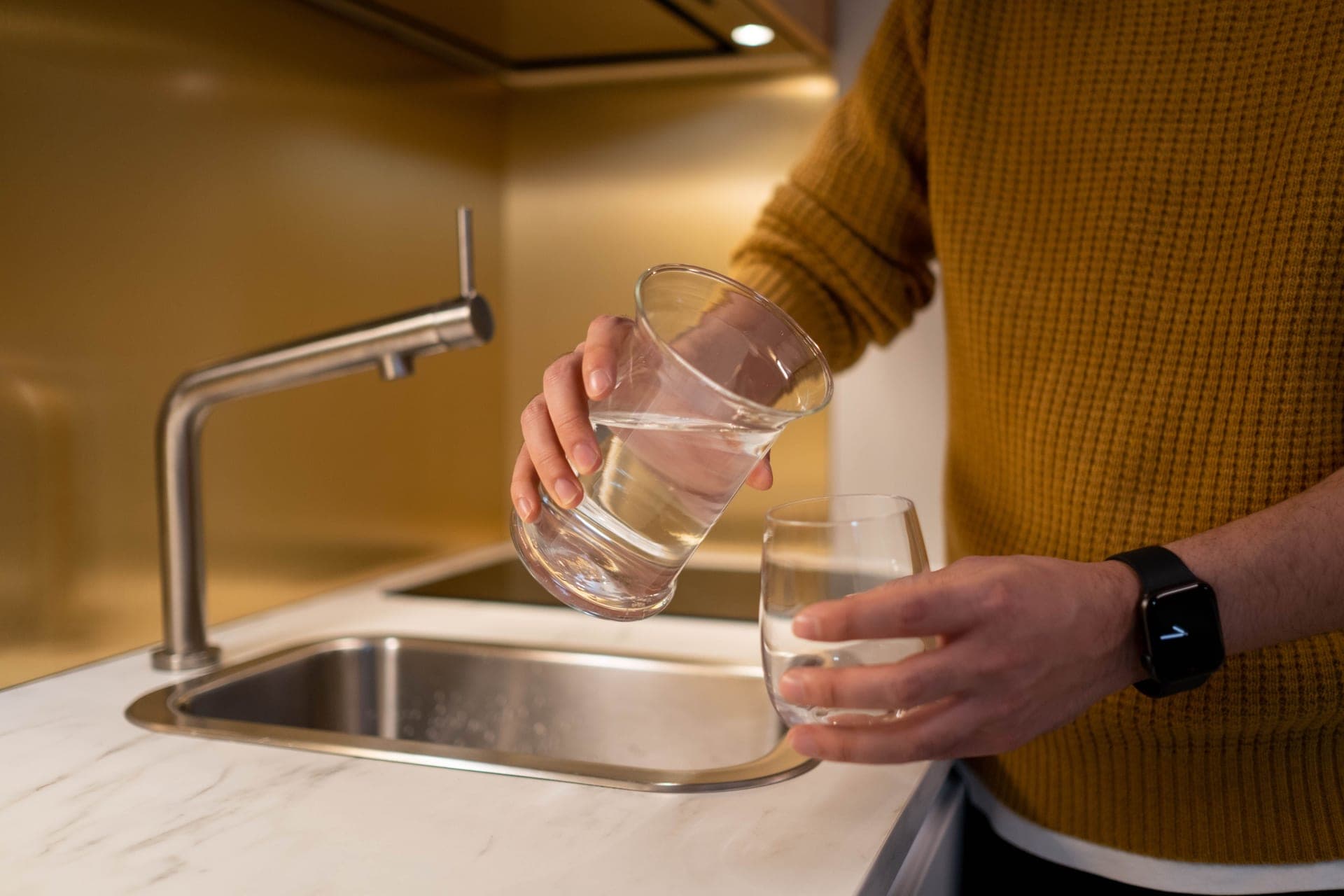
The Epic Smart Shield is a direct-connect carbon block filter for the existing cold line: no second faucet, no drain, no power. Epic states it is certified by IAPMO R&T to NSF/ANSI 42, 53 and 401 at 651 gallons, which makes it one of the very few direct-connect filters carrying a health-effects certification rather than a taste one. What its data sheet does not certify is fluoride or PFAS — and the newer Smart Shield MAX, which markets both, is the model Epic says has not been third-party certified.
Quick picks
Tap any row to jump to the full write-up. The button goes straight to the retailer.
| # | Product | Best for | Price |
|---|---|---|---|
| 1 | 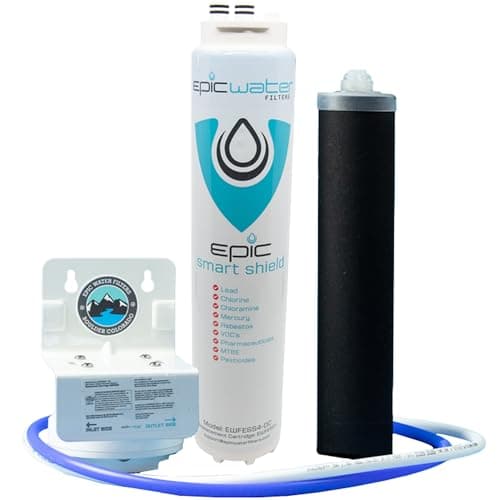 Epic Smart Shield Under-Sink Filter651 rated gallons, direct connect to the existing cold line, IAPMO certified to NSF/ANSI 42, 53 and 401. | The unit reviewed | $135.00 - View on Amazon #ad Price as of November 5, 2026. We may earn a commission. Disclosure. |
| 2 | 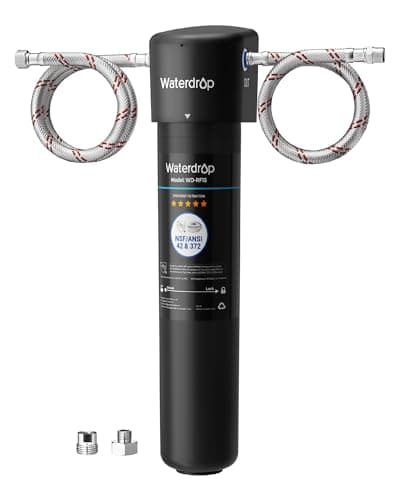 Waterdrop 15UA Direct-Connect Under-Sink FilterRated for about two years against twelve months — but certified to 42 and 372 only, so taste and materials rather than health effects. | If cartridge life matters more | $51.29 - View on Amazon $69.99 — 27% off #ad Price as of November 5, 2026. We may earn a commission. Disclosure. |
| 3 | 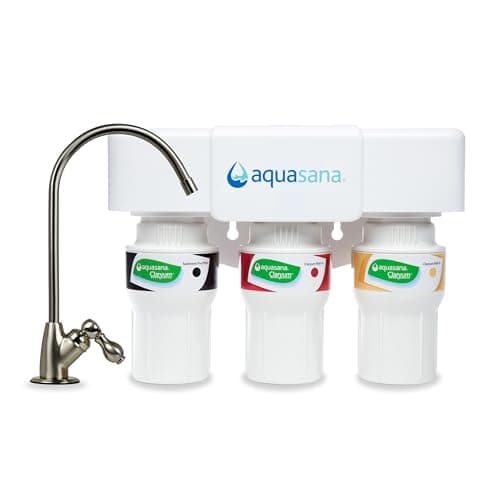 Aquasana Claryum 3-Stage Under-Sink Filter (AQ-5300)Adds the P473 protocol for PFOA and PFOS, which the Smart Shield's data sheet does not carry. Needs its own faucet hole. | If you can drill for a wider list | $154.99 - View on Amazon $349.99 — 56% off #ad Price as of November 5, 2026. We may earn a commission. Disclosure. |
| 4 | 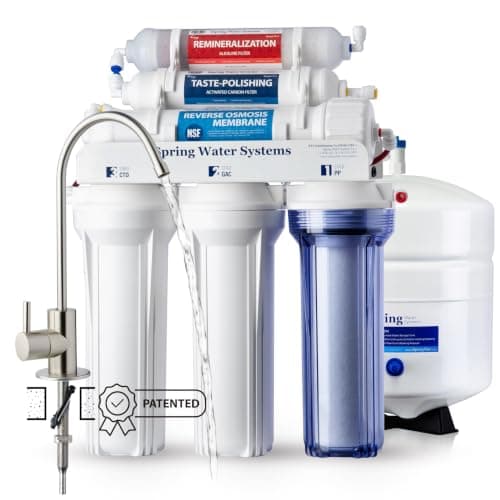 iSpring RCC7AK 6-Stage Reverse Osmosis SystemCarbon cannot reach fluoride at any certification level. This is the certified route, with remineralization. | If the worry is fluoride | $199.99 - View on Amazon $234.99 — 15% off #ad Price as of November 5, 2026. We may earn a commission. Disclosure. |
What it is
A single tall cartridge that cuts into the cold supply under the sink. There is no second faucet, no drain connection, no pressure tank and no power. You shut off the cold angle stop, put the filter in line with push-fit fittings, and the water coming out of the tap you already own is filtered.
That architecture is the entire reason to consider it, and it is rarer than it sounds. Most filters with a serious certification list come with their own faucet, which means a hole in the sink deck or the countertop — the thing that stops most installs. Most filters that avoid the hole are inline cartridges certified for taste and little else. The Smart Shield sits in the narrow overlap, and that is worth more than any single contaminant number on it.
The certification, and exactly what it covers
Epic states the Smart Shield is “Certified by IAPMO R&T to NSF/ANSI 42, 53 and 401” as model EWFESS4-DC. Its performance data sheet carries the same statement in the formal wording a certification produces — tested and certified by IAPMO R&T against NSF/ANSI 42, 53 and 401 for the claims specified on the sheet — along with the challenge concentrations and measured reductions that sit behind it.
Three standards map onto three different worries, and the middle one is the one that matters: in plain words, 42 is taste and odor, 53 is health effects, and 401 is the emerging-compounds list. Plenty of inline filters hold 42. Very few hold 53.
| Certified claim | Influent challenge | Measured reduction |
|---|---|---|
| Lead, pH 6.5 | 0.15 mg/L | Over 99.3%, to under 0.010 mg/L |
| Lead, pH 8.5 | 0.15 mg/L | Over 99.4%, to under 0.010 mg/L |
| Cysts | At least 50,000 per liter | Over 99.99% |
| Chloramine | 3.0 mg/L | Over 99.9% |
| Chlorine, taste and odor | 2.0 mg/L | 89.1% minimum, 95.5% average |
| Mercury, pH 6.5 / 8.5 | 0.006 mg/L | Over 96.6% / over 96.7% |
| Asbestos | 10 million to 100 million fibers/L | 99% |
| VOCs, chloroform surrogate | 0.300 mg/L | 96.7% minimum, 99.6% average |
| MTBE | 0.015 mg/L | 66.9% minimum, 86.6% average |
| Pharmaceuticals and BPA (401) | Six compounds | Over 95.4% to over 98.9% |
Two things are worth pulling out of that table. The lead result is genuinely strong, and it is tested at both pH 6.5 and pH 8.5 — the acidic case is the harder one, and the one that matters if your plumbing is the problem rather than the main. The lead roundup explains why the two-pH requirement exists.
The MTBE row is the honest counterweight. Getting from 0.015 mg/L down to the 0.005 mg/L limit needs a 66.7% reduction; the measured minimum was 66.9%. It passes, and it passes by two-tenths of a percentage point. That is a real certified claim, and it is also the thinnest margin on the sheet — exactly the kind of detail a “reduces 70+ contaminants” headline flattens away.
What the data sheet does not say
This is the part worth paying attention to, because Epic's marketing and Epic's certification are two different documents. Alongside the certified claims, the product page lists reductions that are “Also tested to reduce PFOA (94%), PFOS (98%), microplastics (99.6%) and glyphosate (over 99.9%)”. Those are laboratory figures. None of them appears on the performance data sheet, and there is no PFOA or PFOS row in its NSF/ANSI 53 table at all.
That distinction is not pedantry. NSF/ANSI 53 has a specific protocol for PFOA and PFOS, and filters that hold it say so on their sheet — the Aquasana Claryum carries it, and the certified-filter directory lists who else does. A certified claim means an accredited body verified the number and keeps auditing the production that has to reproduce it. A laboratory figure means someone ran a test. Epic publishes both and labels them correctly on its own site; it is the retail listings that blur them.
Fluoride does not appear anywhere. Not on the data sheet, not in Epic's own description of this model. That is expected rather than damning — carbon block does not reduce fluoride by any mechanism, which is why fluoride is a reverse osmosis question. It matters here only because of what Epic sells next to it.
The MAX question, which is the reason most people land here
Epic also sells the Smart Shield MAX. It costs a little more, it is rated higher, and its retail title markets fluoride, PFAS and lead. If you are choosing between the two, the ordinary assumption is that the newer, dearer, bigger-numbered one is the better filter. Here that assumption inverts.
On Epic's own MAX page, the description says the filter is “Independently tested to NSF/ANSI Standards 42, 53, P231, and 401” and publishes a claim list including fluoride at 90%, PFAS at 99.6%, lead at 98%, and bacteria and viruses at 99%. The same page's FAQ says: “This product has not been 3rd party certified but we are working on it”.
| Smart Shield | Smart Shield MAX | |
|---|---|---|
| Third-party certified | Yes — IAPMO R&T, per Epic | No, per Epic's own FAQ |
| Standards | NSF/ANSI 42, 53, 401 | 42, 53, P231, 401 — tested, not certified |
| Rated capacity | 651 gallons | 750 gallons, per Epic |
| Fluoride claim | None | 90%, uncertified |
| PFAS claim | Lab figure only, not on the data sheet | 99.6%, uncertified |
| Bacteria and viruses | No claim | 99%, uncertified |
| Cartridge | Its own | Its own, sold separately |
So the MAX adds the two claims the original lacks, plus a microbiological claim, and subtracts the one thing that made the original worth recommending. On a site whose whole method is certification listing before manufacturer figure, that is not a close call: buy the certified one.
Two fair caveats. “We are working on it” means the MAX may well be certified later, so this is a status worth re-checking rather than a permanent verdict. And the P231 claim deserves a specific note: P231 is the microbiological purifier protocol, and a certified P231 filter would be a meaningfully different product. Uncertified, it is a laboratory number — and the original's own data sheet carries the standard warning against using it on water that is microbiologically unsafe or of unknown quality. Neither of these filters is a substitute for disinfection.
If fluoride or PFAS is the actual reason you are shopping, the honest answer is that neither Smart Shield is the right purchase. Certified fluoride and certified PFAS reduction are reverse osmosis territory, or a carbon system that holds P473 specifically.
How far 651 gallons actually goes
Epic rates the cartridge at “651-gallon filter capacity, about 12 months of filtration for most households”. Do the division and that twelve months assumes about 1.8 gallons a day through the filter. For a household drawing drinking water only, that is a fair assumption.
But this filter is not plumbed to a drinking tap. It is plumbed to the cold line that feeds the kitchen faucet, so every gallon out of that tap spends cartridge life: filling a pasta pot, rinsing vegetables, topping up the dog bowl, running the tap while you wait for it to cool. That is the price of not drilling a hole, and it is rarely mentioned.
What the rating means at your tap
Epic's own twelve months implies roughly 1.8 gallons a day. Run the same 651 gallons against heavier use:
- 3 gallons a day — about 7 months.
- 5 gallons a day — about 4 months.
- 8 gallons a day — about 10 weeks.
Nobody meters their kitchen tap, so treat these as brackets rather than predictions. The point is only that “about a year” describes a light-use kitchen, and a busy one should budget for two cartridges a year rather than one.
We show the arithmetic rather than a verdict so you can redo it with the price you actually pay. Filter prices move; the rated capacities above do not.
There is a fix, and it is the reason Epic sells a Smart Shield bundled with a dedicated faucet. Put the filter on its own tap and it only treats what you actually draw to drink, which is where the 651 gallons stretches to a year or more. It also reintroduces the hole in the counter, so you are back to choosing between cartridge life and the install. That is the genuine trade-off in this category, and no product resolves it.
Running cost, which is the weakest part of the case
The cartridge is proprietary, and Epic prices it close to the price of the complete system — close enough that a second year costs very nearly what the first one did, housing included. That is unusual even in a category where proprietary cartridges are the norm, and it is the number to check before you buy rather than after.
Divide whatever the cartridge costs by 651 gallons and compare that figure, not the sticker price, against anything else you are considering — the under-sink roundup runs that comparison across the tier, and the cost of stretching a cartridge past its rating is why skipping the replacement is not a saving.
Third-party compatible cartridges for this housing do exist, and they are noticeably cheaper. They also put you outside the certified configuration: IAPMO certifies a system — housing and cartridge together, as submitted. Fit a different cartridge and the certification no longer describes what is under your sink. Since the certification is the only reason to choose this filter over a longer-life inline alternative, saving money that way removes the thing you paid for.
Against the alternatives that need no drilling
| Epic Smart Shield | Waterdrop 15UA | Aquasana Claryum 3-Stage | |
|---|---|---|---|
| Install | Direct connect | Direct connect | Its own faucet — needs a hole |
| Certified standards | 42, 53, 401 | 42, 372 | 42, 53 (incl. P473), 401 |
| Health-effects claim | Yes | No | Yes |
| PFOA and PFOS | Lab figure only | No | Certified under P473 |
| Rated capacity | 651 gallons | About 2 years — Waterdrop's own figure varies by listing | 600 gallons |
| Flow rate | 1.25 gpm | 0.75 gpm | 0.5 gpm |
| Wastewater | None | None | None |
Those two middle rows are the whole decision. The Waterdrop runs many times as many gallons for a fraction of the cost per gallon — but it is certified to 42 and 372, which is taste, odor and lead-free materials. It is not certified to reduce lead from the water. The Smart Shield is. If your reason for filtering is a lead result or a cyst advisory, the capacity comparison is irrelevant, because the cheaper filter does not make the claim you need.
The Aquasana is the one that genuinely beats it on paper: the same three standards plus P473, at a similar capacity. It costs a hole in the countertop, and it runs at 0.5 gpm against the Smart Shield's 1.25. If you can drill, drill. If you cannot — rented kitchen, stone counter, no spare opening — the Smart Shield is the strongest certified option that leaves the sink alone, and the renter page covers the rest of that constraint.
The install, honestly
This is the easy part. Epic says “Installs in 15 to 20 minutes with an adjustable wrench and a Phillips screwdriver”, and for once that is believable: shut the cold angle stop, interrupt the supply line with the push-fit fittings, strap the housing to the cabinet wall, open up and check for weeps. No drilling, no drain saddle, no outlet.
Two practical constraints. The housing is nearly 20 inches tall, so measure the clear height beside your waste pipe before ordering — a shallow cabinet or a garbage disposal can rule it out. And it is a cold-water filter only, rated 40 to 120 psi and 33 to 100°F, so it goes on the cold side and nowhere near the hot feed.
Epic also recommends adding its sediment pre-filter on older plumbing or high-sediment supply. That is sensible rather than upselling: a carbon block clogs on grit, and a cheap sediment stage protects the expensive cartridge. If your water runs cloudy or your pipes are old, budget for it.
Who should buy it
- Anyone who needs a certified health-effects claim and cannot drill. That is the narrow spot this product owns, and almost nothing else sits in it.
- Renters. It is reversible — the angle stop goes back to original in ten minutes and no hole exists to explain.
- Households worried about lead or cysts. Lead certified at both pH values, cysts over 99.99%.
- Anyone who wants full tap flow. At 1.25 gpm it is the fastest of the three compared above, and it keeps the minerals — unlike reverse osmosis.
Who should not
- Anyone whose test named fluoride, nitrate, arsenic or high TDS. Carbon does not reach them, and this sheet does not claim them.
- Anyone buying specifically for PFAS. The figures are laboratory figures. Buy a filter that carries P473 on its data sheet instead.
- Heavy kitchen-tap users on a tight budget. Everything through the cold tap burns cartridge life, and the cartridge is expensive.
- Anyone who can easily drill. A dedicated-faucet system gives you a wider certified list and far better cartridge economics for the same money.
The picks in full
The unit reviewed
Epic Smart Shield Under-Sink Filter
Epic Water Filters
The product that changes how this brand should be read. Where Epic's pitchers lean on laboratory data, the Smart Shield carries an IAPMO certification across three standards — and it runs 651 gallons on the existing cold line with no second faucet.
Certification status
Epic states the Smart Shield is certified by IAPMO to NSF/ANSI 42, 53 and 401. That is the aesthetic standard, the health-effects standard and the emerging-compounds standard together, which is a stronger position than most direct-connect filters, and stronger than Epic's own pitcher line.
Published specifications
| Rated capacity | 651 gallons |
|---|---|
| Certified standards | NSF/ANSI 42, 53 and 401 (IAPMO) |
| Format | Direct connect to the existing cold line — no second faucet |
| Dimensions | 19.75" tall x 4.5" deep x 4.25" wide |
| Install time | About 15 minutes, per Epic |
| Media | Solid carbon block |
| Tested claim list | 70+ contaminants, laboratory data beyond the certified claims |
What we like
- An IAPMO certification across 42, 53 and 401 — most direct-connect filters hold 42 alone
- 651 rated gallons, several times a premium pitcher cartridge
- No dedicated faucet, no drain line and no power: the easiest certified install in the tier
What we do not
- Every drop through the kitchen tap goes through the cartridge, including washing-up water
- Proprietary cartridge at a premium price
- No fluoride claim — carbon block cannot reach it
- Nearly 20 inches tall, so it needs real vertical clearance under the sink
Skip it if
Fluoride, nitrate or dissolved solids, and cabinets too shallow for a 20-inch housing. Reverse osmosis is the answer to the first three.
#ad Price as of November 5, 2026. We may earn a commission. Disclosure.
Where these specifications came from
If cartridge life matters more
Waterdrop 15UA Direct-Connect Under-Sink Filter
Waterdrop
The answer to the most common under-sink objection: it plumbs into the cold line feeding the faucet you already have, so there is no extra tap, no drilled counter and nothing visible.
Certification status
Waterdrop publishes the UA direct-connect range as certified to NSF/ANSI 42 for chlorine reduction and NSF/ANSI 372 for lead-free materials. Verify the listing for the specific variant before buying — the 15UB (dedicated faucet) and 15UA (direct connect) are listed separately. Note that retailer listings for this model quote capacities between 16,000 and 24,420 gallons; the 19,000-gallon figure used here is Waterdrop's own published rating, and it is the one to size against.
Published specifications
| Rated capacity | 19,000 gallons / about 2 years |
|---|---|
| Format | Direct connect to the existing cold line — no separate faucet |
| Certified standards | NSF/ANSI 42, 372 |
| Flow rate | 0.75 gpm |
| Connection | Quick-connect fittings, no threading |
What we like
- No counter drilling and no second tap — the single biggest objection to under-sink filtration, removed
- 19,000-gallon rated capacity means a filter change roughly every two years
- Quick-connect install is a genuinely realistic first-time DIY job
What we do not
- NSF/ANSI 42 is an aesthetic standard — chlorine, taste and odor, not a health claim
- Filters everything the tap delivers, including draws for cooking, which shortens life
- Not a lead or PFAS answer at this certification level
Skip it if
Anyone with a health-driven contaminant worry. NSF/ANSI 42 covers taste and odor. If lead or PFAS is the reason you are shopping, this is the wrong tier of certification.
$69.99 — 27% off
#ad Price as of November 5, 2026. We may earn a commission. Disclosure.
If you can drill for a wider list
Aquasana Claryum 3-Stage Under-Sink Filter (AQ-5300)
Aquasana
Carbon-block filtration rather than reverse osmosis: it keeps the minerals, wastes nothing, and fits where a reverse-osmosis system will not. It also cannot do what RO does for fluoride or nitrate.
Certification status
WQA tested and certified to NSF/ANSI 42, 53 — which includes the P473 protocol for PFOA and PFOS — and 401, for the reduction of 78 contaminants. Aquasana publishes 99.6% for lead and microplastics, 99.7% for PFOA and PFOS, 99.99% for cysts and 97% for chlorine across the Claryum 3-Stage line.
Published specifications
| Filter life | 600 gallons / up to 6 months |
|---|---|
| Certified standards | NSF/ANSI 42, 53 (includes P473), 401 (WQA) |
| Flow rate | 0.5 gpm |
| Wastewater | None |
| Format | 3-stage carbon block with a dedicated faucet |
| Contaminants claimed | 78 |
| Lead / PFOA and PFOS | 99.6% / 99.7% |
What we like
- No drain line, no wastewater, no tank — much easier to install than reverse osmosis
- NSF/ANSI 401 certification covers pharmaceutical-class trace compounds
- Full flow rate, unlike reverse osmosis, so filling a pot is not a project
What we do not
- Not reverse osmosis: no meaningful fluoride, nitrate or TDS reduction
- 600-gallon filter life is short next to an inline system's tens of thousands
- Proprietary cartridges
Skip it if
Anyone whose problem is fluoride, nitrate or total dissolved solids. Carbon block does not remove those; you need reverse osmosis for that job.
$349.99 — 56% off
#ad Price as of November 5, 2026. We may earn a commission. Disclosure.
If the worry is fluoride
iSpring RCC7AK 6-Stage Reverse Osmosis System
iSpring
The value pick of the reverse-osmosis tier: a WQA Gold Seal system with an alkaline stage, usually at the lowest price of anything here that carries a real certification.
Certification status
Certified against NSF/ANSI 58 for TDS reduction and carries the WQA Gold Seal, with 97.2% TDS removal certified.
Published specifications
| Output | 75 GPD |
|---|---|
| Stages | 6, including alkaline remineralization |
| Certified TDS reduction | 97.2% |
| Feed pressure | 45-70 psi |
| Feed temperature | 40-100 degrees F |
| Assembled size | 15.5" deep x 19.5" high, 25 lb |
| Certification | NSF/ANSI 58, WQA Gold Seal |
What we like
- Certified performance at the lowest price in the tier
- Push-fit tubing makes a first-time install genuinely manageable
- Alkaline stage included rather than sold as an upgrade
What we do not
- Narrow 45-70 psi feed window — low-pressure homes may need a booster pump
- Tank plus housing needs real cabinet depth
- Conventional reverse-osmosis drain ratio
Skip it if
Homes with feed pressure below 45 psi that will not add a booster pump, and anyone who wants a tankless footprint.
$234.99 — 15% off
#ad Price as of November 5, 2026. We may earn a commission. Disclosure.
Where these specifications came from
Questions people actually ask
Is the Epic Smart Shield NSF certified?
Epic states it is certified by IAPMO R&T to NSF/ANSI 42, 53 and 401 as model EWFESS4-DC, and its performance data sheet carries the same statement along with the certified reduction figures. IAPMO is an accredited certifier, so this is a certification rather than a laboratory claim. Note that Epic is explicit that its pitcher and bottle filters are tested but not certified to the same extent — the Smart Shield is the exception in the range, not the rule.
Smart Shield or Smart Shield MAX?
Buy the original. The MAX costs more and claims more — fluoride at 90%, PFAS at 99.6%, bacteria and viruses at 99% — but Epic's own MAX page says in its FAQ that the product has not been third-party certified. The original is the one with the IAPMO certification. If the fluoride or PFAS claim is what attracted you to the MAX, a certified reverse osmosis system is the honest answer to both, and it will cost less than being wrong.
Does the Epic Smart Shield remove fluoride?
No, and Epic does not claim it does for this model. Fluoride does not appear on the performance data sheet or in Epic's description of the Smart Shield, because carbon block does not reduce fluoride by any mechanism. Fluoride reduction means reverse osmosis, distillation or activated alumina.
Does it remove PFAS?
Epic publishes laboratory figures of 94% for PFOA and 98% for PFOS, but there is no PFOA or PFOS row on the certified performance data sheet. NSF/ANSI 53 has a specific protocol for those two compounds — P473 — and filters that hold it list it. If PFAS is your reason for buying, choose a filter that carries that claim on its sheet.
How long does the filter really last?
It is rated at 651 gallons, which Epic describes as about 12 months. That works out to roughly 1.8 gallons a day, which suits a household drawing drinking water only. Because this filter sits on the cold line feeding the whole kitchen faucet, cooking and rinsing consume the same capacity — at 3 gallons a day you are looking at about 7 months, and at 5 about 4 months.
Can I use a cheaper third-party replacement cartridge?
You can, and they exist for noticeably less. But IAPMO certifies the system as submitted, housing and cartridge together, so a different cartridge means the certification no longer describes what is under your sink. Given that the certification is the main reason to choose this filter over a cheaper long-life inline one, that is a false economy.
Do I need the sediment pre-filter too?
Only if your supply carries grit or your plumbing is old, which is exactly when Epic recommends it. A carbon block clogs on sediment, and a cheap pre-filter protects an expensive cartridge. On clean municipal water with modern pipes it is not necessary.
Sources
- Epic Water Filters / IAPMO R&T — Performance Data Sheet, Epic Smart Shield model EWFESS4-DC
- Epic Water Filters — Epic Smart Shield under-sink water filter system
- Epic Water Filters — Epic Smart Shield MAX
- Epic Water Filters — support: are Epic filters NSF/ANSI certified?
- Epic Water Filters — Smart Shield with dedicated faucet bundle
- NSF — Certified Products and Systems