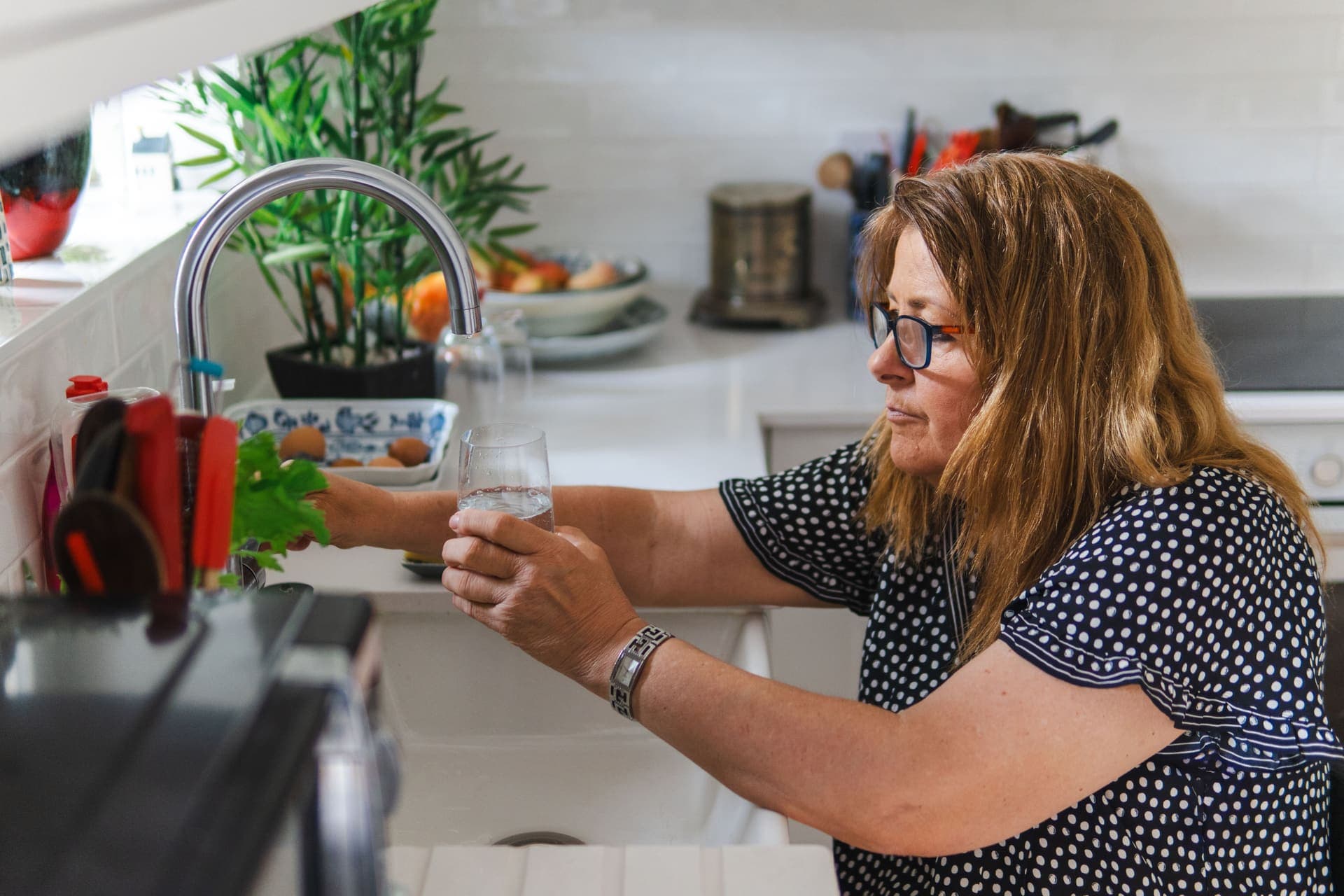
An overdue carbon filter is worse than no filter. Research found effluent bacteria counts up to 100 times higher than influent once a carbon block passed 85% of its rated volume. If you want to forget about maintenance, buy on rated gallons: the Aquasana Rhino runs 1,000,000 gallons.
Quick picks
Tap any row to jump to the full write-up. The button goes straight to the retailer.
| # | Product | Best for | Price |
|---|---|---|---|
| 1 | 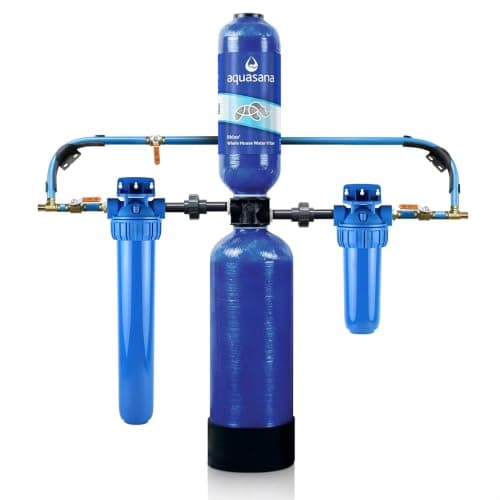 Aquasana Rhino EQ-1000 Whole-House FilterA 1,000,000-gallon main tank — roughly ten years for a typical household before the media is the limit. Aquasana Rhino EQ-1000 Whole-House FilterA 1,000,000-gallon main tank — roughly ten years for a typical household before the media is the limit. | Longest interval between changes | $1,123.00 - View on Amazon #ad Price as of October 17, 2026. We may earn a commission. Disclosure. |
| 2 |  EcoPure EPINL30 In-Line Refrigerator and Ice Maker Filter2,500 rated gallons against a typical fridge cartridge's 200 to 300. NSF/ANSI 42 only, and this page says so. EcoPure EPINL30 In-Line Refrigerator and Ice Maker Filter2,500 rated gallons against a typical fridge cartridge's 200 to 300. NSF/ANSI 42 only, and this page says so. | Longest-life fridge filter | $28.73 - View on Amazon $31.82 — 10% off #ad Price as of October 17, 2026. We may earn a commission. Disclosure. |
| 3 | 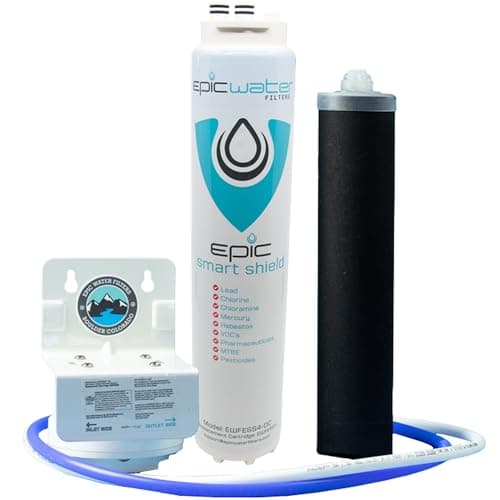 Epic Smart Shield Under-Sink Filter651 rated gallons, IAPMO certified to NSF/ANSI 42, 53 and 401, with no second faucet to install. Epic Smart Shield Under-Sink Filter651 rated gallons, IAPMO certified to NSF/ANSI 42, 53 and 401, with no second faucet to install. | Longest-life under-sink cartridge | $135.00 - View on Amazon #ad Price as of October 17, 2026. We may earn a commission. Disclosure. |
| 4 | 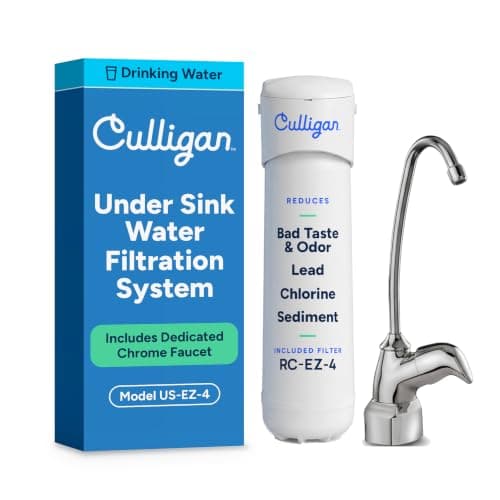 Culligan US-EZ-4 Under-Sink Filtration System500 rated gallons with cysts, lead, mercury and the PFOA/PFOS protocol under NSF/ANSI 53. Culligan US-EZ-4 Under-Sink Filtration System500 rated gallons with cysts, lead, mercury and the PFOA/PFOS protocol under NSF/ANSI 53. | Best interval with a real health claim | $92.96 - View on Amazon #ad Price as of October 17, 2026. We may earn a commission. Disclosure. |
| 5 | 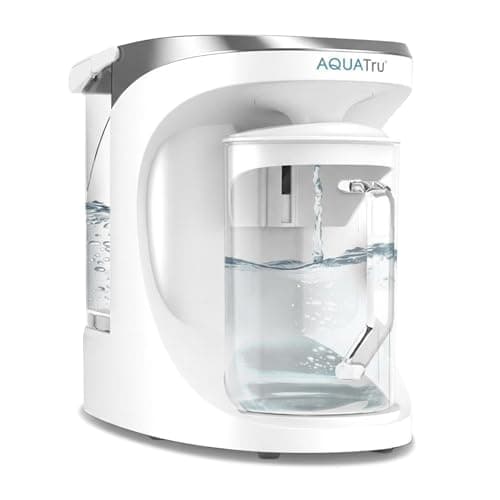 AquaTru Carafe Countertop Reverse Osmosis PurifierCounts gallons used and warns you, rather than relying on a calendar you will ignore. AquaTru Carafe Countertop Reverse Osmosis PurifierCounts gallons used and warns you, rather than relying on a calendar you will ignore. | If you would rather watch gallons than guess | $356.25 - View on Amazon $375.00 — 5% off #ad Price as of October 17, 2026. We may earn a commission. Disclosure. |
The finding this page is built on
Most advice about overdue filters is vague about consequences — "it stops working as well" — which is both true and useless. There is better evidence than that, and it is more alarming than the vague version.
A 2017 study in Environmental Science: Water Research & Technology looked at what point-of-use activated carbon block filters do to bacteria over a cartridge's life. The premise is worth stating because it surprises people: the filters are not designed to remove bacteria, which can grow in the filter. Carbon is a porous, nutrient-rich, chlorine-free surface with water moving slowly through it. That is close to ideal growing conditions.
The measured result: after 85% of the rated volume had passed through, effluent heterotrophic plate counts plateaued at levels up to 100 times greater than influent counts, and the fabric upstream of the carbon had developed significant biofilm.
Read that number carefully, because it is the whole argument of this page. The filter does not merely stop subtracting things from your water. Towards the end of its rated life it starts adding something, and the thing it adds is not on any label.
What that does and does not mean for you
We should be honest about the limits of this evidence, because overstating it is how legitimate findings turn into scare copy.
Heterotrophic plate count is a general measure of bacterial population, not a count of pathogens. Most of what grows in a carbon filter is environmental and harmless to a healthy adult, and the health significance of high counts in point-of-use water has been argued over for decades without resolution — some studies found no effect, others found correlations with gastrointestinal illness. Nobody has shown that an overdue Brita makes healthy people ill.
Two groups should still treat it as a real risk rather than a curiosity. Anyone immunocompromised, for the obvious reason. And anyone whose filter sits unused for stretches — a holiday home, an office, a second kitchen — because stagnant water in the filter and the outlet line is the condition the study was describing, concentrated.
For everyone else, the practical takeaway is narrower and still worth having: the rated capacity is not a performance cliff you coast past. It is roughly where the filter's behavior changes direction.
The other three things an overdue cartridge does
Bacterial regrowth is the finding people have not heard. These three are better known and worth ranking properly, because they are not equally serious.
Chemical breakthrough. Activated carbon works by adsorption, which is a finite-capacity process: the surface fills up. Once it is saturated, the contaminant it was holding simply passes through. This is the mechanism behind the rated gallon figure, and it is why "the water still tastes fine" is not evidence — taste and odor compounds break through at a different point from lead or VOCs.
Flow collapse. The sediment stage loads up with particulate and the flow drops. This is the symptom people actually notice, and it is the most benign of the four: it is annoying rather than risky, and it is a warning rather than a harm.
Dumping. The one people most fear and the least likely. An ion-exchange resin that has exhausted can release what it captured when the chemistry shifts, which is why ZeroWater ships a meter — a rising TDS reading on a resin filter means it is finished. A plain carbon block does not dump in the dramatic sense; it breaks through.
| What happens | Mechanism | Do you notice? | How much it matters |
|---|---|---|---|
| Bacterial regrowth | Carbon is a growth surface once chlorine is stripped | No | High if immunocompromised, or after stagnation |
| Chemical breakthrough | Adsorption capacity is finite | No | High — it is the reason you bought the filter |
| Flow collapse | Sediment loading | Yes, immediately | Low — annoying, and a useful warning |
| Resin dumping | Exhausted ion exchange releases its load | Only with a TDS meter | Medium, and only on resin filters |
Notice that the two that matter most are the two you cannot detect without instruments. That asymmetry is the reason the interval is a specification rather than a judgement call.
Gallons, not months — and why the dates on the box disagree
Every manufacturer publishes two numbers, and only one of them is about the filter.
The rated capacity in gallons is the tested figure: it is what the cartridge was challenged to under NSF/ANSI protocols. The interval in months is an estimate built on an assumption about your household that nobody checked. For the AquaTru Carafe the two published sources do not even agree with each other — the IAPMO performance data sheet lists the pre/carbon cartridge at three months or 300 gallons while AquaTru's own product page lists six months and the same 300 gallons. The gallon figure is identical in both places. That is the tell.
So the arithmetic that actually governs your interval is a short one. Count the gallons your household draws through the filter in a week, divide the rated capacity by it, and that is your interval in weeks. The pitcher page works this through for jug filters, where the gap between the calendar claim and the real interval is widest.
A worked example for the tier spread, at two gallons a day — 730 gallons a year:
| Format | Typical rated capacity | Changes per year at 2 gal/day |
|---|---|---|
| Pitcher cartridge | 40-150 gallons | 5 to 18 |
| Faucet mount | 100-200 gallons | 4 to 7 |
| Refrigerator cartridge | 200-300 gallons | 2 to 4 |
| Under-sink carbon | 500-651 gallons | 1 to 1.5 |
| Reverse osmosis membrane | 600+ gallons, 24 months | About 1, by calendar |
| Whole-house tank media | 600,000-1,000,000 gallons | Once a decade |
The spread across that table is three orders of magnitude, which is the real answer to "which filter needs the least maintenance". It is not a brand question. It is a question of where in the plumbing the cartridge sits and how much media fits there.
Lowest maintenance, by tier
If minimising attention is the actual goal, the ranking falls out of the capacities rather than out of any feature list.
Whole-house is the answer, if you own the house. The Aquasana Rhino's main tank is rated at 1,000,000 gallons — a decade for most households — with only the pre-filter on a short cycle. The whole-house roundup covers the tier, and the pre-filter page covers the one cartridge that does need regular attention and protects everything downstream.
Under-sink is the answer if you can plumb but not re-pipe. The Epic Smart Shield runs 651 rated gallons, direct-connect, with an IAPMO certification across NSF/ANSI 42, 53 and 401. The Culligan US-EZ-4 is 500 gallons with a cyst and lead claim. One or two cartridges a year is a different relationship with a filter than one a month.
Fridge filters are where the biggest single win hides. Most compatible cartridges are rated at 200 to 300 gallons; the EcoPure EPINL30 is rated at 2,500. The honest catch, which the fridge roundup spells out, is that its listing is NSF/ANSI 42 only — chlorine and taste, no lead and no cyst claim. You are trading claim breadth for interval, and that is a real trade rather than a free lunch.
A gallon counter beats a calendar. Whatever you buy, a system that counts throughput and tells you is worth more than one with a sticker. The reason is in the section above: the two consequences that matter are invisible, so the reminder has to come from the machine.
If you have already left one in too long
This comes up constantly and deserves a straight answer rather than reassurance or alarm.
Change it, flush the new cartridge for as long as the manual says — usually a few liters, and the purpose is to clear carbon fines rather than to sterilize anything — and do not worry about the water you already drank. There is no evidence that a late cartridge change harms a healthy adult, and a lot of evidence that people drink unfiltered tap water their whole lives without consequence.
Two exceptions, both from the research above. If the system has been standing unused for weeks, run it to waste for several minutes before drinking, because stagnant water in the filter and the line is the worst case. And if anyone in the household is immunocompromised, CDC advises against handling spent cartridges yourself at all, since a used filter holds what it caught — have someone else change it.
The cost-per-gallon math
The useful way to compare maintenance across tiers is cost per gallon, because a cheap cartridge changed ten times a year is not cheap.
Divide the cartridge price by its rated gallons. A pitcher cartridge at 40 gallons and an under-sink cartridge at 651 gallons can sit at the same shelf price and differ by more than tenfold per gallon. A whole-house tank rated at 1,000,000 gallons has a large up-front number and the lowest cost per gallon in the category by a wide margin — the whole-house cost page does that arithmetic over ten years.
Add your own time to the comparison if you are reading this page because you keep forgetting. Ten cartridge changes a year is ten occasions to remember, order and fit something. One is not.
We do not print product prices in this text. The buy buttons carry the live figure and the date it was checked, which is the only price worth quoting.
We show the arithmetic rather than a verdict so you can redo it with the price you actually pay. Filter prices move; the rated capacities above do not.
The picks in full
Longest interval between changes
Aquasana Rhino EQ-1000 Whole-House Filter
Aquasana
A million-gallon point-of-entry filter for chlorinated municipal supply. It fixes the shower and the laundry as well as the kitchen tap, and it does not pretend to be a health-contaminant system.
Certification status
Certified by NSF International to NSF/ANSI 42, with the tank certified to NSF/ANSI 61 for material safety. NSF/ANSI 42 is an aesthetic-effects standard — taste, odor and chlorine — not a health-effects claim.
Published specifications
| Rated capacity | 1,000,000 gallons / up to 10 years |
|---|---|
| Rated flow | 7.0 gpm |
| Max operating pressure | 100 psi |
| Operating temperature | 40-90 degrees F |
| Dimensions | 46" L x 9" W x 44" H, 44.1 lb |
| Certified standards | NSF/ANSI 42; tank to NSF/ANSI 61 |
| Published chlorine reduction | Greater than 97% |
What we like
- Ten years or a million gallons before the main media is due — effectively no maintenance routine
- Treats every tap, so showers and laundry benefit, not just drinking water
- NSF/ANSI 61 material certification on the tank
What we do not
- NSF/ANSI 42 only — this is a chlorine and aesthetics system, not a lead or PFAS system
- Needs a main-line install, usually a plumber, and space where the water enters
- Does nothing for hardness
Skip it if
Anyone buying it to solve lead, PFAS or hard water. It is certified for aesthetic effects. Pair it with an under-sink system for drinking-water health contaminants, and a softener for hardness.
#ad Price as of October 17, 2026. We may earn a commission. Disclosure.
Where these specifications came from
Longest-life fridge filter
EcoPure EPINL30 In-Line Refrigerator and Ice Maker Filter
EcoPure
The honest version of an inline filter: a carbon cartridge that splices into the quarter-inch line behind the fridge, certified for exactly what a carbon filter of that size can do — chlorine, taste and odor — and rated for 2,500 gallons, which is years of ice.
Certification status
Listed by NSF under NSF/ANSI 42 for chlorine reduction and taste and odor reduction, at a rated capacity of 2,500 gallons and a service flow of 0.5 gpm. It carries no NSF/ANSI 53 claim, so it is not a lead or cyst filter. EcoPure's larger EPINL40 is listed under 53 for lead and cysts at 2,000 gallons, but we could not find it in stock.
Published specifications
| Type | Inline, fits the quarter-inch cold line |
|---|---|
| Certified standard | NSF/ANSI 42 (NSF listing) |
| Claims | Chlorine reduction, taste and odor reduction |
| Rated capacity | 2,500 gallons |
| Service flow | 0.5 gpm |
| Manufacturer's interval | Up to 5 years |
| Fittings | 1/4-inch compression and push-to-connect included |
| Also fits | Ice makers, RVs, campers, boats, under-sink lines |
What we like
- A checkable NSF listing rather than vague 'NSF-tested' wording
- 2,500 rated gallons is years of ice and dispenser water for most households
- Both fitting types in the box, so it goes on copper or plastic tubing without a hardware trip
What we do not
- NSF/ANSI 42 only — no lead, cyst or emerging-compound claim of any kind
- A five-year interval encourages people to forget it entirely
- Does nothing about cloudy ice, which is trapped air rather than contamination
- Redundant if your refrigerator already takes an internal cartridge
Skip it if
Lead. If that is why you are filtering the fridge line, this is the wrong product and an inline carbon filter of any brand is the wrong category.
$31.82 — 10% off
#ad Price as of October 17, 2026. We may earn a commission. Disclosure.
Longest-life under-sink cartridge
Epic Smart Shield Under-Sink Filter
Epic Water Filters
The product that changes how this brand should be read. Where Epic's pitchers lean on laboratory data, the Smart Shield carries an IAPMO certification across three standards — and it runs 651 gallons on the existing cold line with no second faucet.
Certification status
Epic states the Smart Shield is certified by IAPMO to NSF/ANSI 42, 53 and 401. That is the aesthetic standard, the health-effects standard and the emerging-compounds standard together, which is a stronger position than most direct-connect filters, and stronger than Epic's own pitcher line.
Published specifications
| Rated capacity | 651 gallons |
|---|---|
| Certified standards | NSF/ANSI 42, 53 and 401 (IAPMO) |
| Format | Direct connect to the existing cold line — no second faucet |
| Dimensions | 19.75" tall x 4.5" deep x 4.25" wide |
| Install time | About 15 minutes, per Epic |
| Media | Solid carbon block |
| Tested claim list | 70+ contaminants, laboratory data beyond the certified claims |
What we like
- An IAPMO certification across 42, 53 and 401 — most direct-connect filters hold 42 alone
- 651 rated gallons, several times a premium pitcher cartridge
- No dedicated faucet, no drain line and no power: the easiest certified install in the tier
What we do not
- Every drop through the kitchen tap goes through the cartridge, including washing-up water
- Proprietary cartridge at a premium price
- No fluoride claim — carbon block cannot reach it
- Nearly 20 inches tall, so it needs real vertical clearance under the sink
Skip it if
Fluoride, nitrate or dissolved solids, and cabinets too shallow for a 20-inch housing. Reverse osmosis is the answer to the first three.
#ad Price as of October 17, 2026. We may earn a commission. Disclosure.
Where these specifications came from
Best interval with a real health claim
Culligan US-EZ-4 Under-Sink Filtration System
Culligan
The cheapest certified under-sink filter on this site, and the claim list is better than the price suggests: chloramine under 42, and lead plus PFOA and PFOS under 53. The catch is a dedicated faucet and a 500-gallon cartridge.
Certification status
Certified by IAPMO R&T to NSF/ANSI 42 for chlorine taste and odor, chloramines and nominal particulate Class I, and to NSF/ANSI 53 for cysts, lead, mercury, VOCs, MTBE, turbidity, PFOA and PFOS. Rated at 500 gallons or about six months, at a 0.5 gpm service flow.
Published specifications
| Rated capacity | 500 gallons / about 6 months |
|---|---|
| Certified standards | NSF/ANSI 42 and 53 (IAPMO R&T) |
| Chloramine | Included in the NSF/ANSI 42 claim |
| PFOA / PFOS | Included in the NSF/ANSI 53 claim |
| Also certified for | Lead, mercury, cysts, VOCs, MTBE, turbidity |
| Service flow | 0.5 gpm |
| Operating pressure | 30-100 psi |
| Replacement cartridge | RC-EZ-4 |
| Faucet | Dedicated faucet included — needs a hole |
What we like
- A certified chloramine claim, which most filters do not carry and most chloraminated supplies need
- PFOA and PFOS named in the 53 certification on an inexpensive cartridge
- Twist-on, twist-off cartridge change with quick-connect fittings and a double shut-off
What we do not
- Needs a dedicated faucet, which means drilling the counter or using a spare hole
- 500 gallons is a modest cartridge life next to direct-connect inline filters
- No fluoride, nitrate or arsenic claim — the limit of carbon, not of this product
- Proprietary RC-EZ-4 cartridge
Skip it if
Fluoride, nitrate or hardness, and anyone who cannot drill or spare a hole in the sink deck for the faucet.
#ad Price as of October 17, 2026. We may earn a commission. Disclosure.
Where these specifications came from
If you would rather watch gallons than guess
AquaTru Carafe Countertop Reverse Osmosis Purifier
AquaTru
The Classic's certification table in two-thirds of the footprint, pouring into glass instead of a plastic tank. You give up capacity and gain a published 63% recovery rate, which is better than almost any plumbed system manages.
Certification status
IAPMO publishes a performance data sheet covering Carafe models AT100, AT110, AT120, AT130 and AT140, certified under NSF/ANSI 42, 53 and 58, with additional testing to NSF/ANSI 401 and NSF Protocol 53 for PFOA and PFOS. The NSF/ANSI 58 table records average reductions of 99.2% for lead, 99.9% for cysts, 96.4% for fluoride, 98.8% for pentavalent arsenic, 97.5% for hexavalent chromium, 98.3% for nitrate and 94.4% for TDS. PFOA and PFOS average 99% under NSF Protocol 53.
Published specifications
| Filtration | 4-stage countertop reverse osmosis |
|---|---|
| Carafe | 64 oz borosilicate glass |
| Clean water tank | 0.5 gallons (1.9 L) |
| Tap water tank | 0.66 gallons (2.5 L) |
| Daily production rate | 35 GPD |
| Efficiency rating | 63% (IAPMO) |
| Certified standards | NSF/ANSI 42, 53, 58 (IAPMO) |
| Dimensions | 13 in H x 14 in D x 7.5 in W |
| Power | 120 V, 60 Hz |
| Max inlet hardness | 10 gpg (171 mg/L) |
What we like
- A published 63% efficiency rating — most tank reverse osmosis systems send three or four gallons to drain per gallon produced
- The NSF/ANSI 58 claim list reaches lead, fluoride, nitrate, arsenic, chromium-6 and cysts, which carbon cannot
- Glass carafe rather than a plastic holding tank, and it goes in the fridge
- No plumbing, no drilling and no drain saddle — the whole certification travels with a renter
What we do not
- A 0.5 gallon clean tank against the Classic's 0.75 — you refill it more often for the same household
- Three cartridges on three different clocks, and the manufacturer's web page and the certifier's data sheet disagree on the pre/carbon interval
- Needs a counter outlet and 7.5 inches of width it does not share
- Not for water above 10 gpg hardness without softening first, or the membrane scales
Skip it if
A household that drinks a lot of water. The clean tank holds half a gallon and refills at 35 gallons a day, so a family of four will be waiting on it. Buy the Classic for its larger tanks, or a plumbed under-sink system if you can install one.
$375.00 — 5% off
#ad Price as of October 17, 2026. We may earn a commission. Disclosure.
Questions people actually ask
What happens if you don't change your water filter?
Three things you will not notice and one you will. Activated carbon saturates and the contaminants it was holding pass through; bacteria grow in the filter — one peer-reviewed study measured effluent counts up to 100 times higher than influent after 85% of rated volume; exhausted ion-exchange resin can release its load; and flow drops as the sediment stage clogs. Only the flow drop is visible, which is why the rated gallon figure matters.
Can an old water filter make you sick?
There is no evidence it makes healthy adults ill, and that should be said plainly. Carbon filters do grow bacteria once they strip the chlorine, and research has measured large increases in heterotrophic plate counts in overdue cartridges, but heterotrophic counts are a general population measure rather than a pathogen count and the health significance has been argued over for decades. The people who should treat it seriously are anyone immunocompromised and anyone whose system has stood unused for weeks.
Which water filter needs the least maintenance?
Whole-house, by a wide margin, if you own the property — the Aquasana Rhino's main tank is rated at 1,000,000 gallons, roughly a decade for a typical household. Below that, an under-sink cartridge such as the Epic Smart Shield at 651 rated gallons is one or two changes a year. The EcoPure EPINL30 refrigerator filter is rated at 2,500 gallons against a typical 200 to 300, though its listing covers NSF/ANSI 42 only.
Should I go by months or gallons?
Gallons. The rated capacity is the figure the cartridge was actually tested to under NSF/ANSI protocols; the interval in months is an estimate built on an assumed household. The two published sources for the AquaTru Carafe's pre/carbon cartridge disagree on the months — three on the certifier's data sheet, six on the manufacturer's page — while agreeing exactly on 300 gallons. Count gallons and divide.
How long do water filters last?
It depends entirely on where the cartridge sits. Pitcher cartridges are rated at 40 to 150 gallons, faucet mounts 100 to 200, refrigerator cartridges 200 to 300, under-sink carbon 500 to 651, reverse osmosis membranes 600 or more with a 24-month calendar limit, and whole-house tank media 600,000 to 1,000,000 gallons. At two gallons a day that is anything from eighteen changes a year to one a decade.
Does a water filter grow mould or slime?
Biofilm, which is the technical version of the same thing. The 2017 study that measured bacterial increases also reported significant biofilm on the fabric upstream of the carbon. It forms because filtering removes the chlorine that was suppressing growth, leaving a damp nutrient-rich surface. Changing on schedule is the control; so is running the system to waste for a few minutes after it has stood unused.
Do I need to flush a new filter?
Yes, for the reason the manual gives rather than for hygiene. The flush clears loose carbon fines from manufacturing, which is why the first liter or two can run grey or taste of carbon. Follow the published volume for your cartridge. It is not sterilizing anything and it is not optional if you want the first glass to taste right.
Sources
- Wu, Rodgers, Reckhow et al., Environmental Science: Water Research & Technology (2017) — bacterial growth and biofilm in point-of-use activated carbon block filters
- AquaTru / IAPMO — Performance Data Sheet, Carafe models AT100-AT140
- CDC — Choosing a home water treatment system and the NSF standards that apply
- NSF — Certified Products and Systems