
Sorted by standard: Brita Elite holds NSF/ANSI 53 for lead, everydrop EDR1RXD1 is NSF certified under 42, 53 and 401, Aquasana's AQ-5300 is WQA certified across 78 contaminants, and both AquaTru units hold IAPMO listings under 58. No shower filter holds 177.
Quick picks
Tap any row to jump to the full write-up. The button goes straight to the retailer.
| # | Product | Best for | Price |
|---|---|---|---|
| 1 | 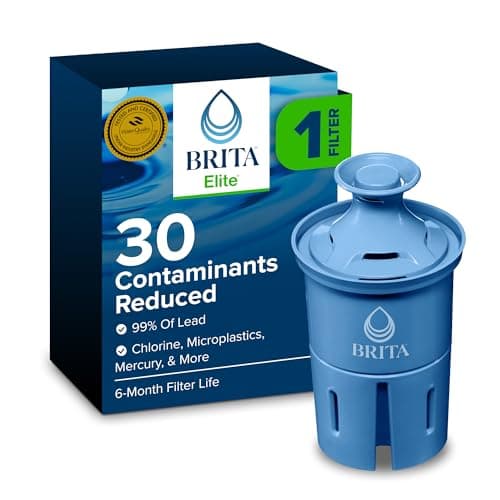 Brita Elite Filter (with any Brita pitcher)Certified to NSF/ANSI 42, 53 and 401. The lead claim belongs to the Elite (blue) filter only — not the Standard white one. | Cheapest real health-effects certification | $17.07 - View on Amazon $19.99 — 15% off #ad Price as of November 2, 2026. We may earn a commission. Disclosure. |
| 2 | 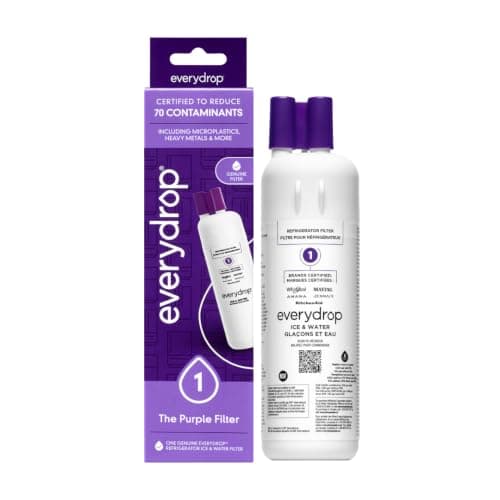 everydrop Filter 1 (EDR1RXD1) Refrigerator FilterCertified by NSF International under 42, 53 and 401, listing held by Whirlpool, with a nineteen-claim health list under 53. | Best certified refrigerator filter | $57.00 - View on Amazon $59.99 — 5% off #ad Price as of November 2, 2026. We may earn a commission. Disclosure. |
| 3 | 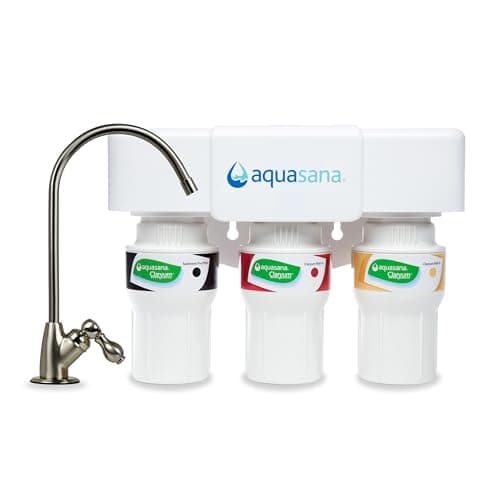 Aquasana Claryum 3-Stage Under-Sink Filter (AQ-5300)WQA certified to NSF/ANSI 42, 53 — which includes the P473 PFOA/PFOS protocol — and 401, across 78 contaminants. | Widest certified claim list in carbon | $154.99 - View on Amazon $349.99 — 56% off #ad Price as of November 2, 2026. We may earn a commission. Disclosure. |
| 4 | 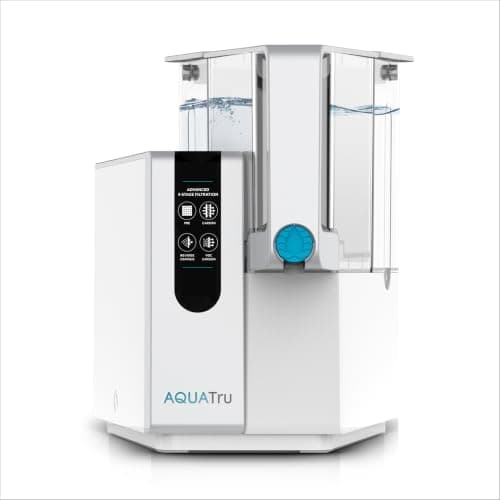 AquaTru Classic Countertop Reverse Osmosis PurifierIAPMO certified to NSF/ANSI 53, 58, 401 and P473. The only format here that reaches fluoride and nitrate with no install. | Broadest certification without plumbing | $475.00 - View on Amazon #ad Price as of November 2, 2026. We may earn a commission. Disclosure. |
| 5 | 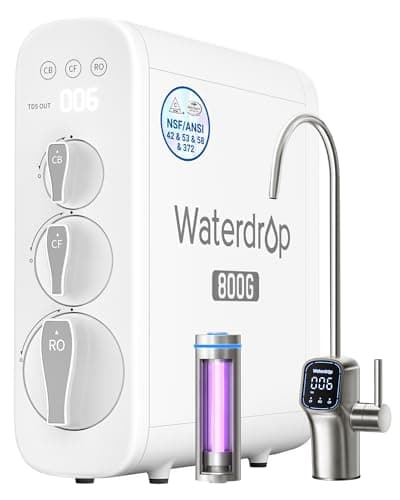 Waterdrop G3P800 Tankless Reverse Osmosis SystemCertified to 42, 53 and 58 for TDS, fluoride, cadmium, chromium-6 and selenium, plus 372 for lead-free materials. | Best certified plumbed system | $849.00 - View on Amazon #ad Price as of November 2, 2026. We may earn a commission. Disclosure. |
What had to be true for a product to appear here
This page is a directory, not an explainer. If you want to know what each standard number means, the certification guide covers the semantics — the 42-versus-53 gap, what "certified to" means against "tested to", and who the certifying bodies are. This page answers the next question: which filters actually hold one.
Three things had to be true for a product to make the list below:
- A named certifying body. NSF International, WQA or IAPMO R&T. A product that says "certified" without naming who certified it has not told you anything.
- A checkable listing, in that body's own searchable database or on a published performance data sheet carrying its mark — not a line of marketing copy.
- The claim stated per contaminant. Certification is granted contaminant by contaminant, so "certified to NSF/ANSI 53" on its own is not a lead claim.
Everything that failed those tests is in the skip box at the end, including some products this site rates highly for other reasons. The distinction being drawn here is about the evidence, not the engineering.
The directory, by standard
Read down the left column to the standard that matches your problem, then across.
| Standard | What it covers | Held on this site by | Body |
|---|---|---|---|
| NSF/ANSI 42 | Chlorine, taste, odor, particulate — aesthetic, not health | Almost everything certified at all, including Brita Elite, everydrop EDR1RXD1, Aquasana AQ-5300, Waterdrop G3P800 | NSF / WQA / IAPMO |
| NSF/ANSI 53 | Health effects: lead, cysts, VOCs, asbestos, turbidity | Brita Elite (lead), everydrop EDR1RXD1 (19 claims), Aquasana AQ-5300, AquaTru Classic, Waterdrop G3P800, Culligan US-EZ-4 (incl. PFOA/PFOS) | NSF / WQA / IAPMO |
| NSF/ANSI 58 | Reverse osmosis: fluoride, nitrate, arsenic, chromium-6, TDS | AquaTru Classic, AquaTru Carafe, Waterdrop G3P800 and G3P600, iSpring RCC7AK (TDS) | IAPMO / WQA |
| NSF/ANSI 401 | Emerging compounds: pharmaceuticals, microplastics, BPA | everydrop EDR1RXD1, Aquasana AQ-5300, AquaTru Classic, Epic Smart Shield | NSF / WQA / IAPMO |
| NSF P473 | PFOA and PFOS specifically | AquaTru Classic, Aquasana AQ-5300 (inside its 53) | IAPMO / WQA |
| NSF/ANSI 372 | Lead-free materials — what the housing is made of, not what it removes | Waterdrop G3P800 and G3P600, Kohler Wellspring, Epic Pure XP, Clearly Filtered pitcher | NSF / IAPMO |
| NSF/ANSI 177 | Shower filters: free available chlorine | Nobody — see below | — |
Two rows in that table are doing work that is easy to miss, and both are places where money gets wasted.
The 372 trap, and the 177 gap
These are the two standards most often waved at buyers as though they meant something they do not.
NSF/ANSI 372 is a materials standard. It certifies that a product is lead-free — in the legal sense of a weighted average of 0.25% lead across wetted surfaces — and it says nothing whatsoever about what the filter removes from your water. A pitcher advertised as "NSF certified" on the strength of 372 alone has been certified not to add lead. That is worth having and it is not a filtration claim. The faucet page covers why 372 matters most on the fitting that touches your water last.
Nobody holds NSF/ANSI 177. This is the only standard written for shower filters, it covers free available chlorine, and across the shower filters this site has examined, none holds a certification listing under it. The best-documented options are tested to it: Aquasana publishes an independently tested figure of over 90% chlorine reduction over 10,000 gallons, and Culligan's performance sheet states its showerhead was tested according to 177 — while adding that chloramine was not evaluated. AquaBliss publishes no independently verified figure at all. The shower roundup works through the tier, and the honest summary is that a shower filter is a chlorine purchase measured by test report rather than certified by a listing.
Three bodies, and why NSF's database is not the whole answer
This confuses people constantly, and it causes buyers to reject genuinely certified products.
NSF International, the Water Quality Association and IAPMO R&T all certify drinking water treatment units to the same NSF/ANSI standards. They are independent certifiers of a shared standard, in the way that different laboratories can all run the same test method.
The consequence is the one that trips people up: NSF's searchable database only contains products NSF itself certified. A product certified by IAPMO or WQA will not appear there, and its absence is not evidence of anything. The Aquasana Claryum systems are a clear example — the dedicated-faucet models are WQA certified and the direct-connect model is IAPMO certified, so neither shows up in NSF's listing, and both are certified.
So "I searched NSF and could not find it" is only a finding if the brand claims NSF specifically. Check the body the brand names, in that body's own directory.
Certification is per contaminant, which changes what to look for
The single most useful habit on this page: stop reading standard numbers as grades and start reading them as lists.
A product certified under NSF/ANSI 53 has been certified for the specific contaminants named in its listing, not for everything 53 covers. The everydrop EDR1RXD1 is the clearest example of why that matters — its 53 listing carries a nineteen-claim health list including lead, cysts, asbestos, turbidity, benzene and atrazine, which is unusually broad. A different cartridge certified "to 53" might carry one claim.
The inverse trap is just as expensive. The Brita Elite is certified under 53 — for lead, among others — and per Brita's own performance data sheet it is not certified for PFOA or PFOS, and no Brita pitcher filter is certified for fluoride. Reading its 53 certification as general health coverage is exactly the mistake the standard's structure invites.
So the question to ask a listing is never "is it certified?" It is "is it certified for the thing in my water?" If you do not know what that is, test first — buying certification for the wrong contaminant is the most common waste in this category.
If you want the broadest certified coverage, it is reverse osmosis
There is a structural reason the two AquaTru units and the Waterdrop system carry the longest certified claim lists on this page, and it is not brand quality.
NSF/ANSI 58 is the reverse osmosis standard, and the contaminants that sit inside it — fluoride, nitrate, arsenic, hexavalent chromium, TDS, radium — are the ones carbon physically cannot remove. A certified carbon filter can hold 42, 53, 401 and P473 and still reach none of them. That is a mechanism limit, not a paperwork gap.
Which means the answer to "what has the most certifications" is almost always an RO system, and the honest follow-up is that most households do not need that breadth. Whether it is worth it depends on whether anything on the 58 list is actually in your water, and the tier guide starts from the problem rather than the certificate.
How to check any claim yourself, in about two minutes
Everything on this page is verifiable, and you should not take our word for it.
Find the certifying body the brand names — NSF, WQA or IAPMO R&T. Search that body's own product directory for the brand or the exact model code, not the marketing name. Open the listing and read the reduction claims, which are enumerated per contaminant. Then compare that list against the contaminant you are trying to remove.
Two things to watch while you do it. Model codes matter more than product names — the Brita Elite and Standard filters fit the same pitcher and hold different certifications, and cartridge families frequently differ by a single suffix. And a performance data sheet is a legitimate source when it carries the certifier's mark and states the claims; a product page that says "meets NSF standards" without naming a body or a listing is not.
How we pick sets out the evidence hierarchy this site applies, and it is the same one above: a certification listing, then an accredited test report, then a manufacturer figure, then nothing.
The cost-per-gallon math
Certification does not track price, and this page is the clearest demonstration of it on the site.
The cheapest pick here holds a health-effects certification for lead and costs less than a fifth of what the most expensive uncertified-for-health pitcher does. Work it out per gallon from the rated capacity rather than from the sticker: a cartridge rated at 120 gallons against one rated at 100 changes the annual cost more than the shelf price does.
The genuine premium is for breadth — a 58 listing reaching fluoride and nitrate, or a 401 listing reaching pharmaceuticals. If none of those contaminants is in your water, the breadth is costing you money for paperwork you will never use, which is the opposite of the mistake this page usually corrects.
We do not print product prices in this text. The buy buttons carry the live figure and the date it was checked, which is the only price worth quoting.
We show the arithmetic rather than a verdict so you can redo it with the price you actually pay. Filter prices move; the rated capacities above do not.
The picks in full
Cheapest real health-effects certification
Brita Elite Filter (with any Brita pitcher)
Brita
The cheapest route to an NSF/ANSI 53 lead certification. It drops into a pitcher most households already have, and it is emphatically not the same filter as the white Brita Standard.
Certification status
Certified to NSF/ANSI 42, 53 and 401. The lead certification belongs to the Elite (blue) filter only — the Standard (white) filter is certified to NSF/ANSI 42 for taste and odor and is not certified for lead. Per Brita's January 2026 performance data sheet the Elite is not certified for PFOA or PFOS, and no Brita pitcher filter is certified for fluoride.
Published specifications
| Rated filter life | 120 gallons / about 6 months |
|---|---|
| Standard filter life, for comparison | 40 gallons / about 2 months |
| Certified standards | NSF/ANSI 42, 53, 401 |
| Lead | Certified under NSF/ANSI 53 |
| PFOA / PFOS | Not certified (January 2026 performance data sheet) |
| Fluoride | Not certified, not claimed |
What we like
- Genuine NSF/ANSI 53 lead certification at the lowest entry price of anything on this site
- Fits Brita pitchers and dispensers already in millions of kitchens — no new hardware
- Three times the rated life of the Standard filter, which changes the cost-per-gallon math
What we do not
- Not certified for PFOA or PFOS, so it is the wrong answer to a PFAS worry
- No fluoride claim at all
- Slow gravity flow, like every pitcher
Skip it if
Anyone whose actual worry is PFAS or fluoride. The Elite is not certified for either, and buying it for those is buying the wrong thing.
$19.99 — 15% off
#ad Price as of November 2, 2026. We may earn a commission. Disclosure.
Where these specifications came from
Best certified refrigerator filter
everydrop Filter 1 (EDR1RXD1) Refrigerator Filter
everydrop by Whirlpool
The OEM filter, certified to three NSF standards, sold beside a wall of cheaper compatibles that are certified to none of them. That gap is the whole decision in this category.
Certification status
Certified by NSF International to NSF/ANSI 42, 53 and 401, with the listing held by Whirlpool Corporation. NSF's entry for the EDR1RXD1 element records 200 gallons at a 0.5 gpm service flow, with chlorine, taste, odor and particulate claims under 42; a nineteen-claim health list under 53 including lead, cysts, asbestos, turbidity, benzene, atrazine and the VOC group; and ten emerging compounds under 401 including microplastics and bisphenol A. everydrop's own '70 contaminants' figure counts the individual compounds inside that VOC group.
Published specifications
| Certified standards | NSF/ANSI 42, 53 and 401 (NSF listing) |
|---|---|
| Rated life | 200 gallons / 6 months |
| Service flow | 0.5 gpm |
| Media | Coconut shell carbon |
| Fits | Whirlpool, Maytag, KitchenAid, Amana, JennAir — check your model |
| Also sold as | W10295370A, WHR1RXD1 |
| Lead / cysts / asbestos | All three in the NSF/ANSI 53 claim list |
| Microplastics | In the NSF/ANSI 401 claim list |
| No claim for | Fluoride, nitrate, arsenic, PFAS |
What we like
- Three certified standards, including 53 for lead and 401 for emerging compounds
- Designed for the housing it goes in, so the bypass and seal behave as the fridge expects
- Certification status is checkable in NSF's own listings rather than taken on trust
What we do not
- Several times the price of the compatibles sitting next to it in search results
- 200 rated gallons is the shortest certified filter life most households own
- Only fits the Whirlpool family — the wrong filter for an LG, Samsung or GE fridge
Skip it if
Anyone whose refrigerator is not in the Whirlpool family. Fridge filters are model-specific hardware, and the right answer is whichever certified filter fits your housing.
$59.99 — 5% off
#ad Price as of November 2, 2026. We may earn a commission. Disclosure.
Where these specifications came from
Widest certified claim list in carbon
Aquasana Claryum 3-Stage Under-Sink Filter (AQ-5300)
Aquasana
Carbon-block filtration rather than reverse osmosis: it keeps the minerals, wastes nothing, and fits where a reverse-osmosis system will not. It also cannot do what RO does for fluoride or nitrate.
Certification status
WQA tested and certified to NSF/ANSI 42, 53 — which includes the P473 protocol for PFOA and PFOS — and 401, for the reduction of 78 contaminants. Aquasana publishes 99.6% for lead and microplastics, 99.7% for PFOA and PFOS, 99.99% for cysts and 97% for chlorine across the Claryum 3-Stage line.
Published specifications
| Filter life | 600 gallons / up to 6 months |
|---|---|
| Certified standards | NSF/ANSI 42, 53 (includes P473), 401 (WQA) |
| Flow rate | 0.5 gpm |
| Wastewater | None |
| Format | 3-stage carbon block with a dedicated faucet |
| Contaminants claimed | 78 |
| Lead / PFOA and PFOS | 99.6% / 99.7% |
What we like
- No drain line, no wastewater, no tank — much easier to install than reverse osmosis
- NSF/ANSI 401 certification covers pharmaceutical-class trace compounds
- Full flow rate, unlike reverse osmosis, so filling a pot is not a project
What we do not
- Not reverse osmosis: no meaningful fluoride, nitrate or TDS reduction
- 600-gallon filter life is short next to an inline system's tens of thousands
- Proprietary cartridges
Skip it if
Anyone whose problem is fluoride, nitrate or total dissolved solids. Carbon block does not remove those; you need reverse osmosis for that job.
$349.99 — 56% off
#ad Price as of November 2, 2026. We may earn a commission. Disclosure.
Broadest certification without plumbing
AquaTru Classic Countertop Reverse Osmosis Purifier
AquaTru
Reverse osmosis performance with no plumbing, no drilling and no landlord conversation. You pay for that with counter space, a wait, and two tanks you fill and empty by hand.
Certification status
Certified by IAPMO to NSF/ANSI 53, 58, 401 and P473, covering lead, reverse-osmosis performance, emerging compounds and the PFOA/PFOS protocol.
Published specifications
| Filtration | 4-stage countertop reverse osmosis |
|---|---|
| Clean water tank | 0.75 gallons |
| Tap water tank | 1 gallon |
| Installation | None — no plumbing connection |
| Certified standards | NSF/ANSI 53, 58, 401, P473 (IAPMO) |
What we like
- Real reverse osmosis with a P473 PFOA/PFOS certification and zero installation
- The strongest answer available to a renter with a lead or PFAS problem
- No drilling, no drain saddle, no landlord permission needed
What we do not
- Takes up substantial counter space
- You refill and empty tanks by hand — it is not on-demand
- Highest purchase price in the no-plumbing tier by a wide margin
Skip it if
Anyone who can plumb in an under-sink system. A permanent under-sink RO is cheaper per gallon, on-demand, and out of sight. Buy this when you genuinely cannot install.
#ad Price as of November 2, 2026. We may earn a commission. Disclosure.
Where these specifications came from
Best certified plumbed system
Waterdrop G3P800 Tankless Reverse Osmosis System
Waterdrop
Tankless reverse osmosis that gives back the cupboard a pressure tank would eat, fills a glass without the pause, and sends markedly less water down the drain than a classic tank system.
Certification status
Certified to NSF/ANSI 42 for chlorine reduction, NSF/ANSI 53 and 58 for TDS, fluoride, cadmium, hexavalent chromium and selenium, and NSF/ANSI 372 for lead-free materials.
Published specifications
| Output | 800 GPD |
|---|---|
| Pure-to-drain ratio | 3:1 |
| Format | Tankless — no pressure tank |
| Certified standards | NSF/ANSI 42, 53, 58, 372 |
| Installation | Two holes: smart LED faucet and drain |
| Faucet | Included, with TDS display |
What we like
- No pressure tank, so it fits cabinets a tank system cannot
- 3:1 pure-to-drain is far better than the ratio typical of older reverse osmosis
- 800 GPD means no waiting for a tank to refill
What we do not
- Needs a power outlet under the sink — a real constraint in older kitchens
- Proprietary filter cartridges, so you are tied to Waterdrop's pricing
- Requires drilling for the included faucet unless you have a spare hole
Skip it if
Renters, and anyone with no outlet under the sink. It is a permanent, powered installation — a countertop unit is the answer if you cannot commit to that.
#ad Price as of November 2, 2026. We may earn a commission. Disclosure.
Where these specifications came from
Questions people actually ask
Which water filters are actually NSF certified?
On this site: the everydrop EDR1RXD1 refrigerator filter is certified by NSF International under NSF/ANSI 42, 53 and 401 with the listing held by Whirlpool; the Brita Elite is certified to 42, 53 and 401; Aquasana's AQ-5300 is WQA certified to 42, 53 including the P473 PFOA/PFOS protocol, and 401 across 78 contaminants; both AquaTru units hold IAPMO listings under NSF/ANSI 58; and Waterdrop's G3P800 is certified to 42, 53, 58 and 372. No shower filter holds NSF/ANSI 177.
Is a filter certified to NSF/ANSI 372 a certified water filter?
Not in the sense most buyers mean. NSF/ANSI 372 is a materials standard: it certifies the product is lead-free, legally a weighted average of 0.25% lead across wetted surfaces, and says nothing about what the filter removes. A product marketed as 'NSF certified' on the strength of 372 alone has been certified not to add lead to your water. That is worth having and it is not a filtration claim.
Why can't I find a filter in NSF's database even though it says it's certified?
Because NSF's searchable database only contains products NSF itself certified. The Water Quality Association and IAPMO R&T certify to the same NSF/ANSI standards, and products they certified will not appear in NSF's listing. The Aquasana Claryum systems are a good example — WQA and IAPMO certified respectively, so absent from NSF's database and genuinely certified. Check whichever body the brand names, in that body's own directory.
Which shower filters are NSF 177 certified?
None that we have examined. NSF/ANSI 177 is the only standard written for shower filters and it covers free available chlorine, but the best-documented products are tested to it rather than certified under it — Aquasana publishes an independently tested figure above 90% chlorine reduction over 10,000 gallons, and Culligan's sheet states its showerhead was tested according to 177 while noting chloramine was not evaluated. Treat shower filtration as a chlorine purchase backed by a test report.
Does certified to NSF/ANSI 53 mean a filter removes lead?
No. Certification is granted contaminant by contaminant, so a 53 listing covers only the contaminants enumerated in it. The everydrop EDR1RXD1's 53 listing carries a nineteen-claim list including lead, cysts and asbestos; another cartridge certified 'to 53' might carry a single claim. Always read the listing's claim list rather than the standard number.
What has the most certifications?
Reverse osmosis, almost always, and for a mechanical reason rather than a brand one. NSF/ANSI 58 is the RO standard and the contaminants inside it — fluoride, nitrate, arsenic, chromium-6, TDS — are ones carbon physically cannot remove, so a certified carbon filter can hold 42, 53, 401 and P473 and reach none of them. Whether you need that breadth depends entirely on what your water test shows.
Are Berkey, Clearly Filtered and Epic certified?
Each holds a narrow certification and claims considerably past it. NSF's listing records the Big Berkey family under NSF/ANSI 42 for chlorine, taste and odor only; Clearly Filtered's pitcher is listed under 42; Epic's Pure XP is certified to 42 and 372. The wide contaminant lists all three advertise come from laboratory testing rather than from certification listings. That is a different kind of evidence, not necessarily a worse product.