Four causes account for almost all of it: the cartridge is past its rated gallons, the vessel itself needs washing, a new filter was not conditioned before use, or the taste is something the filter was never certified to remove. Check them in that order, because the first two are free.
Quick picks
Tap any row to jump to the full write-up. The button goes straight to the retailer.
| # | Product | Best for | Price |
|---|---|---|---|
| 1 | 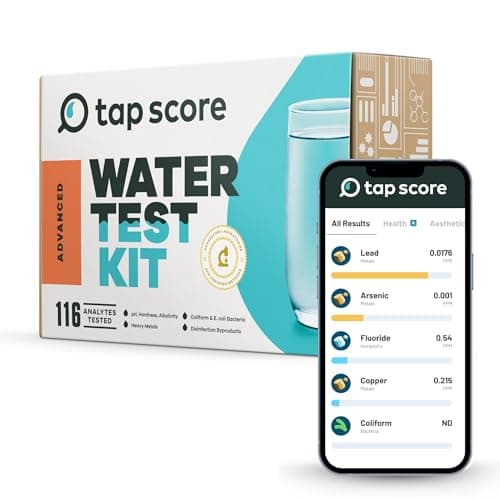 Tap Score Advanced Water Test (SimpleLab)A laboratory panel names the compound instead of leaving you to guess at a taste. Tap Score Advanced Water Test (SimpleLab)A laboratory panel names the compound instead of leaving you to guess at a taste. | Best if you want an answer | $215.20 - View on Amazon $269.00 — 20% off #ad Price as of October 6, 2026. We may earn a commission. Disclosure. |
| 2 | 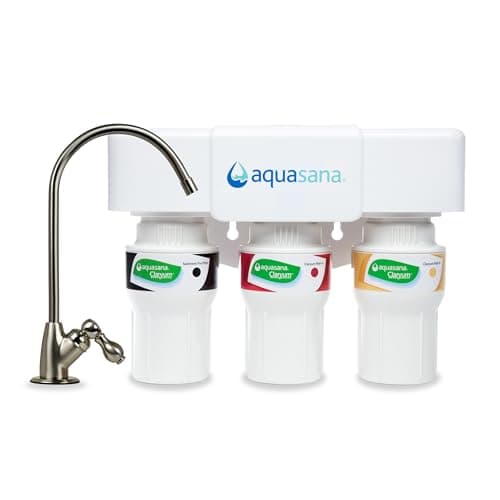 Aquasana Claryum 3-Stage Under-Sink Filter (AQ-5300)Certified for chloramine as well as chlorine, which ordinary carbon handles poorly. Aquasana Claryum 3-Stage Under-Sink Filter (AQ-5300)Certified for chloramine as well as chlorine, which ordinary carbon handles poorly. | Best for chloramine | $154.99 - View on Amazon $349.99 — 56% off #ad Price as of October 6, 2026. We may earn a commission. Disclosure. |
| 3 | 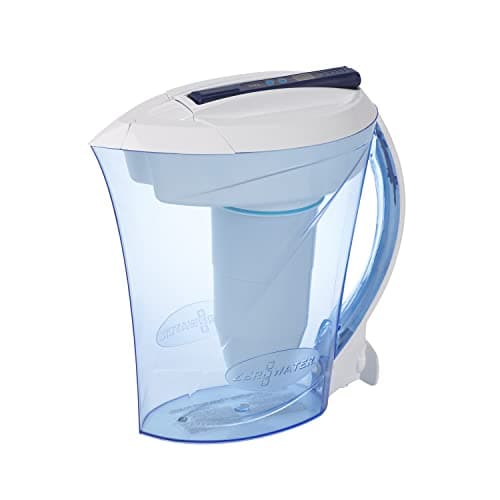 ZeroWater 10-Cup Ready-Pour PitcherShips with a TDS meter, and the manufacturer publishes the reading at which to replace. ZeroWater 10-Cup Ready-Pour PitcherShips with a TDS meter, and the manufacturer publishes the reading at which to replace. | Best for knowing when to change it | $28.99 - View on Amazon $59.98 — 52% off #ad Price as of October 6, 2026. We may earn a commission. Disclosure. |
One: the cartridge is finished, and months lied to you
Every certified filter carries a rated capacity in gallons, and every manufacturer also publishes a friendly figure in months. The gallons are the tested number. The months are an assumption about a household that may look nothing like yours.
Brita's faucet system data sheet is blunt about this: capacity is 100 gallons, and filter life should not exceed 100 gallons. If a decrease in flow rate is noticed, replace the filter earlier. A household filling water bottles for four people reaches 100 gallons in a fraction of the time the box suggests.
Some products give you a direct readout. ZeroWater ships a TDS meter and tells owners that when the meter reads 006 or higher the filter should be replaced, adding that when the filtered water tastes acidic or fishy the filter has reached the point of exhaustion and must be replaced. That sour or fishy note is the single most-reported off-taste in the pitcher tier, and it is a maintenance signal rather than a defect.
If you cannot remember when you last changed the cartridge, change it. That resolves this more often than every other cause combined. How long pitcher filters actually last works through the gallons-versus-months arithmetic properly.
Two: the vessel, not the filter
A pitcher removes the chlorine that was keeping the water bacteriologically quiet, then stores that water at room temperature in a plastic jug with a lid. Anything growing in the reservoir, around the spout or under the lid gets tasted in every glass, and no new cartridge fixes a dirty pitcher.
ZeroWater's own instruction is the general rule for the category: clean the device in warm water using mild soap, then rinse and dry thoroughly. Do that on the same schedule as the filter change at minimum, and sooner if the water has started tasting stale or musty rather than chemical. Refrigerating filtered water and drinking it within a day or two also helps more than people expect, because it is no longer disinfected water.
Three: a new cartridge that was never conditioned
Most carbon cartridges need soaking or flushing before first use. Skip that step and the first several liters carry loose carbon fines — grey water, black flecks, a dusty taste — and the flow rate is poor, which then gets misread as a faulty filter.
The site's pitcher pages flag this per product, and the pattern holds across brands: soak or run through the volume the manufacturer specifies, discard it, and judge the taste from the next batch. A filter judged on its first glass is being judged on the one glass the manufacturer told you to throw away.
Four: you bought a filter for the wrong problem
This is the expensive case, and the one certifications settle quickly. NSF/ANSI 42 is the aesthetic standard — chlorine, taste and odor. If your filter carries only a 42 claim, then anything that is not chlorine was never in scope.
| What it tastes or smells like | Likely cause | What the fix actually is |
|---|---|---|
| Swimming pool, but a filter did not fix it | Chloramine, not free chlorine | Catalytic carbon certified for chloramine |
| Rotten eggs | Hydrogen sulfide | Oxidation or aeration, at the point of entry |
| Metallic, coppery, blood-like | Iron, copper, or manganese | Iron filtration, or a plumbing fix |
| Salty | Chloride and dissolved solids | Reverse osmosis. Carbon does nothing |
| Flat, dull, or oddly soft | Very low mineral content after RO or ion exchange | Remineralization, if it bothers you |
| Musty, earthy, stale | The vessel, or storage time | Wash the pitcher, refrigerate, drink it sooner |
Chloramine deserves its own note because it is so widely misdiagnosed. EPA states that more than one in five Americans uses drinking water treated with chloramines, and chloramine is far more stubborn against ordinary activated carbon than free chlorine is. If your water still smells faintly of a swimming pool after filtration, that is the likely explanation, and the answer is a filter certified for chloramine specifically. The chlorine taste page covers the distinction in full.
When to stop guessing and test
Taste is a poor instrument. It cannot separate iron from manganese, it cannot see lead at all, and it will not tell you whether the concentration matters. If you have replaced the cartridge, washed the vessel, conditioned the new filter and the taste is still there, the next step is a laboratory panel rather than a third filter.
How to test your tap water covers what to order and what it costs. A result turns a vague complaint into a named compound, and a named compound points at exactly one tier of filtration — which tier that is stops being a guess at that point.
The cost-per-gallon math
Work through this list in order and the cheap fixes come first by design.
Washing the pitcher costs nothing. Conditioning a cartridge costs nothing. Replacing a filter you were overdue to replace costs what it was always going to cost.
A laboratory panel costs more than a cartridge and less than the wrong system, and it is the only step here that can rule out the expensive mistake: buying a second filter that was never certified for the thing you can taste.
We show the arithmetic rather than a verdict so you can redo it with the price you actually pay. Filter prices move; the rated capacities above do not.
The picks in full
Best if you want an answer
Tap Score Advanced Water Test (SimpleLab)
SimpleLab
Mail-in testing through certified laboratories, with a report that names contaminants, gives concentrations, and compares them against health guidelines. This is the number every system on this site is sized from.
Certification status
Samples are analyzed by laboratories in the SimpleLab network certified to ISO/IEC 17025, and Tap Score is recognized by the Water Quality Association.
Published specifications
| Method | Mail-in sample, certified laboratory analysis |
|---|---|
| Lab accreditation | ISO/IEC 17025 certified network laboratories |
| Panels available | City water, well water, and contaminant-specific tests |
| What you get | Concentrations plus health-guideline comparison |
What we like
- Certified-laboratory analysis, not a color-matching strip
- The report explains what each result means rather than dumping numbers
- Contaminant-specific panels exist when you only need one answer
What we do not
- Costs meaningfully more than a strip kit
- Turnaround is days, not minutes
- You have to actually collect the sample correctly, which is where home tests usually go wrong
Skip it if
Somebody whose entire complaint is a chlorine taste. That diagnosis is free — you can smell it — and a certified carbon filter costs less than the test.
$269.00 — 20% off
#ad Price as of October 6, 2026. We may earn a commission. Disclosure.
Where these specifications came from
Best for chloramine
Aquasana Claryum 3-Stage Under-Sink Filter (AQ-5300)
Aquasana
Carbon-block filtration rather than reverse osmosis: it keeps the minerals, wastes nothing, and fits where a reverse-osmosis system will not. It also cannot do what RO does for fluoride or nitrate.
Certification status
WQA tested and certified to NSF/ANSI 42, 53 — which includes the P473 protocol for PFOA and PFOS — and 401, for the reduction of 78 contaminants. Aquasana publishes 99.6% for lead and microplastics, 99.7% for PFOA and PFOS, 99.99% for cysts and 97% for chlorine across the Claryum 3-Stage line.
Published specifications
| Filter life | 600 gallons / up to 6 months |
|---|---|
| Certified standards | NSF/ANSI 42, 53 (includes P473), 401 (WQA) |
| Flow rate | 0.5 gpm |
| Wastewater | None |
| Format | 3-stage carbon block with a dedicated faucet |
| Contaminants claimed | 78 |
| Lead / PFOA and PFOS | 99.6% / 99.7% |
What we like
- No drain line, no wastewater, no tank — much easier to install than reverse osmosis
- NSF/ANSI 401 certification covers pharmaceutical-class trace compounds
- Full flow rate, unlike reverse osmosis, so filling a pot is not a project
What we do not
- Not reverse osmosis: no meaningful fluoride, nitrate or TDS reduction
- 600-gallon filter life is short next to an inline system's tens of thousands
- Proprietary cartridges
Skip it if
Anyone whose problem is fluoride, nitrate or total dissolved solids. Carbon block does not remove those; you need reverse osmosis for that job.
$349.99 — 56% off
#ad Price as of October 6, 2026. We may earn a commission. Disclosure.
Best for knowing when to change it
ZeroWater 10-Cup Ready-Pour Pitcher
ZeroWater
The only mainstream pitcher that hands you a TDS meter and invites you to check its work. It buys you a PFOA/PFOS certification the Brita Elite does not have, and it costs you filter life.
Certification status
The 5-stage filter is system-certified by IAPMO against NSF/ANSI 42 for chlorine taste and odor and NSF/ANSI 53 for lead, hexavalent chromium, mercury and PFOA/PFOS.
Published specifications
| Filtration | 5-stage, including ion-exchange resin |
|---|---|
| Rated filter life | About 15-20 gallons, varying with source TDS |
| Certified standards | NSF/ANSI 42 and 53 (IAPMO) |
| PFOA / PFOS | Certified under NSF/ANSI 53 |
| Published reduction — PFOA/PFOS | 99% |
| Published reduction — lead | 95% |
| Published reduction — chromium 6 | 99% |
| Included | Handheld TDS meter |
What we like
- Carries a PFOA/PFOS certification, which the Brita Elite does not
- The bundled TDS meter turns 'is it still working' from a guess into a reading
- Ion exchange drives total dissolved solids far lower than carbon alone
What we do not
- Filter life is the shortest of any pitcher here, and it collapses further on hard or high-TDS water
- Cost per gallon is the highest in the pitcher tier as a result
- Some owners find the taste flat or faintly sour at very low TDS — a real preference issue, not a defect
Skip it if
Anyone on hard, high-TDS water who will not tolerate changing a filter every few weeks. On 400+ ppm supply the running cost is genuinely painful and an under-sink system is cheaper inside a year.
$59.98 — 52% off
#ad Price as of October 6, 2026. We may earn a commission. Disclosure.
Where these specifications came from
Questions people actually ask
Why does my filtered water taste worse than the tap?
Most often the cartridge is past its rated gallons, or the pitcher needs washing. Filtration also removes the chlorine residual that was suppressing bacterial growth, so filtered water stored warm for days can develop a musty taste that unfiltered tap water would not. Refrigerate it and drink it within a day or two.
My filtered water tastes sour or fishy. What is that?
In an ion-exchange pitcher such as ZeroWater, the manufacturer identifies that exact taste as filter exhaustion and tells owners to replace the cartridge — and to replace it once a TDS meter reads 006 or higher rather than waiting for the taste.
Why does my water still smell like a swimming pool after filtering?
Probably chloramine rather than free chlorine. EPA says more than one in five Americans is served chloraminated water, and ordinary activated carbon handles chloramine much less effectively than chlorine. You need a filter certified for chloramine specifically.
Do I need to soak a new filter before using it?
For most carbon cartridges, yes — follow the manufacturer's conditioning instruction. Skipping it produces grey water, black carbon flecks and a dusty taste in the first few liters, which is the most common reason a perfectly good new filter gets blamed.
How often should I wash a water filter pitcher?
At least as often as you change the cartridge, and sooner if the water tastes stale or musty. ZeroWater's own instruction is to clean the device in warm water with mild soap, rinse and dry thoroughly, and that guidance is sound for every pitcher on this site.