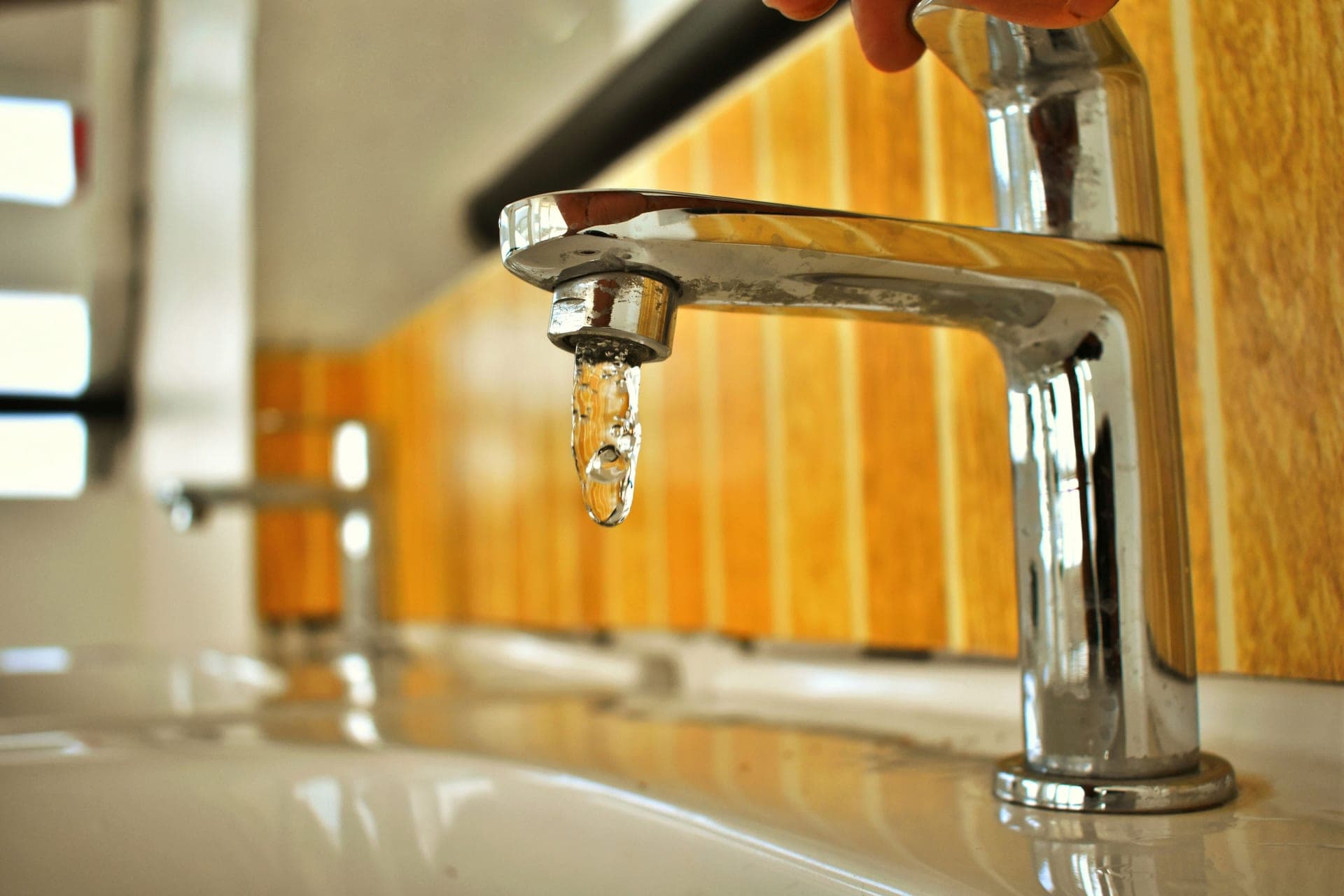
Reverse osmosis and filtered water are both fine for houseplants. The water to avoid is softened water — Nebraska Extension says not to use it repeatedly on plants, lawns or gardens because ion exchange replaces hardness with sodium. Fluoride damages specific monocots.
Quick picks
Tap any row to jump to the full write-up. The button goes straight to the retailer.
| # | Product | Best for | Price |
|---|---|---|---|
| 1 | 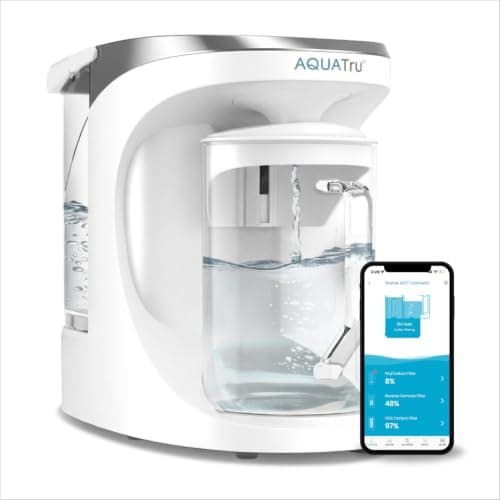 AquaTru Carafe Smart Countertop Reverse Osmosis PurifierCertified under NSF/ANSI 58 for fluoride at 96.4% average. Carbon filters do not touch fluoride, and nothing else here will either. | Best for fluoride-sensitive plants | $425.00 - View on Amazon #ad Price as of November 3, 2026. We may earn a commission. Disclosure. |
| 2 | 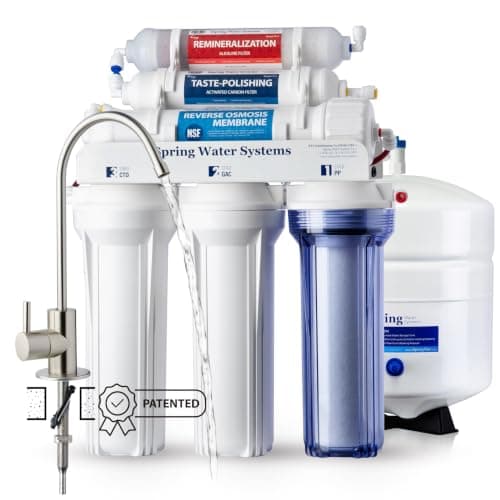 iSpring RCC7AK 6-Stage Reverse Osmosis SystemCertified reverse osmosis with a pH+ remineralization stage, which is an advantage for plants rather than the liability it is on a reef tank. | Best if you want some minerals back | $199.99 - View on Amazon $234.99 — 15% off #ad Price as of November 3, 2026. We may earn a commission. Disclosure. |
| 3 | 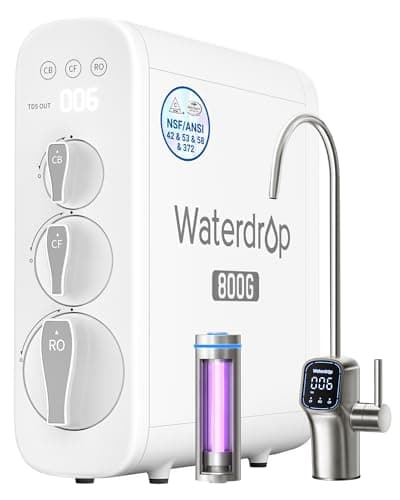 Waterdrop G3P800 Tankless Reverse Osmosis SystemCertified to 42, 53, 58 and 372, and tankless at 800 GPD — it fills a watering can without a storage tank to empty. | Best if you water a lot of plants | $849.00 - View on Amazon $999.00 — 15% off #ad Price as of November 3, 2026. We may earn a commission. Disclosure. |
| 4 | 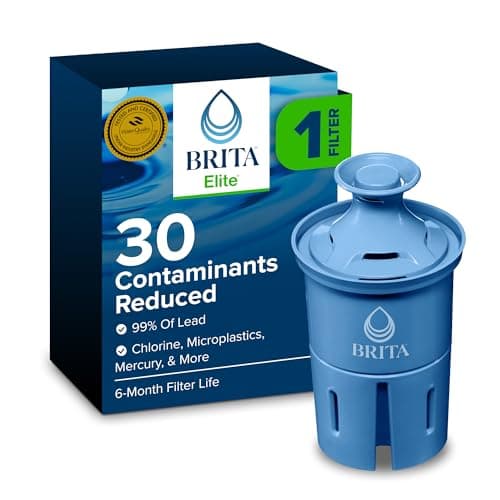 Brita Elite Filter (with any Brita pitcher)Cheap, certified for lead under NSF/ANSI 53, and the honest limit: no Brita pitcher filter is certified for fluoride. | If chlorine is your only worry | $17.07 - View on Amazon $19.99 — 15% off #ad Price as of November 3, 2026. We may earn a commission. Disclosure. |
The short answer, which inverts the question
People arrive here asking whether reverse osmosis water is bad for plants, because it has had the minerals taken out of it and plants need minerals. It is a reasonable worry and it is mostly misplaced.
A potted plant gets its calcium, magnesium and micronutrients from the growing medium and from whatever you feed it, not from the water. Watering with low-mineral water does not starve it, which is why commercial growers and hydroponic setups deliberately start from reverse osmosis: it is a known blank they then dose to a target.
The water that extension services actually warn against is the one a lot of readers have plumbed into the whole house and assume is the gentler option. It is softened water, and the reason is sodium.
Softened water: the one clear warning
This is the strongest finding on the page and it comes from a land-grant extension service rather than from anyone selling anything.
Nebraska Extension's publication on ion-exchange softening explains the mechanism plainly: softening works by removing the hardness ions calcium and magnesium and replacing them with non-hardness ions, typically sodium supplied by dissolved sodium chloride salt. A softener does not take hardness away so much as trade it.
And the guidance that follows from that is explicit: It is not recommended to repeatedly use softened water for plants, lawns or gardens due to the sodium content. Note the word repeatedly — a single watering is not the concern. Sodium accumulating in a pot that never gets flushed is, because a container has nowhere for salts to go.
The fix is cheap and is in the same publication: most softener installations keep an unsoftened line, and Nebraska describes plumbing a bypass so hard water remains available for drinking, cooking and other uses. If you have a softener, find out whether your kitchen cold tap or an outside spigot is on the hard side of it, and fill the watering can there. That is the whole solution, and it costs nothing.
If you are still deciding whether to soften at all, the worth-it page covers the appliance economics, and the salty-water page covers the same sodium mechanism from the drinking side.
Fluoride: real, and only for some plants
The fluoride question is the one with genuine horticultural literature behind it, and the answer is narrower than the internet suggests.
Michigan State University Extension describes fluoride toxicity in plants irrigated with city water, and it names the susceptible group specifically: monocots, including spider plant, lilies, spikes and dracaena. The injury pattern is equally specific — necrotic regions, especially at the tips and along margins of leaves.
Two things are worth taking from that. The first is that it is a monocot problem, concentrated in plants with long strap-shaped leaves — the water travels to the leaf tip and what it carries stays there. If your affected plant is a spider plant, a dracaena or a cordyline, fluoride is a live hypothesis. If it is a pothos or a monstera, it is not the first thing to suspect.
The second is that your tap is not the only source. The same extension article names single superphosphates in the fertilizer and, to some extent, perlite. So a grower can switch to bottled water, see no improvement, and conclude water chemistry was irrelevant when the fluoride was arriving in the feed or the potting mix.
One honest limit: the article does not state a concentration at which injury begins, and we are not going to invent one. US fluoridation is targeted at 0.7 mg/L, which is a long way below the levels used in the greenhouse literature, so treat fluoride as a plausible cause for a susceptible species rather than a certainty.
If you do decide to remove it, the removal route is narrow: carbon filtration does not reduce fluoride, and reverse osmosis is the certified option — which is why both RO systems lead the picks on this page and the pitcher does not.
Chlorine and chloramine: the weakest leg, and we will say so
This is where most pages on this topic are most confident and the evidence is thinnest, so here is an honest accounting.
What is solid is the regulatory ceiling. EPA sets a maximum residual disinfectant level of 4.0 mg/L for both chlorine and chloramines in public drinking water, so whatever is in your tap is at or below that figure.
What is not solid is the leap from there to plant damage. The claims you will read — that tap water chlorine sterilizes your soil microbiology, or that it burns roots — rest on gardening blogs and product marketing rather than on controlled work, and we could not find peer-reviewed evidence of harm to houseplants at municipal concentrations. We are not going to assert the opposite either. The honest position is that this is unresolved, and that it is a weak reason to buy a filter.
Two practical notes that are solid. Chlorine dissipates from standing water; chloramine largely does not, which is the same asymmetry that matters for fish — covered on the aquarium page, where the stakes are much higher because gill tissue is not leaf tissue. And if you want chlorine gone from your watering can, a carbon pitcher does it for very little money, which is the one job the Brita pick on this page is actually for.
What reverse osmosis actually does to the water
It is worth being precise about the starting point, because "RO water has no minerals" is close to true but not exactly true, and the difference matters for hydroponics.
Certified figures put it in a band rather than at zero. The AquaTru Carafe's IAPMO performance data sheet records a minimum reduction of 94.5% for total dissolved solids from a 750 mg/L challenge, and the iSpring RCC7AK is certified at 97.2% TDS removal. So RO water is very low in dissolved solids, not free of them.
For a plant in soil, that distinction is academic — the medium and the fertilizer are doing the nutritional work. For a hydroponic or semi-hydro setup it is the entire point: you want a predictable blank so that the nutrient solution you mix is the nutrient solution the roots actually get, rather than your tap water plus whatever you added. That is the same logic as the aquarium case, and it is why growers buy RO rather than avoid it.
The one place remineralizing reverse osmosis is the better buy
This site is usually skeptical of remineralization, so it is worth flagging the exception clearly.
On a reef tank, a remineralizing stage is actively wrong — it puts an uncontrolled mineral load back into the water you were trying to start clean. For houseplants the calculation flips. Adding modest calcium and magnesium back is either neutral or mildly helpful, and it removes the only genuine objection to RO water for plants, which is that it contributes nothing nutritionally.
That is why the iSpring RCC7AK with its pH+ stage sits second in the picks rather than being warned against. The remineralizing roundup covers the tier, and the minerals question covers what the membrane actually takes out.
What to use, by situation
| Your situation | What to water with | Why |
|---|---|---|
| You have a whole-house softener | The unsoftened bypass line, or RO | Extension guidance: do not repeatedly use softened water on plants, due to sodium |
| Spider plant, dracaena or cordyline with burnt tips | Reverse osmosis | Fluoride injury is documented in monocots, and only RO removes fluoride |
| Pothos, monstera, most tropicals on city water | Tap water | No evidence of a problem at municipal levels |
| Hydroponics or semi-hydro | Reverse osmosis | You want a known blank to dose nutrients into |
| You dislike chlorine smell in the can | A carbon pitcher | Cheap, and chlorine is the one thing carbon definitely handles |
| Brown tips, cause unknown | Flush the pot first, then reassess | Fertilizer salts and erratic watering are commoner causes than water chemistry |
| Hard water, white crust on the soil surface | Tap is fine; scrape the crust | Carbonate deposits are cosmetic in a pot, unlike in a kettle |
The pattern worth noticing is that two of the seven rows end in "buy nothing", and the row most likely to apply to a reader with an expensive filtration setup already is the one about the bypass line, which also costs nothing. That is the honest shape of this topic.
The cost-per-gallon math
Watering is a volume activity, which changes the arithmetic from every other page on this site. Drinking water is measured in gallons a day; a houseplant collection can be measured in gallons a week, and a garden in gallons an hour.
That makes cartridge life the number that matters, not the sticker price. Work out roughly how much water your plants take in a month, then divide the cartridge price by its rated gallons to get a cost per gallon — and be honest about whether you are willing to pay that for watering as well as for drinking.
For most collections the answer is that a dedicated filter for plants is not worth it, and the sensible move is to use the drinking system you already have, or the bypass tap you already have. The reverse osmosis cost page works through the ten-year figures if you are sizing a system that has to do both jobs — and if you are, a tankless unit matters more than it does for drinking, because a storage tank you empty into a watering can has to refill before the next one.
We do not print product prices in this text. The buy buttons carry the live figure and the date it was checked, which is the only price worth quoting.
We show the arithmetic rather than a verdict so you can redo it with the price you actually pay. Filter prices move; the rated capacities above do not.
The picks in full
Best for fluoride-sensitive plants
AquaTru Carafe Smart Countertop Reverse Osmosis Purifier
AquaTru
The Classic's certification table in two-thirds of the footprint, pouring into glass instead of a plastic tank. You give up capacity and gain a published 63% recovery rate, which is better than almost any plumbed system manages.
Certification status
IAPMO publishes a performance data sheet covering Carafe models AT100, AT110, AT120, AT130 and AT140, certified under NSF/ANSI 42, 53 and 58, with additional testing to NSF/ANSI 401 and NSF Protocol 53 for PFOA and PFOS. The NSF/ANSI 58 table records average reductions of 99.2% for lead, 99.9% for cysts, 96.4% for fluoride, 98.8% for pentavalent arsenic, 97.5% for hexavalent chromium, 98.3% for nitrate and 94.4% for TDS. PFOA and PFOS average 99% under NSF Protocol 53. The sheet covers the Carafe family rather than one SKU, and the variant currently stocked is the Smart (WiFi) model — the same four-stage system with app monitoring added. The plain non-connected Carafe listing went unavailable in October 2026; the alkaline variant is also sold, and it is the wrong one to buy if low dissolved solids is the point.
Published specifications
| Filtration | 4-stage countertop reverse osmosis |
|---|---|
| Carafe | 64 oz borosilicate glass |
| Clean water tank | 0.5 gallons (1.9 L) |
| Tap water tank | 0.66 gallons (2.5 L) |
| Daily production rate | 35 GPD |
| Efficiency rating | 63% (IAPMO) |
| Connectivity | WiFi app monitoring (Smart variant) |
| Certified standards | NSF/ANSI 42, 53, 58 (IAPMO) |
| Dimensions | 13 in H x 14 in D x 7.5 in W |
| Power | 120 V, 60 Hz |
| Max inlet hardness | 10 gpg (171 mg/L) |
What we like
- A published 63% efficiency rating — most tank reverse osmosis systems send three or four gallons to drain per gallon produced
- The NSF/ANSI 58 claim list reaches lead, fluoride, nitrate, arsenic, chromium-6 and cysts, which carbon cannot
- Glass carafe rather than a plastic holding tank, and it goes in the fridge
- No plumbing, no drilling and no drain saddle — the whole certification travels with a renter
What we do not
- A 0.5 gallon clean tank against the Classic's 0.75 — you refill it more often for the same household
- Three cartridges on three different clocks, and the manufacturer's web page and the certifier's data sheet disagree on the pre/carbon interval
- Needs a counter outlet and 7.5 inches of width it does not share
- The plain non-connected Carafe is no longer listed, so the stocked model carries WiFi you may not want and a price step with it
- Not for water above 10 gpg hardness without softening first, or the membrane scales
Skip it if
A household that drinks a lot of water. The clean tank holds half a gallon and refills at 35 gallons a day, so a family of four will be waiting on it. Buy the Classic for its larger tanks, or a plumbed under-sink system if you can install one.
#ad Price as of November 3, 2026. We may earn a commission. Disclosure.
Best if you want some minerals back
iSpring RCC7AK 6-Stage Reverse Osmosis System
iSpring
The value pick of the reverse-osmosis tier: a WQA Gold Seal system with an alkaline stage, usually at the lowest price of anything here that carries a real certification.
Certification status
Certified against NSF/ANSI 58 for TDS reduction and carries the WQA Gold Seal, with 97.2% TDS removal certified.
Published specifications
| Output | 75 GPD |
|---|---|
| Stages | 6, including alkaline remineralization |
| Certified TDS reduction | 97.2% |
| Feed pressure | 45-70 psi |
| Feed temperature | 40-100 degrees F |
| Assembled size | 15.5" deep x 19.5" high, 25 lb |
| Certification | NSF/ANSI 58, WQA Gold Seal |
What we like
- Certified performance at the lowest price in the tier
- Push-fit tubing makes a first-time install genuinely manageable
- Alkaline stage included rather than sold as an upgrade
What we do not
- Narrow 45-70 psi feed window — low-pressure homes may need a booster pump
- Tank plus housing needs real cabinet depth
- Conventional reverse-osmosis drain ratio
Skip it if
Homes with feed pressure below 45 psi that will not add a booster pump, and anyone who wants a tankless footprint.
$234.99 — 15% off
#ad Price as of November 3, 2026. We may earn a commission. Disclosure.
Where these specifications came from
Best if you water a lot of plants
Waterdrop G3P800 Tankless Reverse Osmosis System
Waterdrop
Tankless reverse osmosis that gives back the cupboard a pressure tank would eat, fills a glass without the pause, and sends markedly less water down the drain than a classic tank system.
Certification status
Certified to NSF/ANSI 42 for chlorine reduction, NSF/ANSI 53 and 58 for TDS, fluoride, cadmium, hexavalent chromium and selenium, and NSF/ANSI 372 for lead-free materials.
Published specifications
| Output | 800 GPD |
|---|---|
| Pure-to-drain ratio | 3:1 |
| Format | Tankless — no pressure tank |
| Certified standards | NSF/ANSI 42, 53, 58, 372 |
| Installation | Two holes: smart LED faucet and drain |
| Faucet | Included, with TDS display |
What we like
- No pressure tank, so it fits cabinets a tank system cannot
- 3:1 pure-to-drain is far better than the ratio typical of older reverse osmosis
- 800 GPD means no waiting for a tank to refill
What we do not
- Needs a power outlet under the sink — a real constraint in older kitchens
- Proprietary filter cartridges, so you are tied to Waterdrop's pricing
- Requires drilling for the included faucet unless you have a spare hole
Skip it if
Renters, and anyone with no outlet under the sink. It is a permanent, powered installation — a countertop unit is the answer if you cannot commit to that.
$999.00 — 15% off
#ad Price as of November 3, 2026. We may earn a commission. Disclosure.
Where these specifications came from
If chlorine is your only worry
Brita Elite Filter (with any Brita pitcher)
Brita
The cheapest route to an NSF/ANSI 53 lead certification. It drops into a pitcher most households already have, and it is emphatically not the same filter as the white Brita Standard.
Certification status
Certified to NSF/ANSI 42, 53 and 401. The lead certification belongs to the Elite (blue) filter only — the Standard (white) filter is certified to NSF/ANSI 42 for taste and odor and is not certified for lead. Per Brita's January 2026 performance data sheet the Elite is not certified for PFOA or PFOS, and no Brita pitcher filter is certified for fluoride.
Published specifications
| Rated filter life | 120 gallons / about 6 months |
|---|---|
| Standard filter life, for comparison | 40 gallons / about 2 months |
| Certified standards | NSF/ANSI 42, 53, 401 |
| Lead | Certified under NSF/ANSI 53 |
| PFOA / PFOS | Not certified (January 2026 performance data sheet) |
| Fluoride | Not certified, not claimed |
What we like
- Genuine NSF/ANSI 53 lead certification at the lowest entry price of anything on this site
- Fits Brita pitchers and dispensers already in millions of kitchens — no new hardware
- Three times the rated life of the Standard filter, which changes the cost-per-gallon math
What we do not
- Not certified for PFOA or PFOS, so it is the wrong answer to a PFAS worry
- No fluoride claim at all
- Slow gravity flow, like every pitcher
Skip it if
Anyone whose actual worry is PFAS or fluoride. The Elite is not certified for either, and buying it for those is buying the wrong thing.
$19.99 — 15% off
#ad Price as of November 3, 2026. We may earn a commission. Disclosure.
Where these specifications came from
Questions people actually ask
Is reverse osmosis water bad for plants?
No. A potted plant takes its calcium, magnesium and micronutrients from the growing medium and from fertilizer, not from the water, so low-mineral water does not starve it. Commercial and hydroponic growers deliberately start from reverse osmosis because it gives them a predictable blank to dose nutrients into. If the missing minerals bother you, a remineralizing RO system puts some back, and for plants that is a reasonable choice rather than a mistake.
Can I water plants with softened water?
Extension guidance says not repeatedly. Nebraska Extension's publication on ion-exchange softening states that it is not recommended to repeatedly use softened water for plants, lawns or gardens due to the sodium content — because softening works by removing calcium and magnesium and replacing them with sodium. Sodium accumulates in a pot, which has nowhere for salts to drain. The free fix is to fill the watering can from an unsoftened bypass line, such as a kitchen cold tap or outside spigot plumbed around the softener.
Does tap water fluoride hurt houseplants?
For specific plants, yes. Michigan State University Extension describes fluoride toxicity in plants irrigated with city water and names the susceptible group as monocots, including spider plant, lilies, spikes and dracaena, with injury appearing as necrotic regions especially at the tips and along leaf margins. Two caveats: the article names superphosphate fertilizer and, to some extent, perlite as other fluoride sources, and it does not state a concentration at which injury begins.
How do I remove fluoride for my plants?
Reverse osmosis, or not at all. Carbon filtration does not reduce fluoride, so a standard pitcher or faucet filter will not help — no mainstream pitcher filter is certified for it. Reverse osmosis is the certified route: the AquaTru Carafe's IAPMO data sheet records 96.4% average fluoride reduction under NSF/ANSI 58. Distillation also removes it. Rainwater is the free option if you can collect it.
Does chlorine in tap water kill soil microbes?
The evidence is thin and we are not going to claim it either way. EPA caps chlorine and chloramines in public drinking water at a maximum residual disinfectant level of 4.0 mg/L, so tap concentrations are at or below that. The claims that this sterilizes soil or burns roots rest on gardening blogs and product marketing rather than controlled studies, and we could not find peer-reviewed evidence of harm to houseplants at municipal levels. It is a weak reason to buy a filter.
Should I let tap water sit out before watering?
It only helps if your utility uses free chlorine. Chlorine dissipates from standing water; chloramine largely does not, which is why the same trick fails for aquariums. Your utility's annual water quality report states which disinfectant it uses. Given how weak the evidence of plant harm is at municipal levels, this is worth doing only if it costs you nothing.
My plant has brown leaf tips — is it the water?
Possibly, but check the commoner causes first. Accumulated fertilizer salts in the pot, watering that lets the root ball dry out and rewet, low winter humidity and pot-bound roots all produce tip burn. Flush the pot thoroughly with plain water to leach salts, water on a consistent schedule, and see whether new growth comes in clean. If it does, the water was never the problem — and if the plant is a spider plant or dracaena and it does not, fluoride becomes the live hypothesis.
Sources
- Skipton & Dvorak, University of Nebraska-Lincoln Extension G1491 (revised September 2014) — Drinking Water Treatment: Water Softening (Ion Exchange)
- Michigan State University Extension — fluoride toxicity in plants irrigated with city water
- EPA — National Primary Drinking Water Regulations
- AquaTru / IAPMO — Performance Data Sheet, Carafe models AT100-AT140
- NSF — Certified Products and Systems