AquaTru is countertop reverse osmosis certified by IAPMO to NSF/ANSI 53, 58, 401 and P473 across 84 contaminants. Clearly Filtered is a pitcher certified by NSF to 42 and 372, with its fluoride, PFAS and metals figures coming from laboratory testing. Both address the same contaminants; only one holds certified claims for them.
Quick picks
Tap any row to jump to the full write-up. The button goes straight to the retailer.
| # | Product | Best for | Price |
|---|---|---|---|
| 1 | 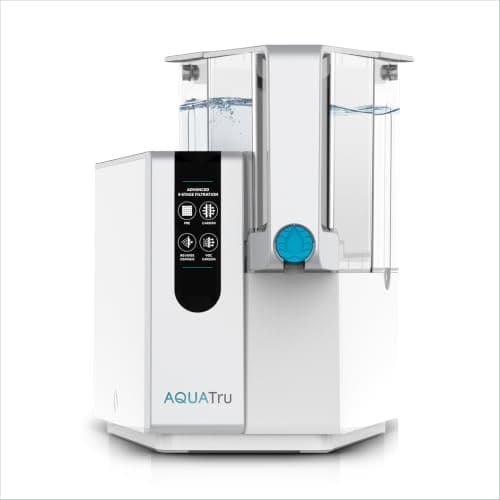 AquaTru Classic Countertop Reverse Osmosis PurifierIAPMO certified to NSF/ANSI 53, 58, 401 and P473 across 84 contaminants, with no plumbing. AquaTru Classic Countertop Reverse Osmosis PurifierIAPMO certified to NSF/ANSI 53, 58, 401 and P473 across 84 contaminants, with no plumbing. | If certification decides it | $403.75 - View on Amazon $475.00 — 15% off #ad Price as of October 6, 2026. We may earn a commission. Disclosure. |
| 2 | 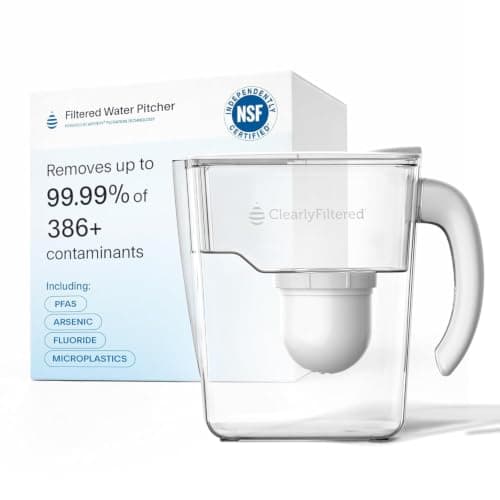 Clearly Filtered Water Pitcher (Affinity)A fraction of the price, with published lab figures for fluoride, PFAS, arsenic and chromium-6. Clearly Filtered Water Pitcher (Affinity)A fraction of the price, with published lab figures for fluoride, PFAS, arsenic and chromium-6. | If the budget decides it | $87.99 - View on Amazon $109.99 — 20% off #ad Price as of October 6, 2026. We may earn a commission. Disclosure. |
| 3 | 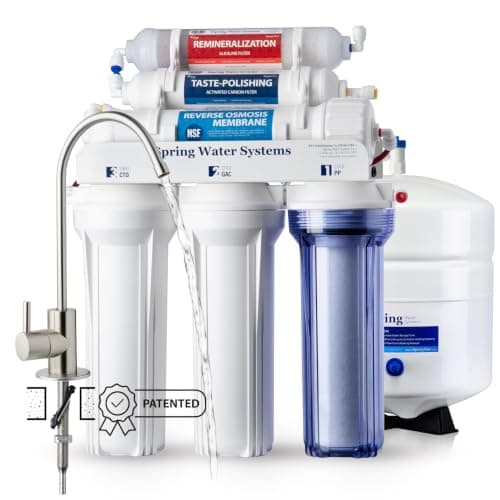 iSpring RCC7AK 6-Stage Reverse Osmosis SystemThe same reverse osmosis evidence under the sink, at a far lower cost per gallon. iSpring RCC7AK 6-Stage Reverse Osmosis SystemThe same reverse osmosis evidence under the sink, at a far lower cost per gallon. | If you can plumb it in | $198.75 - View on Amazon $234.99 — 15% off #ad Price as of October 6, 2026. We may earn a commission. Disclosure. |
They are not the same kind of product
People compare these two because they address the same contaminant list — fluoride, PFAS, arsenic, chromium-6, lead — which almost nothing else in the no-plumbing tier does. But the machines could hardly be more different.
| Clearly Filtered pitcher | AquaTru Classic | |
|---|---|---|
| Technology | Composite media, gravity | Four-stage reverse osmosis, powered |
| Certified claims | NSF/ANSI 42 and 372 — chlorine, taste, odor, materials | IAPMO to NSF/ANSI 53, 58, 401 and P473, 84 contaminants |
| Fluoride evidence | Laboratory testing, >99.54% published | Certified claim, fluoride named |
| PFAS evidence | Laboratory testing, PFOA 99.64% and PFOS >99.80% | Certified under P473 |
| Filter life | 100 gallons | Two cartridges on different schedules |
| Installation | None — it is a jug | None — it is an appliance with two tanks |
| Wastewater | None | Yes, reverse osmosis produces it |
| Counter space | Fridge shelf | Substantial |
The evidence question, stated plainly
Clearly Filtered's figures come from a named ISO 17025 laboratory testing to NSF methods, and they are specific and strong. They are not certified claims. AquaTru's claims are certified by IAPMO, which means a listing body stands behind them with ongoing surveillance, and the contaminant is named on a certificate you can look up.
Neither is dishonest, and this site says so about both — the Clearly Filtered brand page sets out exactly which of its claims are certified and which are tested. The question is what you need: a measurement, or a maintained listing.
- If a landlord, lender or health directive is involved, the certification is the only answer that will satisfy it.
- If you are spending your own money on your own water, a laboratory figure from a credible lab is real information, and the price difference between these two is large.
The practical differences nobody mentions
Speed and routine. The pitcher is slow by gravity and lives in the fridge. The AquaTru is a two-tank appliance: you fill the tap-water tank, it runs, and you pour from the clean tank. It takes counter space permanently and needs an outlet.
Cartridge economics. The pitcher is rated at 100 gallons, which for a household drinking two gallons a day is roughly seven cartridges a year — at a premium price per cartridge. The AquaTru runs on two cartridges with longer intervals. The countertop roundup compares the running costs across the no-plumbing tier.
Minerals. Reverse osmosis strips them; the pitcher does not. Some people notice the flat taste of RO water immediately — which matters less for health than it does for taste, and AquaTru sells an alkaline cartridge for exactly that reason.
Which to buy
AquaTru if your reason for filtering is a specific contaminant you have measured — fluoride, PFAS, arsenic, nitrate — and you want the claim to be certified. It is the strongest evidence available without plumbing anything.
Clearly Filtered if the budget is the constraint, if counter space is scarce, or if you want the widest claim list for the smallest outlay and are comfortable reading laboratory data as what it is.
Neither if you can run a line under the sink. A plumbed reverse osmosis system reaches the same certified claims at a far lower cost per gallon, and nothing has to live on your counter — the under-sink RO roundup is the cheaper destination for anyone who can install one.
The cost-per-gallon math
A household drinking two gallons a day uses about 730 gallons a year. At 100 rated gallons the Clearly Filtered pitcher needs roughly seven cartridges to cover that; the AquaTru covers it on two cartridges with different lifetimes.
The pitcher is far cheaper to start and closes the gap quickly on consumables. Over three years, on that consumption, the countertop machine is usually the cheaper certified route — and the under-sink system is cheaper than either.
We show the arithmetic rather than a verdict so you can redo it with the price you actually pay. Filter prices move; the rated capacities above do not.
The picks in full
If certification decides it
AquaTru Classic Countertop Reverse Osmosis Purifier
AquaTru
Reverse osmosis performance with no plumbing, no drilling and no landlord conversation. You pay for that with counter space, a wait, and two tanks you fill and empty by hand.
Certification status
Certified by IAPMO to NSF/ANSI 53, 58, 401 and P473, covering lead, reverse-osmosis performance, emerging compounds and the PFOA/PFOS protocol.
Published specifications
| Filtration | 4-stage countertop reverse osmosis |
|---|---|
| Clean water tank | 0.75 gallons |
| Tap water tank | 1 gallon |
| Installation | None — no plumbing connection |
| Certified standards | NSF/ANSI 53, 58, 401, P473 (IAPMO) |
What we like
- Real reverse osmosis with a P473 PFOA/PFOS certification and zero installation
- The strongest answer available to a renter with a lead or PFAS problem
- No drilling, no drain saddle, no landlord permission needed
What we do not
- Takes up substantial counter space
- You refill and empty tanks by hand — it is not on-demand
- Highest purchase price in the no-plumbing tier by a wide margin
Skip it if
Anyone who can plumb in an under-sink system. A permanent under-sink RO is cheaper per gallon, on-demand, and out of sight. Buy this when you genuinely cannot install.
$475.00 — 15% off
#ad Price as of October 6, 2026. We may earn a commission. Disclosure.
Where these specifications came from
If the budget decides it
Clearly Filtered Water Pitcher (Affinity)
Clearly Filtered
The broadest claim list of any pitcher we list, and the one that needs the most careful reading: it is independently tested to NSF standards, not certified by a listing body. That distinction is the whole decision.
Certification status
Two different kinds of evidence sit on this pitcher. NSF's own listing records the Filtered Water Pitcher under NSF/ANSI 42 at 100 gallons for chlorine reduction and taste and odor reduction, and Clearly Filtered states it holds NSF/ANSI 42 and 372 certifications and is pursuing 53 and 401. Everything beyond that — the 386+ contaminant list, including fluoride, PFAS, arsenic and chromium-6 — comes from testing at QFT, now IAPMO New Jersey, an ISO 17025 laboratory working to NSF/ANSI protocols. Test data, not a certification listing.
Published specifications
| Capacity | 80 oz / 10 cups |
|---|---|
| Rated filter life | 100 gallons / about 4 months |
| Filtration | 3-stage: stainless mesh, coconut carbon, Affinity composite shell |
| Certified | NSF/ANSI 42 and 372 (chlorine, taste and odor; lead-free materials) |
| Tested, not certified | NSF/ANSI 53, 401 and P473 methods |
| Manufacturer claim | Up to 99.99% of 386+ contaminants |
| Fluoride / lead | >99.54% / 99.34% (laboratory data) |
| PFOA / PFOS | 99.64% / >99.80% (laboratory data) |
| Housing | Tritan, BPA-free |
What we like
- Addresses PFAS and fluoride, which most certified pitchers do not touch
- 100-gallon rated life is far longer than ZeroWater's
- Published test data covers an unusually wide contaminant list
What we do not
- Outside chlorine and materials, every claim is test data rather than a certification listing
- Highest sticker price in the pitcher tier
- Flow is slow even by pitcher standards
Skip it if
Anyone who needs a certification listing for a specific contaminant — for a landlord, a lender, a health directive, or their own peace of mind. If the listing is what you need, buy a certified product instead.
$109.99 — 20% off
#ad Price as of October 6, 2026. We may earn a commission. Disclosure.
Where these specifications came from
If you can plumb it in
iSpring RCC7AK 6-Stage Reverse Osmosis System
iSpring
The value pick of the reverse-osmosis tier: a WQA Gold Seal system with an alkaline stage, usually at the lowest price of anything here that carries a real certification.
Certification status
Certified against NSF/ANSI 58 for TDS reduction and carries the WQA Gold Seal, with 97.2% TDS removal certified.
Published specifications
| Output | 75 GPD |
|---|---|
| Stages | 6, including alkaline remineralization |
| Certified TDS reduction | 97.2% |
| Feed pressure | 45-70 psi |
| Feed temperature | 40-100 degrees F |
| Assembled size | 15.5" deep x 19.5" high, 25 lb |
| Certification | NSF/ANSI 58, WQA Gold Seal |
What we like
- Certified performance at the lowest price in the tier
- Push-fit tubing makes a first-time install genuinely manageable
- Alkaline stage included rather than sold as an upgrade
What we do not
- Narrow 45-70 psi feed window — low-pressure homes may need a booster pump
- Tank plus housing needs real cabinet depth
- Conventional reverse-osmosis drain ratio
Skip it if
Homes with feed pressure below 45 psi that will not add a booster pump, and anyone who wants a tankless footprint.
$234.99 — 15% off
#ad Price as of October 6, 2026. We may earn a commission. Disclosure.
Where these specifications came from
Questions people actually ask
Is AquaTru or Clearly Filtered better?
AquaTru holds certified claims — IAPMO to NSF/ANSI 53, 58, 401 and P473 across 84 contaminants — while Clearly Filtered's comparable figures come from laboratory testing, with its NSF certification covering chlorine, taste, odor and materials. If the evidence standard matters, AquaTru. If budget or counter space matters, the pitcher.
Do both remove fluoride?
Both address it. AquaTru's fluoride claim is part of its IAPMO certification; Clearly Filtered publishes more than 99.54% fluoride reduction from laboratory testing. No pitcher holds a certified fluoride claim, because fluoride reduction is a claim under the reverse osmosis standard rather than the carbon standards.
Which is cheaper to run?
Over the first year the pitcher usually is, because the purchase price is far lower. Over three years at two gallons a day the countertop system tends to win, because a 100-gallon pitcher cartridge at a premium price is an expensive way to filter a lot of water.
Does AquaTru need plumbing?
No. It is a countertop appliance with two tanks: you fill one with tap water and pour from the other. It needs counter space and a power outlet, which is the trade for reverse osmosis without installation.
Is reverse osmosis overkill?
If your only complaint is chlorine taste, yes — a certified carbon pitcher fixes that for a fraction of the money. Reverse osmosis earns its cost when a dissolved contaminant appears on your water report that carbon cannot touch.