
Mostly yes, with one exception. Brita says its Original (Standard) and Elite filters are compatible with all Brita pitchers and dispensers, and the two are interchangeable with each other. Stream filters are not: they work only in Brita Stream pitchers, and no other filter works in a Stream.
Quick picks
Tap any row to jump to the full write-up. The button goes straight to the retailer.
| # | Product | Best for | Price |
|---|---|---|---|
| 1 | 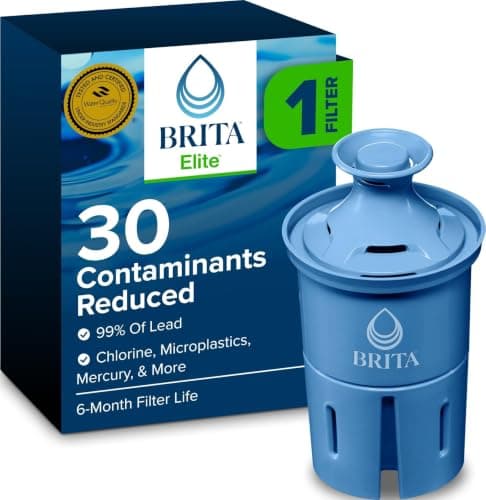 Brita Elite Filter (with any Brita pitcher)Fits every Brita pitcher and dispenser, at 120 rated gallons against the Standard's 40. Brita Elite Filter (with any Brita pitcher)Fits every Brita pitcher and dispenser, at 120 rated gallons against the Standard's 40. | The drop-in upgrade | $19.88 - View on Amazon #ad Price as of October 17, 2026. We may earn a commission. Disclosure. |
| 2 | 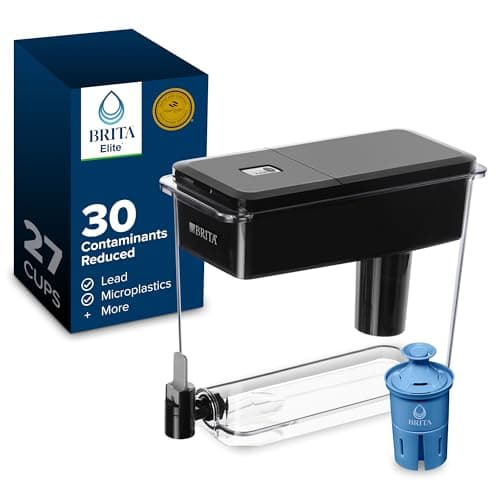 Brita UltraMax 27-Cup Dispenser with Elite Filter27-cup dispenser that takes the same Elite filter. Same cartridge, bigger tank. Brita UltraMax 27-Cup Dispenser with Elite Filter27-cup dispenser that takes the same Elite filter. Same cartridge, bigger tank. | If you need more capacity | $49.98 - View on Amazon #ad Price as of October 17, 2026. We may earn a commission. Disclosure. |
| 3 | 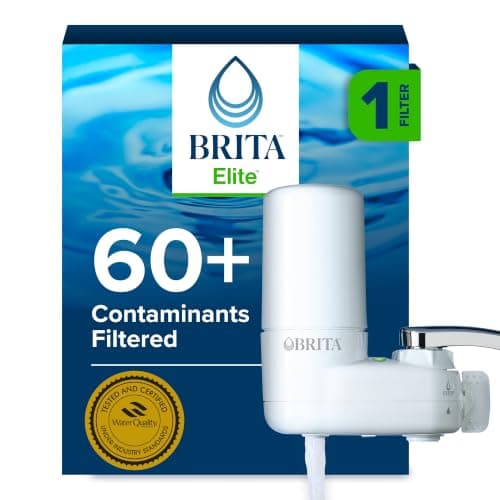 Brita Faucet Mount System (SAFF-100 / FF-100)100 rated gallons, but its own cartridge — nothing shared with the pitcher filters. Brita Faucet Mount System (SAFF-100 / FF-100)100 rated gallons, but its own cartridge — nothing shared with the pitcher filters. | A different Brita format entirely | $32.99 - View on Amazon #ad Price as of October 17, 2026. We may earn a commission. Disclosure. |
| 4 | 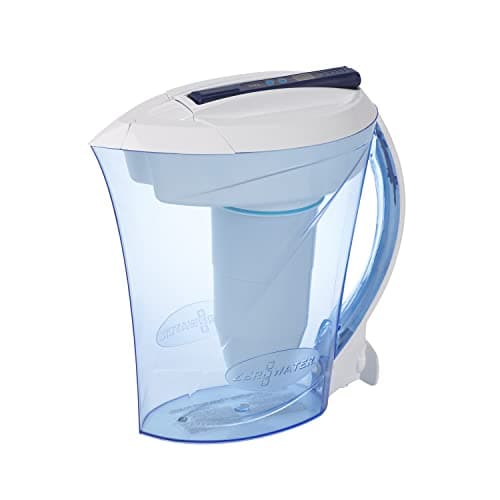 ZeroWater 10-Cup Ready-Pour PitcherNo Brita filter is certified for PFOA/PFOS. This one is, at a published 99%. ZeroWater 10-Cup Ready-Pour PitcherNo Brita filter is certified for PFOA/PFOS. This one is, at a published 99%. | If PFAS is the reason you are here | $27.94 - View on Amazon #ad Price as of October 17, 2026. We may earn a commission. Disclosure. |
The short answer, and the one exception
This question gets asked constantly and the honest answer has exactly one wrinkle in it, so here is the whole thing in one table before anything else.
| Filter | Fits | Rated life |
|---|---|---|
| Original / Standard (white) | All Brita pitchers and dispensers | 40 gallons / about 2 months |
| Elite (blue) | All Brita pitchers and dispensers | 120 gallons / about 6 months |
| Stream (gray) | Brita Stream pitchers ONLY | 40 gallons / about 2 months |
| Faucet system (SAFF-100 / FF-100) | Nothing else — its own housing | 100 gallons / about 4 months |
| Filtering water bottle | Nothing else — its own bottle | 40 gallons / about 2 months |
Brita's wording is unusually clear for this category. Brita Original (Standard) Filters and Brita Elite Filters are compatible with all Brita Pitchers and Dispensers. And on the exception, twice over: Brita Stream Filters (gray) are exclusively for the Filter-As-You-Pour Brita Stream pitchers, and asked the question the other way round, only the Brita Stream Filter will work in a Brita Stream Pitcher.
So if you are standing in a kitchen holding a blue Elite filter and a pitcher you were given four years ago, it fits. If the pitcher says Stream on it, it does not.
Standard and Elite are the same size, and that is the useful part
The interesting consequence of this is not really about fit. It is that the two filters are physically interchangeable while being certified completely differently, which means an upgrade costs you a cartridge rather than a pitcher.
The Standard is certified to NSF/ANSI 42 — chlorine, taste and odor. The Elite is certified to NSF/ANSI 42, 53 and 401, and the 53 listing is what covers lead. Whether a Brita removes lead therefore depends entirely on which of two identically-shaped cartridges is sitting in the reservoir, which is the single most common way people get this wrong. Nothing on the outside of the pitcher tells you.
And because the Elite runs 120 rated gallons against the Standard's 40, the upgrade is usually cheaper per gallon rather than more expensive — three Standard cartridges to one Elite. We go through that arithmetic on the Brita brand page, and the short version is that the Standard is hard to justify at all once you notice it is also the more expensive filter per gallon.
Why Stream is a genuinely different machine
Stream is not a cost-reduced version of a normal Brita. It filters at a different moment, and that is why the cartridge cannot be shared.
A standard Brita filters on the way down: you fill the top reservoir, water passes through the cartridge under gravity, and clean water collects in the bottom. A Stream filter attaches to the lid and filters as the water leaves the pitcher — Brita's Filter-As-You-Pour design. The whole flow path is different, the mounting is different, and the cartridge is shaped for a job the other filters do not do.
The trade-off is real and worth knowing before you buy either: Stream pours immediately with no waiting for a reservoir to drain, and its filter is rated at 40 gallons with no longer-life option in the format. A standard pitcher makes you wait and then lets you fit a 120-gallon Elite. If you hate waiting, Stream is a reasonable choice; just understand you are choosing a format with one cartridge and no upgrade path.
If you own a Stream and want more coverage
This is the situation where the compatibility answer actually costs somebody money, so it deserves a straight answer rather than a shrug.
There is no cartridge you can buy to make a Stream behave like an Elite. The options are a standard Brita pitcher or dispenser with an Elite filter in it, or a different product entirely. Which one depends on what you are actually trying to remove — and if you are not sure, that is the question to settle first, because there is a list of things no pitcher reaches regardless of brand or cartridge.
The Brita formats that are not pitcher filters at all
Two more Brita products come up in this question and neither shares anything with the pitcher cartridges.
The faucet-mount system takes its own cartridge at 100 rated gallons, roughly four months, and screws onto the tap instead of sitting in a jug. The filtering water bottles take their own 40-gallon cartridge. Neither is cross-compatible with a pitcher filter in either direction, and nobody should expect them to be — they are different housings.
The faucet mount is worth a look if counter space is the constraint rather than cost, and the pitcher-versus-faucet comparison runs through when each format makes sense. It is a longer-life cartridge than a Standard pitcher filter, which surprises people.
What fitting does not mean
One warning to finish on, because this page is about physical compatibility and physical compatibility is the least important thing about a water filter.
A filter fitting your pitcher tells you nothing about whether it addresses your problem. No Brita pitcher filter — Standard, Elite or Stream — is certified for PFOA, PFOS or fluoride. The PFAS question and the fluoride question both resolve the same way, and they resolve that way for the whole brand rather than for one cartridge. If either is why you are shopping, the right move is a product certified for it rather than a different filter that slots into the jug you already own.
Put the other way round: the fact that an upgrade drops straight in is genuinely good news if your problem is lead, chlorine or taste. It is irrelevant if your problem is something Brita does not claim. The tier guide is the faster route to that answer than any amount of reading about cartridge shapes.
The cost-per-gallon math
The compatibility fact has one piece of arithmetic attached to it, and it is the reason this page has a buy button on it at all.
Because Standard and Elite fit the same pitcher, the choice between them is a pure cost and coverage comparison with no hardware consequences. The Elite is rated at 120 gallons and the Standard at 40, so one Elite covers the same water as three Standards. Price all four cartridges on the day you buy and the Elite normally wins on cost per gallon before you even count the lead certification the Standard does not carry.
For a Stream owner the arithmetic is different and less pleasant: the cartridge is fixed at 40 gallons and the only way to change that number is to change pitchers. Work out what a year of Stream cartridges costs before deciding whether the convenience is worth it.
We do not print product prices in this text. The buy buttons carry the live figure and the date it was checked, which is the only price worth quoting.
We show the arithmetic rather than a verdict so you can redo it with the price you actually pay. Filter prices move; the rated capacities above do not.
The picks in full
The drop-in upgrade
Brita Elite Filter (with any Brita pitcher)
Brita
The cheapest route to an NSF/ANSI 53 lead certification. It drops into a pitcher most households already have, and it is emphatically not the same filter as the white Brita Standard.
Certification status
Certified to NSF/ANSI 42, 53 and 401. The lead certification belongs to the Elite (blue) filter only — the Standard (white) filter is certified to NSF/ANSI 42 for taste and odor and is not certified for lead. Per Brita's January 2026 performance data sheet the Elite is not certified for PFOA or PFOS, and no Brita pitcher filter is certified for fluoride.
Published specifications
| Rated filter life | 120 gallons / about 6 months |
|---|---|
| Standard filter life, for comparison | 40 gallons / about 2 months |
| Certified standards | NSF/ANSI 42, 53, 401 |
| Lead | Certified under NSF/ANSI 53 |
| PFOA / PFOS | Not certified (January 2026 performance data sheet) |
| Fluoride | Not certified, not claimed |
What we like
- Genuine NSF/ANSI 53 lead certification at the lowest entry price of anything on this site
- Fits Brita pitchers and dispensers already in millions of kitchens — no new hardware
- Three times the rated life of the Standard filter, which changes the cost-per-gallon math
What we do not
- Not certified for PFOA or PFOS, so it is the wrong answer to a PFAS worry
- No fluoride claim at all
- Slow gravity flow, like every pitcher
Skip it if
Anyone whose actual worry is PFAS or fluoride. The Elite is not certified for either, and buying it for those is buying the wrong thing.
#ad Price as of October 17, 2026. We may earn a commission. Disclosure.
Where these specifications came from
If you need more capacity
Brita UltraMax 27-Cup Dispenser with Elite Filter
Brita
The dispenser whose filter outlasts its tank. The Elite cartridge it ships with is rated at 120 gallons, which is about 71 fills of this 27-cup reservoir — three times what the other two big dispensers manage.
Certification status
Ships with the Brita Elite filter, certified to NSF/ANSI 42, 53 and 401. Brita states the Elite removes 99% of lead and reduces microplastics. Per Brita's January 2026 performance data sheet the Elite is not certified for PFOA or PFOS. The dispenser also accepts the Standard filter, which is not certified for lead — the certification belongs to the cartridge, not the tank.
Published specifications
| Capacity | 27 cups |
|---|---|
| Dimensions | 9.67" H x 13.94" W x 5.19" L |
| Included filter | Brita Elite |
| Elite rated life | 120 gallons / about 6 months |
| Fills per filter | About 71 (120 gallons / 27 cups) |
| Lead | 99% reduction, Elite filter (Brita) |
| PFOA / PFOS | Not certified (January 2026 data sheet) |
| Fridge fit | Slim profile designed for a fridge shelf |
What we like
- The longest-lived certified filter of any dispenser here, by a factor of three
- Slim enough for a fridge door-side shelf, which the widest dispenser here is not
- Accepts any Brita pitcher filter, so replacements are stocked everywhere
What we do not
- No PFOA or PFOS certification — the wrong answer to a PFAS worry
- Refilling a 27-cup tank through a gravity filter takes a long time
- The cheaper listings ship with the Standard filter, which carries no lead claim — check the box
- Spigots on gravity dispensers drip if the seal is not seated properly
Skip it if
Households whose reason for filtering is PFAS. The Elite is not certified for PFOA or PFOS, and a bigger tank does not change that.
#ad Price as of October 17, 2026. We may earn a commission. Disclosure.
A different Brita format entirely
Brita Faucet Mount System (SAFF-100 / FF-100)
Brita
The only faucet mount on this page whose data sheet says certified rather than tested, and it certifies 99.9% lead at both test pH values plus 99.9% of microplastics. It is also the slowest thing here, by design.
Certification status
Certified by WQA against NSF/ANSI 42, 53 and 401 for the contaminants listed on the FF-100 / SAFF-100 performance data sheet, using the FR-200 filter. Lead is 99.9% at pH 6.5 and pH 8.5; microplastics in the 0.5-1 micron range are 99.9% under NSF/ANSI 401. The sheet carries no PFOA or PFOS claim and states the system is not intended to purify water.
Published specifications
| Rated capacity | 100 gallons (378 liters) |
|---|---|
| Manufacturer's stated interval | About 4 months for a typical household |
| Replacement filter | FR-200 |
| Service flow rate | 0.58 gpm (2.19 L/min) |
| Working pressure | 20-100 psig (138-689 kPa) |
| Lead, pH 6.5 and pH 8.5 | 99.9% reduction |
| Chlorine | 99.0% reduction |
| Asbestos | 99.9% reduction |
| Microplastics, 0.5-1 micron | 99.9% (NSF/ANSI 401) |
| PFOA / PFOS | No claim on the data sheet |
What we like
- Certified by WQA against all three standards rather than tested against them — the strongest paperwork in the category
- 99.9% lead at both test pH values, matching what certified pitcher filters achieve
- A published microplastics figure, which almost nothing at this price carries
What we do not
- 0.58 gpm is the slowest published service flow of the three certified mounts, and it is noticeable at the sink
- The 100-gallon rating and the 4-month claim only agree if you divert most of your tap use
- No PFOA, PFOS or fluoride claim of any kind
- Does not fit pull-out or pull-down sprayer faucets
Skip it if
PFAS households, and anyone who will resent the flow rate. Filling a stockpot through a 0.58 gpm cartridge is a genuinely slow experience, and the diverter exists precisely so you do not have to.
#ad Price as of October 17, 2026. We may earn a commission. Disclosure.
If PFAS is the reason you are here
ZeroWater 10-Cup Ready-Pour Pitcher
ZeroWater
The only mainstream pitcher that hands you a TDS meter and invites you to check its work. It buys you a PFOA/PFOS certification the Brita Elite does not have, and it costs you filter life.
Certification status
The 5-stage filter is system-certified by IAPMO against NSF/ANSI 42 for chlorine taste and odor and NSF/ANSI 53 for lead, hexavalent chromium, mercury and PFOA/PFOS.
Published specifications
| Filtration | 5-stage, including ion-exchange resin |
|---|---|
| Rated filter life | About 15-20 gallons, varying with source TDS |
| Certified standards | NSF/ANSI 42 and 53 (IAPMO) |
| PFOA / PFOS | Certified under NSF/ANSI 53 |
| Published reduction — PFOA/PFOS | 99% |
| Published reduction — lead | 95% |
| Published reduction — chromium 6 | 99% |
| Included | Handheld TDS meter |
What we like
- Carries a PFOA/PFOS certification, which the Brita Elite does not
- The bundled TDS meter turns 'is it still working' from a guess into a reading
- Ion exchange drives total dissolved solids far lower than carbon alone
What we do not
- Filter life is the shortest of any pitcher here, and it collapses further on hard or high-TDS water
- Cost per gallon is the highest in the pitcher tier as a result
- Some owners find the taste flat or faintly sour at very low TDS — a real preference issue, not a defect
Skip it if
Anyone on hard, high-TDS water who will not tolerate changing a filter every few weeks. On 400+ ppm supply the running cost is genuinely painful and an under-sink system is cheaper inside a year.
#ad Price as of October 17, 2026. We may earn a commission. Disclosure.
Where these specifications came from
Questions people actually ask
Do all Brita filters fit all pitchers?
No, though most do. Brita states that its Original (Standard) and Elite filters are compatible with all Brita pitchers and dispensers. Stream filters are the exception: they are exclusively for Brita Stream pitchers, and Brita confirms that only a Stream filter will work in a Stream pitcher. Faucet-mount and bottle filters are separate formats that share nothing with pitcher cartridges.
Can you use a Brita Elite filter in a regular pitcher?
Yes. Brita says the Elite filter is compatible with all Brita pitchers and dispensers, and it is the same size as the Original (Standard) filter, so it drops straight into a pitcher you already own. That is the cheapest way to get a lead-certified Brita, because the certification is in the cartridge rather than the jug.
Are Brita Standard and Elite filters interchangeable?
Physically, yes — they are the same size and both fit all Brita pitchers and dispensers. In performance they are not equivalent at all. The Standard is certified to NSF/ANSI 42 for chlorine, taste and odor. The Elite is certified to NSF/ANSI 42, 53 and 401, and the 53 listing covers lead. Same slot, different evidence.
Will an Elite filter work in a Brita Stream pitcher?
No. Brita's answer is explicit: only the Brita Stream filter will work in a Brita Stream pitcher. Stream filters attach to the lid and filter as you pour rather than sitting in a reservoir, so the cartridge is not interchangeable in either direction.
How long does each Brita filter last?
Per Brita's own support pages: the Original (Standard) filter is rated at 40 gallons or about two months, the Elite at 120 gallons or about six months, the Stream filter at 40 gallons or about two months, the faucet system cartridge at 100 gallons or about four months, and the filtering water bottle filter at 40 gallons or about two months.
Is there a Brita filter that removes PFAS or fluoride?
No. No Brita pitcher filter is certified for PFOA, PFOS or fluoride, and that applies to the Standard, the Elite and the Stream alike. If PFAS is the concern, ZeroWater's 5-stage filter carries an IAPMO certification at a published 99% and the PUR PLUS filter publishes a certified total-PFAS figure. For fluoride, reverse osmosis is the reliable route.