No. Per Brita's January 2026 performance data sheet, the Brita Elite is not certified for PFOA or PFOS, and neither is the Standard filter. If PFAS is your concern, ZeroWater's 5-stage filter carries that certification and Brita does not.
Quick picks
Tap any row to jump to the full write-up. The button goes straight to the retailer.
| # | Product | Best for | Price |
|---|---|---|---|
| 1 | 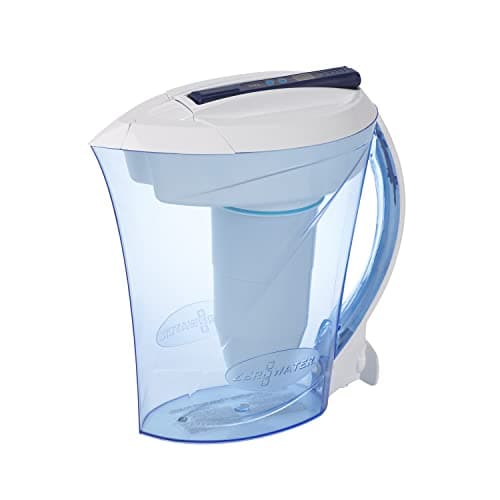 ZeroWater 10-Cup Ready-Pour PitcherIAPMO certified against NSF/ANSI 53 for PFOA and PFOS, 99% published reduction. ZeroWater 10-Cup Ready-Pour PitcherIAPMO certified against NSF/ANSI 53 for PFOA and PFOS, 99% published reduction. | The certified pitcher | $27.94 - View on Amazon #ad Price as of October 17, 2026. We may earn a commission. Disclosure. |
| 2 | 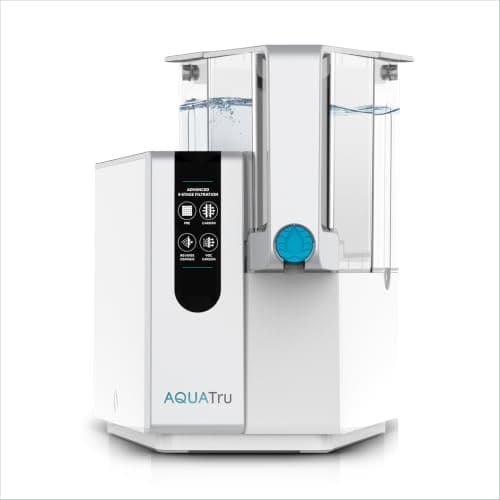 AquaTru Classic Countertop Reverse Osmosis PurifierCertified to NSF/ANSI 58 and the P473 PFOA/PFOS protocol. AquaTru Classic Countertop Reverse Osmosis PurifierCertified to NSF/ANSI 58 and the P473 PFOA/PFOS protocol. | The strongest no-install option | $451.25 - View on Amazon $475.00 — 5% off #ad Price as of October 17, 2026. We may earn a commission. Disclosure. |
| 3 | 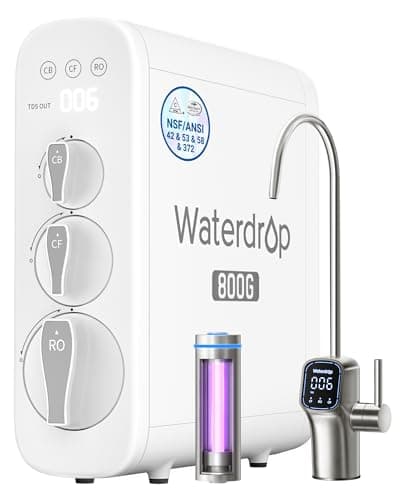 Waterdrop G3P800 Tankless Reverse Osmosis SystemReverse osmosis certified to NSF/ANSI 42, 53, 58 and 372. Waterdrop G3P800 Tankless Reverse Osmosis SystemReverse osmosis certified to NSF/ANSI 42, 53, 58 and 372. | The best plumbed option | $759.00 - View on Amazon $999.00 — 24% off #ad Price as of October 17, 2026. We may earn a commission. Disclosure. |
The answer, and where it comes from
Per Brita's January 2026 performance data sheet, as reported by Tap Score, the Brita Elite is not certified for PFOA or PFOS. The Standard filter is certified to NSF/ANSI 42 for taste and odor and makes no health claim at all.
This is a certification fact with a date on it, not an opinion. Manufacturers revise performance data sheets, so it carries the verification date at the top of this page and it gets re-checked on a schedule.
Why the Elite's lead certification confuses this
The Elite is certified to NSF/ANSI 53. So is ZeroWater's 5-stage filter. Same standard, different answers on PFAS — because certification is per contaminant, not per standard.
NSF/ANSI 53 covers a list of health contaminants: lead, cysts, VOCs, chromium, certain PFAS and others. A product is certified for the specific ones it was tested against. The Elite was tested and certified for lead. It was not certified for PFOA or PFOS.
This is the single most important idea on this whole site, and PFAS is where it costs the most. The full explanation of the standards.
What is certified
| Product | PFOA / PFOS status | Evidence |
|---|---|---|
| ZeroWater 5-stage | Certified | IAPMO against NSF/ANSI 53, 99% published reduction |
| AquaTru Classic | Certified | IAPMO to NSF/ANSI 53, 58, 401 and P473 |
| Waterdrop G3P800 | Certified RO | NSF/ANSI 42, 53, 58, 372 |
| Clearly Filtered pitcher | Tested, not certified | Independent testing to NSF 42/53/401/P473 |
| Epic Pure pitcher | Tested, not certified | Tested against NSF 42/53/401/P473 |
| Brita Elite | Not certified | Jan 2026 performance data sheet |
| Brita Standard | Not certified | NSF/ANSI 42 only |
NSF P473 is the protocol written specifically for PFOA and PFOS, tested at concentrations relevant to the EPA's 4.0 parts per trillion limit. It is the most targeted certification available and worth looking for by name.
Should you be worried about PFAS at all?
Depends on your supply, and much of the country genuinely does not know yet. The EPA finalized national PFAS limits on 26 April 2024, setting 4.0 parts per trillion for PFOA and PFOS, with initial monitoring required by 26 April 2027.
So for many systems, measurement is still under way. Check whether your utility has published results. If you live near a military base, airport or industrial site with a history of fluorinated foam or PFAS use, acting before the data arrives is reasonable. The full PFAS picture.
Is this a criticism of Brita?
No. The Elite is a genuinely good product — the cheapest certified lead filter on this site and one of the best cost-per-gallon options in the pitcher tier. It simply was not built as a PFAS filter and does not claim to be one.
The problem is not the product. It is buying the default brand for a contaminant it never addressed, which is what happens when people shop by brand instead of by certification.
The cost-per-gallon math
If PFAS is confirmed, the pitcher route is the cheapest entry and the most expensive to run: ZeroWater's filter is rated at roughly 15 to 20 gallons and falls further on high-TDS water.
At two gallons a day, that is something like 36 filters a year on soft water and more on hard. Set that annual spend against a certified reverse osmosis system, whose consumables run on a multi-month to multi-year cycle.
For a household of three or more, the RO system usually pays back inside two years. For one person drinking modestly, the certified pitcher stays the sensible answer.
We show the arithmetic rather than a verdict so you can redo it with the price you actually pay. Filter prices move; the rated capacities above do not.
The picks in full
The certified pitcher
ZeroWater 10-Cup Ready-Pour Pitcher
ZeroWater
The only mainstream pitcher that hands you a TDS meter and invites you to check its work. It buys you a PFOA/PFOS certification the Brita Elite does not have, and it costs you filter life.
Certification status
The 5-stage filter is system-certified by IAPMO against NSF/ANSI 42 for chlorine taste and odor and NSF/ANSI 53 for lead, hexavalent chromium, mercury and PFOA/PFOS.
Published specifications
| Filtration | 5-stage, including ion-exchange resin |
|---|---|
| Rated filter life | About 15-20 gallons, varying with source TDS |
| Certified standards | NSF/ANSI 42 and 53 (IAPMO) |
| PFOA / PFOS | Certified under NSF/ANSI 53 |
| Published reduction — PFOA/PFOS | 99% |
| Published reduction — lead | 95% |
| Published reduction — chromium 6 | 99% |
| Included | Handheld TDS meter |
What we like
- Carries a PFOA/PFOS certification, which the Brita Elite does not
- The bundled TDS meter turns 'is it still working' from a guess into a reading
- Ion exchange drives total dissolved solids far lower than carbon alone
What we do not
- Filter life is the shortest of any pitcher here, and it collapses further on hard or high-TDS water
- Cost per gallon is the highest in the pitcher tier as a result
- Some owners find the taste flat or faintly sour at very low TDS — a real preference issue, not a defect
Skip it if
Anyone on hard, high-TDS water who will not tolerate changing a filter every few weeks. On 400+ ppm supply the running cost is genuinely painful and an under-sink system is cheaper inside a year.
#ad Price as of October 17, 2026. We may earn a commission. Disclosure.
Where these specifications came from
The strongest no-install option
AquaTru Classic Countertop Reverse Osmosis Purifier
AquaTru
Reverse osmosis performance with no plumbing, no drilling and no landlord conversation. You pay for that with counter space, a wait, and two tanks you fill and empty by hand.
Certification status
Certified by IAPMO to NSF/ANSI 53, 58, 401 and P473, covering lead, reverse-osmosis performance, emerging compounds and the PFOA/PFOS protocol.
Published specifications
| Filtration | 4-stage countertop reverse osmosis |
|---|---|
| Clean water tank | 0.75 gallons |
| Tap water tank | 1 gallon |
| Installation | None — no plumbing connection |
| Certified standards | NSF/ANSI 53, 58, 401, P473 (IAPMO) |
What we like
- Real reverse osmosis with a P473 PFOA/PFOS certification and zero installation
- The strongest answer available to a renter with a lead or PFAS problem
- No drilling, no drain saddle, no landlord permission needed
What we do not
- Takes up substantial counter space
- You refill and empty tanks by hand — it is not on-demand
- Highest purchase price in the no-plumbing tier by a wide margin
Skip it if
Anyone who can plumb in an under-sink system. A permanent under-sink RO is cheaper per gallon, on-demand, and out of sight. Buy this when you genuinely cannot install.
$475.00 — 5% off
#ad Price as of October 17, 2026. We may earn a commission. Disclosure.
Where these specifications came from
The best plumbed option
Waterdrop G3P800 Tankless Reverse Osmosis System
Waterdrop
Tankless reverse osmosis that gives back the cupboard a pressure tank would eat, fills a glass without the pause, and sends markedly less water down the drain than a classic tank system.
Certification status
Certified to NSF/ANSI 42 for chlorine reduction, NSF/ANSI 53 and 58 for TDS, fluoride, cadmium, hexavalent chromium and selenium, and NSF/ANSI 372 for lead-free materials.
Published specifications
| Output | 800 GPD |
|---|---|
| Pure-to-drain ratio | 3:1 |
| Format | Tankless — no pressure tank |
| Certified standards | NSF/ANSI 42, 53, 58, 372 |
| Installation | Two holes: smart LED faucet and drain |
| Faucet | Included, with TDS display |
What we like
- No pressure tank, so it fits cabinets a tank system cannot
- 3:1 pure-to-drain is far better than the ratio typical of older reverse osmosis
- 800 GPD means no waiting for a tank to refill
What we do not
- Needs a power outlet under the sink — a real constraint in older kitchens
- Proprietary filter cartridges, so you are tied to Waterdrop's pricing
- Requires drilling for the included faucet unless you have a spare hole
Skip it if
Renters, and anyone with no outlet under the sink. It is a permanent, powered installation — a countertop unit is the answer if you cannot commit to that.
$999.00 — 24% off
#ad Price as of October 17, 2026. We may earn a commission. Disclosure.
Where these specifications came from
Questions people actually ask
Does the Brita Elite remove PFAS?
No. Per Brita's January 2026 performance data sheet, the Elite is not certified for PFOA or PFOS. It is certified to NSF/ANSI 53 for lead, which is a different contaminant within the same standard.
Which pitcher does remove PFAS?
ZeroWater's 5-stage filter is IAPMO certified against NSF/ANSI 53 for PFOA and PFOS, with a published 99% reduction. Clearly Filtered and Epic Pure both address PFAS in independent testing rather than under a certification listing.
How do I know if I have PFAS in my water?
Check whether your utility has published PFAS monitoring results. Initial monitoring is required by 26 April 2027, so many systems are still measuring. A PFAS-specific laboratory test is the alternative if nothing is published and you live near a known source.
Does boiling remove PFAS?
No — it concentrates them. PFAS do not evaporate with the water, so boiling reduces the volume and raises the concentration. Boiling addresses microbiological risk only.