The G3P800 is a tankless reverse osmosis system rated at 800 GPD with a published 3:1 pure-to-drain ratio, certified to NSF/ANSI 42, 53, 58 and 372. It removes the pressure tank that makes conventional RO awkward, and it requires a power outlet under the sink.
Quick picks
Tap any row to jump to the full write-up. The button goes straight to the retailer.
| # | Product | Best for | Price |
|---|---|---|---|
| 1 | 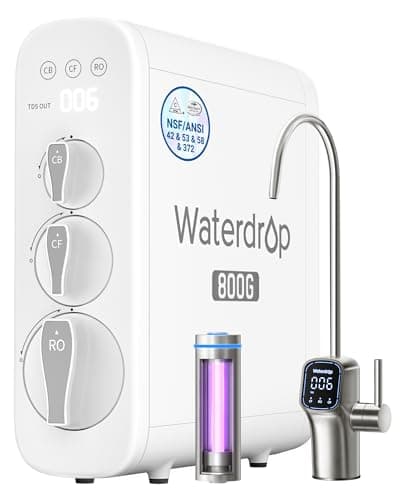 Waterdrop G3P800 Tankless Reverse Osmosis System800 GPD tankless, 3:1 pure-to-drain, NSF/ANSI 42, 53, 58 and 372. Waterdrop G3P800 Tankless Reverse Osmosis System800 GPD tankless, 3:1 pure-to-drain, NSF/ANSI 42, 53, 58 and 372. | The system reviewed here | $759.00 - View on Amazon $999.00 — 24% off #ad Price as of October 17, 2026. We may earn a commission. Disclosure. |
| 2 | 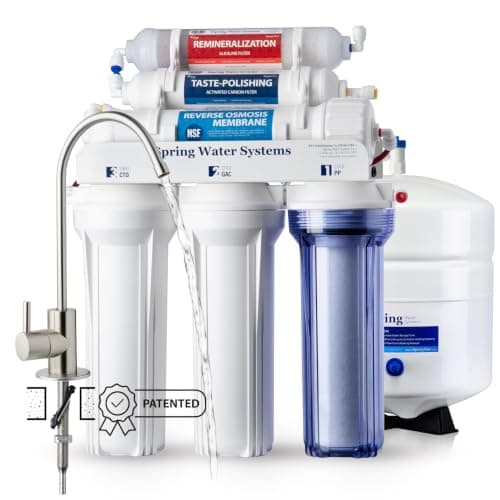 iSpring RCC7AK 6-Stage Reverse Osmosis SystemTank RO that needs no electricity, at a lower price. iSpring RCC7AK 6-Stage Reverse Osmosis SystemTank RO that needs no electricity, at a lower price. | If there is no outlet | $211.49 - View on Amazon $234.99 — 10% off #ad Price as of October 17, 2026. We may earn a commission. Disclosure. |
| 3 | 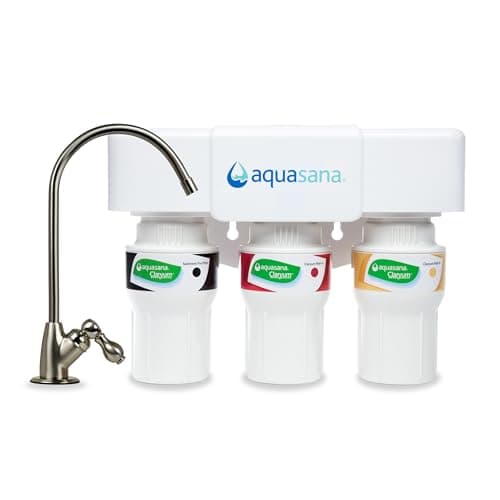 Aquasana Claryum 3-Stage Under-Sink Filter (AQ-5300)Certified carbon block — different technology, no drain line. Aquasana Claryum 3-Stage Under-Sink Filter (AQ-5300)Certified carbon block — different technology, no drain line. | If you want no wastewater at all | $154.99 - View on Amazon $349.99 — 56% off #ad Price as of October 17, 2026. We may earn a commission. Disclosure. |
What problem it solves
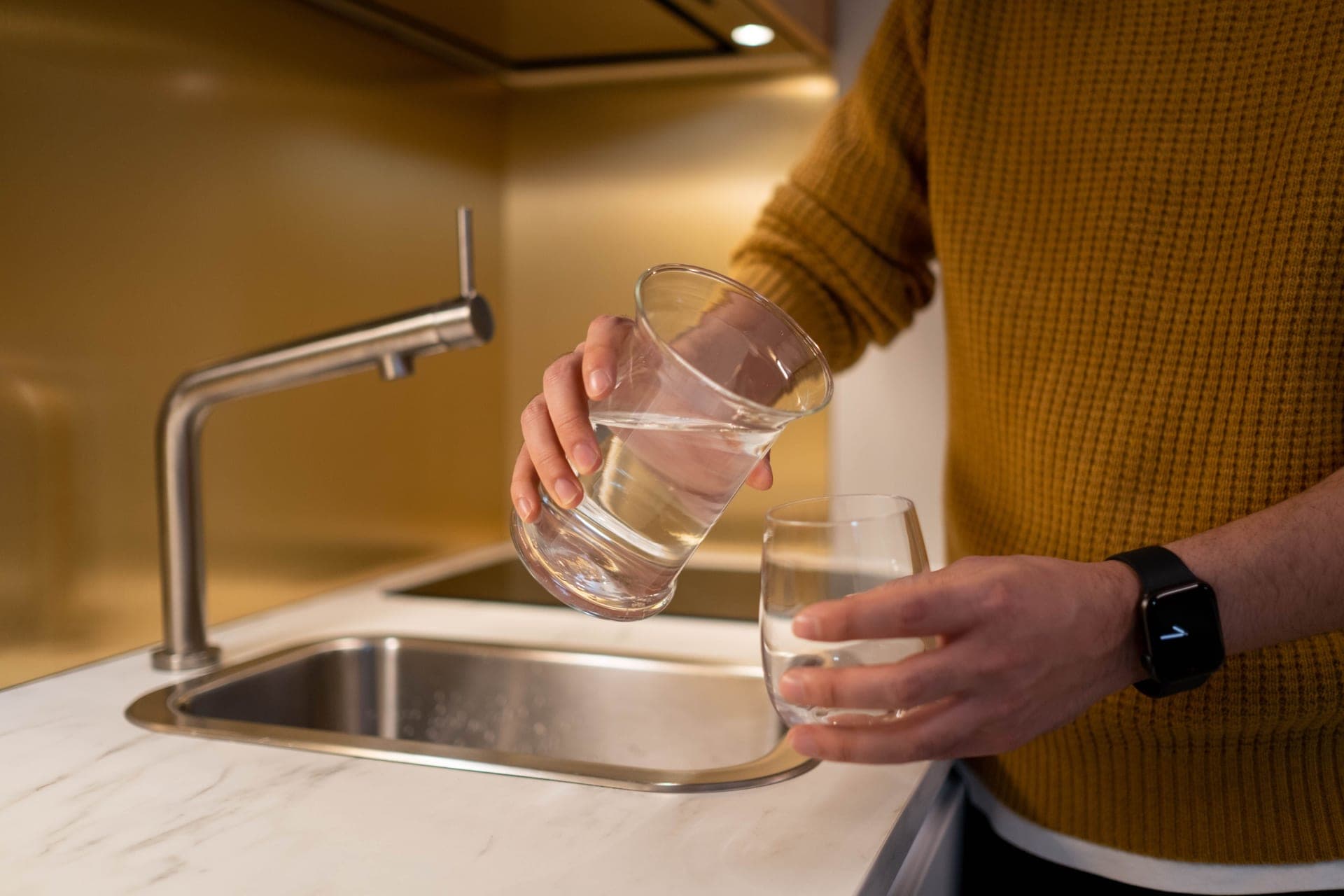
Conventional under-sink reverse osmosis has one enormous practical drawback: a 4-gallon pressure tank that consumes most of a cabinet, plus the housing, plus the tubing. Plenty of people who want RO abandon the idea when they open the cupboard.
Tankless removes the tank. The G3P800 produces on demand at 800 GPD, which is fast enough that you never notice a tank is missing, and it fits cabinets where a tank system simply will not go.
Specifications
| Specification | Published figure |
|---|---|
| Output | 800 GPD |
| Pure-to-drain ratio | 3:1 |
| Format | Tankless — no pressure tank |
| Certified standards | NSF/ANSI 42, 53, 58, 372 |
| Installation | Two holes: smart LED faucet and drain |
| Faucet | Included, with a TDS display |
The certification list is unusually complete for a consumer system: NSF/ANSI 42 for chlorine reduction, 53 and 58 for TDS, fluoride, cadmium, hexavalent chromium and selenium, and 372 for lead-free materials.
The 3:1 ratio is the underrated feature
Conventional RO commonly runs around one part product to three or four parts drain. The G3P800 publishes the inverse — roughly one cup to drain for every three cups produced.
That matters most on a well, on a septic system, or on an expensively metered supply, and it matters over years rather than days. It is also the specification most buyers never compare, because it is not on the front of the box.
What it costs you
A power outlet. The system is pumped. Older kitchens frequently have no outlet inside the sink cabinet, and running one is an electrician job. Check first — this is the single most common reason this system goes back.
Proprietary cartridges. You are tied to Waterdrop's pricing for the life of the system. Systems using standard 10-inch cartridges, like the APEC ROES-PH75, keep replacement costs exposed to competition instead.
A drilled faucet hole, unless your sink has a spare. The included smart faucet with its TDS display is a genuinely nice thing to have and it still needs somewhere to go.
Who it is for
Homeowners with a tight cabinet, an outlet, and a contaminant list that includes fluoride, nitrate, arsenic or dissolved solids. If your list is chlorine and lead only, the Aquasana Claryum carbon block in the under-sink roundup is a cheaper, simpler and equally certified answer for those specific contaminants.
The cost-per-gallon math
Two running costs: cartridges and water sent to drain.
Cartridges are proprietary and replaced on Waterdrop's schedule. Price the full replacement set and multiply across ten years, then do the same for a system using standard cartridges — that comparison is usually larger than the purchase price difference between the two systems.
Water is where the G3P800 claws it back. At 3:1 in the product's favor, producing a gallon of drinking water costs about a third of a gallon to drain. A conventional 1:3 system costs three gallons. Over a household's annual drinking and cooking volume that difference is thousands of gallons, and on a metered supply it is a line on a bill.
We show the arithmetic rather than a verdict so you can redo it with the price you actually pay. Filter prices move; the rated capacities above do not.
The picks in full
The system reviewed here
Waterdrop G3P800 Tankless Reverse Osmosis System
Waterdrop
Tankless reverse osmosis that gives back the cupboard a pressure tank would eat, fills a glass without the pause, and sends markedly less water down the drain than a classic tank system.
Certification status
Certified to NSF/ANSI 42 for chlorine reduction, NSF/ANSI 53 and 58 for TDS, fluoride, cadmium, hexavalent chromium and selenium, and NSF/ANSI 372 for lead-free materials.
Published specifications
| Output | 800 GPD |
|---|---|
| Pure-to-drain ratio | 3:1 |
| Format | Tankless — no pressure tank |
| Certified standards | NSF/ANSI 42, 53, 58, 372 |
| Installation | Two holes: smart LED faucet and drain |
| Faucet | Included, with TDS display |
What we like
- No pressure tank, so it fits cabinets a tank system cannot
- 3:1 pure-to-drain is far better than the ratio typical of older reverse osmosis
- 800 GPD means no waiting for a tank to refill
What we do not
- Needs a power outlet under the sink — a real constraint in older kitchens
- Proprietary filter cartridges, so you are tied to Waterdrop's pricing
- Requires drilling for the included faucet unless you have a spare hole
Skip it if
Renters, and anyone with no outlet under the sink. It is a permanent, powered installation — a countertop unit is the answer if you cannot commit to that.
$999.00 — 24% off
#ad Price as of October 17, 2026. We may earn a commission. Disclosure.
Where these specifications came from
If there is no outlet
iSpring RCC7AK 6-Stage Reverse Osmosis System
iSpring
The value pick of the reverse-osmosis tier: a WQA Gold Seal system with an alkaline stage, usually at the lowest price of anything here that carries a real certification.
Certification status
Certified against NSF/ANSI 58 for TDS reduction and carries the WQA Gold Seal, with 97.2% TDS removal certified.
Published specifications
| Output | 75 GPD |
|---|---|
| Stages | 6, including alkaline remineralization |
| Certified TDS reduction | 97.2% |
| Feed pressure | 45-70 psi |
| Feed temperature | 40-100 degrees F |
| Assembled size | 15.5" deep x 19.5" high, 25 lb |
| Certification | NSF/ANSI 58, WQA Gold Seal |
What we like
- Certified performance at the lowest price in the tier
- Push-fit tubing makes a first-time install genuinely manageable
- Alkaline stage included rather than sold as an upgrade
What we do not
- Narrow 45-70 psi feed window — low-pressure homes may need a booster pump
- Tank plus housing needs real cabinet depth
- Conventional reverse-osmosis drain ratio
Skip it if
Homes with feed pressure below 45 psi that will not add a booster pump, and anyone who wants a tankless footprint.
$234.99 — 10% off
#ad Price as of October 17, 2026. We may earn a commission. Disclosure.
Where these specifications came from
If you want no wastewater at all
Aquasana Claryum 3-Stage Under-Sink Filter (AQ-5300)
Aquasana
Carbon-block filtration rather than reverse osmosis: it keeps the minerals, wastes nothing, and fits where a reverse-osmosis system will not. It also cannot do what RO does for fluoride or nitrate.
Certification status
WQA tested and certified to NSF/ANSI 42, 53 — which includes the P473 protocol for PFOA and PFOS — and 401, for the reduction of 78 contaminants. Aquasana publishes 99.6% for lead and microplastics, 99.7% for PFOA and PFOS, 99.99% for cysts and 97% for chlorine across the Claryum 3-Stage line.
Published specifications
| Filter life | 600 gallons / up to 6 months |
|---|---|
| Certified standards | NSF/ANSI 42, 53 (includes P473), 401 (WQA) |
| Flow rate | 0.5 gpm |
| Wastewater | None |
| Format | 3-stage carbon block with a dedicated faucet |
| Contaminants claimed | 78 |
| Lead / PFOA and PFOS | 99.6% / 99.7% |
What we like
- No drain line, no wastewater, no tank — much easier to install than reverse osmosis
- NSF/ANSI 401 certification covers pharmaceutical-class trace compounds
- Full flow rate, unlike reverse osmosis, so filling a pot is not a project
What we do not
- Not reverse osmosis: no meaningful fluoride, nitrate or TDS reduction
- 600-gallon filter life is short next to an inline system's tens of thousands
- Proprietary cartridges
Skip it if
Anyone whose problem is fluoride, nitrate or total dissolved solids. Carbon block does not remove those; you need reverse osmosis for that job.
$349.99 — 56% off
#ad Price as of October 17, 2026. We may earn a commission. Disclosure.
Questions people actually ask
Does the Waterdrop G3P800 need electricity?
Yes. It is a pumped tankless system and requires a power outlet inside the sink cabinet. That is a hard requirement, and older kitchens often do not have one — check before ordering.
How much water does it waste?
It publishes a 3:1 pure-to-drain ratio, meaning roughly one cup to drain for every three cups produced. That is considerably better than conventional tank systems, which commonly run the ratio the other way round.
Does it remove fluoride?
Yes. Its NSF/ANSI 53 and 58 certifications cover TDS, fluoride, cadmium, hexavalent chromium and selenium. Fluoride is one of the main reasons to choose reverse osmosis over a carbon block.
Can I install it myself?
The plumbing is quick-connect and manageable. The two harder parts are drilling a faucet hole in a stone countertop and having an outlet available. If both of those are sorted, it is a realistic DIY job in an afternoon.