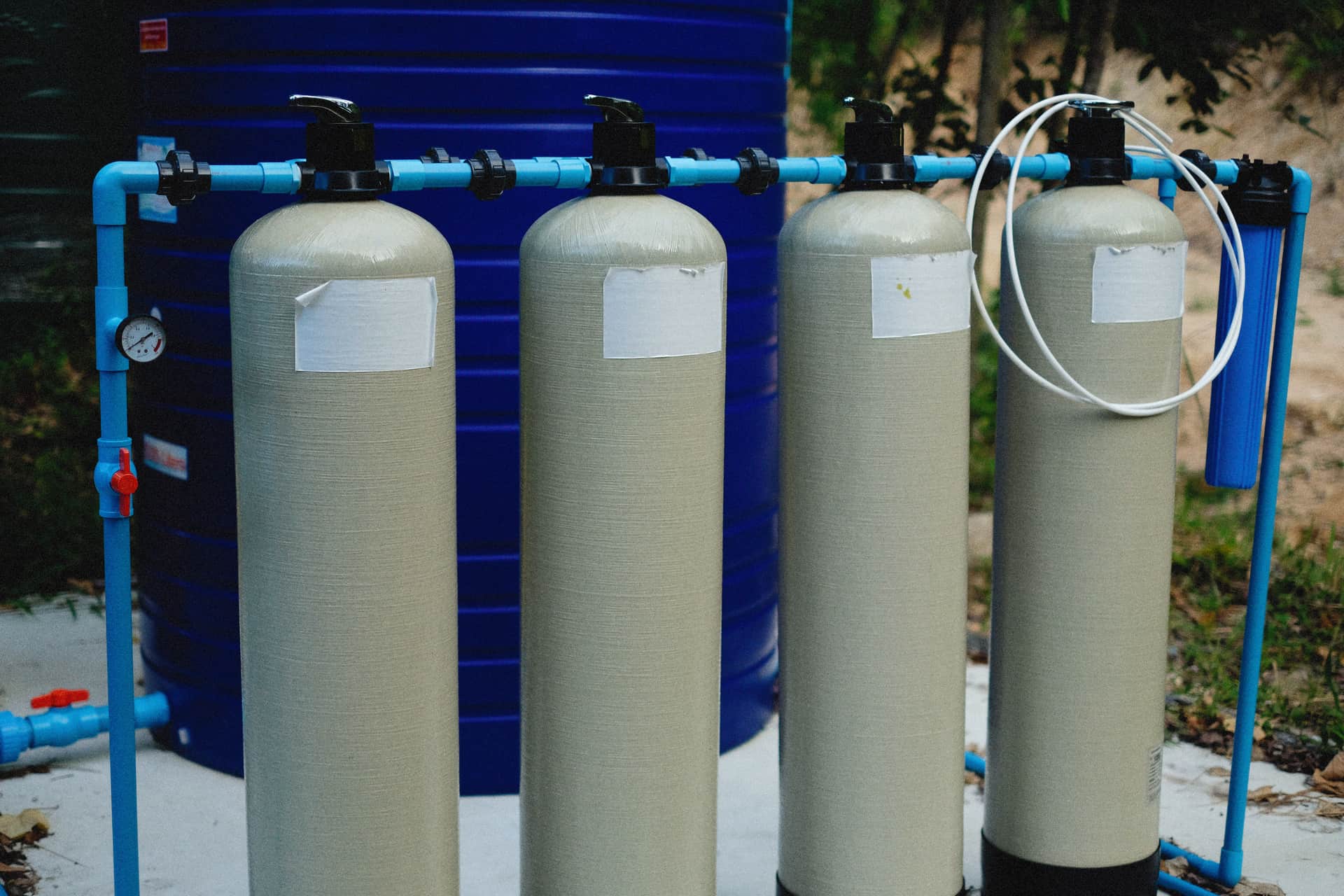
Carbon filtration adsorbs organic molecules including chlorine, VOCs and — when certified — lead. Reverse osmosis pushes water through a membrane and additionally removes fluoride, nitrate, arsenic and dissolved solids. The contaminant decides which you need.
Quick picks
Tap any row to jump to the full write-up. The button goes straight to the retailer.
| # | Product | Best for | Price |
|---|---|---|---|
| 1 | 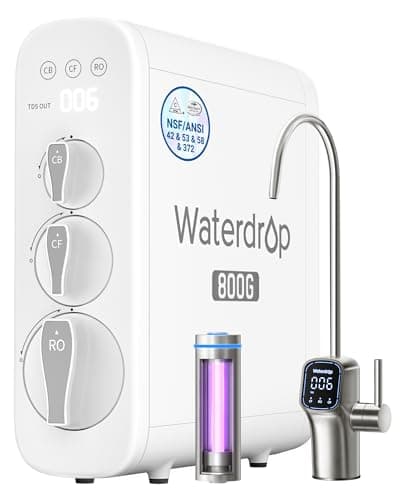 Waterdrop G3P800 Tankless Reverse Osmosis SystemTankless, 3:1 pure-to-drain, certified to NSF/ANSI 42, 53, 58 and 372. Waterdrop G3P800 Tankless Reverse Osmosis SystemTankless, 3:1 pure-to-drain, certified to NSF/ANSI 42, 53, 58 and 372. | Best reverse osmosis | $759.00 - View on Amazon $999.00 — 24% off #ad Price as of October 17, 2026. We may earn a commission. Disclosure. |
| 2 | 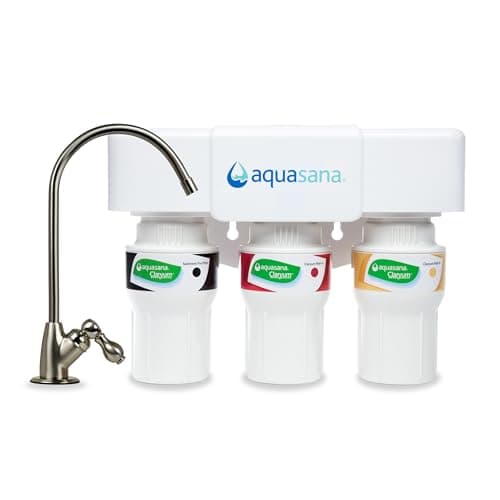 Aquasana Claryum 3-Stage Under-Sink Filter (AQ-5300)Certified to NSF/ANSI 42, 53 and 401 with no wastewater and no drain line. Aquasana Claryum 3-Stage Under-Sink Filter (AQ-5300)Certified to NSF/ANSI 42, 53 and 401 with no wastewater and no drain line. | Best carbon block | $154.99 - View on Amazon $349.99 — 56% off #ad Price as of October 17, 2026. We may earn a commission. Disclosure. |
| 3 | 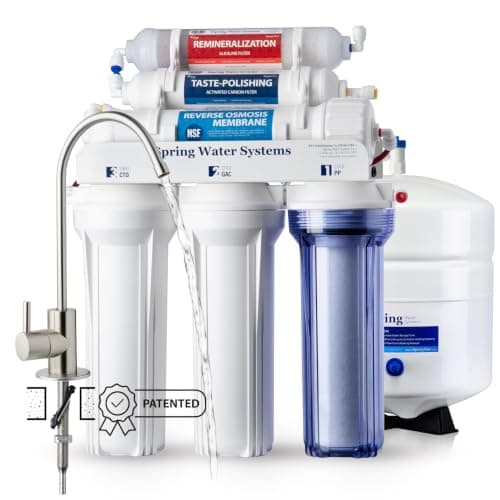 iSpring RCC7AK 6-Stage Reverse Osmosis SystemNSF/ANSI 58 with 97.2% certified TDS removal and an alkaline stage. iSpring RCC7AK 6-Stage Reverse Osmosis SystemNSF/ANSI 58 with 97.2% certified TDS removal and an alkaline stage. | Best value RO | $211.49 - View on Amazon $234.99 — 10% off #ad Price as of October 17, 2026. We may earn a commission. Disclosure. |
Two mechanisms
Carbon filtration works by adsorption. Activated carbon has an enormous internal surface area, and organic molecules stick to it as water passes through. That makes it excellent at chlorine, taste, odor, VOCs and — in a dense certified block — lead and cysts.
Reverse osmosis works by exclusion. Household pressure pushes water against a semipermeable membrane; water passes and most dissolved contaminants are rejected on size and charge, then flushed to drain. Because it does not rely on a surface holding molecules, it reaches dissolved inorganic contaminants carbon has no mechanism for.
What each removes
| Contaminant | Certified carbon block | Reverse osmosis |
|---|---|---|
| Chlorine, taste, odor | Yes | Yes |
| Chloramine | Yes, with catalytic carbon | Yes |
| Lead | Yes, under NSF/ANSI 53 | Yes, under NSF/ANSI 58 |
| VOCs | Yes | Yes |
| Cysts | Yes | Yes |
| PFAS | Yes, with the right certification | Yes |
| Fluoride | No | Yes |
| Nitrate | No | Yes |
| Arsenic | No | Yes, under NSF/ANSI 58 |
| Dissolved solids (TDS) | No | Yes |
| Hardness | No | Yes, at that tap only |
The four rows where only RO says yes are the whole decision. If your contaminant is in that group, no carbon block will help you at any price. If it is not, carbon is cheaper and simpler on every axis.
What reverse osmosis costs you
- Wastewater. Published as a pure-to-drain ratio. Conventional systems commonly run around 1:3; the Waterdrop G3P800 publishes 3:1 in the product's favor. Compare the number rather than assuming.
- Speed. Slower than a tap, unless the system is tankless and high-output. Tank systems pause while refilling.
- Space. A 4-gallon tank plus housing takes most of a cabinet. Tankless avoids this and needs power instead.
- Minerals. RO strips them, which is why the water tastes flat and why remineralization stages exist.
- A drain connection. Carbon block needs none.
The mineral question, honestly
People worry that RO water is unhealthy because it has no minerals. The dietary contribution of drinking water is small compared with food for most people on a normal diet, so the health case is weak.
The taste case is real and worth taking seriously. RO water tastes flat or faintly sour to people used to mineral-rich tap water, and that is why most systems on this site include a remineralization stage. Buy the stage for taste, which is a good enough reason on its own.
The honest recommendation
Start with the contaminant, not the technology. If you have fluoride, nitrate, arsenic or a TDS problem, reverse osmosis is the answer and the running cost is the price of solving it. If you have chlorine and lead, a certified carbon block does the job with less of everything — less cost, less water, less space, less installation.
Buying RO "because it is better" is over-engineering. Buying carbon for fluoride is buying a product that cannot work.
The cost-per-gallon math
Carbon block: cartridges on a rated-gallon cycle, no wastewater, no membrane.
Reverse osmosis: pre-filters every six to twelve months, a membrane every two to five years, plus water to drain at the published ratio.
Over a decade, RO costs meaningfully more to run. The comparison only makes sense against what it does that carbon cannot — so if your contaminant list does not include fluoride, nitrate, arsenic or dissolved solids, the extra running cost buys nothing.
We show the arithmetic rather than a verdict so you can redo it with the price you actually pay. Filter prices move; the rated capacities above do not.
The picks in full
Best reverse osmosis
Waterdrop G3P800 Tankless Reverse Osmosis System
Waterdrop
Tankless reverse osmosis that gives back the cupboard a pressure tank would eat, fills a glass without the pause, and sends markedly less water down the drain than a classic tank system.
Certification status
Certified to NSF/ANSI 42 for chlorine reduction, NSF/ANSI 53 and 58 for TDS, fluoride, cadmium, hexavalent chromium and selenium, and NSF/ANSI 372 for lead-free materials.
Published specifications
| Output | 800 GPD |
|---|---|
| Pure-to-drain ratio | 3:1 |
| Format | Tankless — no pressure tank |
| Certified standards | NSF/ANSI 42, 53, 58, 372 |
| Installation | Two holes: smart LED faucet and drain |
| Faucet | Included, with TDS display |
What we like
- No pressure tank, so it fits cabinets a tank system cannot
- 3:1 pure-to-drain is far better than the ratio typical of older reverse osmosis
- 800 GPD means no waiting for a tank to refill
What we do not
- Needs a power outlet under the sink — a real constraint in older kitchens
- Proprietary filter cartridges, so you are tied to Waterdrop's pricing
- Requires drilling for the included faucet unless you have a spare hole
Skip it if
Renters, and anyone with no outlet under the sink. It is a permanent, powered installation — a countertop unit is the answer if you cannot commit to that.
$999.00 — 24% off
#ad Price as of October 17, 2026. We may earn a commission. Disclosure.
Where these specifications came from
Best carbon block
Aquasana Claryum 3-Stage Under-Sink Filter (AQ-5300)
Aquasana
Carbon-block filtration rather than reverse osmosis: it keeps the minerals, wastes nothing, and fits where a reverse-osmosis system will not. It also cannot do what RO does for fluoride or nitrate.
Certification status
WQA tested and certified to NSF/ANSI 42, 53 — which includes the P473 protocol for PFOA and PFOS — and 401, for the reduction of 78 contaminants. Aquasana publishes 99.6% for lead and microplastics, 99.7% for PFOA and PFOS, 99.99% for cysts and 97% for chlorine across the Claryum 3-Stage line.
Published specifications
| Filter life | 600 gallons / up to 6 months |
|---|---|
| Certified standards | NSF/ANSI 42, 53 (includes P473), 401 (WQA) |
| Flow rate | 0.5 gpm |
| Wastewater | None |
| Format | 3-stage carbon block with a dedicated faucet |
| Contaminants claimed | 78 |
| Lead / PFOA and PFOS | 99.6% / 99.7% |
What we like
- No drain line, no wastewater, no tank — much easier to install than reverse osmosis
- NSF/ANSI 401 certification covers pharmaceutical-class trace compounds
- Full flow rate, unlike reverse osmosis, so filling a pot is not a project
What we do not
- Not reverse osmosis: no meaningful fluoride, nitrate or TDS reduction
- 600-gallon filter life is short next to an inline system's tens of thousands
- Proprietary cartridges
Skip it if
Anyone whose problem is fluoride, nitrate or total dissolved solids. Carbon block does not remove those; you need reverse osmosis for that job.
$349.99 — 56% off
#ad Price as of October 17, 2026. We may earn a commission. Disclosure.
Best value RO
iSpring RCC7AK 6-Stage Reverse Osmosis System
iSpring
The value pick of the reverse-osmosis tier: a WQA Gold Seal system with an alkaline stage, usually at the lowest price of anything here that carries a real certification.
Certification status
Certified against NSF/ANSI 58 for TDS reduction and carries the WQA Gold Seal, with 97.2% TDS removal certified.
Published specifications
| Output | 75 GPD |
|---|---|
| Stages | 6, including alkaline remineralization |
| Certified TDS reduction | 97.2% |
| Feed pressure | 45-70 psi |
| Feed temperature | 40-100 degrees F |
| Assembled size | 15.5" deep x 19.5" high, 25 lb |
| Certification | NSF/ANSI 58, WQA Gold Seal |
What we like
- Certified performance at the lowest price in the tier
- Push-fit tubing makes a first-time install genuinely manageable
- Alkaline stage included rather than sold as an upgrade
What we do not
- Narrow 45-70 psi feed window — low-pressure homes may need a booster pump
- Tank plus housing needs real cabinet depth
- Conventional reverse-osmosis drain ratio
Skip it if
Homes with feed pressure below 45 psi that will not add a booster pump, and anyone who wants a tankless footprint.
$234.99 — 10% off
#ad Price as of October 17, 2026. We may earn a commission. Disclosure.
Where these specifications came from
Questions people actually ask
Is reverse osmosis better than a water filter?
It removes more, and it costs more to run. Better depends on your contaminant: for fluoride, nitrate, arsenic and dissolved solids, RO is the only household answer. For chlorine and lead, a certified carbon block does the job with no wastewater and no drain.
Does reverse osmosis remove good minerals?
Yes, along with everything else. The dietary significance is small for most people on a normal diet, but the taste difference is real — RO water tastes flat, which is exactly why remineralization stages exist and why most systems include one.
Which removes lead?
Both, when certified. Carbon block certified to NSF/ANSI 53 and reverse osmosis certified to NSF/ANSI 58 each carry a lead claim. Certification is per product rather than per technology, so check the specific listing.
Can I have both?
Yes, and RO systems already do — every RO system includes carbon pre-filters and usually a carbon post-filter. The pre-filters protect the membrane from chlorine, which damages it, so the two technologies are working together in a single unit.