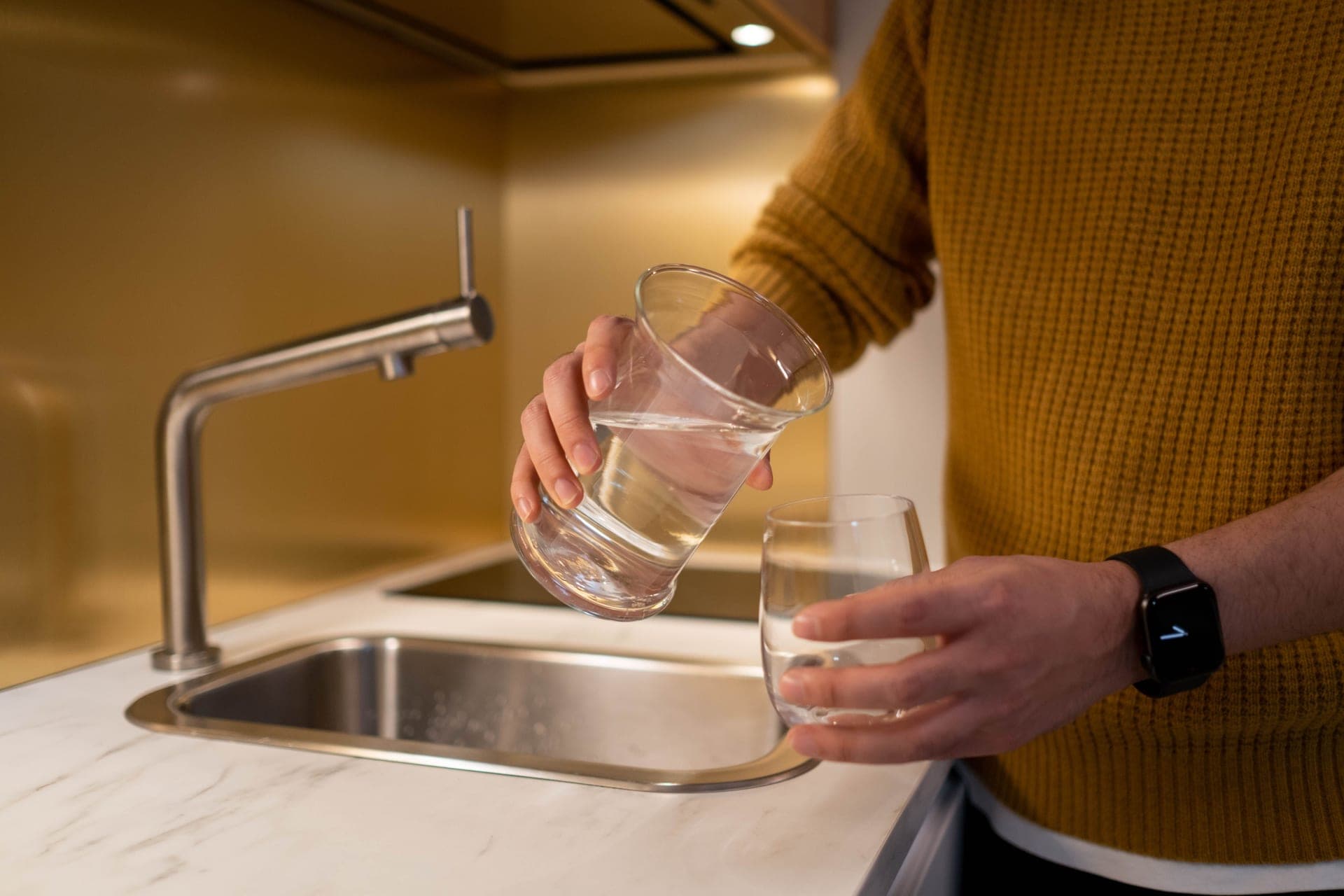
The G3P600 is a tankless under-sink reverse osmosis system rated at 600 GPD with a 2:1 pure-to-drain ratio, certified to NSF/ANSI 58 for TDS reduction and 372 for lead-free materials. It costs meaningfully less than the G3P800 and wastes meaningfully more water.
Quick picks
Tap any row to jump to the full write-up. The button goes straight to the retailer.
| # | Product | Best for | Price |
|---|---|---|---|
| 1 | 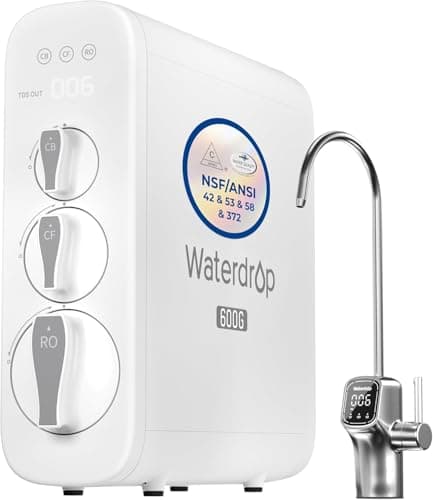 Waterdrop G3P600 Tankless Reverse Osmosis System600 GPD, 8-stage, 2:1 pure-to-drain, NSF/ANSI 58 and 372 certified. Waterdrop G3P600 Tankless Reverse Osmosis System600 GPD, 8-stage, 2:1 pure-to-drain, NSF/ANSI 58 and 372 certified. | The system reviewed | $399.00 - View on Amazon $539.00 — 26% off #ad Price as of October 6, 2026. We may earn a commission. Disclosure. |
| 2 | 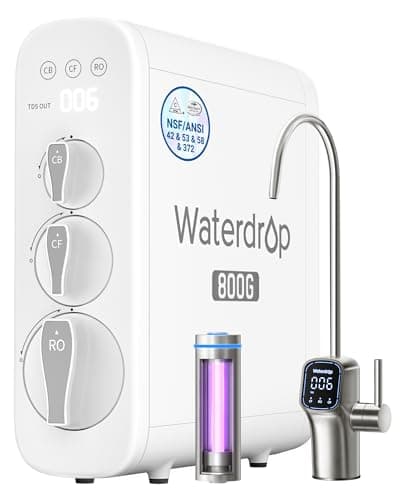 Waterdrop G3P800 Tankless Reverse Osmosis System800 GPD and a 3:1 drain ratio, with a wider certified claim list. Waterdrop G3P800 Tankless Reverse Osmosis System800 GPD and a 3:1 drain ratio, with a wider certified claim list. | Spend more, waste less | $699.00 - View on Amazon $999.00 — 30% off #ad Price as of October 6, 2026. We may earn a commission. Disclosure. |
| 3 | 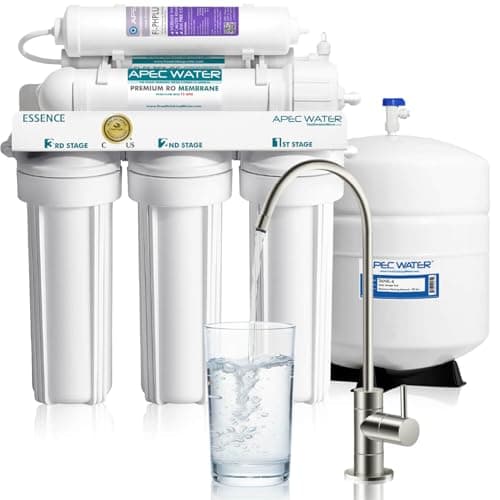 APEC ROES-PH75 Essence 6-Stage Alkaline RO SystemConventional tank RO with a remineralizing stage and no power requirement. APEC ROES-PH75 Essence 6-Stage Alkaline RO SystemConventional tank RO with a remineralizing stage and no power requirement. | If you do not want a plug | $189.99 - View on Amazon $294.99 — 36% off #ad Price as of October 6, 2026. We may earn a commission. Disclosure. |
What it is
The G3P600 is the middle of Waterdrop's tankless line. Tankless means there is no pressure tank taking up half the cupboard: a pump pushes water through the membrane on demand, so the system is a slim box roughly the size of a briefcase standing on its end — 18.11 by 5.67 by 17.73 inches, 15.44 pounds. It produces 600 gallons a day, which works out at 0.42 gallons a minute, and Waterdrop quotes about eight seconds to fill a cup.
That is the entire appeal of this tier, and it is a real one. A conventional reverse osmosis system stores filtered water in a bladder tank and refills slowly; a tankless one gives you a normal-feeling stream and gives you the cupboard back. The reverse osmosis roundup covers that trade in full.
The specification that decides this purchase
The G3P600 has a 2:1 pure-to-drain ratio. The G3P800 above it has 3:1. Both numbers are published by Waterdrop and both are good by the standards of reverse osmosis, where older tank systems commonly ran at 1:3 in the wrong direction. But the gap between 2:1 and 3:1 is not cosmetic.
| G3P600 | G3P800 | |
|---|---|---|
| Rated production | 600 GPD | 800 GPD |
| Pure-to-drain ratio | 2:1 | 3:1 |
| Stages | 8 | 10 |
| Certified standards | NSF/ANSI 58 and 372 (Waterdrop's NSF page) | NSF/ANSI 42, 53, 58 and 372 (Waterdrop's NSF page) |
| Sediment / carbon filter | 550 gallons, about 6 months | 550 gallons, about 6 months |
| Carbon block filter | 1,100 gallons, about 12 months | 1,100 gallons, about 12 months |
| RO membrane | 2,200 gallons, about 24 months | 2,200 gallons, about 24 months |
| Power required | Yes | Yes |
Run the arithmetic on a household that drinks and cooks with two gallons of filtered water a day. At 2:1, producing those two gallons sends one gallon to the drain. At 3:1 it sends two thirds of a gallon. The difference is about 120 gallons a year — not enough to matter on a water bill in most of the country, and enough to matter a great deal if you are on a meter in a drought state or on a septic field you are trying not to overload.
What the certification actually says
Waterdrop's own certification page lists the G3P600 under NSF/ANSI 58 and NSF/ANSI 372, and separately notes 42 and 53 for the G3-series. The retail listing for this model claims 42, 53, 58 and 372. Those are not the same statement, and the difference is worth understanding rather than glossing over.
- 58 is the reverse osmosis standard. The core claim under it is total dissolved solids reduction, and individual contaminant claims — fluoride, arsenic, hexavalent chromium — are optional within it. A system can be honestly 58-certified and never have been tested for any of them.
- 372 is a materials standard: no more than a 0.25% weighted average of lead in the wetted parts. It says nothing about what the system removes.
- Neither number tells you about PFAS. In NSF's own database the PFOA reduction claim sits under standard 53, not 58 — the PFAS question has its own page for exactly this reason.
The Waterdrop brand page sets out how the company's certifications are split between NSF and IAPMO R&T, and why searching one database and finding nothing proves less than it appears to.
Living with it
Installation. You need three things under the sink: a drain connection, a one-inch hole for the faucet — an existing soap dispenser hole usually works — and a power outlet. The last one stops more installs than anything else on this site. Waterdrop supplies a 90-inch cable, which reaches further than most, but an older kitchen with no under-sink socket needs an electrician before it needs a filter.
Noise and vibration. A pump runs whenever you draw water. It is not loud, but it is not a silent gravity system either, and Waterdrop asks for about an inch of clearance from the cabinet wall so the case does not buzz against it.
Cartridges. Three of them, on a 6, 12 and 24-month rotation, and they are proprietary. That is the standard bargain in this category and it is the number to check before buying, not after — what reverse osmosis actually costs runs the five-year total for systems like this one.
Minerals. Reverse osmosis takes calcium and magnesium out along with everything else. Whether that matters is a longer argument than it looks — we went through it here — but if you want them back, this model has no remineralizing stage and the systems that do are a separate shortlist.
Who should buy it
Buy the G3P600 if your water is on a municipal supply, your cabinet is tight, you have an outlet, and the difference in purchase price against the 800 is money you would rather keep. It is the same industrial design, the same cartridge rotation and the same tankless convenience.
Buy the G3P800 instead if you are filtering a lot of water, if your water is metered and expensive, or if you want the broader certification wording. Buy neither if you are on a well: Waterdrop's own specification page says this system is not recommended for well water, and well systems need sediment handling first.
The cost-per-gallon math
Two gallons of filtered water a day is about 730 gallons a year. The membrane is rated for 2,200 gallons, so it lasts roughly three years of drinking water — but Waterdrop rates it at 24 months, and the month figure is the one to follow, because a membrane sitting in chlorinated water ages whether you drink through it or not.
At 2:1, those 730 gallons send about 365 gallons to the drain each year. At the 800's 3:1 it would be about 243. Whether 120 gallons a year is worth the price difference is a local question: it is pocket change on most municipal bills and a genuine consideration on a septic system.
We show the arithmetic rather than a verdict so you can redo it with the price you actually pay. Filter prices move; the rated capacities above do not.
The picks in full
The system reviewed
Waterdrop G3P600 Tankless Reverse Osmosis System
Waterdrop
The G3P800's smaller sibling: same slim tankless body, same cartridge rotation, 600 gallons a day instead of 800. The specification that actually changes is the one people skim — it sends two gallons to the drain for every three it makes, where the 800 sends one.
Certification status
Waterdrop's certification page lists the G3P600 under NSF/ANSI 58 for reverse osmosis performance and NSF/ANSI 372 for lead-free materials, and lists 42 and 53 for the G3 series; the retail listing claims 42, 53, 58 and 372. Note that fluoride, arsenic and hexavalent chromium claims are optional within NSF/ANSI 58, so a 58 certification alone does not mean a system was tested for any of them.
Published specifications
| Rated production | 600 GPD, 0.42 gpm |
|---|---|
| Pure-to-drain ratio | 2:1 |
| Format | Tankless — no pressure tank |
| Stages | 8, with a 0.0001 micron membrane |
| Sediment and carbon filter | 550 gallons / about 6 months |
| Carbon block filter | 1,100 gallons / about 12 months |
| RO membrane | 2,200 gallons / about 24 months |
| Dimensions | 18.11" x 5.67" x 17.73", 15.44 lb |
| Installation | Power outlet, a 1-inch faucet hole and a drain connection |
What we like
- Tankless, so it gives back the cupboard space a pressure tank occupies
- Long cartridge intervals: 6, 12 and 24 months across the three filters
- Fast enough that it feels like a tap rather than a tank refilling
What we do not
- 2:1 pure-to-drain against the G3P800's 3:1 — it wastes half again as much water
- Needs a power outlet under the sink, which is the most common reason this install stalls
- Proprietary cartridges, so Waterdrop sets the replacement price for the life of the system
- Waterdrop states it is not recommended for well water
- No remineralizing stage, so the water arrives with almost no mineral content
Skip it if
Wells, cabinets with no outlet, and anyone who cares more about wastewater than about the purchase price — the G3P800 is the same machine with a better drain ratio.
$539.00 — 26% off
#ad Price as of October 6, 2026. We may earn a commission. Disclosure.
Spend more, waste less
Waterdrop G3P800 Tankless Reverse Osmosis System
Waterdrop
Tankless reverse osmosis that gives back the cupboard a pressure tank would eat, fills a glass without the pause, and sends markedly less water down the drain than a classic tank system.
Certification status
Certified to NSF/ANSI 42 for chlorine reduction, NSF/ANSI 53 and 58 for TDS, fluoride, cadmium, hexavalent chromium and selenium, and NSF/ANSI 372 for lead-free materials.
Published specifications
| Output | 800 GPD |
|---|---|
| Pure-to-drain ratio | 3:1 |
| Format | Tankless — no pressure tank |
| Certified standards | NSF/ANSI 42, 53, 58, 372 |
| Installation | Two holes: smart LED faucet and drain |
| Faucet | Included, with TDS display |
What we like
- No pressure tank, so it fits cabinets a tank system cannot
- 3:1 pure-to-drain is far better than the ratio typical of older reverse osmosis
- 800 GPD means no waiting for a tank to refill
What we do not
- Needs a power outlet under the sink — a real constraint in older kitchens
- Proprietary filter cartridges, so you are tied to Waterdrop's pricing
- Requires drilling for the included faucet unless you have a spare hole
Skip it if
Renters, and anyone with no outlet under the sink. It is a permanent, powered installation — a countertop unit is the answer if you cannot commit to that.
$999.00 — 30% off
#ad Price as of October 6, 2026. We may earn a commission. Disclosure.
Where these specifications came from
If you do not want a plug
APEC ROES-PH75 Essence 6-Stage Alkaline RO System
APEC Water Systems
A conventional tank system that uses ordinary 10-inch cartridges rather than proprietary pods, which keeps the ten-year running cost sane. The sixth stage puts minerals back for people who dislike RO's flat taste.
Certification status
WQA Gold Seal certified.
Published specifications
| Output | 75 GPD at 60 psi and 77 degrees F |
|---|---|
| Tank capacity | 4 gallons |
| Stages | 6, including a calcite remineralization stage |
| Feed pressure | 40-85 psi |
| Max feed TDS | 2,000 ppm |
| System dimensions | 15.5" L x 5.25" W x 17.5" H, plus a separate tank |
| Certification | WQA Gold Seal |
What we like
- Standard-size cartridges, so replacements are cheap and sourceable from many brands
- Calcite stage restores minerals and lifts the pH of reverse-osmosis water
- No electricity required
What we do not
- The 4-gallon tank plus housing takes most of an under-sink cabinet
- Slower than tankless systems, and it pauses while the tank refills
- Conventional wastewater ratio, well short of the G3P800's 3:1
Skip it if
Small cabinets. Measure before you buy — the tank alone is roughly 11 x 11 x 15 inches, and people discover this after delivery.
$294.99 — 36% off
#ad Price as of October 6, 2026. We may earn a commission. Disclosure.
Where these specifications came from
Questions people actually ask
Is the Waterdrop G3P600 NSF certified?
Waterdrop's certification page lists the G3P600 under NSF/ANSI 58 for reverse osmosis performance and NSF/ANSI 372 for lead-free materials, and lists 42 and 53 for the G3 series. Note what 58 does and does not cover: total dissolved solids reduction is the core claim, and individual contaminant claims such as fluoride or hexavalent chromium are optional within the standard.
What is the difference between the G3P600 and the G3P800?
Production and water efficiency. The G3P600 is rated at 600 GPD with a 2:1 pure-to-drain ratio and eight stages; the G3P800 is 800 GPD with 3:1 and ten stages. The cartridges and their rated lives are the same. For most households the deciding factor is the drain ratio, which is twice as wasteful on the 600.
Does the Waterdrop G3P600 need electricity?
Yes. Every tankless reverse osmosis system needs mains power to run the pump that pushes water through the membrane on demand. Waterdrop supplies a 90-inch cable. If there is no outlet in the sink cabinet, this is an electrician's job before it is a plumber's.
Can I use the G3P600 on well water?
Waterdrop's own specification page says it is not recommended for well water, citing high particle content and variable composition. A well needs sediment and iron handling upstream of any membrane, which is what the dedicated well systems on this site are built around.
How long do the filters last?
Waterdrop rates the CF sediment and carbon filter at 550 gallons or six months, the CB carbon block at 1,100 gallons or twelve months, and the RO membrane at 2,200 gallons or 24 months. They are proprietary cartridges, so the replacement price is set by Waterdrop for the life of the system.