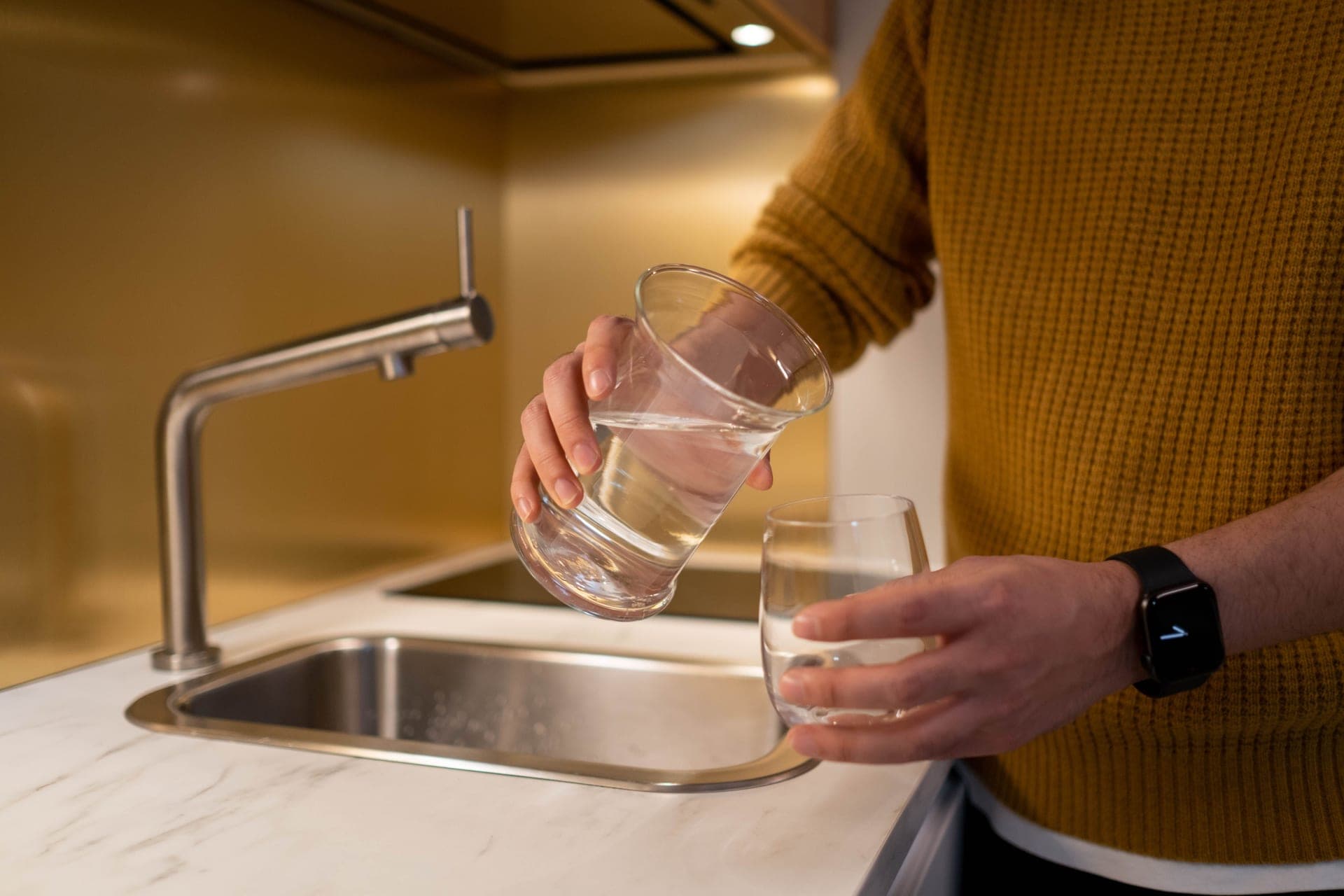
Both are 800 GPD tankless reverse osmosis systems for under a sink. The Waterdrop G3P800 is certified by IAPMO R&T to NSF/ANSI 42, 53 and 58; iSpring publishes no certification for the RO800G, though it certifies its own RCC7AK. That gap is most of the price difference.
Quick picks
Tap any row to jump to the full write-up. The button goes straight to the retailer.
| # | Product | Best for | Price |
|---|---|---|---|
| 1 | 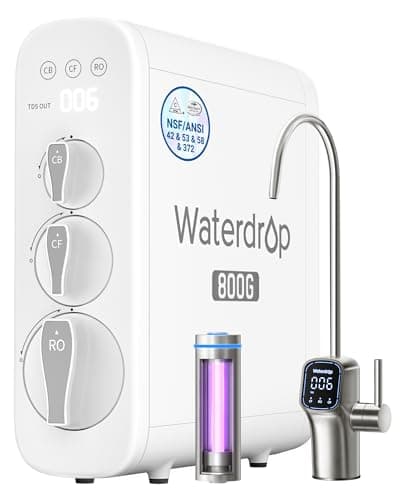 Waterdrop G3P800 Tankless Reverse Osmosis SystemIAPMO R&T certified to NSF/ANSI 42, 53 and 58, with a published 3:1 pure-to-drain ratio. Waterdrop G3P800 Tankless Reverse Osmosis SystemIAPMO R&T certified to NSF/ANSI 42, 53 and 58, with a published 3:1 pure-to-drain ratio. | If certification matters | $699.00 - View on Amazon $999.00 — 30% off #ad Price as of October 6, 2026. We may earn a commission. Disclosure. |
| 2 | 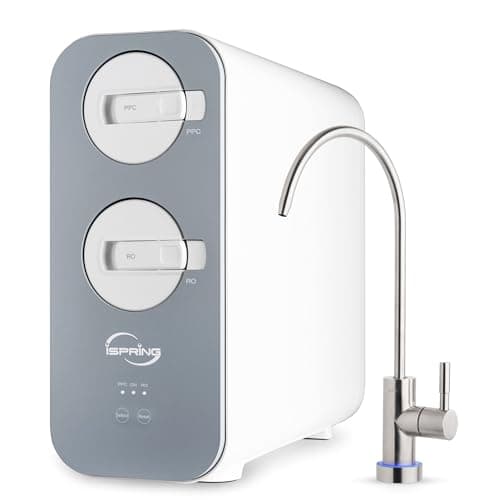 iSpring RO800G Tankless Reverse Osmosis SystemSame 800 GPD format at a lower price, 2.5:1 published ratio, and no certification listing. iSpring RO800G Tankless Reverse Osmosis SystemSame 800 GPD format at a lower price, 2.5:1 published ratio, and no certification listing. | If the budget decides | $417.33 - View on Amazon $490.99 — 15% off #ad Price as of October 6, 2026. We may earn a commission. Disclosure. |
| 3 | 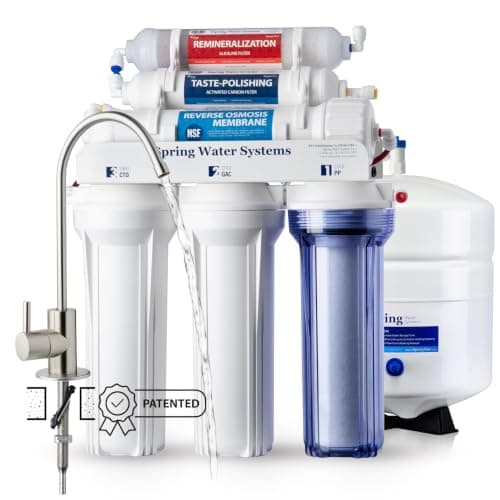 iSpring RCC7AK 6-Stage Reverse Osmosis SystemNSF/ANSI 58 certified with published figures — the tank format, and the cheapest certified route. iSpring RCC7AK 6-Stage Reverse Osmosis SystemNSF/ANSI 58 certified with published figures — the tank format, and the cheapest certified route. | iSpring's certified option | $198.75 - View on Amazon $234.99 — 15% off #ad Price as of October 6, 2026. We may earn a commission. Disclosure. |
The comparison that decides it
| Waterdrop G3P800 | iSpring RO800G | |
|---|---|---|
| Certification | IAPMO R&T to NSF/ANSI 42, 53 and 58 | None published for this model |
| Output | 800 GPD | 800 GPD |
| Pure-to-drain | 3:1 published | Up to 2.5:1 published |
| Format | Tankless, pumped | Tankless, pumped |
| Needs power | Yes | Yes |
| Named claims | TDS, fluoride, cadmium, chromium, selenium, lead-free materials | TDS and PFAS, as listing claims |
| Flow | Fast fill | Up to 0.6 gpm |
| Cartridges | Proprietary | Proprietary |
Strip out the marketing and these are the same machine in two boxes: a pumped membrane system producing 800 gallons a day with no pressure tank, sized for a family, needing an outlet. The specifications that differ — a 3:1 ratio against up to 2.5:1, fill speeds measured in seconds — are real but small.
The difference that is not small is the certification line.
What the certification gap actually means
Waterdrop states the G3P800 is certified by IAPMO R&T to NSF/ANSI 42, 53 and 58 for the claims on its performance data sheet. That is a listing body standing behind named claims, subject to ongoing surveillance — and it is why the system does not appear in NSF's own database, as the Waterdrop brand page explains.
For the iSpring RO800G we could find no certification listing at all. That is not an accusation that the machine does not work — reverse osmosis membranes are well-understood and iSpring is an established manufacturer. It is an observation about evidence, and it is sharpened by the fact that iSpring certifies its own RCC7AK to NSF/ANSI 58 and publishes per-contaminant figures for it. The company knows how to certify a system. This model is not one it chose to certify.
The practical consequence: the RO800G's TDS and PFAS claims have nothing behind them but the listing copy. If you are buying reverse osmosis because a test named a contaminant — fluoride, nitrate, arsenic — you want the certification that names it.
Where the iSpring genuinely wins
Price, and it is not a small gap. For a household whose reason for buying is taste, dissolved solids on a high-TDS supply, or a general preference for filtered water rather than a specific test result, the RO800G delivers the same format and the same output for meaningfully less money.
There is an honest version of that purchase: you are buying a membrane system, membranes reject dissolved solids by physics rather than by certification, and you accept that the specific claims are unverified. Plenty of sensible buying happens on exactly that basis.
What you should not do is buy it because of the PFAS wording on the listing. If PFAS is the reason, the certified PFAS options are a different shortlist, and one of them is cheaper than either machine here.
The third option neither brand leads with
If certification is what you care about and the budget is what is stopping you, the answer is not either tankless unit. It is iSpring's own RCC7AK: NSF/ANSI 58 certified, with published per-contaminant reductions, at a price below both.
What you give up is the tankless format — the RCC7AK has a pressure tank that eats cabinet space and a slower refill — and what you gain is that it needs no power and costs less. The reverse osmosis roundup compares all three formats properly.
Wastewater, in context
Both systems publish ratios in the product's favor, which is the meaningful improvement tankless RO brought to the category — conventional tank systems commonly send several gallons to the drain for each gallon produced.
A published 3:1 against up to 2.5:1 is a genuine difference over a decade on a metered supply or a septic system, and it is a rounding error next to the difference between either of these and an old tank system. Do not let it decide the purchase; let the certification decide it.
How to choose in one paragraph
If a laboratory result named a contaminant, buy the Waterdrop: it is the one whose claims a listing body audits. If you want certified reverse osmosis at the lowest price and can live with a tank, buy the iSpring RCC7AK. If you want maximum output per dollar and are relaxed about unverified claims, the RO800G is a legitimate purchase made with your eyes open. And if there is no outlet under your sink, none of this applies — buy a tank system.
The cost-per-gallon math
Compare these over ten years, not at the till.
Both are proprietary-cartridge systems, so the manufacturer sets your running cost for the life of the unit: pre-filters roughly annually, a membrane every few years. Price both sets before you choose, because the cheaper machine is not automatically the cheaper decade.
Then add the wastewater. At a published 3:1 against 2.5:1, the difference on a household drinking 200 gallons a year is modest; on a septic system or a metered supply in a dry state it is worth checking rather than assuming.
We show the arithmetic rather than a verdict so you can redo it with the price you actually pay. Filter prices move; the rated capacities above do not.
The picks in full
If certification matters
Waterdrop G3P800 Tankless Reverse Osmosis System
Waterdrop
Tankless reverse osmosis that gives back the cupboard a pressure tank would eat, fills a glass without the pause, and sends markedly less water down the drain than a classic tank system.
Certification status
Certified to NSF/ANSI 42 for chlorine reduction, NSF/ANSI 53 and 58 for TDS, fluoride, cadmium, hexavalent chromium and selenium, and NSF/ANSI 372 for lead-free materials.
Published specifications
| Output | 800 GPD |
|---|---|
| Pure-to-drain ratio | 3:1 |
| Format | Tankless — no pressure tank |
| Certified standards | NSF/ANSI 42, 53, 58, 372 |
| Installation | Two holes: smart LED faucet and drain |
| Faucet | Included, with TDS display |
What we like
- No pressure tank, so it fits cabinets a tank system cannot
- 3:1 pure-to-drain is far better than the ratio typical of older reverse osmosis
- 800 GPD means no waiting for a tank to refill
What we do not
- Needs a power outlet under the sink — a real constraint in older kitchens
- Proprietary filter cartridges, so you are tied to Waterdrop's pricing
- Requires drilling for the included faucet unless you have a spare hole
Skip it if
Renters, and anyone with no outlet under the sink. It is a permanent, powered installation — a countertop unit is the answer if you cannot commit to that.
$999.00 — 30% off
#ad Price as of October 6, 2026. We may earn a commission. Disclosure.
Where these specifications came from
If the budget decides
iSpring RO800G Tankless Reverse Osmosis System
iSpring
The cheapest way into 800 GPD tankless reverse osmosis, and the reason it is cheaper is visible in the paperwork: iSpring certifies its RCC7AK and does not publish a certification for this model.
Certification status
We could find no NSF/ANSI certification published for the RO800G, which is notable because iSpring publishes one for its own RCC7AK (NSF/ANSI 58). The listing claims TDS and PFAS reduction; without a certification listing those are manufacturer claims, not verified performance.
Published specifications
| Output | 800 GPD |
|---|---|
| Pure-to-drain ratio | Up to 2.5:1 |
| Format | Tankless — needs a power outlet under the sink |
| Flow | Up to 0.6 gpm |
| Stages | 3-stage, including PP and carbon block composite |
| Certification | None published for this model |
What we like
- Tankless output at a meaningfully lower price than the certified alternatives
- 2.5:1 published pure-to-drain is far better than conventional tank systems
- Filter-life reminders and automatic pre-flush, so maintenance is not guesswork
What we do not
- No published NSF/ANSI certification, in a category where the direct competitor has three
- The PFAS and TDS claims have no listing behind them
- Needs an outlet under the sink, which older kitchens frequently do not have
- Proprietary cartridges, so iSpring sets the running cost
Skip it if
Anyone buying reverse osmosis for a specific contaminant they can name. If the reason is fluoride, nitrate or arsenic, buy the system whose certification names it.
$490.99 — 15% off
#ad Price as of October 6, 2026. We may earn a commission. Disclosure.
Where these specifications came from
iSpring's certified option
iSpring RCC7AK 6-Stage Reverse Osmosis System
iSpring
The value pick of the reverse-osmosis tier: a WQA Gold Seal system with an alkaline stage, usually at the lowest price of anything here that carries a real certification.
Certification status
Certified against NSF/ANSI 58 for TDS reduction and carries the WQA Gold Seal, with 97.2% TDS removal certified.
Published specifications
| Output | 75 GPD |
|---|---|
| Stages | 6, including alkaline remineralization |
| Certified TDS reduction | 97.2% |
| Feed pressure | 45-70 psi |
| Feed temperature | 40-100 degrees F |
| Assembled size | 15.5" deep x 19.5" high, 25 lb |
| Certification | NSF/ANSI 58, WQA Gold Seal |
What we like
- Certified performance at the lowest price in the tier
- Push-fit tubing makes a first-time install genuinely manageable
- Alkaline stage included rather than sold as an upgrade
What we do not
- Narrow 45-70 psi feed window — low-pressure homes may need a booster pump
- Tank plus housing needs real cabinet depth
- Conventional reverse-osmosis drain ratio
Skip it if
Homes with feed pressure below 45 psi that will not add a booster pump, and anyone who wants a tankless footprint.
$234.99 — 15% off
#ad Price as of October 6, 2026. We may earn a commission. Disclosure.
Where these specifications came from
Questions people actually ask
Is Waterdrop or iSpring better?
For evidence, Waterdrop: the G3P800 is certified by IAPMO R&T to NSF/ANSI 42, 53 and 58. For price, iSpring's RO800G delivers the same 800 GPD tankless format for less, with no certification listing we could find. The gap in paperwork is most of the gap in price.
Is the iSpring RO800G NSF certified?
We could find no NSF/ANSI certification published for the RO800G. That is notable because iSpring does publish an NSF/ANSI 58 certification for its RCC7AK, so treat the RO800G's TDS and PFAS claims as manufacturer statements rather than verified performance.
Do both systems need electricity?
Yes. Both are pumped tankless units and both need a power outlet under the sink. Older kitchens frequently do not have one, and that rules out the entire tankless format — a tank system such as the iSpring RCC7AK or APEC ROES-PH75 runs on line pressure alone.
Which wastes less water?
Waterdrop publishes a 3:1 pure-to-drain ratio and iSpring publishes up to 2.5:1, both in the product's favor. The difference between them is small; the difference between either and a conventional tank system is large.
Is 800 GPD overkill for a household?
For most, yes in throughput terms — a family drinks a fraction of that. What the high rating actually buys is fill speed, so you are not standing at the tap waiting. If that does not bother you, a 75 GPD certified tank system costs less and does the same filtration job.