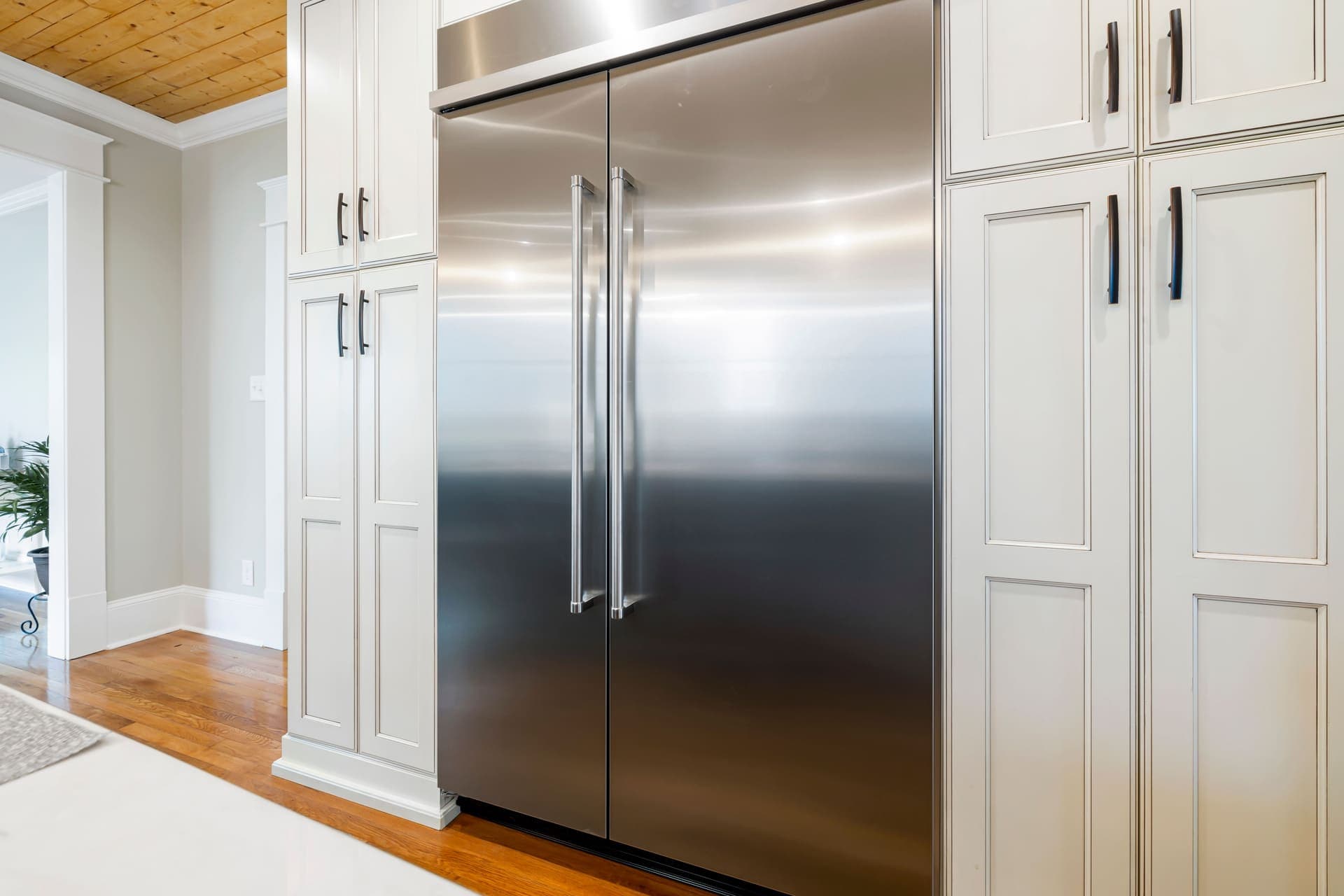
A refrigerator filter is model-specific, so the real choice is not which filter but which version of it: the OEM filter certified to NSF/ANSI 42, 53 and 401, or a cheaper compatible certified to fewer standards or none. On lead and emerging compounds, that difference is the product.
Quick picks
Tap any row to jump to the full write-up. The button goes straight to the retailer.
| # | Product | Best for | Price |
|---|---|---|---|
| 1 | 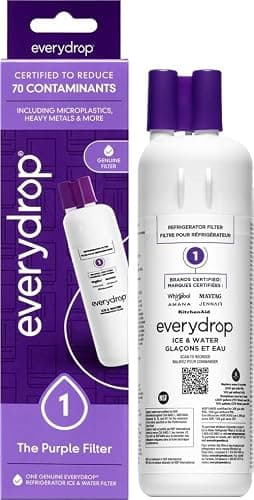 everydrop Filter 1 (EDR1RXD1) Refrigerator FilterCertified by NSF to NSF/ANSI 42, 53 and 401 — lead, pharmaceuticals and microplastics. everydrop Filter 1 (EDR1RXD1) Refrigerator FilterCertified by NSF to NSF/ANSI 42, 53 and 401 — lead, pharmaceuticals and microplastics. | Best for the Whirlpool family | $48.25 - View on Amazon $59.99 — 20% off #ad Price as of October 7, 2026. We may earn a commission. Disclosure. |
| 2 | 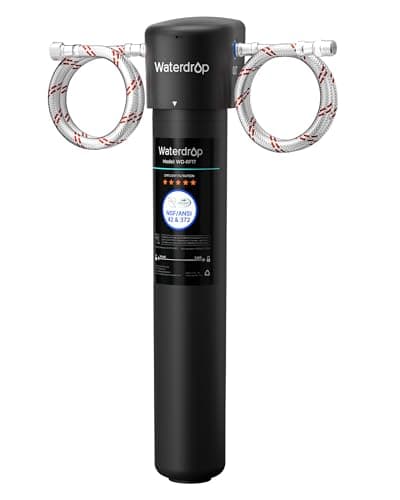 Waterdrop 17UA Direct-Connect Under-Sink FilterDirect-connect under-sink filter rated at 24,000 gallons — roughly three years per cartridge. Waterdrop 17UA Direct-Connect Under-Sink FilterDirect-connect under-sink filter rated at 24,000 gallons — roughly three years per cartridge. | Best way to stop buying them | Check price on Amazon #ad We do not show a price we cannot verify today. We may earn a commission. Disclosure. |
| 3 | 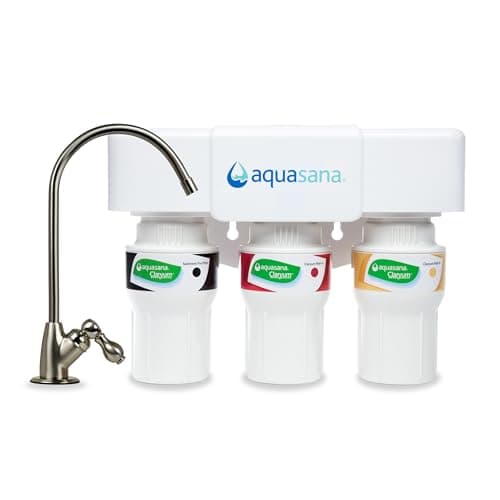 Aquasana Claryum 3-Stage Under-Sink Filter (AQ-5300)Claryum 3-stage certified to NSF/ANSI 42, 53 and 401, at full flow with no wastewater. Aquasana Claryum 3-Stage Under-Sink Filter (AQ-5300)Claryum 3-stage certified to NSF/ANSI 42, 53 and 401, at full flow with no wastewater. | Best certified upgrade at the sink | $154.99 - View on Amazon $349.99 — 56% off #ad Price as of October 7, 2026. We may earn a commission. Disclosure. |
| 4 | 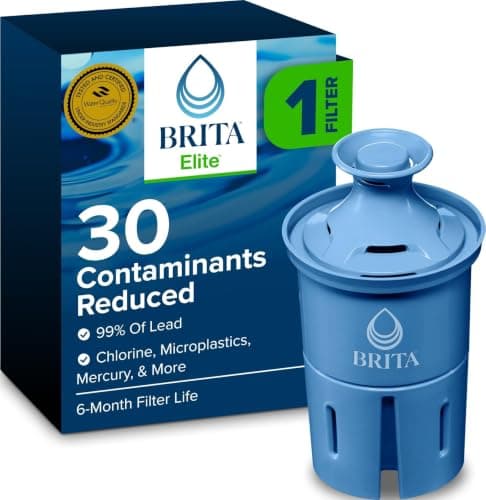 Brita Elite Filter (with any Brita pitcher)If the fridge filter is only there for drinking water, this does the lead claim for less. Brita Elite Filter (with any Brita pitcher)If the fridge filter is only there for drinking water, this does the lead claim for less. | Cheapest certified drinking water | $19.88 - View on Amazon #ad Price as of October 7, 2026. We may earn a commission. Disclosure. |
The choice you actually have
Almost nothing about a fridge filter is a free choice. The housing in your refrigerator accepts one shape of cartridge, so the model is decided by the appliance you already own. What is genuinely open is which version you buy: the manufacturer's own filter, or one of the dozens of compatibles sold beside it at a third of the price.
That decision is worth more than it looks, because the price gap is usually a certification gap.
The criteria, in the order that decides it
- Does it fit? Check the part number stamped on the filter you are replacing, not the model of the fridge. Whirlpool-family filters carry everydrop numbers like EDR1RXD1 alongside OEM codes such as W10295370A.
- Which standards is it certified to, and by whom? NSF/ANSI 42 is taste and odor. 53 is health effects, which is where lead lives. 401 covers emerging compounds. A filter with only a 42 claim is a taste product, whatever the listing implies.
- Is the certification checkable? A named certifying body and a model number can be looked up. "NSF-tested materials" and "meets NSF standards" are phrases that survive scrutiny precisely because they claim nothing.
- Rated life. Fridge filters are quoted in months, universally, and the six-month figure assumes a household size. If your dispenser gets heavy use, the filter is finished sooner than the light on the door thinks.
- Does the fridge even need to be the filter? Covered at the bottom of this page, and it is the question that saves the most money.
OEM against compatible, honestly
| OEM filter (everydrop EDR1RXD1) | Typical compatible | |
|---|---|---|
| Certification | NSF/ANSI 42, 53 and 401 | Often 42 only, sometimes none |
| Lead claim | Covered under 53 | Usually absent |
| Emerging compounds | Covered under 401 | Usually absent |
| Price | Several times higher | The reason people buy it |
| Fit and seal | Designed for the housing | Usually fine, occasionally leaks |
| Who stands behind it | The appliance maker | Varies, sometimes nobody |
Two honest observations. The first: plenty of compatibles hold a genuine NSF/ANSI 42 certification and will improve the taste of your water exactly as advertised, for much less money. If taste is all you wanted, that is a rational purchase. A few go further — Waterdrop's Plus cartridges are listed by NSF under 42, 53 and 401, lead included, while the plainer codes in the same family are listed for taste alone.
The second: if you bought a filtered fridge because of lead in an older home, a 42-certified compatible does not do that job, and the listing will not tell you so. The claim you need is 53, named, with a certifying body attached.
What about the ice maker?
Same line, same filter. The ice maker and the door dispenser are fed from one cold supply that passes through this cartridge, so filtering the ice is not a separate purchase — unless your refrigerator has no cartridge slot at all, in which case an inline filter on the tubing is the only product that fits.
What a certified fridge filter actually covers
The everydrop Filter 1 is certified by NSF to NSF/ANSI 42, 53 and 401, and the listing claims reduction of 70 contaminants including lead, pesticides, pharmaceuticals and 99% of microplastics. That is a broader certified list than most faucet mounts carry, delivered through a fitting you change in ten seconds without tools. The full review reads the certified claim list straight out of NSF's database — thirty-two claims, 200 rated gallons — and works out what that costs per gallon.
For a household whose reason for filtering is lead or general drinking-water quality, a certified fridge filter is a legitimate answer — and because it is plumbed into the cold line, it filters the ice as well, which the pitcher tier never does.
What it does not cover
- Fluoride, nitrate and arsenic. Carbon does not remove any of them, and a fridge filter is a carbon block in a plastic shell. Those need reverse osmosis.
- Hardness. The scale in your kettle is unaffected.
- Everything outside the fridge. The kitchen tap, the bathroom, the shower — all untouched. If the complaint is house-wide, this is the wrong tier.
- PFAS, in most cases. Check for a specific PFOA and PFOS claim rather than assuming; the PFAS roundup lists what is certified.
The cheaper structural answer
Here is the arithmetic nobody in this category puts in front of you. A fridge filter is rated in months and typically replaced twice a year, forever, at OEM prices. A direct-connect under-sink filter such as the Waterdrop 17UA is rated at 24,000 gallons — roughly three years for most households — and it filters the kitchen tap rather than one dispenser.
Many refrigerators can be run with the filter bypassed (a bypass plug, or a setting), which means the under-sink filter can do the work and the fridge stops consuming cartridges. Check your manual before assuming, because some models will not dispense without a filter or a bypass fitted.
Where that works, it is the single biggest saving available in this part of the site: a direct-connect system needs no drilling and installs in about an hour.
Buying without getting counterfeited
- Read the certification sentence, not the headline. A real one names a body and standards. A fake one says the filter was "tested to NSF standards" with no listing.
- Be suspicious of OEM branding at a discount price. Counterfeit everydrop and comparable filters are a known problem; a genuine OEM cartridge at a third of the usual price is usually neither.
- Keep the old cartridge until the new one runs clean. Flush the first few gallons regardless — carbon fines make the first pour grey, and that is normal rather than a fault.
The cost-per-gallon math
Fridge filters are the most expensive filtered water per gallon in the house, and the month-based interval hides it.
Take the OEM cartridge price and divide by the gallons your dispenser actually delivers in six months — for most households that is a few hundred gallons at most, including ice.
Then price a direct-connect under-sink cartridge rated at 24,000 gallons against the same consumption. The per-gallon gap is not close, and it is the reason this page ends with a recommendation that is not a fridge filter at all.
The honest exception: if your fridge will not dispense without a filter, you are buying cartridges regardless, and the only question left is whether they are certified for what you actually care about.
We show the arithmetic rather than a verdict so you can redo it with the price you actually pay. Filter prices move; the rated capacities above do not.
The picks in full
Best for the Whirlpool family
everydrop Filter 1 (EDR1RXD1) Refrigerator Filter
everydrop by Whirlpool
The OEM filter, certified to three NSF standards, sold beside a wall of cheaper compatibles that are certified to none of them. That gap is the whole decision in this category.
Certification status
Certified by NSF International to NSF/ANSI 42, 53 and 401, with the listing held by Whirlpool Corporation. NSF's entry for the EDR1RXD1 element records 200 gallons at a 0.5 gpm service flow, with chlorine, taste, odor and particulate claims under 42; a nineteen-claim health list under 53 including lead, cysts, asbestos, turbidity, benzene, atrazine and the VOC group; and ten emerging compounds under 401 including microplastics and bisphenol A. everydrop's own '70 contaminants' figure counts the individual compounds inside that VOC group.
Published specifications
| Certified standards | NSF/ANSI 42, 53 and 401 (NSF listing) |
|---|---|
| Rated life | 200 gallons / 6 months |
| Service flow | 0.5 gpm |
| Media | Coconut shell carbon |
| Fits | Whirlpool, Maytag, KitchenAid, Amana, JennAir — check your model |
| Also sold as | W10295370A, WHR1RXD1 |
| Lead / cysts / asbestos | All three in the NSF/ANSI 53 claim list |
| Microplastics | In the NSF/ANSI 401 claim list |
| No claim for | Fluoride, nitrate, arsenic, PFAS |
What we like
- Three certified standards, including 53 for lead and 401 for emerging compounds
- Designed for the housing it goes in, so the bypass and seal behave as the fridge expects
- Certification status is checkable in NSF's own listings rather than taken on trust
What we do not
- Several times the price of the compatibles sitting next to it in search results
- 200 rated gallons is the shortest certified filter life most households own
- Only fits the Whirlpool family — the wrong filter for an LG, Samsung or GE fridge
Skip it if
Anyone whose refrigerator is not in the Whirlpool family. Fridge filters are model-specific hardware, and the right answer is whichever certified filter fits your housing.
$59.99 — 20% off
#ad Price as of October 7, 2026. We may earn a commission. Disclosure.
Where these specifications came from
Best way to stop buying them
Waterdrop 17UA Direct-Connect Under-Sink Filter
Waterdrop
The answer to the most common under-sink objection: it plumbs into the cold line feeding the faucet you already have, so there is no extra tap, no drilled counter and nothing visible.
Certification status
The 17 series is certified against NSF/ANSI 42 for chlorine reduction and NSF/ANSI 372 for lead-free materials. Verify the listing for the specific variant before buying — the 17UB (dedicated faucet) and 17UA (direct connect) are listed separately.
Published specifications
| Rated capacity | 24,000 gallons / about 3 years |
|---|---|
| Format | Direct connect to the existing cold line — no separate faucet |
| Certified standards | NSF/ANSI 42, 372 |
| Connection | Quick-connect fittings, no threading |
What we like
- No counter drilling and no second tap — the single biggest objection to under-sink filtration, removed
- 24,000-gallon rated capacity means a filter change roughly every three years
- Quick-connect install is a genuinely realistic first-time DIY job
What we do not
- NSF/ANSI 42 is an aesthetic standard — chlorine, taste and odor, not a health claim
- Filters everything the tap delivers, including draws for cooking, which shortens life
- Not a lead or PFAS answer at this certification level
Skip it if
Anyone with a health-driven contaminant worry. NSF/ANSI 42 covers taste and odor. If lead or PFAS is the reason you are shopping, this is the wrong tier of certification.
#ad We do not show a price we cannot verify today. We may earn a commission. Disclosure.
Where these specifications came from
Best certified upgrade at the sink
Aquasana Claryum 3-Stage Under-Sink Filter (AQ-5300)
Aquasana
Carbon-block filtration rather than reverse osmosis: it keeps the minerals, wastes nothing, and fits where a reverse-osmosis system will not. It also cannot do what RO does for fluoride or nitrate.
Certification status
WQA tested and certified to NSF/ANSI 42, 53 — which includes the P473 protocol for PFOA and PFOS — and 401, for the reduction of 78 contaminants. Aquasana publishes 99.6% for lead and microplastics, 99.7% for PFOA and PFOS, 99.99% for cysts and 97% for chlorine across the Claryum 3-Stage line.
Published specifications
| Filter life | 600 gallons / up to 6 months |
|---|---|
| Certified standards | NSF/ANSI 42, 53 (includes P473), 401 (WQA) |
| Flow rate | 0.5 gpm |
| Wastewater | None |
| Format | 3-stage carbon block with a dedicated faucet |
| Contaminants claimed | 78 |
| Lead / PFOA and PFOS | 99.6% / 99.7% |
What we like
- No drain line, no wastewater, no tank — much easier to install than reverse osmosis
- NSF/ANSI 401 certification covers pharmaceutical-class trace compounds
- Full flow rate, unlike reverse osmosis, so filling a pot is not a project
What we do not
- Not reverse osmosis: no meaningful fluoride, nitrate or TDS reduction
- 600-gallon filter life is short next to an inline system's tens of thousands
- Proprietary cartridges
Skip it if
Anyone whose problem is fluoride, nitrate or total dissolved solids. Carbon block does not remove those; you need reverse osmosis for that job.
$349.99 — 56% off
#ad Price as of October 7, 2026. We may earn a commission. Disclosure.
Cheapest certified drinking water
Brita Elite Filter (with any Brita pitcher)
Brita
The cheapest route to an NSF/ANSI 53 lead certification. It drops into a pitcher most households already have, and it is emphatically not the same filter as the white Brita Standard.
Certification status
Certified to NSF/ANSI 42, 53 and 401. The lead certification belongs to the Elite (blue) filter only — the Standard (white) filter is certified to NSF/ANSI 42 for taste and odor and is not certified for lead. Per Brita's January 2026 performance data sheet the Elite is not certified for PFOA or PFOS, and no Brita pitcher filter is certified for fluoride.
Published specifications
| Rated filter life | 120 gallons / about 6 months |
|---|---|
| Standard filter life, for comparison | 40 gallons / about 2 months |
| Certified standards | NSF/ANSI 42, 53, 401 |
| Lead | Certified under NSF/ANSI 53 |
| PFOA / PFOS | Not certified (January 2026 performance data sheet) |
| Fluoride | Not certified, not claimed |
What we like
- Genuine NSF/ANSI 53 lead certification at the lowest entry price of anything on this site
- Fits Brita pitchers and dispensers already in millions of kitchens — no new hardware
- Three times the rated life of the Standard filter, which changes the cost-per-gallon math
What we do not
- Not certified for PFOA or PFOS, so it is the wrong answer to a PFAS worry
- No fluoride claim at all
- Slow gravity flow, like every pitcher
Skip it if
Anyone whose actual worry is PFAS or fluoride. The Elite is not certified for either, and buying it for those is buying the wrong thing.
#ad Price as of October 7, 2026. We may earn a commission. Disclosure.
Where these specifications came from
Questions people actually ask
Are expensive OEM refrigerator filters worth it?
If you need a health claim, yes. The everydrop Filter 1 is certified to NSF/ANSI 42, 53 and 401, so lead and emerging compounds are covered. Many cheap compatibles carry a 42 certification only, which covers taste and odor and nothing else — fine if taste was the reason, not fine if lead was.
Do aftermarket fridge filters work?
The certified ones do what their certification says. The problem is that a listing can copy the OEM part number, which tells you the housing it fits and nothing about what it removes. Look for named standards and a named certifying body; absent those, assume no health claim.
How often should a refrigerator water filter be changed?
Manufacturers quote six months, and that assumes an average household. Heavy dispenser and ice use reaches the rated capacity sooner, and a noticeable drop in dispenser flow is the practical signal regardless of what the indicator light says.
Does a fridge filter remove fluoride or nitrate?
No. It is a carbon block, and carbon does not remove fluoride, nitrate or arsenic by any mechanism. Those require reverse osmosis at the tap.
Can I bypass the fridge filter and filter at the sink instead?
Often yes, with a bypass plug — check your manual, because some models will not dispense without one fitted. Where it works, a direct-connect under-sink filter rated in tens of thousands of gallons replaces a cartridge you were buying twice a year, and it filters the kitchen tap too.