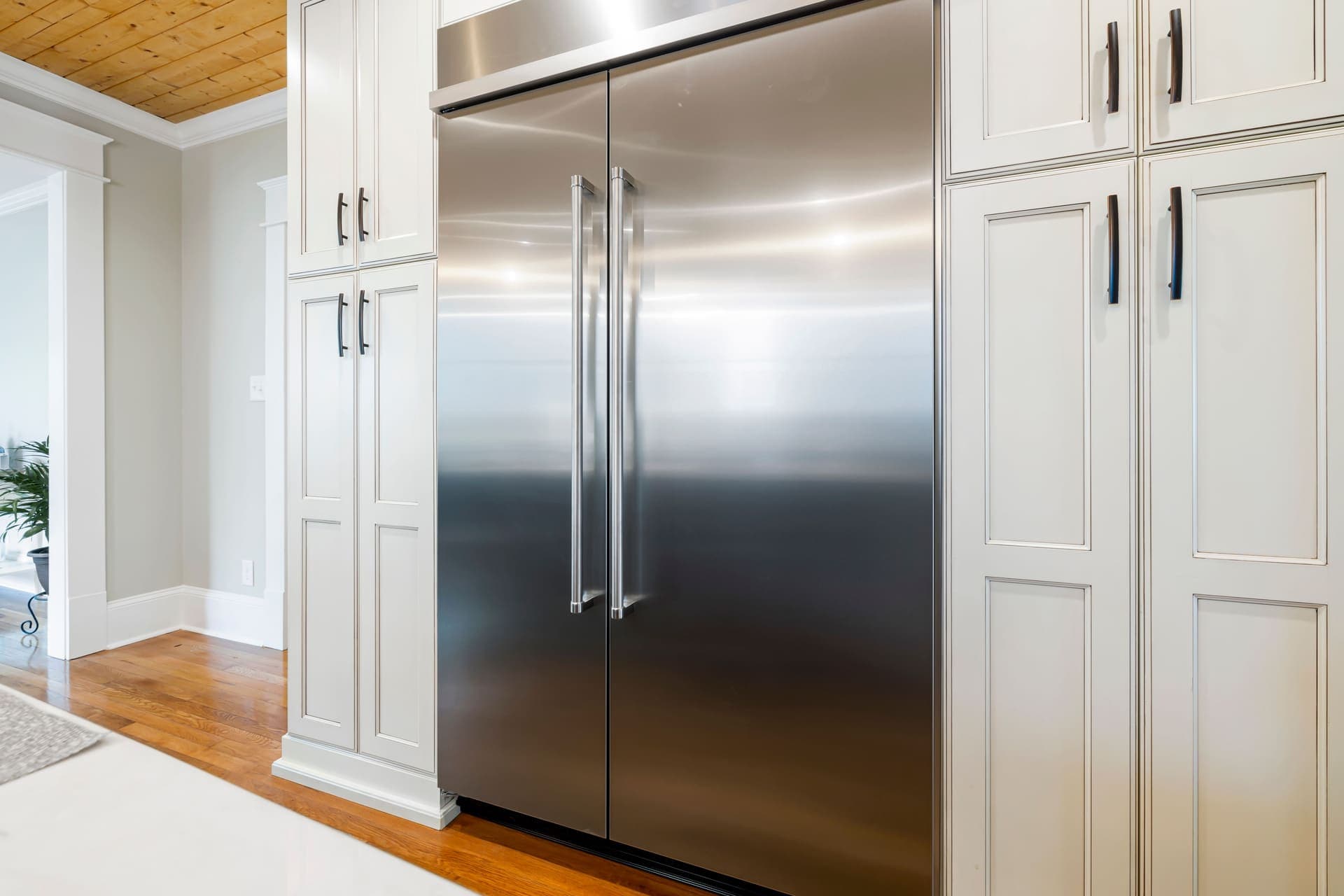
An ice maker is fed by the same cold line as the water dispenser, so filtering it means one of two things: the certified cartridge inside the fridge, or an inline filter spliced into the quarter-inch tubing behind it. Inline filters are almost always certified for chlorine and taste only.
Quick picks
Tap any row to jump to the full write-up. The button goes straight to the retailer.
| # | Product | Best for | Price |
|---|---|---|---|
| 1 | 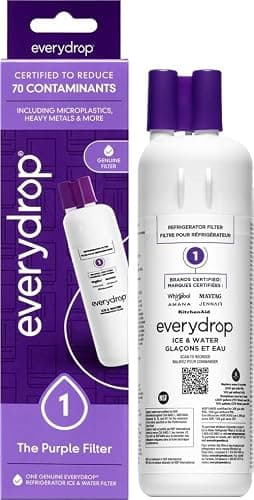 everydrop Filter 1 (EDR1RXD1) Refrigerator FilterCertified by NSF to NSF/ANSI 42, 53 and 401 — the ice and the dispenser share it. everydrop Filter 1 (EDR1RXD1) Refrigerator FilterCertified by NSF to NSF/ANSI 42, 53 and 401 — the ice and the dispenser share it. | If your fridge takes a cartridge | $48.25 - View on Amazon $59.99 — 20% off #ad Price as of October 6, 2026. We may earn a commission. Disclosure. |
| 2 | 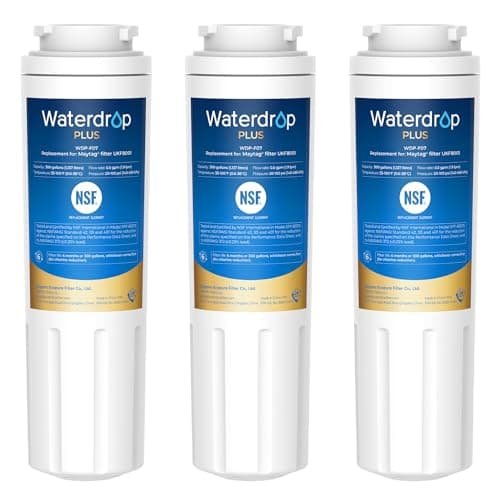 Waterdrop Plus UKF8001 Refrigerator Filter (WDP-F07)NSF-listed under 42, 53 and 401 for a different fridge family, at compatible-filter money. Waterdrop Plus UKF8001 Refrigerator Filter (WDP-F07)NSF-listed under 42, 53 and 401 for a different fridge family, at compatible-filter money. | Certified compatible | $27.99 - View on Amazon $36.99 — 24% off #ad Price as of October 6, 2026. We may earn a commission. Disclosure. |
| 3 | 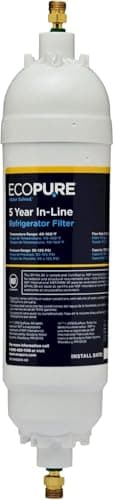 EcoPure EPINL30 In-Line Refrigerator and Ice Maker FilterNSF/ANSI 42 certified, 2,500 rated gallons, and it splices into the quarter-inch line. EcoPure EPINL30 In-Line Refrigerator and Ice Maker FilterNSF/ANSI 42 certified, 2,500 rated gallons, and it splices into the quarter-inch line. | For a fridge with no internal filter | $29.83 - View on Amazon $32.15 — 7% off #ad Price as of October 6, 2026. We may earn a commission. Disclosure. |
| 4 | 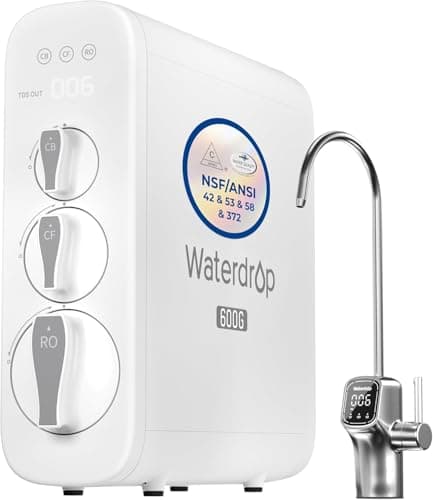 Waterdrop G3P600 Tankless Reverse Osmosis SystemReverse osmosis on the cold line strips the dissolved solids that make ice cloudy and taste stale. Waterdrop G3P600 Tankless Reverse Osmosis SystemReverse osmosis on the cold line strips the dissolved solids that make ice cloudy and taste stale. | If you want clearer ice | $399.00 - View on Amazon $539.00 — 26% off #ad Price as of October 6, 2026. We may earn a commission. Disclosure. |
How the water gets to the ice maker
There is one cold water line behind your refrigerator. It feeds the door dispenser and the ice maker from the same quarter-inch tube, and on most modern fridges it passes through the cartridge inside the appliance on its way. That single fact answers most questions people ask about ice maker filtration.
- If your fridge takes an internal cartridge, that cartridge is already your ice maker filter. Buying a second filter changes nothing except the number of things you have to replace. The refrigerator filter roundup covers which cartridge to buy and why the certification gap between the OEM part and the compatible one usually explains the price.
- If it does not — older fridges, basic models, standalone ice machines, RVs and boats — nothing is filtering that line, and an inline filter on the tubing is the only product that fits.
- If you have an under-sink system, the line can often be teed from it, which is the highest-quality option and the most involved.
How we judged these
The criteria are the same ones this site applies everywhere, with one addition that matters in this category.
- A certification you can look up. A named body, a named standard, a model number in a public listing. Inline filters are sold with a lot of vague NSF language.
- Which standard. 42 is chlorine, taste and odor. 53 is health effects — lead, cysts. 401 is emerging compounds. Most inline filters hold 42 only.
- Rated gallons, not years. "Five-year filter" is a marketing unit. Gallons is the engineering one.
- Whether the fittings match your line. Quarter-inch is standard, but compression against push-to-connect is the difference between a ten-minute job and a trip to the hardware store.
The listings, compared
| everydrop EDR1RXD1 | Waterdrop WDP-F07 | EcoPure EPINL30 | |
|---|---|---|---|
| Type | Fridge cartridge (OEM) | Fridge cartridge (compatible) | Inline, on the tubing |
| Certified standards | NSF/ANSI 42, 53, 401 | NSF/ANSI 42, 53, 401 | NSF/ANSI 42 |
| Lead claim | Yes | Yes, 99.6% published | No |
| Rated capacity | 200 gallons / 6 months | 300 gallons | 2,500 gallons |
| Service flow | 0.5 gpm | 0.5 gpm | 0.5 gpm |
| Fits | Whirlpool family fridges | Maytag UKF8001 family | Any quarter-inch cold line |
The inline filter trap
Inline filters are cheap, they last years, and they are the right product for a fridge with no cartridge slot. They are also where the loosest claims in this category live.
EcoPure's EPINL30, the one on this page, is listed by NSF under NSF/ANSI 42 at 2,500 gallons for chlorine, taste and odor. That is exactly what a carbon filter of that size should claim, and it is honest. In the same NSF listing, the EPINL40 carries an NSF/ANSI 53 claim for lead and cysts at 2,000 gallons — a genuinely better filter, which we would have put first if we could have found it in stock. We could not, on the date above, so it is not a pick.
Now the trap. The smaller EPINL20 is sold with lead reduction in the listing title, and in NSF's database that model appears under NSF/ANSI 42 alone, at 1,350 gallons, for chlorine and taste and odor. We are not calling that a fake claim — certifications also sit with IAPMO and WQA, and a listing title is not a data sheet. We are saying that if lead is the reason you are buying, the claim needs to be on a listing you can find, and on that model we could not find it.
The general rule for this category: an inline carbon filter is a taste product. Treat any health claim on one as unproven until you have the listing in front of you. What each standard covers is the shortest way to read those listings properly.
Cloudy ice, and why no filter fixes it
This is the most common reason people go looking for an ice maker filter, and it is the one thing on this page filtration does not solve.
Household ice freezes from the outside in. Dissolved air and dissolved minerals are pushed ahead of the ice front and end up trapped in the middle, which is the white core you see in every cube from every fridge. A carbon filter removes chlorine and particulates. It does not remove dissolved air and it removes almost no dissolved minerals, so the cube looks the same.
What does change it: reverse osmosis, which strips most of the dissolved solids, and directional freezing, which is a bar trick rather than an appliance feature. If your ice tastes stale rather than looking cloudy, that is a different and much more fixable problem — old ice absorbs freezer odors, and a filter plus emptying the bin weekly usually solves it.
Teeing an under-sink system to the fridge
If you already have an under-sink system, running a line to the refrigerator is a common upgrade and a reasonable one. Two cautions before you do it.
- Pressure. Some fridges need a minimum supply pressure to fill the ice mold reliably, and a tank reverse osmosis system delivers less than mains pressure. A tankless system such as the Waterdrop G3P600 or a permeate pump is the usual answer.
- Volume. An ice maker is a constant draw. Feeding it from a system sized for drinking water shortens cartridge life, and you will notice it on the replacement schedule rather than in the glass.
On the plus side, reverse osmosis water genuinely does make better ice: fewer dissolved solids means less of the mineral taste that transfers to a drink as the cube melts.
The cost-per-gallon math
An ice maker and dispenser together are a heavier draw than most people assume. Rated gallons is what tells you the real replacement cadence.
Whirlpool rates the OEM cartridge in months rather than gallons — six of them — while the certified compatible publishes 300 gallons and the inline filter 2,500. At a heavy draw the month figure flatters the cartridge and the gallon figure tells the truth — but it is doing a much smaller job, and comparing the two on price alone is comparing a taste filter with a lead filter.
We show the arithmetic rather than a verdict so you can redo it with the price you actually pay. Filter prices move; the rated capacities above do not.
The picks in full
If your fridge takes a cartridge
everydrop Filter 1 (EDR1RXD1) Refrigerator Filter
everydrop by Whirlpool
The OEM filter, certified to three NSF standards, sold beside a wall of cheaper compatibles that are certified to none of them. That gap is the whole decision in this category.
Certification status
Certified by NSF International to NSF/ANSI 42, 53 and 401, with the listing held by Whirlpool Corporation. NSF's entry for the EDR1RXD1 element records 200 gallons at a 0.5 gpm service flow, with chlorine, taste, odor and particulate claims under 42; a nineteen-claim health list under 53 including lead, cysts, asbestos, turbidity, benzene, atrazine and the VOC group; and ten emerging compounds under 401 including microplastics and bisphenol A. everydrop's own '70 contaminants' figure counts the individual compounds inside that VOC group.
Published specifications
| Certified standards | NSF/ANSI 42, 53 and 401 (NSF listing) |
|---|---|
| Rated life | 200 gallons / 6 months |
| Service flow | 0.5 gpm |
| Media | Coconut shell carbon |
| Fits | Whirlpool, Maytag, KitchenAid, Amana, JennAir — check your model |
| Also sold as | W10295370A, WHR1RXD1 |
| Lead / cysts / asbestos | All three in the NSF/ANSI 53 claim list |
| Microplastics | In the NSF/ANSI 401 claim list |
| No claim for | Fluoride, nitrate, arsenic, PFAS |
What we like
- Three certified standards, including 53 for lead and 401 for emerging compounds
- Designed for the housing it goes in, so the bypass and seal behave as the fridge expects
- Certification status is checkable in NSF's own listings rather than taken on trust
What we do not
- Several times the price of the compatibles sitting next to it in search results
- 200 rated gallons is the shortest certified filter life most households own
- Only fits the Whirlpool family — the wrong filter for an LG, Samsung or GE fridge
Skip it if
Anyone whose refrigerator is not in the Whirlpool family. Fridge filters are model-specific hardware, and the right answer is whichever certified filter fits your housing.
$59.99 — 20% off
#ad Price as of October 6, 2026. We may earn a commission. Disclosure.
Where these specifications came from
Certified compatible
Waterdrop Plus UKF8001 Refrigerator Filter (WDP-F07)
Waterdrop
The compatible refrigerator filter that holds the certification people assume all of them have. NSF lists this cartridge under 42, 53 and 401 — lead, cysts, mercury and six emerging compounds — which is a broader certified list than any faucet mount on this site. The catch is that the near-identical cartridge codes beside it are not listed the same way.
Certification status
Listed by NSF under system model EFF-6007S with element WDP-F07 (also sold as WDP-UKF8001): NSF/ANSI 42 for chlorine, taste and odor; NSF/ANSI 53 for cyst, lead, benzene, carbofuran, endrin and mercury; NSF/ANSI 401 for phenytoin, ibuprofen, naproxen, estrone, bisphenol A and nonylphenol. Rated at 300 gallons and 0.5 gpm. The plain WD-F07 cartridge in the same family is listed under NSF/ANSI 42 only, and the WDS-F07 drops mercury and the 401 claims.
Published specifications
| Replaces | Maytag UKF8001, Whirlpool Filter 4, EDR4RXD1, 4396395, PUR Puriclean II, Kenmore 46-9005 / 46-9006 |
|---|---|
| Rated life | 300 gallons / about 6 months |
| Certified standards | NSF/ANSI 42, 53 and 401 (NSF listing) |
| Lead | 99.6% reduction |
| Cysts | 99.99% |
| Chlorine, taste and odor | 97.3% |
| Bisphenol A / nonyl phenol | 99.2% / 97.2% |
| Pharmaceutical residues | Naproxen 96.2%, estrone 96.6%, phenytoin 95.2%, ibuprofen 94.4% |
| Service flow | 0.5 gpm |
What we like
- A checkable NSF listing that names lead, cysts and mercury — most compatibles carry an NSF/ANSI 42 taste claim or nothing
- The NSF/ANSI 401 listing adds six emerging compounds, which even some OEM filters do not carry
- Sold in multipacks, so the cost per certified gallon is among the lowest on this site
What we do not
- Only the WDP (Plus) code carries this listing — the WD and WDS versions of the same filter are certified for less, and the listings look nearly identical
- 300 gallons is a shorter rated life than an under-sink cartridge by a wide margin
- A compatible, not an OEM part, so fit tolerances and appliance warranties are your call to make
- Refrigerator filters are the most counterfeited product in home water filtration — buy from a seller you can identify
Skip it if
Fluoride, arsenic or PFAS, none of which appears in the listing, and anyone whose fridge takes a different filter — these are model-specific parts and the compatibility list is the first thing to check.
$36.99 — 24% off
#ad Price as of October 6, 2026. We may earn a commission. Disclosure.
For a fridge with no internal filter
EcoPure EPINL30 In-Line Refrigerator and Ice Maker Filter
EcoPure
The honest version of an inline filter: a carbon cartridge that splices into the quarter-inch line behind the fridge, certified for exactly what a carbon filter of that size can do — chlorine, taste and odor — and rated for 2,500 gallons, which is years of ice.
Certification status
Listed by NSF under NSF/ANSI 42 for chlorine reduction and taste and odor reduction, at a rated capacity of 2,500 gallons and a service flow of 0.5 gpm. It carries no NSF/ANSI 53 claim, so it is not a lead or cyst filter. EcoPure's larger EPINL40 is listed under 53 for lead and cysts at 2,000 gallons, but we could not find it in stock.
Published specifications
| Type | Inline, fits the quarter-inch cold line |
|---|---|
| Certified standard | NSF/ANSI 42 (NSF listing) |
| Claims | Chlorine reduction, taste and odor reduction |
| Rated capacity | 2,500 gallons |
| Service flow | 0.5 gpm |
| Manufacturer's interval | Up to 5 years |
| Fittings | 1/4-inch compression and push-to-connect included |
| Also fits | Ice makers, RVs, campers, boats, under-sink lines |
What we like
- A checkable NSF listing rather than vague 'NSF-tested' wording
- 2,500 rated gallons is years of ice and dispenser water for most households
- Both fitting types in the box, so it goes on copper or plastic tubing without a hardware trip
What we do not
- NSF/ANSI 42 only — no lead, cyst or emerging-compound claim of any kind
- A five-year interval encourages people to forget it entirely
- Does nothing about cloudy ice, which is trapped air rather than contamination
- Redundant if your refrigerator already takes an internal cartridge
Skip it if
Lead. If that is why you are filtering the fridge line, this is the wrong product and an inline carbon filter of any brand is the wrong category.
$32.15 — 7% off
#ad Price as of October 6, 2026. We may earn a commission. Disclosure.
If you want clearer ice
Waterdrop G3P600 Tankless Reverse Osmosis System
Waterdrop
The G3P800's smaller sibling: same slim tankless body, same cartridge rotation, 600 gallons a day instead of 800. The specification that actually changes is the one people skim — it sends two gallons to the drain for every three it makes, where the 800 sends one.
Certification status
Waterdrop's certification page lists the G3P600 under NSF/ANSI 58 for reverse osmosis performance and NSF/ANSI 372 for lead-free materials, and lists 42 and 53 for the G3 series; the retail listing claims 42, 53, 58 and 372. Note that fluoride, arsenic and hexavalent chromium claims are optional within NSF/ANSI 58, so a 58 certification alone does not mean a system was tested for any of them.
Published specifications
| Rated production | 600 GPD, 0.42 gpm |
|---|---|
| Pure-to-drain ratio | 2:1 |
| Format | Tankless — no pressure tank |
| Stages | 8, with a 0.0001 micron membrane |
| Sediment and carbon filter | 550 gallons / about 6 months |
| Carbon block filter | 1,100 gallons / about 12 months |
| RO membrane | 2,200 gallons / about 24 months |
| Dimensions | 18.11" x 5.67" x 17.73", 15.44 lb |
| Installation | Power outlet, a 1-inch faucet hole and a drain connection |
What we like
- Tankless, so it gives back the cupboard space a pressure tank occupies
- Long cartridge intervals: 6, 12 and 24 months across the three filters
- Fast enough that it feels like a tap rather than a tank refilling
What we do not
- 2:1 pure-to-drain against the G3P800's 3:1 — it wastes half again as much water
- Needs a power outlet under the sink, which is the most common reason this install stalls
- Proprietary cartridges, so Waterdrop sets the replacement price for the life of the system
- Waterdrop states it is not recommended for well water
- No remineralizing stage, so the water arrives with almost no mineral content
Skip it if
Wells, cabinets with no outlet, and anyone who cares more about wastewater than about the purchase price — the G3P800 is the same machine with a better drain ratio.
$539.00 — 26% off
#ad Price as of October 6, 2026. We may earn a commission. Disclosure.
Questions people actually ask
Does my ice maker need its own water filter?
Not if your refrigerator takes an internal cartridge — the ice maker and the door dispenser run off the same filtered line, so one cartridge covers both. An inline filter is for fridges and standalone ice machines that have no cartridge slot at all.
Do inline refrigerator filters remove lead?
Most do not. The common inline filters are certified under NSF/ANSI 42 for chlorine, taste and odor. A few models carry an NSF/ANSI 53 claim for lead and cysts, and those are worth seeking out — but the claim has to be on the model's listing, not in the listing title.
Will a water filter stop my ice from being cloudy?
No. Cloudy ice is trapped air and dissolved minerals freezing from the outside in, not contamination. Only removing the dissolved solids, which means reverse osmosis, changes it noticeably — and even then the freezing direction matters more than the water.
Why does my ice taste bad?
Usually chlorine in the supply, or freezer odors absorbed by old ice sitting in the bin. A certified carbon filter fixes the first; emptying the bin weekly and keeping strong-smelling food sealed fixes the second. If the taste is metallic rather than stale, that is worth investigating separately.
Can I connect reverse osmosis to my refrigerator?
Yes, and it makes better-tasting ice. Check two things first: whether your fridge needs a minimum supply pressure that a tank system cannot maintain, and whether feeding a constant ice-maker draw will shorten your cartridge life more than you want.