No published study shows hard water causes hair loss from the follicle — the research measured hair-shaft strength and disagrees with itself. For eczema the picture is genuinely mixed: a real association in infancy, and a randomized trial of softeners as treatment that found no benefit.
Quick picks
Tap any row to jump to the full write-up. The button goes straight to the retailer.
| # | Product | Best for | Price |
|---|---|---|---|
| 1 | 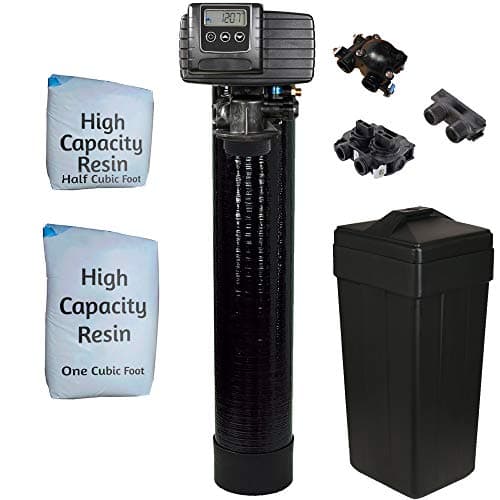 AFWFilters Fleck 5600SXT 48,000-Grain Metered SoftenerA whole-house ion-exchange softener is what SWET and SOFTER actually installed. It removes hardness; it is not an eczema treatment. | The only intervention the trials tested | $793.00 - View on Amazon #ad Price as of November 2, 2026. We may earn a commission. Disclosure. |
| 2 | 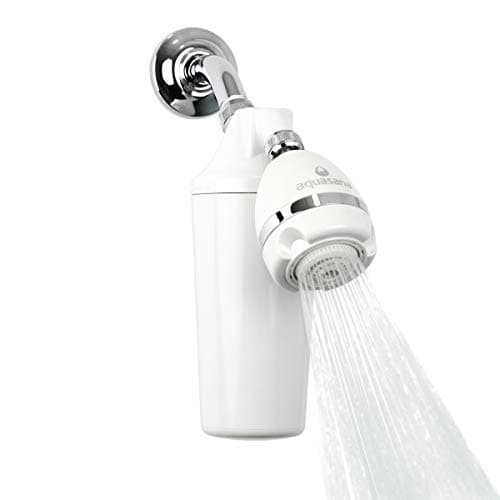 Aquasana AQ-4100 Shower Filter with Shower HeadIndependently tested to NSF/ANSI 177 for over 90% chlorine reduction. Its listing markets soft skin and hair; the standard covers chlorine. | Best shower filter, for chlorine | $89.99 - View on Amazon #ad Price as of November 2, 2026. We may earn a commission. Disclosure. |
| 3 | 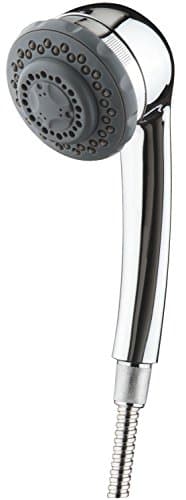 Culligan HSH-C135 Filtered Handheld ShowerheadTested according to NSF/ANSI 177 for free available chlorine, with the sheet's own note that chloramine was not evaluated. | Cheapest 177-tested shower filter | $65.43 - View on Amazon #ad Price as of November 2, 2026. We may earn a commission. Disclosure. |
| 4 | 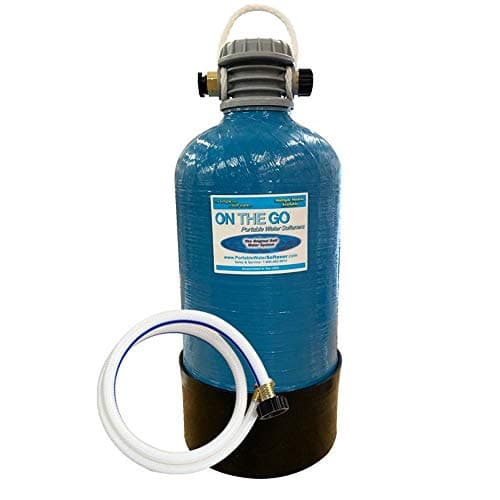 On The Go Portable Double Standard Water Softener, 16,000 GrainIn the SOFTER trial 28% of families could not have a softener fitted. Real ion exchange on hose threads, regenerated by hand. | If you cannot install one | $209.00 - View on Amazon #ad Price as of November 2, 2026. We may earn a commission. Disclosure. |
How we weighed this, before any product appears
Almost every page that ranks for this question is published by somebody selling a water softener or a shower filter, and the answer is always yes. So the criteria matter more here than anywhere else on this site, and they are the ordinary ones in medicine:
- A randomized trial of the actual intervention beats everything else, because it is the only design that tells you whether doing the thing helps.
- A population association tells you two things move together. It does not tell you that changing one changes the other.
- A laboratory test on cut hair tells you about a fiber in a clamp. It does not tell you about a follicle in a scalp.
- A product listing is marketing, and on this topic it is the least reliable source in the stack — including on a product we recommend below.
Read in that order, the evidence says something more interesting than either the vendors or the skeptics claim.
Hair loss: the study most often cited says it is not about hair loss
Start with the hair claim, because it resolves most cleanly. There are two controlled studies on hard water and hair, they measured the same thing, and they disagree.
The International Journal of Trichology published the first in 2013. Hair from 15 volunteers was cut in half, with one half soaked in hard water at 212.5 ppm calcium carbonate and the other in distilled water, for ten minutes on alternate days over thirty days, then pulled on an INSTRON strength tester. The conclusion: The hardness of water does not interfere with the tensile strength and elasticity of hair.
The Journal of the Pakistan Medical Association published the second in 2016, with a larger sample and a longer exposure: hair from 76 men, each sample split, one half treated with hard water for ten minutes on alternate days for three months and the other with de-ionized water. That one found the opposite — the tensile strength of hair was significantly (p=0.001) reduced in hair treated with hard water, with means of 238.49 against 255.36.
Here is the part that settles the question in the page title. The 2016 paper is the one routinely cited as proof that hard water causes hair loss, and its own abstract says the effect concerns weakening and breakage, not hair loss. Both studies measured the tensile strength of a hair shaft. Neither looked at follicles, scalp, shedding rates or any clinical measure of alopecia.
So the honest summary: there is contested laboratory evidence that hard water may weaken the hair fiber, no evidence that it causes hair to fall out, and a mundane mechanism — mineral deposits and poor lather — behind the dull, rough, hard-to-manage feeling people genuinely notice. If your hair is coming out, hard water is not the explanation, and a dermatologist is the right call rather than a plumber.
Eczema: three layers of evidence, pointing different ways
Skin is the more serious half of this question and the evidence is much better than it is for hair. It is also more interesting, because the layers do not agree in the way you would expect.
Layer one: the association is real, and narrow
In 2016 the Journal of Allergy and Clinical Immunology published an analysis from the Enquiring About Tolerance cohort covering 1,303 three-month-old infants recruited from the general population, with water hardness and chlorine figures obtained from the local suppliers. The infants were examined for atopic dermatitis, screened for filaggrin gene mutations, and had transepidermal water loss measured on unaffected forearm skin.
High domestic calcium carbonate was associated with increased eczema risk in infancy. Three qualifications travel with that finding and all of them matter:
- Calcium carbonate and chlorine levels were strongly correlated in the data, and the authors concluded the effect of higher total chlorine remains uncertain. The study cannot cleanly separate the two.
- Effect estimates were larger in infants carrying a filaggrin mutation — a known skin-barrier variant — but the interaction test was not statistically significant, so that is a signal rather than a result.
- The authors were explicit that an intervention trial was needed to find out whether lowering hardness around birth reduces risk. An association was never claimed to be more than an association.
Layer two: the treatment trial was negative
That intervention question had already been asked for children who already have eczema, and the answer was no.
The Softened Water Eczema Trial, published in PLOS Medicine in 2011, randomized 336 children aged 6 months to 16 years with moderate or severe atopic eczema, all living in hard water areas, to a plumbed ion-exchange softener plus usual care or usual care alone. The primary outcome was change in severity on the Six Area Six Sign Atopic Dermatitis score at twelve weeks, scored by assessors blinded to which group each child was in.
The softener group did not improve more than the control group, and the confidence intervals were tight enough that a clinically meaningful benefit was unlikely to have been missed. The authors concluded they cannot recommend the use of ion-exchange water softeners for this purpose. The accompanying health-economic evaluation reached the same place from the cost side.
One detail from that trial is worth more than the rest of this page put together. Both groups improved, and the participants — who could obviously see whether a softener had been installed — believed it had helped them. Blinded measurement said otherwise. That gap is the entire reason this topic needs trials rather than testimonials, and it is what every five-star review of a shower filter for eczema is made of.
Layer three: prevention is still an open question
Treating existing eczema and preventing it from developing are different questions, and the second one is genuinely unsettled.
The SOFTER trial tested whether a softener fitted around the time of birth could prevent eczema in infants at high risk, randomizing pregnant women in hard water areas to a softener or to their usual supply. It was designed as a feasibility study, and that is what it reported: a definitive trial would be feasible and acceptable, and one is still needed.
Its clinical numbers are suggestive and nothing more. At six months, visible eczema affected 33% of infants in the softener group against 48% in the control group — a difference of −15% with a 95% confidence interval from −38% to 8.3%. That interval crosses zero, and the authors ran no significance testing, so the result cannot be distinguished from chance. Anyone quoting "softeners cut infant eczema by 15%" is quoting a feasibility study as though it were an answer.
Why both things can be true
Readers reasonably ask how hardness can be associated with eczema in infancy while softening fails to treat it. Three reasons, and none requires anyone to be wrong.
Prevention and treatment are different. A factor that contributes to a barrier problem developing in the first months of life need not reverse the disease once it is established. That is ordinary in medicine rather than a contradiction.
The window appears to be early. Follow-up of the same infant cohort found the hardness association in the first three months of life and not beyond it. By the time a child is old enough to be in a treatment trial, the exposure that mattered may be behind them.
Hardness may not be the active ingredient. Calcium carbonate and chlorine travel together in the supply data, and the researchers could not separate them. If the irritant is really the disinfectant, a softener — which removes calcium and magnesium and leaves chlorine untouched — is the wrong tool, and a negative softener trial is exactly what you would expect.
That last possibility is the one with a cheap test attached, and it is why a shower filter appears in the picks at all.
What a shower filter actually changes
If the chlorine hypothesis is the live one, the shower is where most people meet chlorine in quantity, and a shower filter is the only cheap intervention available. But the claims on these products need reading carefully, including on the one we recommend.
The Aquasana AQ-4100 is the best-documented shower filter on this site: Aquasana publishes an independently tested figure of over 90% chlorine reduction against NSF/ANSI 177, which is the only standard written for shower filters. Its retail listing also markets soft skin and hair and describes itself as dermatologist-recommended. Those are not the same kind of statement. The 177 figure is a measured chlorine reduction; the skin and hair language is marketing, and no shower filter holds a certification for a dermatological outcome because no such certification exists.
Two further limits, both already covered on this site and both relevant here. A shower filter cannot soften water — there is no room in the housing for enough ion exchange, so it does not touch the hardness the cohort study was measuring. And nobody holds a 177 certification; the best products are tested to it, which is a weaker form of evidence than a listing.
So buy a shower filter expecting less chlorine, which is real, measured and cheap. Do not buy one expecting it to treat a skin condition, and do not buy one expecting softer water. The shower roundup ranks the tier on the evidence each product actually publishes.
What to do, in the order the evidence supports
| Your situation | What the evidence supports | What it does not support |
|---|---|---|
| Diagnosed eczema, you or your child | Treatment your clinician recommends | Buying a softener for it — SWET found no benefit |
| Newborn on the way, hard water area | A reasonable precaution, not a proven one | Any confident claim of prevention — SOFTER was a feasibility trial |
| Dry, tight skin after showering | A shower filter, for chlorine | A softener, if the shower is the only complaint |
| Hair feels rough, dull, hard to manage | Softening, for comfort and lather | Treating it as hair loss |
| Hair is actually falling out | A dermatologist | Any water treatment — nothing links hardness to follicular loss |
| Scale on the kettle, grey laundry, failing appliances | A softener, on the appliance economics | Expecting a skin or hair benefit to justify it |
| You rent and cannot plumb | A portable softener or a shower filter | A plumbed softener — 28% of SOFTER families could not fit one |
The honest read of the bottom rows is that hard water is mostly a plumbing and appliance problem rather than a health one, and that is also where the money makes sense. The worth-it page does that calculation on appliance life and running costs, which is a far stronger case than anything on this page.
The cost-per-gallon math
This page is unusual on this site in that the arithmetic argues against the biggest purchase, so it is worth doing explicitly.
A plumbed softener is the most expensive item here by an order of magnitude, and the only intervention with a randomized trial behind it for skin — a trial that found no benefit. Priced as an eczema treatment it has a measured effect of nothing, which makes any price the wrong price. Priced as appliance protection and laundry quality it can pay for itself, and the softener roundup covers sizing, which is the decision that actually drives cost.
A shower filter is the cheap end, and its cost per month depends entirely on cartridge life rather than on the unit price. Divide the cartridge price by the rated gallons — the Aquasana figure is published over 10,000 gallons — and compare that to how much water your shower actually moves, which at a typical two gallons a minute is more than people expect.
For a renter, the portable softener's 16,000-grain capacity is the number to size against, and the apartment page works the regeneration interval through properly.
We do not print product prices in this text. The buy buttons carry the live figure and the date it was checked, which is the only price worth quoting.
We show the arithmetic rather than a verdict so you can redo it with the price you actually pay. Filter prices move; the rated capacities above do not.
The picks in full
The only intervention the trials tested
AFWFilters Fleck 5600SXT 48,000-Grain Metered Softener
AFWFilters
The Fleck 5600SXT is the valve independent water-treatment dealers have used for decades, which means parts, manuals and people who know it are everywhere. Assembled rather than boxed as an appliance.
Certification status
Manufacturer-published capacity and flow figures. The valve is an industry-standard component with widely available service parts.
Published specifications
| Capacity | 48,000 grains |
|---|---|
| Resin | 1.5 cubic feet, 8% cross-linked |
| Resin tank | 10" x 54" |
| Brine tank | 14" |
| Service flow | Up to 12 gpm |
| Control | Fleck 5600SXT digital metered valve |
| Connection | 1" male threaded yoke, bypass valve included |
| Warranty | 5 years on the valve, 10 years on the tank |
What we like
- Fleck valves are the industry standard, so service parts and expertise are genuinely available
- Higher capacity and flow than most consumer-boxed softeners
- Metered regeneration rather than a clock
What we do not
- Ships as components — you assemble and load the resin yourself
- Larger physical footprint than an appliance-style unit
- No help at all with anything other than hardness
Skip it if
Anyone who wants an appliance experience. If loading a resin tank and programming a valve sounds like a bad Saturday, buy a boxed softener or hire a dealer.
#ad Price as of November 2, 2026. We may earn a commission. Disclosure.
Where these specifications came from
Best shower filter, for chlorine
Aquasana AQ-4100 Shower Filter with Shower Head
Aquasana
The only shower filter we found with a published figure against the only standard that exists for the category. It is also slower than the shower you have now, and that is the trade nobody mentions.
Certification status
Aquasana states the AQ-4100 is independently tested to NSF/ANSI Standard 177 to reduce over 90% of chlorine for 10,000 gallons or up to six months, and that its filtration media is NSF/ANSI certified to Standard 61 for materials safety. Tested to, not certified under — and Standard 61 covers what the media is made of, not what it removes.
Published specifications
| Rated capacity | 10,000 gallons / up to 6 months |
|---|---|
| Chlorine reduction | Over 90% (NSF/ANSI 177 test) |
| Rated flow | 1.75 gpm |
| Operating pressure | 30-80 psi |
| Maximum water temperature | 115 degrees F |
| Media | KDF-55 plus coconut shell carbon |
| Fitting | Standard 1/2 inch shower arm |
What we like
- A published chlorine figure against NSF/ANSI 177 — more evidence than most of this category offers
- KDF-55 works at shower temperatures, where plain carbon performs poorly
- Sold with a head, without a head, or as a handheld wand, so it fits whatever you already have
What we do not
- Tested to the standard rather than certified under it, and Aquasana is clear about the wording
- 1.75 gpm rated flow is below a standard US shower head, and some owners notice
- No claim for chloramine, which is what many utilities actually use
- Nothing here softens water — hardness passes straight through
Skip it if
Anyone whose complaint is scale on the glass or a squeaky-clean drag on the skin. That is hardness, and no shower filter removes calcium and magnesium.
#ad Price as of November 2, 2026. We may earn a commission. Disclosure.
Cheapest 177-tested shower filter
Culligan HSH-C135 Filtered Handheld Showerhead
Culligan
Culligan's filtered showerheads are the category's old guard, and the performance data sheet says what the marketing usually will not: tested for free chlorine, and not evaluated against chloramine.
Certification status
Culligan's performance data sheet for its WSH-C125 and HSH-C135 filtered showerheads states the system was tested according to NSF/ANSI 177 for reduction of free available chlorine. The same sheet states the system has not been evaluated for free available chlorine reduction performance in the presence of chloramines.
Published specifications
| Rated capacity | 10,000 gallons / about 6 months |
|---|---|
| Rated service flow | 2.5 gpm |
| Operating pressure | 40-100 psi |
| Water temperature | 40-120 degrees F |
| Standard | NSF/ANSI 177, free available chlorine |
| Chloramine | Not evaluated |
| Replacement cartridge | WHR-140 |
What we like
- Handheld head and filter in a single fitting, which is the format most people actually want
- Higher rated flow than the Aquasana, so it feels closer to an unfiltered shower
- Replacement cartridges are stocked by general retailers, not just the manufacturer
What we do not
- The data sheet's chloramine exclusion is explicit, and chloramine is common on US municipal supply
- Culligan publishes no percentage reduction figure alongside the NSF/ANSI 177 statement
- Plastic housing at a price where metal fittings exist
- Like every shower filter, it does nothing about hardness
Skip it if
Households on chloraminated water who want a documented answer. The sheet says the system was not evaluated for that case, and we are not going to pretend otherwise.
#ad Price as of November 2, 2026. We may earn a commission. Disclosure.
Where these specifications came from
If you cannot install one
On The Go Portable Double Standard Water Softener, 16,000 Grain
On The Go
A real ion-exchange softener in a bottle you regenerate in the sink with table salt. It is the only softening technology that works without a plumber, and the compromise is that you do it by hand every few weeks.
Certification status
No NSF/ANSI certification listing. On The Go publishes a 16,000 grain capacity for the double-standard unit and states the resin is drinking-water safe. The mechanism is conventional sodium-form ion exchange — the same chemistry as a plumbed softener — so the capacity figure, not a certification, is what you size against.
Published specifications
| Format | Portable ion-exchange softener |
|---|---|
| Capacity | 16,000 grains |
| Regeneration | Manual, with common table or solar salt |
| Connection | Standard garden hose thread |
| Certified standards | None — see certification note |
What we like
- Actually softens — ion exchange removes the calcium and magnesium rather than conditioning them
- No plumbing cuts, no drain connection and no landlord conversation
- Regenerates with supermarket salt in about half an hour
- Leaves with you, and the capacity figure lets you calculate the interval before buying
What we do not
- 16,000 grains is a small softener: at 15 gpg that is roughly 1,000 gallons between regenerations
- Manual regeneration every few weeks, forever — there is no timer and no brine tank
- Hose-thread connections mean it serves one fixture, not the apartment
- No certification listing of any kind
Skip it if
Anyone who can install a plumbed softener. A cabinet softener with a brine tank regenerates itself, holds ten times the capacity and treats the whole house. Buy this when the constraint is the lease, not the budget.
#ad Price as of November 2, 2026. We may earn a commission. Disclosure.
Where these specifications came from
Questions people actually ask
Does hard water cause hair loss?
There is no published evidence that it does. The two controlled studies on hard water and hair both measured the tensile strength of cut hair shafts, not follicles or shedding — and they disagree with each other. The 2016 study most often cited as proof states in its own abstract that the effect concerns weakening and breakage, not hair loss. Hard water can make hair feel rough and lather poorly; if hair is actually falling out, see a dermatologist.
Does a water softener help eczema?
The randomized trial says no, for treating existing eczema. The Softened Water Eczema Trial, published in PLOS Medicine in 2011, randomized 336 children aged 6 months to 16 years with moderate or severe atopic eczema in hard water areas to a plumbed ion-exchange softener or usual care, and measured severity with blinded assessors at 12 weeks. There was no benefit, and the authors concluded they cannot recommend ion-exchange water softeners for this purpose.
But isn't hard water linked to eczema?
Yes, as an association in infancy. A 2016 analysis of 1,303 three-month-old infants in the Journal of Allergy and Clinical Immunology found high domestic calcium carbonate associated with increased eczema risk. Three caveats travel with it: hardness and chlorine were strongly correlated so the chlorine effect remains uncertain; the filaggrin-mutation interaction test was not statistically significant; and follow-up found the association in the first three months of life only. An association is not evidence that changing the exposure changes the outcome.
Can softening water prevent eczema in a baby?
Unknown, and being studied. The SOFTER trial fitted softeners for pregnant women in hard water areas, but it was designed as a feasibility study rather than a test of effectiveness. Visible eczema at six months was 33% in the softener group against 48% in the control group, a difference of −15% with a confidence interval from −38% to 8.3% — an interval that crosses zero, with no significance testing performed. The authors concluded a definitive trial is feasible and still needed.
Will a shower filter help my skin?
It will reduce chlorine, which is measurable, and that may be what is drying your skin. It will not soften the water — there is no room in a shower housing for meaningful ion exchange — and it is not a treatment for a skin condition. Note that NSF/ANSI 177, the only shower-filter standard, covers free available chlorine and nothing dermatological, and the best products are tested to it rather than certified under it.
Why do so many people say a softener fixed their skin?
Because the trial that measured it found exactly that pattern. In SWET both groups improved over twelve weeks, and participants — who could see whether a softener had been installed — believed it had helped them, while blinded assessment found no difference between groups. Eczema fluctuates, and people install softeners when symptoms are bad. That is why this question needs trials rather than testimonials.
So is there any good reason to soften hard water?
Yes, but the case is about plumbing rather than people: scale in pipes and heaters, appliance life, soap and detergent use, laundry and glassware. That case is often strong on its own arithmetic. What the evidence does not support is buying a softener to treat eczema, or expecting it to stop hair loss.
Sources
- Thomas et al., PLOS Medicine (2011) — A Randomised Controlled Trial of Ion-Exchange Water Softeners for the Treatment of Eczema in Children (SWET)
- Perkin et al., Journal of Allergy and Clinical Immunology (2016) — association between domestic water hardness, chlorine and atopic dermatitis risk in early life
- SOFTER — pilot randomised trial of an ion-exchange water softener for the prevention of atopic eczema in neonates (protocol, BMJ Open 2019; results in Clinical and Experimental Allergy 2022)
- Srinivasan et al., International Journal of Trichology (2013) — Effects of hard water on hair
- Journal of the Pakistan Medical Association (2016) — effect of topical application of hard water in weakening of hair in men
- USGS Water Science School — hardness of water