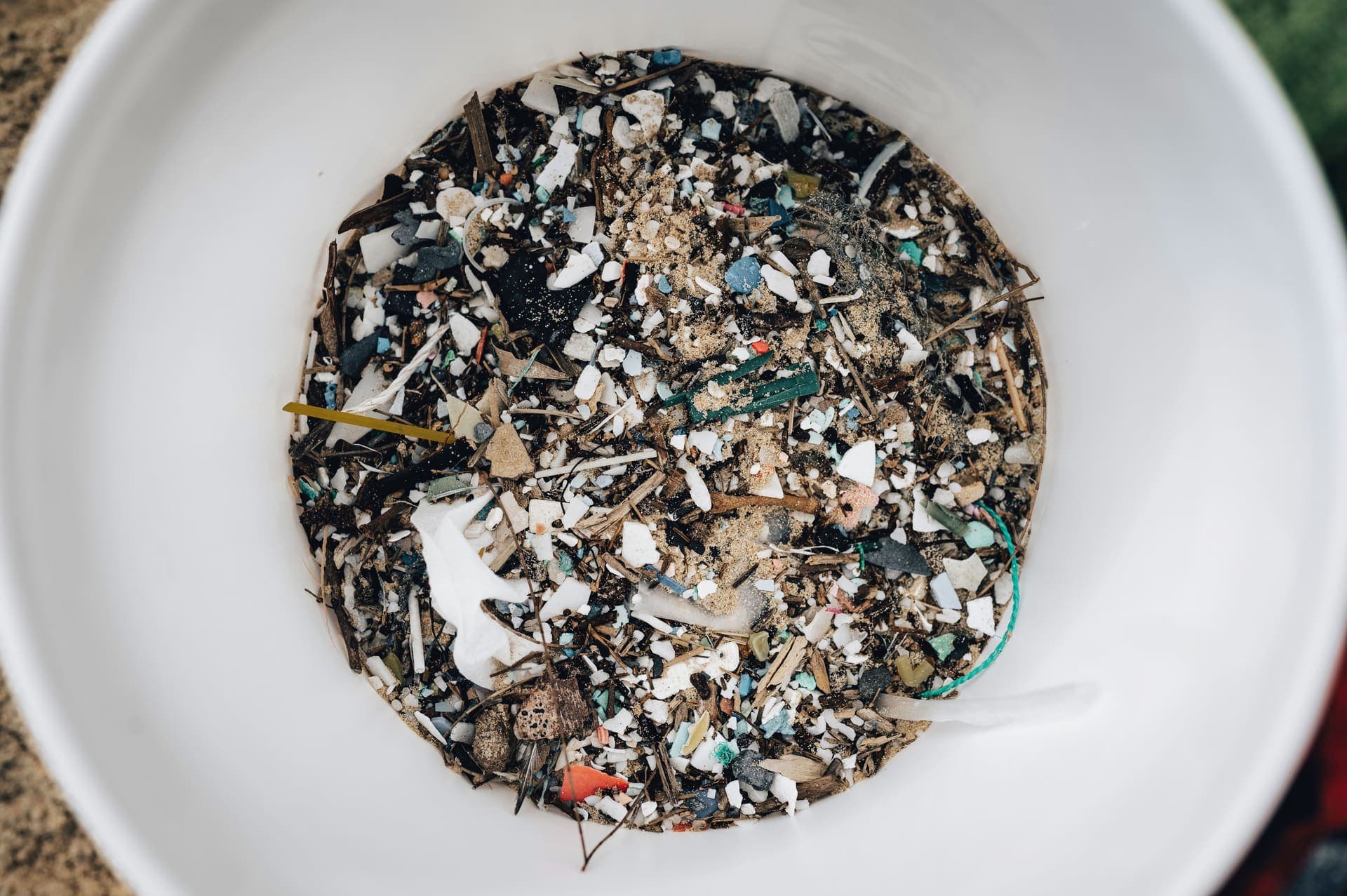
Yes, if you have the right filter. The Brita Elite is certified under NSF/ANSI 401 for microplastic particles 0.5 to 1 micron at 99.6%, and the faucet-mount system publishes 99.9% for the same claim. The white Standard filter carries no microplastics claim at all.
Quick picks
Tap any row to jump to the full write-up. The button goes straight to the retailer.
| # | Product | Best for | Price |
|---|---|---|---|
| 1 | 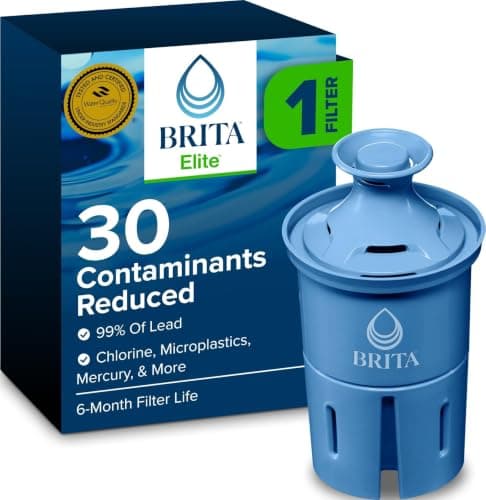 Brita Elite Filter (with any Brita pitcher)Certified under NSF/ANSI 401 for microplastics 0.5-1 micron at 99.6%, rated 120 gallons. Brita Elite Filter (with any Brita pitcher)Certified under NSF/ANSI 401 for microplastics 0.5-1 micron at 99.6%, rated 120 gallons. | The right Brita filter | $19.88 - View on Amazon #ad Price as of October 6, 2026. We may earn a commission. Disclosure. |
| 2 | 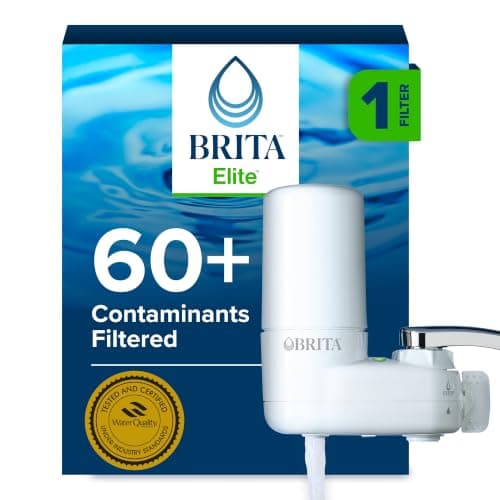 Brita Faucet Mount System (SAFF-100 / FF-100)99.9% at 0.5-1 micron on a WQA-certified performance data sheet. Brita Faucet Mount System (SAFF-100 / FF-100)99.9% at 0.5-1 micron on a WQA-certified performance data sheet. | Highest published Brita figure | $22.86 - View on Amazon #ad Price as of October 6, 2026. We may earn a commission. Disclosure. |
| 3 | 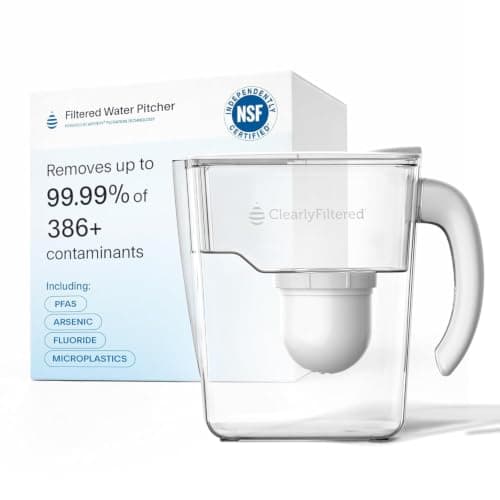 Clearly Filtered Water Pitcher (Affinity)Over 99.99% claimed from independent testing rather than a certification listing. Clearly Filtered Water Pitcher (Affinity)Over 99.99% claimed from independent testing rather than a certification listing. | Highest claimed reduction | $87.99 - View on Amazon $109.99 — 20% off #ad Price as of October 6, 2026. We may earn a commission. Disclosure. |
| 4 | 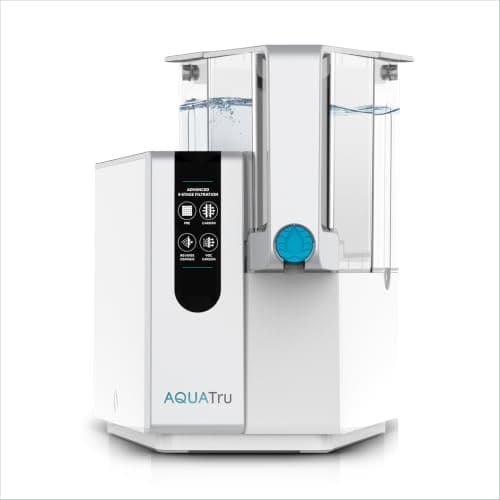 AquaTru Classic Countertop Reverse Osmosis PurifierReverse osmosis excludes particles by size instead of adsorbing them. AquaTru Classic Countertop Reverse Osmosis PurifierReverse osmosis excludes particles by size instead of adsorbing them. | If you want a mechanism, not media | $403.75 - View on Amazon $475.00 — 15% off #ad Price as of October 6, 2026. We may earn a commission. Disclosure. |
First: which filter are you actually holding?
"Brita" is not one product, and the answer flips completely depending on the cartridge in your pitcher. This is the same trap as the lead question, and it catches people just as often.
| Filter | How you recognize it | Microplastics claim |
|---|---|---|
| Elite (OB06) | Blue cartridge, rated 120 gallons | Yes — certified under NSF/ANSI 401, 99.6% at 0.5-1 micron |
| Standard (OB03) | White cartridge, rated 40 gallons | No claim of any kind |
| Faucet mount (FR-200) | Cartridge inside the unit on the tap | Yes — 99.9% at 0.5-1 micron on the system data sheet |
| Anything else in the range | Stream, bottles, dispensers | Check that specific filter's own data sheet |
If you bought a pitcher off a supermarket shelf and never thought about the cartridge, the odds are you have the white Standard filter. It is certified to NSF/ANSI 42 for chlorine taste and odor and to NSF/ANSI 53 for a short list of metals — copper, mercury and cadmium — and it is not certified under NSF/ANSI 401, which is the standard the microplastics claim lives in. No 401 listing means no microplastics claim, and the filter is a few dollars cheaper for exactly that reason.
What the certified claim actually covers
"Removes microplastics" sounds like a promise about plastic in general. It is not. It is a particulate claim with a defined size band, a defined challenge and a defined pass mark:
- Particle size: 0.5 to 1 micron.
- Challenge: at least 10,000 particles per milliliter entering the system.
- Pass mark: at least 85% reduction.
That is what a 401 microplastics listing means, for Brita and for everyone else. It is a real, measured, third-party-verified claim about a specific size range — which is far more than most of this category offers, and considerably less than the packaging implies.
The numbers Brita publishes
Both figures come from Brita's own performance data sheets, which is the only source this site will use for a claim like this.
| Product | Microplastics 0.5-1 micron | Requirement | Rated life |
|---|---|---|---|
| Brita Elite filter (OB06) | 99.6% | 85% | 120 gallons / about 6 months |
| Brita faucet mount (FF-100 / SAFF-100) | 99.9% | 85% | 100 gallons |
| Brita Standard filter (OB03) | No claim | — | 40 gallons |
Both certified products clear the pass mark by a wide margin, and the difference between 99.6% and 99.9% is not a reason to choose one over the other — the format is. The pitcher goes in the fridge and fits any kitchen; the faucet mount delivers on demand but will not fit a pull-out sprayer tap.
Certified by whom, exactly
This site treats "certified" and "tested to" as different claims, so the certifying body matters.
Brita's Elite performance data sheet marks its claims against two named bodies — IAPMO R&T and NSF International — rather than a single blanket statement. The faucet system's sheet ends with the plainest sentence in the category: the system has been certified by WQA against NSF/ANSI Standards 42, 53 and 401 for the reduction of contaminants specified on the Performance Data Sheet.
Named body, named standards, named model. That is the strongest form of evidence available for a household filter claim, and it is worth knowing that Brita earns it here — because on the PFAS question the same company earns nothing of the kind.
What the Elite still does not do
A microplastics certification is not a general seal of quality, and this is where the honest reading of the Elite matters.
- PFOA and PFOS. Not certified. Brita's January 2026 performance data sheet carries no PFOA or PFOS claim for the Elite, so if forever chemicals are your reason for filtering, the PFAS roundup is the page you want.
- Fluoride. No Brita pitcher filter claims it, and carbon does not remove it by any mechanism. Reverse osmosis is the answer there.
- Nanoplastics. Every certified claim in this category stops at 0.5 micron because the test method stops there. The particles researchers are most uncertain about are smaller than that, and nothing on a shelf is certified for them.
- The plastic your own storage adds. Filtered water sitting warm in a plastic jug for days is a different exposure from the one you just filtered out. Refrigerate it and drink it within a day or two.
Should you upgrade, or is the Elite enough?
For most households asking this question, the Elite is the answer and the upgrade is unnecessary. It is a certified 401 claim at supermarket prices, in a pitcher you may already own, with the longest rated life in the mainstream pitcher tier.
Two situations justify going further. If you want the highest published number and your tap accepts a mount, the faucet system's 99.9% is the best-documented figure Brita offers. If you want a mechanism rather than a media claim — a membrane that excludes particles by size and cannot saturate the way carbon does — that is reverse osmosis, and the microplastics roundup compares all four routes side by side with the evidence for each.
The one upgrade we would not describe as an upgrade: switching from the Elite to a premium composite pitcher purely for a bigger microplastics percentage. Going from 99.6% to 99.99% on the same size band, at several times the cost per gallon, is not a meaningful improvement in exposure — and the composite pitchers publish test data rather than certification listings.
How to check your own filter in thirty seconds
- Pull the cartridge. Blue is the Elite, white is the Standard.
- Look for the rated capacity printed on the packaging: 120 gallons is the Elite, 40 is the Standard.
- If you are shopping rather than checking, look for NSF/ANSI 401 in the claim list. That is the standard the microplastics claim belongs to, and it is the one line that settles it.
The cost-per-gallon math
The gap between the two pitcher filters is wider in running cost than the sticker price suggests, and it runs in the Elite's favor.
The Elite is rated at 120 gallons against the Standard's 40 — three times the life. Unless the Elite cartridge costs more than three times the Standard on the day you buy, it is cheaper per gallon as well as being the only one of the two with a microplastics claim.
Against the composite pitchers the comparison reverses. Those are rated around 100 gallons and cost several times as much per cartridge, so their cost per gallon is the highest on this site. You are paying for a broader claim list — PFAS and fluoride — rather than for a better microplastics number.
Divide the current replacement price by rated gallons for whichever pair you are comparing. We do not print prices here, because a price we cannot verify today is worse than no price at all.
We show the arithmetic rather than a verdict so you can redo it with the price you actually pay. Filter prices move; the rated capacities above do not.
The picks in full
The right Brita filter
Brita Elite Filter (with any Brita pitcher)
Brita
The cheapest route to an NSF/ANSI 53 lead certification. It drops into a pitcher most households already have, and it is emphatically not the same filter as the white Brita Standard.
Certification status
Certified to NSF/ANSI 42, 53 and 401. The lead certification belongs to the Elite (blue) filter only — the Standard (white) filter is certified to NSF/ANSI 42 for taste and odor and is not certified for lead. Per Brita's January 2026 performance data sheet the Elite is not certified for PFOA or PFOS, and no Brita pitcher filter is certified for fluoride.
Published specifications
| Rated filter life | 120 gallons / about 6 months |
|---|---|
| Standard filter life, for comparison | 40 gallons / about 2 months |
| Certified standards | NSF/ANSI 42, 53, 401 |
| Lead | Certified under NSF/ANSI 53 |
| PFOA / PFOS | Not certified (January 2026 performance data sheet) |
| Fluoride | Not certified, not claimed |
What we like
- Genuine NSF/ANSI 53 lead certification at the lowest entry price of anything on this site
- Fits Brita pitchers and dispensers already in millions of kitchens — no new hardware
- Three times the rated life of the Standard filter, which changes the cost-per-gallon math
What we do not
- Not certified for PFOA or PFOS, so it is the wrong answer to a PFAS worry
- No fluoride claim at all
- Slow gravity flow, like every pitcher
Skip it if
Anyone whose actual worry is PFAS or fluoride. The Elite is not certified for either, and buying it for those is buying the wrong thing.
#ad Price as of October 6, 2026. We may earn a commission. Disclosure.
Where these specifications came from
Highest published Brita figure
Brita Faucet Mount System (SAFF-100 / FF-100)
Brita
The only faucet mount on this page whose data sheet says certified rather than tested, and it certifies 99.9% lead at both test pH values plus 99.9% of microplastics. It is also the slowest thing here, by design.
Certification status
Certified by WQA against NSF/ANSI 42, 53 and 401 for the contaminants listed on the FF-100 / SAFF-100 performance data sheet, using the FR-200 filter. Lead is 99.9% at pH 6.5 and pH 8.5; microplastics in the 0.5-1 micron range are 99.9% under NSF/ANSI 401. The sheet carries no PFOA or PFOS claim and states the system is not intended to purify water.
Published specifications
| Rated capacity | 100 gallons (378 liters) |
|---|---|
| Manufacturer's stated interval | About 4 months for a typical household |
| Replacement filter | FR-200 |
| Service flow rate | 0.58 gpm (2.19 L/min) |
| Working pressure | 20-100 psig (138-689 kPa) |
| Lead, pH 6.5 and pH 8.5 | 99.9% reduction |
| Chlorine | 99.0% reduction |
| Asbestos | 99.9% reduction |
| Microplastics, 0.5-1 micron | 99.9% (NSF/ANSI 401) |
| PFOA / PFOS | No claim on the data sheet |
What we like
- Certified by WQA against all three standards rather than tested against them — the strongest paperwork in the category
- 99.9% lead at both test pH values, matching what certified pitcher filters achieve
- A published microplastics figure, which almost nothing at this price carries
What we do not
- 0.58 gpm is the slowest published service flow of the three certified mounts, and it is noticeable at the sink
- The 100-gallon rating and the 4-month claim only agree if you divert most of your tap use
- No PFOA, PFOS or fluoride claim of any kind
- Does not fit pull-out or pull-down sprayer faucets
Skip it if
PFAS households, and anyone who will resent the flow rate. Filling a stockpot through a 0.58 gpm cartridge is a genuinely slow experience, and the diverter exists precisely so you do not have to.
#ad Price as of October 6, 2026. We may earn a commission. Disclosure.
Highest claimed reduction
Clearly Filtered Water Pitcher (Affinity)
Clearly Filtered
The broadest claim list of any pitcher we list, and the one that needs the most careful reading: it is independently tested to NSF standards, not certified by a listing body. That distinction is the whole decision.
Certification status
Two different kinds of evidence sit on this pitcher. NSF's own listing records the Filtered Water Pitcher under NSF/ANSI 42 at 100 gallons for chlorine reduction and taste and odor reduction, and Clearly Filtered states it holds NSF/ANSI 42 and 372 certifications and is pursuing 53 and 401. Everything beyond that — the 386+ contaminant list, including fluoride, PFAS, arsenic and chromium-6 — comes from testing at QFT, now IAPMO New Jersey, an ISO 17025 laboratory working to NSF/ANSI protocols. Test data, not a certification listing.
Published specifications
| Capacity | 80 oz / 10 cups |
|---|---|
| Rated filter life | 100 gallons / about 4 months |
| Filtration | 3-stage: stainless mesh, coconut carbon, Affinity composite shell |
| Certified | NSF/ANSI 42 and 372 (chlorine, taste and odor; lead-free materials) |
| Tested, not certified | NSF/ANSI 53, 401 and P473 methods |
| Manufacturer claim | Up to 99.99% of 386+ contaminants |
| Fluoride / lead | >99.54% / 99.34% (laboratory data) |
| PFOA / PFOS | 99.64% / >99.80% (laboratory data) |
| Housing | Tritan, BPA-free |
What we like
- Addresses PFAS and fluoride, which most certified pitchers do not touch
- 100-gallon rated life is far longer than ZeroWater's
- Published test data covers an unusually wide contaminant list
What we do not
- Outside chlorine and materials, every claim is test data rather than a certification listing
- Highest sticker price in the pitcher tier
- Flow is slow even by pitcher standards
Skip it if
Anyone who needs a certification listing for a specific contaminant — for a landlord, a lender, a health directive, or their own peace of mind. If the listing is what you need, buy a certified product instead.
$109.99 — 20% off
#ad Price as of October 6, 2026. We may earn a commission. Disclosure.
Where these specifications came from
If you want a mechanism, not media
AquaTru Classic Countertop Reverse Osmosis Purifier
AquaTru
Reverse osmosis performance with no plumbing, no drilling and no landlord conversation. You pay for that with counter space, a wait, and two tanks you fill and empty by hand.
Certification status
Certified by IAPMO to NSF/ANSI 53, 58, 401 and P473, covering lead, reverse-osmosis performance, emerging compounds and the PFOA/PFOS protocol.
Published specifications
| Filtration | 4-stage countertop reverse osmosis |
|---|---|
| Clean water tank | 0.75 gallons |
| Tap water tank | 1 gallon |
| Installation | None — no plumbing connection |
| Certified standards | NSF/ANSI 53, 58, 401, P473 (IAPMO) |
What we like
- Real reverse osmosis with a P473 PFOA/PFOS certification and zero installation
- The strongest answer available to a renter with a lead or PFAS problem
- No drilling, no drain saddle, no landlord permission needed
What we do not
- Takes up substantial counter space
- You refill and empty tanks by hand — it is not on-demand
- Highest purchase price in the no-plumbing tier by a wide margin
Skip it if
Anyone who can plumb in an under-sink system. A permanent under-sink RO is cheaper per gallon, on-demand, and out of sight. Buy this when you genuinely cannot install.
$475.00 — 15% off
#ad Price as of October 6, 2026. We may earn a commission. Disclosure.
Where these specifications came from
Questions people actually ask
Does a Brita filter remove microplastics?
The Brita Elite does: it is certified under NSF/ANSI 401 for microplastic particles 0.5 to 1 micron, with Brita publishing 99.6% reduction against an 85% requirement. The Brita faucet-mount system publishes 99.9% for the same claim. The white Standard filter carries no microplastics claim.
Which Brita filter removes microplastics?
The blue Elite cartridge (OB06), rated at 120 gallons, and the faucet-mount system using the FR-200 filter. The white Standard cartridge (OB03), rated at 40 gallons, is certified to NSF/ANSI 42 and to 53 for copper, mercury and cadmium, but not to 401 — so it makes no microplastics claim.
What size microplastics does the certification cover?
Particles 0.5 to 1 micron, challenged at a minimum of 10,000 particles per milliliter, with a required reduction of at least 85%. Anything smaller — including nanoplastics — is outside every consumer certification, because there is no consumer test method for it.
Is the Elite filter worth the extra money over the Standard?
For most households, yes, and not only for microplastics. The Elite is rated at 120 gallons against the Standard's 40, so unless it costs more than three times as much per cartridge it is also cheaper per gallon. It adds a certified lead claim and the NSF/ANSI 401 list on top.
Does Brita remove PFAS or fluoride as well?
No. Brita's January 2026 performance data sheet carries no PFOA or PFOS claim for the Elite, and no Brita pitcher filter claims fluoride. A microplastics certification says nothing about either, which is why those questions have their own pages here.
Sources
- Brita — performance data sheet for the Brita system with Elite filter (OB06)
- Brita — performance data sheet, faucet mount system FF-100 / SAFF-100 with FR-200 filter
- Brita — Elite replacement filters, published contaminant list and rated life
- Tap Score (SimpleLab) — what Brita pitchers filter out, citing Brita's January 2026 performance data sheet
- NSF — Certified Products and Systems