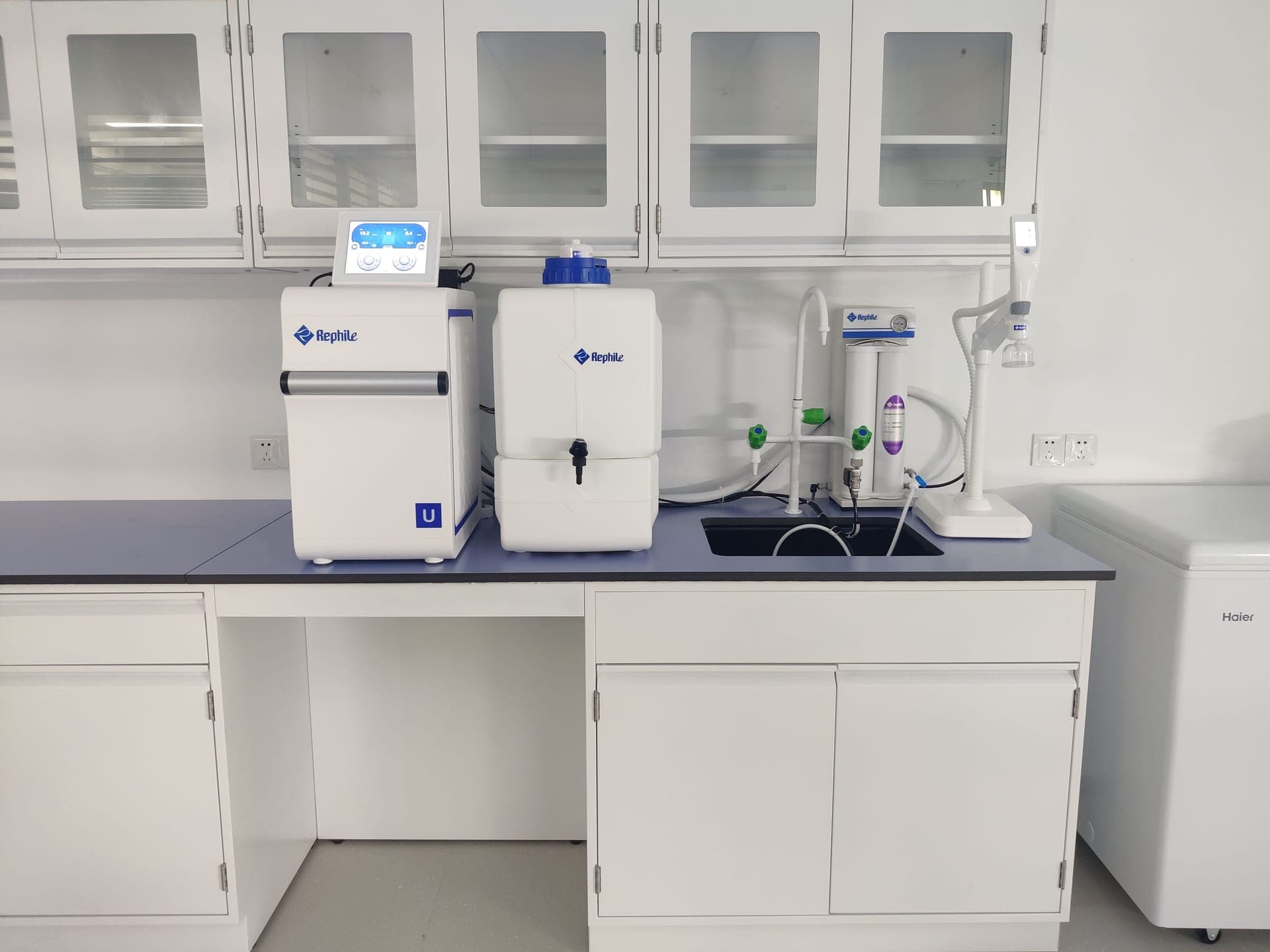
Filtration removes contaminants physically or chemically. Purification implies eliminating microbiological organisms to a defined standard, which almost no household filter meets. In practice the words are used interchangeably in marketing, and only certification tells you which you bought.
Quick picks
Tap any row to jump to the full write-up. The button goes straight to the retailer.
| # | Product | Best for | Price |
|---|---|---|---|
| 1 | 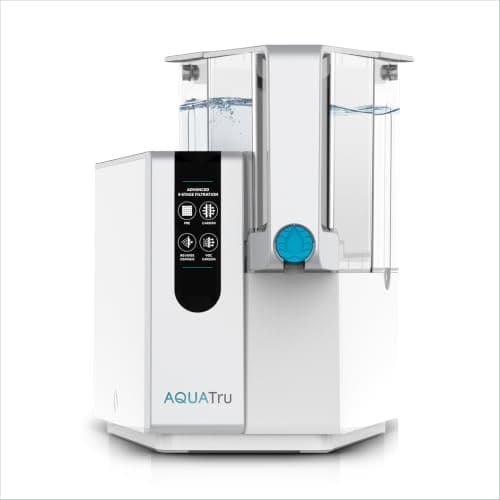 AquaTru Classic Countertop Reverse Osmosis PurifierIAPMO certified to NSF/ANSI 53, 58, 401 and P473 — real, listed certifications. AquaTru Classic Countertop Reverse Osmosis PurifierIAPMO certified to NSF/ANSI 53, 58, 401 and P473 — real, listed certifications. | Marketed as a purifier, and certified | $451.25 - View on Amazon $475.00 — 5% off #ad Price as of October 17, 2026. We may earn a commission. Disclosure. |
| 2 | 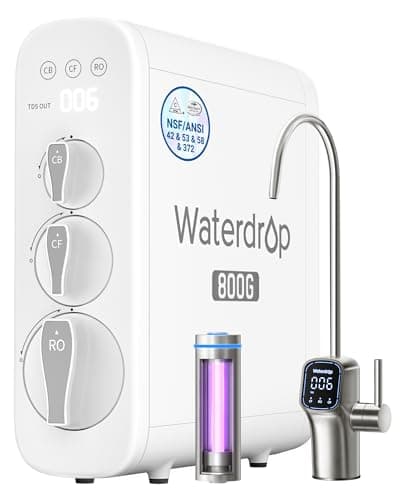 Waterdrop G3P800 Tankless Reverse Osmosis SystemNSF/ANSI 42, 53, 58 and 372 — what the certification says, not what the name implies. Waterdrop G3P800 Tankless Reverse Osmosis SystemNSF/ANSI 42, 53, 58 and 372 — what the certification says, not what the name implies. | Broadest certified reduction | $759.00 - View on Amazon $999.00 — 24% off #ad Price as of October 17, 2026. We may earn a commission. Disclosure. |
| 3 | 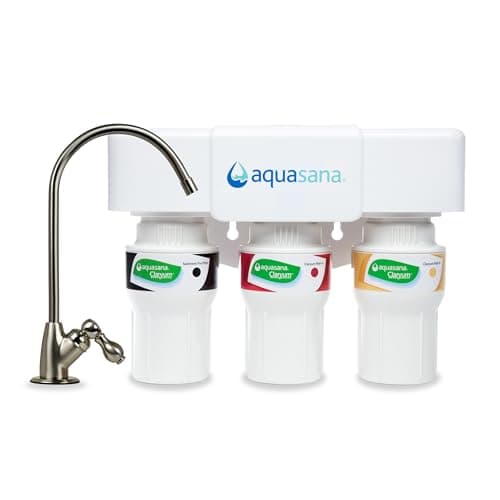 Aquasana Claryum 3-Stage Under-Sink Filter (AQ-5300)Certified to NSF/ANSI 42, 53 and 401 and marketed as exactly that. Aquasana Claryum 3-Stage Under-Sink Filter (AQ-5300)Certified to NSF/ANSI 42, 53 and 401 and marketed as exactly that. | Honest filtration | $154.99 - View on Amazon $349.99 — 56% off #ad Price as of October 17, 2026. We may earn a commission. Disclosure. |
What the words are supposed to mean
Filtration is the physical or chemical removal of contaminants — carbon adsorbing chlorine, a membrane excluding dissolved solids, a sediment cartridge catching grit.
Purification traditionally implies going further: eliminating microbiological organisms — bacteria, viruses, protozoan cysts — to a defined level of reduction. In technical contexts a microbiological water purifier is expected to achieve specific log-reduction targets across all three organism classes.
Almost no household drinking-water filter meets that. Which is why the distinction matters and why the marketing use of the word is worth understanding.
What the words mean on a box
In consumer marketing, largely nothing consistent. Products called "purifiers" are frequently certified to the same standards as products called "filters," and some products called filters remove more than some products called purifiers.
The AquaTru Classic is sold as a purifier and is certified by IAPMO to NSF/ANSI 53, 58, 401 and P473. Those are real certifications and they are what you should be reading — not the noun on the front.
What actually addresses microbiological risk
| Technology | Bacteria | Viruses | Cysts | Notes |
|---|---|---|---|---|
| Carbon filter | No | No | Yes, if certified for cysts | Not a purifier |
| Reverse osmosis | Largely | Largely | Yes | Membrane integrity matters; not certified as purification |
| UV | Yes | Yes | Yes | Inactivates rather than removes; needs clear water |
| Boiling | Yes | Yes | Yes | The correct response to a boil-water notice |
| Distillation | Yes | Yes | Yes | Effective, slow, energy-hungry |
The row that matters for most households: a carbon filter does not address bacteria or viruses, and no amount of calling it a purifier changes that. During a boil-water notice, boil — see is my tap water safe.
When microbiological risk is real
- Private wells. No disinfection, no monitoring. A coliform test is part of every first well panel, and UV is the ongoing answer.
- Boil-water notices. Temporary, and the instruction means what it says.
- Backcountry and international travel, where genuine microbiological purifiers exist as a distinct product category.
On a US municipal supply, microbiological risk is low by design — a disinfectant residual is maintained all the way to your tap precisely to keep it that way.
The practical rule
Ignore both words and read the certification. NSF/ANSI 42 is aesthetic. 53 and 58 are health effects. 401 covers emerging compounds. P473 is PFOA and PFOS specifically. Those numbers are testable claims; "purifier" is a noun.
What you are actually paying for
Products named "purifier" frequently sit at a price premium over products named "filter" with comparable certifications. That premium is sometimes buying real additional capability and sometimes buying the noun.
The test: line up the certification lists side by side. If one product is certified to NSF/ANSI 53, 58, 401 and P473 and the other to 42 alone, the premium is real. If both hold the same standards, you are paying for a word.
We show the arithmetic rather than a verdict so you can redo it with the price you actually pay. Filter prices move; the rated capacities above do not.
The picks in full
Marketed as a purifier, and certified
AquaTru Classic Countertop Reverse Osmosis Purifier
AquaTru
Reverse osmosis performance with no plumbing, no drilling and no landlord conversation. You pay for that with counter space, a wait, and two tanks you fill and empty by hand.
Certification status
Certified by IAPMO to NSF/ANSI 53, 58, 401 and P473, covering lead, reverse-osmosis performance, emerging compounds and the PFOA/PFOS protocol.
Published specifications
| Filtration | 4-stage countertop reverse osmosis |
|---|---|
| Clean water tank | 0.75 gallons |
| Tap water tank | 1 gallon |
| Installation | None — no plumbing connection |
| Certified standards | NSF/ANSI 53, 58, 401, P473 (IAPMO) |
What we like
- Real reverse osmosis with a P473 PFOA/PFOS certification and zero installation
- The strongest answer available to a renter with a lead or PFAS problem
- No drilling, no drain saddle, no landlord permission needed
What we do not
- Takes up substantial counter space
- You refill and empty tanks by hand — it is not on-demand
- Highest purchase price in the no-plumbing tier by a wide margin
Skip it if
Anyone who can plumb in an under-sink system. A permanent under-sink RO is cheaper per gallon, on-demand, and out of sight. Buy this when you genuinely cannot install.
$475.00 — 5% off
#ad Price as of October 17, 2026. We may earn a commission. Disclosure.
Where these specifications came from
Broadest certified reduction
Waterdrop G3P800 Tankless Reverse Osmosis System
Waterdrop
Tankless reverse osmosis that gives back the cupboard a pressure tank would eat, fills a glass without the pause, and sends markedly less water down the drain than a classic tank system.
Certification status
Certified to NSF/ANSI 42 for chlorine reduction, NSF/ANSI 53 and 58 for TDS, fluoride, cadmium, hexavalent chromium and selenium, and NSF/ANSI 372 for lead-free materials.
Published specifications
| Output | 800 GPD |
|---|---|
| Pure-to-drain ratio | 3:1 |
| Format | Tankless — no pressure tank |
| Certified standards | NSF/ANSI 42, 53, 58, 372 |
| Installation | Two holes: smart LED faucet and drain |
| Faucet | Included, with TDS display |
What we like
- No pressure tank, so it fits cabinets a tank system cannot
- 3:1 pure-to-drain is far better than the ratio typical of older reverse osmosis
- 800 GPD means no waiting for a tank to refill
What we do not
- Needs a power outlet under the sink — a real constraint in older kitchens
- Proprietary filter cartridges, so you are tied to Waterdrop's pricing
- Requires drilling for the included faucet unless you have a spare hole
Skip it if
Renters, and anyone with no outlet under the sink. It is a permanent, powered installation — a countertop unit is the answer if you cannot commit to that.
$999.00 — 24% off
#ad Price as of October 17, 2026. We may earn a commission. Disclosure.
Where these specifications came from
Honest filtration
Aquasana Claryum 3-Stage Under-Sink Filter (AQ-5300)
Aquasana
Carbon-block filtration rather than reverse osmosis: it keeps the minerals, wastes nothing, and fits where a reverse-osmosis system will not. It also cannot do what RO does for fluoride or nitrate.
Certification status
WQA tested and certified to NSF/ANSI 42, 53 — which includes the P473 protocol for PFOA and PFOS — and 401, for the reduction of 78 contaminants. Aquasana publishes 99.6% for lead and microplastics, 99.7% for PFOA and PFOS, 99.99% for cysts and 97% for chlorine across the Claryum 3-Stage line.
Published specifications
| Filter life | 600 gallons / up to 6 months |
|---|---|
| Certified standards | NSF/ANSI 42, 53 (includes P473), 401 (WQA) |
| Flow rate | 0.5 gpm |
| Wastewater | None |
| Format | 3-stage carbon block with a dedicated faucet |
| Contaminants claimed | 78 |
| Lead / PFOA and PFOS | 99.6% / 99.7% |
What we like
- No drain line, no wastewater, no tank — much easier to install than reverse osmosis
- NSF/ANSI 401 certification covers pharmaceutical-class trace compounds
- Full flow rate, unlike reverse osmosis, so filling a pot is not a project
What we do not
- Not reverse osmosis: no meaningful fluoride, nitrate or TDS reduction
- 600-gallon filter life is short next to an inline system's tens of thousands
- Proprietary cartridges
Skip it if
Anyone whose problem is fluoride, nitrate or total dissolved solids. Carbon block does not remove those; you need reverse osmosis for that job.
$349.99 — 56% off
#ad Price as of October 17, 2026. We may earn a commission. Disclosure.
Questions people actually ask
Is a water purifier better than a water filter?
Not necessarily, and often not at all. The words are used loosely in consumer marketing, and products with either name can hold identical certifications. Compare certification lists rather than product names.
Do water filters remove bacteria?
Standard carbon filters do not, and are not certified to. Some are certified for cysts, which are larger protozoan organisms, but that is not the same as bacterial or viral reduction. UV, boiling and distillation address microbiological risk.
Do I need purification on city water?
Generally no. US public supplies maintain a disinfectant residual all the way to your tap specifically to control microbiological risk. Private wells are a different case entirely and warrant coliform testing and usually UV.
What certification should I actually look for?
NSF/ANSI 42 for taste and odor, 53 for health contaminants such as lead, 58 for reverse osmosis, 401 for emerging compounds, and P473 for PFOA and PFOS. Those numbers describe what was tested. The product name does not.