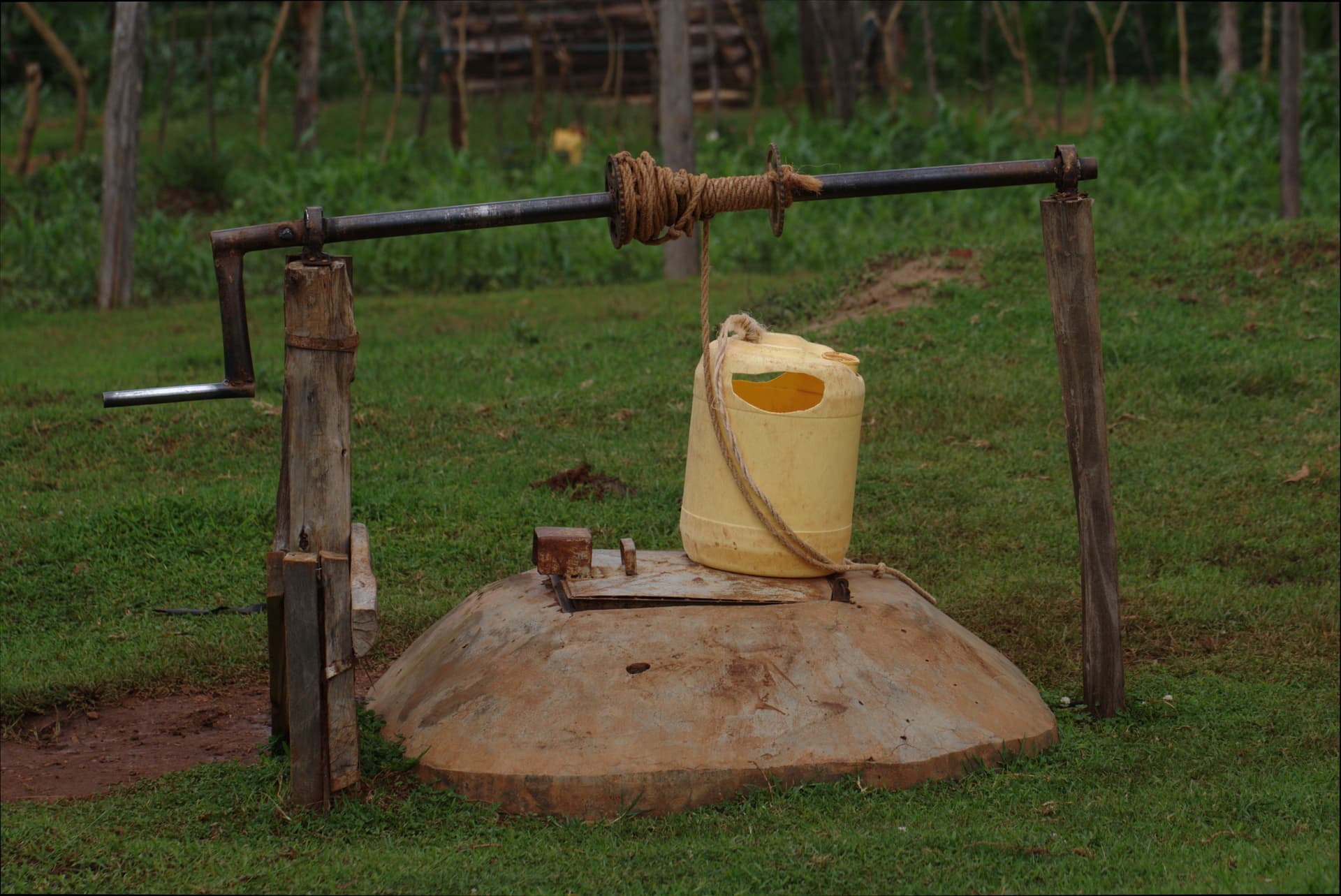
The WS1 uses air injection oxidation to handle up to 7 ppm iron, 8 ppm hydrogen sulfide and 1 ppm manganese at 12 gpm service flow, with automatic backwash, no chemical dosing and a lifetime warranty.
Quick picks
Tap any row to jump to the full write-up. The button goes straight to the retailer.
| # | Product | Best for | Price |
|---|---|---|---|
| 1 | Sno photoSpringWell WS1 Well Water Iron Filter (Air Injection)7 ppm iron, 8 ppm sulfide, 1 ppm manganese, 12 gpm, automatic backwash. | The system reviewed here | Sold direct by SpringWell Water. No affiliate link, so nothing to click and nothing for us to earn. The maker's page is in the sources below. Disclosure. |
| 2 | 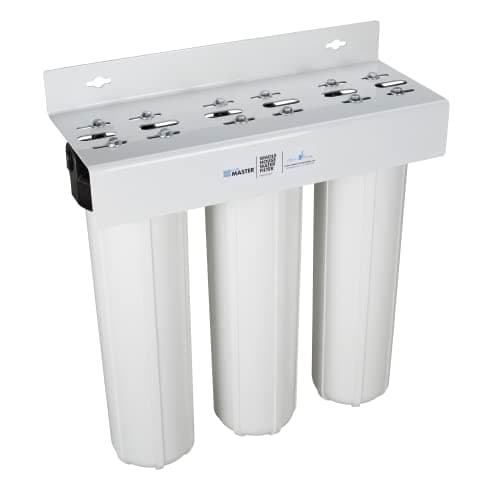 Home Master HMF3SdgFeC 3-Stage Well Water FilterCartridge system, 3 ppm combined, no backwash connection required. Home Master HMF3SdgFeC 3-Stage Well Water FilterCartridge system, 3 ppm combined, no backwash connection required. | If you have no drain | $503.85 - View on Amazon #ad Price as of October 17, 2026. We may earn a commission. Disclosure. |
| 3 | 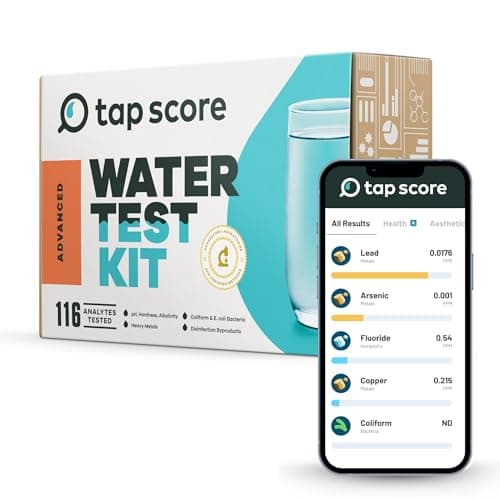 Tap Score Advanced Water Test (SimpleLab)The WS1's ppm limits are only useful against a real lab number. Tap Score Advanced Water Test (SimpleLab)The WS1's ppm limits are only useful against a real lab number. | Buy this first | $269.00 - View on Amazon #ad Price as of October 17, 2026. We may earn a commission. Disclosure. |
How air injection works
The tank holds a pocket of compressed air above the media bed. Water entering the tank passes through that pocket, and dissolved iron and hydrogen sulfide oxidize on contact with the oxygen — ferrous iron becomes ferric particles, sulfide becomes elemental sulfur. The media bed then catches the particles.
Periodically the system backwashes: it reverses flow, lifts and rinses the bed, sends the accumulated particles to drain, and draws a fresh air pocket. Then it goes back to work.
There are no consumables in that cycle. No chlorine to dose, no peroxide to refill, no potassium permanganate. That is the practical advantage over the chemical-injection alternatives, and it is why air injection has become the mainstream residential answer.
Published limits
| Specification | Published figure |
|---|---|
| Iron | Up to 7 ppm |
| Hydrogen sulfide | Up to 8 ppm |
| Manganese | Up to 1 ppm |
| Service flow | 12 gpm |
| Process | Air injection oxidation, chemical-free |
| Regeneration | Automatic backwash |
| Warranty | Lifetime |
Those numbers are unusually specific for this category, and that specificity is the point: they let you check the system against your own lab report before spending anything. A well at 5 ppm iron and 3 ppm sulfide is comfortably inside; a well at 12 ppm iron is not, and no amount of hoping changes that.
The certification position
SpringWell publishes performance limits by contaminant rather than a system-level NSF certification listing. That is a real distinction from a certified product, and it matters less here than it does for drinking-water filters — the claim is a treatment capacity you can verify against your own water, not a health-contaminant reduction claim that needs third-party verification.
Still, know what you are buying: manufacturer-published capability, tested against your own lab numbers.
What it needs from your house
- A drain. Non-negotiable — backwash water has to go somewhere. This is the constraint that rules the system out in some finished basements.
- Power for the control valve.
- Space for a tall tank, with headroom above it for service.
- A pH above about 6.8, because oxidation is pH-dependent. On acidic well water a neutralizer goes first, or this system underperforms in a way that looks like a fault.
Our disclosure on this one
We earn nothing if you buy the WS1. SpringWell sells direct and is not reliably available on Amazon. It is the top pick on this hub because its published limits are the highest here, not because it pays — it does not pay at all. See the full disclosure.
What it does not do
Bacteria — that is UV, after this. Hardness — that is a softener, also after this. Nitrate and arsenic — reverse osmosis at the drinking tap. This system does one family of contaminants and does it well.
The cost-per-gallon math
No consumables at all. The running cost is the electricity for the valve and the water sent to drain during backwash.
Against a cartridge system: price a full cartridge set locally and multiply by ten years, then add that system's purchase price. Set the total against the WS1's purchase price plus a decade of backwash water.
The lifetime warranty belongs in that comparison too. The control valve is the component most likely to fail on a ten-year-old backwashing system, and it is not a cheap part.
We show the arithmetic rather than a verdict so you can redo it with the price you actually pay. Filter prices move; the rated capacities above do not.
The picks in full
The system reviewed here
SpringWell WS1 Well Water Iron Filter (Air Injection)
SpringWell
Air injection oxidation rather than chemical dosing: it draws in air, oxidizes iron and sulfide into particles, and backwashes them out. The published limits are unusually specific, which makes them easy to check against your own water test.
Certification status
SpringWell publishes performance limits by contaminant rather than a system NSF certification listing. Match those limits against your own lab test before buying — this is a system you size from data, not from a category.
Published specifications
| Iron | Up to 7 ppm |
|---|---|
| Hydrogen sulfide | Up to 8 ppm |
| Manganese | Up to 1 ppm |
| Service flow | 12 gpm |
| Process | Air injection oxidation, chemical-free |
| Regeneration | Automatic backwash |
| Warranty | Lifetime |
What we like
- Handles iron, sulfur and manganese in one system, which is the actual well-water problem set
- No chemical dosing and no chlorine tank to refill
- Published ppm limits you can check against a lab report before you buy
What we do not
- Needs a drain for backwash, which constrains where it can go
- Not sold through Amazon, so we earn nothing on this recommendation
- Does nothing for bacteria — that is a UV job
Skip it if
Anyone who has not tested their well. Buying an iron filter without a lab result is how people end up with a system rated for 7 ppm sitting on 12 ppm water, and it fails within months.
Sold direct by SpringWell Water. No affiliate link, so nothing to click and nothing for us to earn. The maker's page is in the sources below. Disclosure.
Where these specifications came from
If you have no drain
Home Master HMF3SdgFeC 3-Stage Well Water Filter
Home Master
Radial-flow media in oversized housings, built specifically to avoid the pressure loss that makes most cartridge systems miserable on a well. The published limit is combined, not per contaminant, which is the detail people miss.
Certification status
Published performance figures rather than a system certification listing. The 3 ppm ceiling is combined across iron, manganese and sulfur.
Published specifications
| Iron + manganese + sulfur | Up to 3 ppm COMBINED |
|---|---|
| Max filtered flow | 15 gpm |
| Feed pressure | 20-90 psi |
| Feed temperature | 40-100 degrees F |
| Rated capacity | 100,000 gallons |
| Stage 1 | 4-layer sediment, 25 / 10 / 5 / 1 micron |
| Stage 2 | Radial-flow iron reduction, under 1 psi pressure drop |
| Stage 3 | Radial-flow coconut-shell granular carbon |
What we like
- Radial flow keeps pressure drop under 1 psi — the usual complaint about cartridge systems, addressed
- Graded 4-layer sediment stage handles the grit a well actually delivers
- Works down to 20 psi feed pressure, lower than most competitors
What we do not
- 3 ppm is a COMBINED ceiling, so 2 ppm iron plus 2 ppm manganese is already over it
- No bacteria treatment
- Cartridge changes on a well are messier than on city water
Skip it if
Wells whose combined iron, manganese and sulfur exceeds 3 ppm. Add your lab numbers together before you decide, not separately.
#ad Price as of October 17, 2026. We may earn a commission. Disclosure.
Where these specifications came from
Buy this first
Tap Score Advanced Water Test (SimpleLab)
SimpleLab
Mail-in testing through certified laboratories, with a report that names contaminants, gives concentrations, and compares them against health guidelines. This is the number every system on this site is sized from.
Certification status
Samples are analyzed by laboratories in the SimpleLab network certified to ISO/IEC 17025, and Tap Score is recognized by the Water Quality Association.
Published specifications
| Method | Mail-in sample, certified laboratory analysis |
|---|---|
| Lab accreditation | ISO/IEC 17025 certified network laboratories |
| Panels available | City water, well water, and contaminant-specific tests |
| What you get | Concentrations plus health-guideline comparison |
What we like
- Certified-laboratory analysis, not a color-matching strip
- The report explains what each result means rather than dumping numbers
- Contaminant-specific panels exist when you only need one answer
What we do not
- Costs meaningfully more than a strip kit
- Turnaround is days, not minutes
- You have to actually collect the sample correctly, which is where home tests usually go wrong
Skip it if
Somebody whose entire complaint is a chlorine taste. That diagnosis is free — you can smell it — and a certified carbon filter costs less than the test.
#ad Price as of October 17, 2026. We may earn a commission. Disclosure.
Where these specifications came from
Questions people actually ask
Does the SpringWell WS1 need chemicals?
No. It draws in air and uses oxygen to oxidize iron and sulfide, then backwashes the particles to drain. There is nothing to dose, refill or store, which is the main practical advantage over chemical-injection systems.
What if my iron is above 7 ppm?
You are outside the published limit and this is the wrong system. Above that range you are looking at chemical injection with a contact tank, or a larger commercial-scale unit. Do not install below the requirement and hope — it fails within months.
Does it need a drain?
Yes. It backwashes automatically and that water has to go somewhere. In a finished basement with no nearby drain, this is the constraint that pushes people toward a cartridge system instead.
Will it remove bacteria from my well?
No. Air injection oxidizes iron and sulfide; it is not a disinfection process. Bacteria need UV treatment, installed after this system because UV requires clear water to be effective.