The Brita UltraMax is a 27-cup gravity dispenser that takes any Brita pitcher cartridge. Bought with the Elite filter it is certified to NSF/ANSI 42, 53 and 401 at 120 gallons — about 71 fills. Bought with the Standard filter it has no lead claim at all, and the cheaper listings are usually the Standard.
Quick picks
Tap any row to jump to the full write-up. The button goes straight to the retailer.
| # | Product | Best for | Price |
|---|---|---|---|
| 1 | 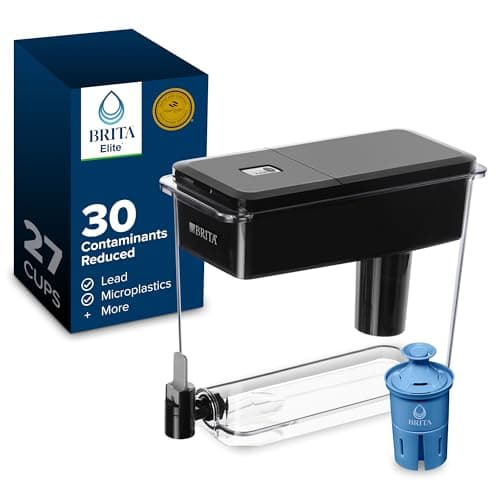 Brita UltraMax 27-Cup Dispenser with Elite Filter27 cups with the Elite filter: certified to 42, 53 and 401, 120 gallons, about 71 fills. Brita UltraMax 27-Cup Dispenser with Elite Filter27 cups with the Elite filter: certified to 42, 53 and 401, 120 gallons, about 71 fills. | The one reviewed | $49.98 - View on Amazon #ad Price as of October 6, 2026. We may earn a commission. Disclosure. |
| 2 | 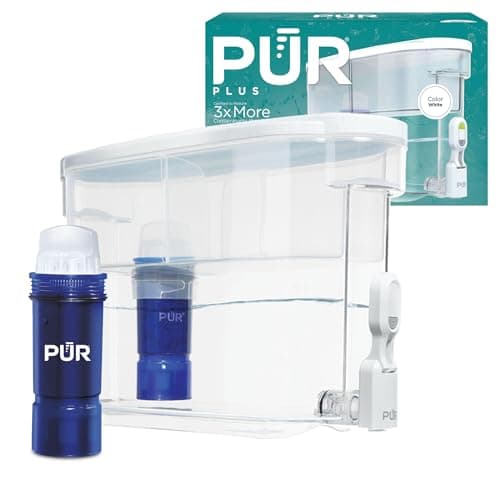 PUR PLUS 30-Cup Dispenser (DS1811Z)A bigger tank and a cartridge whose July 2026 sheet carries a certified total PFAS figure. PUR PLUS 30-Cup Dispenser (DS1811Z)A bigger tank and a cartridge whose July 2026 sheet carries a certified total PFAS figure. | If you want PFAS covered | $39.99 - View on Amazon $44.14 — 9% off #ad Price as of October 6, 2026. We may earn a commission. Disclosure. |
| 3 | 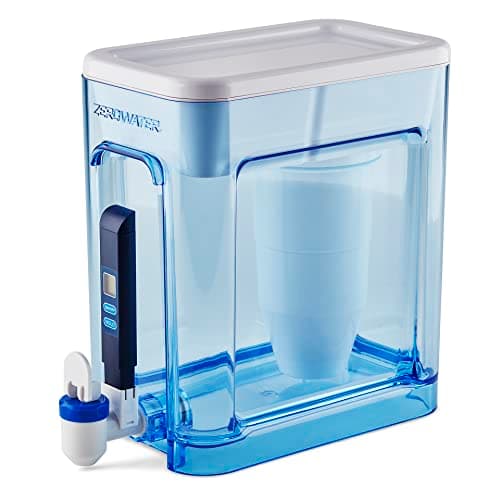 ZeroWater 22-Cup Ready-Read DispenserCertified for PFOA and PFOS at 99%, with the TDS readout built in — and a far shorter filter life. ZeroWater 22-Cup Ready-Read DispenserCertified for PFOA and PFOS at 99%, with the TDS readout built in — and a far shorter filter life. | If you want a meter | $24.49 - View on Amazon $34.99 — 30% off #ad Price as of October 6, 2026. We may earn a commission. Disclosure. |
What it is
A 27-cup gravity dispenser with a spigot, sold as the UltraMax and, in current listings, as the Brita XL. The tank sits on a fridge shelf or a counter, you fill the top, and filtered water collects below. Brita publishes the dimensions as 9.67 inches high, 13.94 wide and 5.19 deep — slim front to back, wide side to side, which is the geometry that decides whether it fits your fridge.
Mechanically there is very little to review. It is a plastic tank with a lid and a spigot, and every Brita pitcher cartridge fits it. That is exactly why the review is about the cartridge.
The cartridge decision, which is the whole product
Brita sells two pitcher filters, both of which fit this dispenser, and they are certified completely differently.
| Elite (blue) | Standard (white) | |
|---|---|---|
| Certified standards | NSF/ANSI 42, 53, 401 | NSF/ANSI 42 |
| Lead | Certified, 99% per Brita | No claim |
| Microplastics | Certified, 99.6% at 0.5-1 micron | No claim |
| PFOA / PFOS | Not certified | Not certified |
| Rated life | 120 gallons / about 6 months | 40 gallons / about 2 months |
| Fills of this 27-cup tank | About 71 | About 24 |
This is the trap in this product. The cheaper listings for the same tank ship the Standard cartridge, and nothing on the outside of the box tells you that the filter inside carries no lead claim. If you are buying a dispenser because of lead, buying the cheaper listing undoes the entire purchase. Brita, filter by filter sets out the two cartridges in detail.
Seventy-one fills, which is the number that matters
A dispenser is a pitcher cartridge in a bigger tank, so the certification belongs to the cartridge and the tank only changes how fast you use it up. At 120 rated gallons and 27 cups a fill, the Elite gives you roughly 71 fills before it is spent.
That is the UltraMax's strongest argument, and it is a big one. The PUR PLUS 30-cup dispenser runs about 21 fills per cartridge and the ZeroWater 22-cup about 11, because their cartridges are rated at 40 and roughly 15 gallons respectively. The dispenser roundup runs all three side by side; on running cost this one wins comfortably.
Living with it
- Refilling is slow. Gravity through carbon at 27 cups is not quick, and the upper reservoir holds a fraction of the tank — filling it completely means several pours and some waiting.
- The spigot is the failure point. Gravity dispensers drip if the spigot seal is not seated properly, and a dripping spigot inside a fridge is a nuisance you will notice daily.
- Measure the shelf. 13.94 inches wide is wider than many fridge shelves allow once the door bins are accounted for. This is the most common reason one goes back.
- Soak the cartridge. Skipping the pre-soak is the usual cause of slow flow and channeling, in this as in every Brita product.
What it does not do
PFAS. Brita's January 2026 sheet shows the Elite is not certified for PFOA or PFOS. If that is your reason for filtering, the PFAS roundup lists the certified routes, and in the dispenser format that means the PUR PLUS cartridge or ZeroWater.
Fluoride, nitrate, hardness. None of them, from any pitcher cartridge — the limits of the tier rather than a fault of this product.
Who should buy it
A household of two to four that drinks filtered water at home, wants a certified lead claim, and is tired of refilling a ten-cup pitcher three times an evening. On those terms it is the cheapest certified route to a lot of filtered water, and the 71-fill cartridge life is a genuine advantage rather than a marketing number.
Anyone drinking more than a couple of gallons a day should price an under-sink system instead: at that volume the cost per gallon crosses over within a year, and the filtered water arrives at full flow with no tank to refill.
The cost-per-gallon math
A household drinking two gallons a day uses about 730 gallons a year. At 120 rated gallons, the Elite cartridge covers that in about six cartridges a year; the Standard would need eighteen, and would not carry a lead claim at any of them.
Multiply six Elite cartridges by the price on the day and compare it with a certified under-sink cartridge rated in the hundreds or thousands of gallons. The dispenser wins on purchase price and loses on cost per gallon — which is the right trade if you rent, and the wrong one if you own and drink a lot.
We show the arithmetic rather than a verdict so you can redo it with the price you actually pay. Filter prices move; the rated capacities above do not.
The picks in full
The one reviewed
Brita UltraMax 27-Cup Dispenser with Elite Filter
Brita
The dispenser whose filter outlasts its tank. The Elite cartridge it ships with is rated at 120 gallons, which is about 71 fills of this 27-cup reservoir — three times what the other two big dispensers manage.
Certification status
Ships with the Brita Elite filter, certified to NSF/ANSI 42, 53 and 401. Brita states the Elite removes 99% of lead and reduces microplastics. Per Brita's January 2026 performance data sheet the Elite is not certified for PFOA or PFOS. The dispenser also accepts the Standard filter, which is not certified for lead — the certification belongs to the cartridge, not the tank.
Published specifications
| Capacity | 27 cups |
|---|---|
| Dimensions | 9.67" H x 13.94" W x 5.19" L |
| Included filter | Brita Elite |
| Elite rated life | 120 gallons / about 6 months |
| Fills per filter | About 71 (120 gallons / 27 cups) |
| Lead | 99% reduction, Elite filter (Brita) |
| PFOA / PFOS | Not certified (January 2026 data sheet) |
| Fridge fit | Slim profile designed for a fridge shelf |
What we like
- The longest-lived certified filter of any dispenser here, by a factor of three
- Slim enough for a fridge door-side shelf, which the widest dispenser here is not
- Accepts any Brita pitcher filter, so replacements are stocked everywhere
What we do not
- No PFOA or PFOS certification — the wrong answer to a PFAS worry
- Refilling a 27-cup tank through a gravity filter takes a long time
- The cheaper listings ship with the Standard filter, which carries no lead claim — check the box
- Spigots on gravity dispensers drip if the seal is not seated properly
Skip it if
Households whose reason for filtering is PFAS. The Elite is not certified for PFOA or PFOS, and a bigger tank does not change that.
#ad Price as of October 6, 2026. We may earn a commission. Disclosure.
If you want PFAS covered
PUR PLUS 30-Cup Dispenser (DS1811Z)
PUR
The biggest tank here and the only one that lets you pour while it is still filtering. The catch is arithmetic: a 40-gallon filter behind a 30-cup reservoir is finished after about 21 fills.
Certification status
Ships with the PUR PLUS filter (PPF951K). PUR states the filter is IAPMO R&T certified to reduce lead and microplastics, and its July 2026 performance data sheet lists total PFAS at 99.75% for that cartridge under the same certification. Rated at 40 gallons or up to two months. No fluoride claim.
Published specifications
| Capacity | 30 cups |
|---|---|
| Dimensions | W 15.3" x H 10.1" x L 5.3" |
| Filter | PUR PLUS lead-reducing |
| Certification | IAPMO R&T — lead, microplastics and total PFAS (July 2026 sheet) |
| Total PFAS | 99.75% (PPF951K column) |
| Rated filter life | 40 gallons / up to 2 months |
| Fills per filter | About 21 (40 gallons / 30 cups) |
| Features | Pour-while-filtering spout, filter change light, LockFit seal |
What we like
- The largest capacity of the three dispensers
- The pull-down spout pours while water is still filtering, so an empty tank is not a wait
- A named certifying body for both lead and microplastics
What we do not
- 40 rated gallons — the shortest-lived lead filter here, and a big tank uses it up fast
- 15.3 inches wide: measure the fridge shelf before ordering, because this is the common return
- No fluoride claim, and a 40-gallon cartridge behind a 30-cup tank is a two-month cadence at best
- PUR's older DS1800Z dispenser looks almost identical and ships a different filter — check the model number
Skip it if
Anyone who will not change a filter every couple of months. The Brita UltraMax reaches a lead certification with a filter that lasts three times as long.
$44.14 — 9% off
#ad Price as of October 6, 2026. We may earn a commission. Disclosure.
If you want a meter
ZeroWater 22-Cup Ready-Read Dispenser
ZeroWater
The PFAS answer in the dispenser format, with the TDS meter moved into the unit so you never have to guess. It also has the shortest filter life on the site, and on a 22-cup tank that turns into roughly eleven fills.
Certification status
Uses the ZeroWater 5-stage filter, which ZeroWater reports is certified by IAPMO against NSF/ANSI 42 and 53, with published reductions of 99% for PFOA/PFOS, 95% for lead and 99% for chromium-6. ZeroWater's own instruction is to replace the filter when the meter reads 006.
Published specifications
| Capacity | 22 cups |
|---|---|
| Dimensions | 5.5" L x 10.4" W x 11.3" H |
| Filter | ZeroWater 5-stage, ion exchange |
| Estimated filter life | About 15 gallons |
| Fills per filter | About 11 (15 gallons / 22 cups) |
| Meter | Built-in TDS readout — replace at 006 |
| PFOA / PFOS | 99% (IAPMO, NSF/ANSI 53) |
| Lead / chromium-6 | 95% / 99% |
What we like
- Certified for PFOA and PFOS, with the reduction published as a percentage
- The meter is built into the unit, so the change point is a reading rather than a guess
- Ion exchange drives dissolved solids far lower than any carbon filter
What we do not
- About 15 gallons per filter — the highest cost per gallon of anything on this page
- On hard or high-TDS water the filter life falls further, sometimes dramatically
- ZeroWater itself says exhausted filters make water taste acidic or fishy
- Some people find near-zero-TDS water tastes flat
Skip it if
Households on hard water who drink a lot. A 22-cup tank on a high-TDS supply can exhaust a filter in days, and an under-sink system becomes cheaper within months.
$34.99 — 30% off
#ad Price as of October 6, 2026. We may earn a commission. Disclosure.
Questions people actually ask
Does the Brita UltraMax come with the Elite filter?
Some listings do and some do not, and that is the single most important thing to check. The same 27-cup tank is sold with the Elite cartridge, which is certified to NSF/ANSI 42, 53 and 401 and covers lead, and with the Standard cartridge, which is certified to 42 only and makes no lead claim. The cheaper listing is usually the Standard.
How many fills do you get per filter?
About 71 with the Elite, which is rated at 120 gallons against a 27-cup tank. With the Standard cartridge at 40 gallons it is about 24. Compare dispensers on fills per filter rather than tank size — it is the figure that drives running cost.
Does the Brita UltraMax remove lead?
With the Elite cartridge, yes: it is certified to NSF/ANSI 53 for lead, which Brita publishes at 99%. With the Standard cartridge, no. The tank is identical either way, so the answer depends entirely on which filter is in it.
Will it fit in my fridge?
Measure before you buy. Brita publishes 9.67 inches high by 13.94 wide by 5.19 deep. It is designed to be slim front to back so it sits on a shelf, but it is wide, and door bins often reduce the usable shelf width more than people expect.
Does it remove PFAS?
No. Per Brita's January 2026 performance data sheet, the Elite filter is not certified for PFOA or PFOS. In the dispenser format the certified PFAS routes are the PUR PLUS cartridge, whose July 2026 sheet carries a total PFAS figure, or ZeroWater's 5-stage filter at 99%.