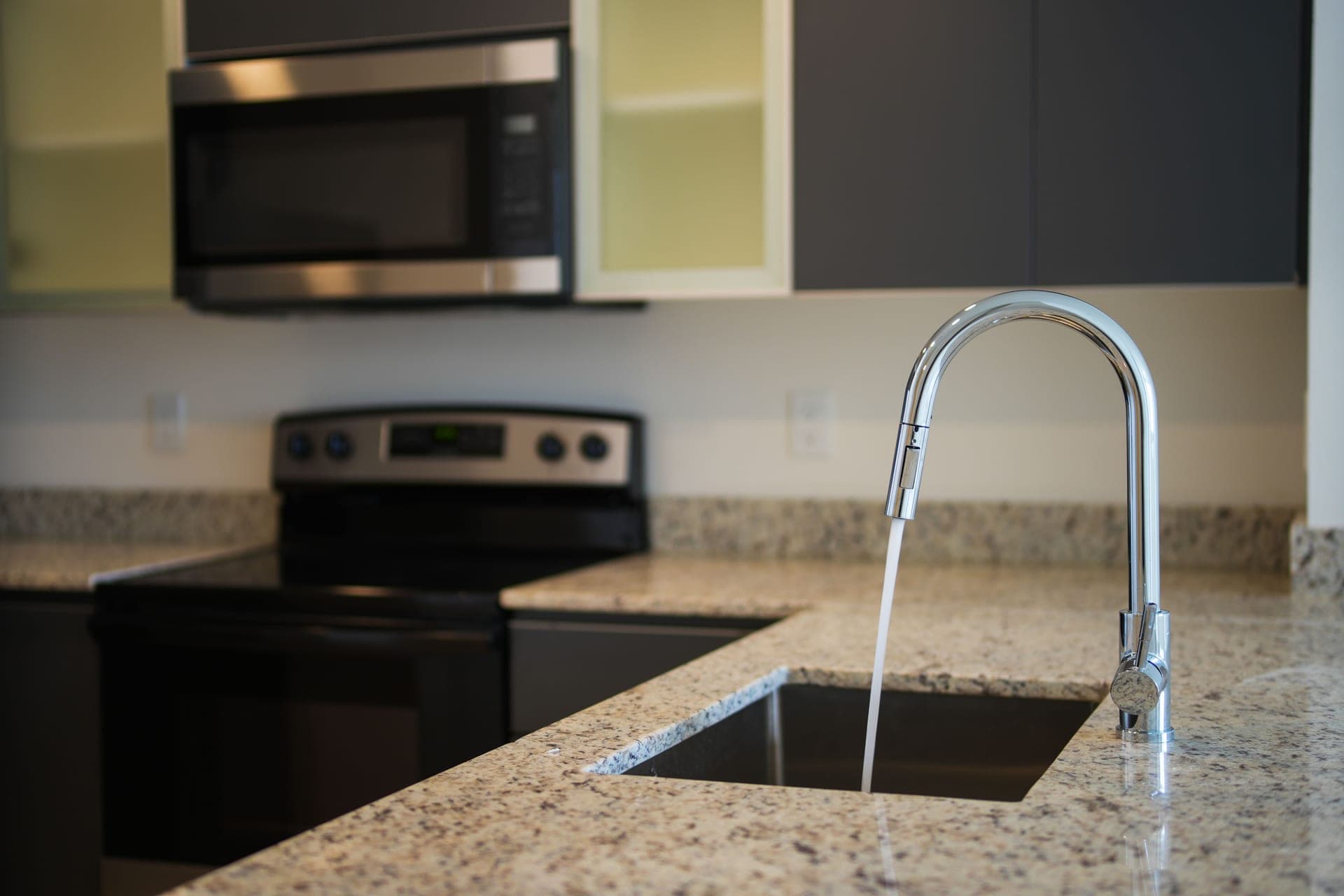
The AquaTru Classic is countertop reverse osmosis certified by IAPMO to NSF/ANSI 53, 58, 401 and P473. It reaches contaminants no pitcher can — fluoride, nitrate, arsenic, PFOA and PFOS — with no plumbing at all. The trade is counter space, batch filtering and a high running cost.
Quick picks
Tap any row to jump to the full write-up. The button goes straight to the retailer.
| # | Product | Best for | Price |
|---|---|---|---|
| 1 | 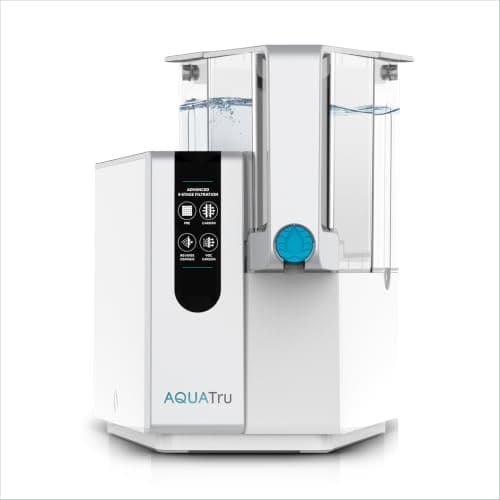 AquaTru Classic Countertop Reverse Osmosis PurifierIAPMO certified to NSF/ANSI 53, 58, 401 and P473 across 84 contaminants, no plumbing. AquaTru Classic Countertop Reverse Osmosis PurifierIAPMO certified to NSF/ANSI 53, 58, 401 and P473 across 84 contaminants, no plumbing. | The unit reviewed | $403.75 - View on Amazon $475.00 — 15% off #ad Price as of October 7, 2026. We may earn a commission. Disclosure. |
| 2 | 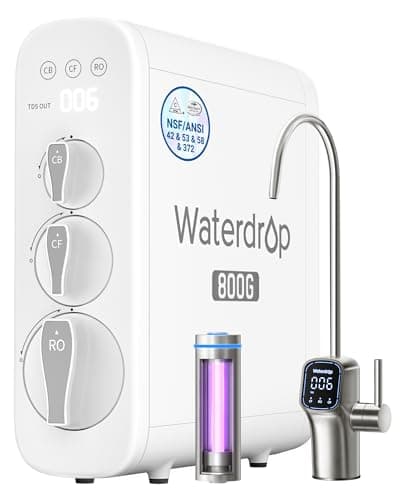 Waterdrop G3P800 Tankless Reverse Osmosis SystemTankless under-sink RO, on demand, certified to 42, 53 and 58, and cheaper per gallon. Waterdrop G3P800 Tankless Reverse Osmosis SystemTankless under-sink RO, on demand, certified to 42, 53 and 58, and cheaper per gallon. | If you can plumb one in | $699.00 - View on Amazon $999.00 — 30% off #ad Price as of October 7, 2026. We may earn a commission. Disclosure. |
| 3 | 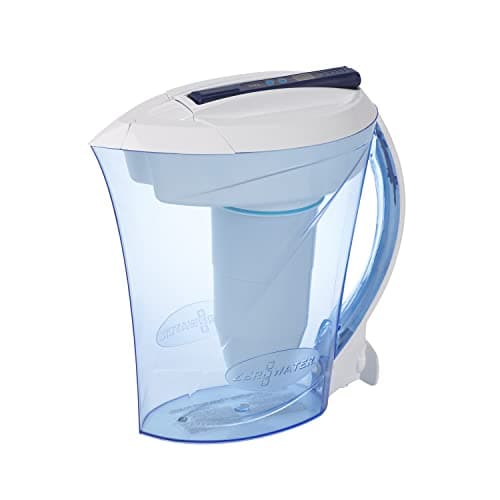 ZeroWater 10-Cup Ready-Pour PitcherCertified for PFOA and PFOS at 99% for the price of a few AquaTru filter sets. ZeroWater 10-Cup Ready-Pour PitcherCertified for PFOA and PFOS at 99% for the price of a few AquaTru filter sets. | If the budget will not stretch | $28.99 - View on Amazon $59.98 — 52% off #ad Price as of October 7, 2026. We may earn a commission. Disclosure. |
What it is, mechanically
The AquaTru is a four-stage reverse osmosis system that sits on a counter and needs a power outlet and nothing else. You fill a tank with tap water, the pump pushes it through a pre-filter, an RO membrane and a carbon post-filter, and clean water collects in a second tank you pour from.
That matters because reverse osmosis normally requires plumbing — a cold supply, a drain line for the reject water, usually a hole drilled in the counter for a dedicated faucet. The AquaTru moves all of that inside a box. The reject water collects in the feed tank and you tip it down the sink.
The certification, which is the reason to consider it
IAPMO certifies the unit to NSF/ANSI 53, 58, 401 and P473, and AquaTru states it is certified to remove 84 contaminants. Take those one at a time, because each is a different promise:
- NSF/ANSI 53 — health effects. Lead, cysts, VOCs and the rest of the list that separates a health filter from a taste filter.
- NSF/ANSI 58 — the reverse osmosis standard. Total dissolved solids, and the optional claims that live under it such as fluoride, nitrate and arsenic.
- NSF/ANSI 401 — emerging compounds: pharmaceuticals, pesticides, the incidental contaminants.
- NSF/ANSI P473 — the protocol written specifically for PFOA and PFOS. Very few products hold it, and it is the claim to look for if forever chemicals are your reason for filtering.
That combination is the whole argument for the machine. A certified pitcher gets you one or two of those standards. This gets you four, with no landlord conversation.
Living with it
The honest daily experience is two chores and a wait.
You fill a tank. The feed tank holds a gallon, and on a busy day in a family you will refill it more than once. It is not a machine you forget about.
You wait. It filters in batches rather than on demand. The clean tank holds three quarters of a gallon, and when it is empty you wait for it to refill rather than turning a tap.
It occupies real estate. This is the complaint that shows up most in owner reviews, and no specification conveys it properly: measure the space next to your sink before ordering, and remember you need clearance above it to lift the lid.
In exchange you get water that has been through a membrane, in a rental, without touching the plumbing. For a household with a real contaminant and no ability to install, there is very little else that does this.
What it reaches that a pitcher cannot
| Contaminant | Certified pitcher | AquaTru Classic |
|---|---|---|
| Chlorine, taste and odor | Yes | Yes |
| Lead | Yes, with the right cartridge | Yes |
| PFOA / PFOS | Only some | Yes, under P473 |
| Fluoride | No | Yes |
| Nitrate | No | Yes |
| Arsenic | No | Yes, under 58 |
| Total dissolved solids | Only ion-exchange pitchers | Yes |
| Minerals kept | Yes | No — removed with everything else |
That last row is the trade people underestimate. Reverse osmosis takes calcium and magnesium out along with the contaminants, which changes the taste — what that actually costs you is a smaller number than either side of the argument suggests, and AquaTru sells an alkaline variant if the flat taste bothers you.
The running cost, honestly
This is where the machine is least attractive, and where most reviews go quiet.
There are three consumables on a schedule — the pre-filter, the membrane and the carbon post-filter — and they are proprietary, so AquaTru sets the price for the life of the unit. The membrane is the long-lived one; the pre-filter is the frequent one.
Then there is the water you throw away. Every RO system sends some water to waste, and on a countertop unit that water is in the feed tank, which means you are also paying for it in effort: you pour it away by hand, several times a week, for years.
Against a plumbed system, the AquaTru is more expensive to buy and more expensive per gallon. Against bottled water for a household with a contaminant problem, it is dramatically cheaper, which is the comparison that actually motivates most buyers.
Who should buy it
- Renters with a named contaminant. Lead, PFAS, nitrate, fluoride — the things a pitcher cannot reach and a landlord will not let you plumb for.
- Anyone in a building where drilling is not an option. No hole in the counter, no drain saddle, no permission needed.
- Households currently buying bottled water for a specific worry. This is the case where the numbers are not close.
Who should not
- Anyone who can install under the sink. A plumbed RO system wins on price, convenience and counter space.
- Anyone whose only complaint is chlorine taste. A certified carbon filter costs a fraction of this and keeps the minerals in.
- Small kitchens. The footprint is the single most common regret.
- Anyone expecting it to fix the shower or the scale. This treats drinking water only. Scale and shower complaints are a point-of-entry problem.
The cost-per-gallon math
Price the machine over three years, not on the day.
Take the purchase price, add a pre-filter and post-filter on their published schedule, add the membrane when it is due, and divide by the gallons your household actually drinks and cooks with. Most people are surprised by how few gallons that is — two liters a person per day is under 200 gallons a year for a family of four.
Then run the same arithmetic for a plumbed under-sink system, which has the same kind of consumables and a much lower purchase price, and for the bottled water you might be replacing. The ordering is stable: under-sink cheapest, AquaTru in the middle, bottled water far and away the most expensive.
We show the arithmetic rather than a verdict so you can redo it with the price you actually pay. Filter prices move; the rated capacities above do not.
The picks in full
The unit reviewed
AquaTru Classic Countertop Reverse Osmosis Purifier
AquaTru
Reverse osmosis performance with no plumbing, no drilling and no landlord conversation. You pay for that with counter space, a wait, and two tanks you fill and empty by hand.
Certification status
Certified by IAPMO to NSF/ANSI 53, 58, 401 and P473, covering lead, reverse-osmosis performance, emerging compounds and the PFOA/PFOS protocol.
Published specifications
| Filtration | 4-stage countertop reverse osmosis |
|---|---|
| Clean water tank | 0.75 gallons |
| Tap water tank | 1 gallon |
| Installation | None — no plumbing connection |
| Certified standards | NSF/ANSI 53, 58, 401, P473 (IAPMO) |
What we like
- Real reverse osmosis with a P473 PFOA/PFOS certification and zero installation
- The strongest answer available to a renter with a lead or PFAS problem
- No drilling, no drain saddle, no landlord permission needed
What we do not
- Takes up substantial counter space
- You refill and empty tanks by hand — it is not on-demand
- Highest purchase price in the no-plumbing tier by a wide margin
Skip it if
Anyone who can plumb in an under-sink system. A permanent under-sink RO is cheaper per gallon, on-demand, and out of sight. Buy this when you genuinely cannot install.
$475.00 — 15% off
#ad Price as of October 7, 2026. We may earn a commission. Disclosure.
Where these specifications came from
If you can plumb one in
Waterdrop G3P800 Tankless Reverse Osmosis System
Waterdrop
Tankless reverse osmosis that gives back the cupboard a pressure tank would eat, fills a glass without the pause, and sends markedly less water down the drain than a classic tank system.
Certification status
Certified to NSF/ANSI 42 for chlorine reduction, NSF/ANSI 53 and 58 for TDS, fluoride, cadmium, hexavalent chromium and selenium, and NSF/ANSI 372 for lead-free materials.
Published specifications
| Output | 800 GPD |
|---|---|
| Pure-to-drain ratio | 3:1 |
| Format | Tankless — no pressure tank |
| Certified standards | NSF/ANSI 42, 53, 58, 372 |
| Installation | Two holes: smart LED faucet and drain |
| Faucet | Included, with TDS display |
What we like
- No pressure tank, so it fits cabinets a tank system cannot
- 3:1 pure-to-drain is far better than the ratio typical of older reverse osmosis
- 800 GPD means no waiting for a tank to refill
What we do not
- Needs a power outlet under the sink — a real constraint in older kitchens
- Proprietary filter cartridges, so you are tied to Waterdrop's pricing
- Requires drilling for the included faucet unless you have a spare hole
Skip it if
Renters, and anyone with no outlet under the sink. It is a permanent, powered installation — a countertop unit is the answer if you cannot commit to that.
$999.00 — 30% off
#ad Price as of October 7, 2026. We may earn a commission. Disclosure.
Where these specifications came from
If the budget will not stretch
ZeroWater 10-Cup Ready-Pour Pitcher
ZeroWater
The only mainstream pitcher that hands you a TDS meter and invites you to check its work. It buys you a PFOA/PFOS certification the Brita Elite does not have, and it costs you filter life.
Certification status
The 5-stage filter is system-certified by IAPMO against NSF/ANSI 42 for chlorine taste and odor and NSF/ANSI 53 for lead, hexavalent chromium, mercury and PFOA/PFOS.
Published specifications
| Filtration | 5-stage, including ion-exchange resin |
|---|---|
| Rated filter life | About 15-20 gallons, varying with source TDS |
| Certified standards | NSF/ANSI 42 and 53 (IAPMO) |
| PFOA / PFOS | Certified under NSF/ANSI 53 |
| Published reduction — PFOA/PFOS | 99% |
| Published reduction — lead | 95% |
| Published reduction — chromium 6 | 99% |
| Included | Handheld TDS meter |
What we like
- Carries a PFOA/PFOS certification, which the Brita Elite does not
- The bundled TDS meter turns 'is it still working' from a guess into a reading
- Ion exchange drives total dissolved solids far lower than carbon alone
What we do not
- Filter life is the shortest of any pitcher here, and it collapses further on hard or high-TDS water
- Cost per gallon is the highest in the pitcher tier as a result
- Some owners find the taste flat or faintly sour at very low TDS — a real preference issue, not a defect
Skip it if
Anyone on hard, high-TDS water who will not tolerate changing a filter every few weeks. On 400+ ppm supply the running cost is genuinely painful and an under-sink system is cheaper inside a year.
$59.98 — 52% off
#ad Price as of October 7, 2026. We may earn a commission. Disclosure.
Where these specifications came from
Questions people actually ask
Is the AquaTru Classic worth it?
If you cannot install a system and you have a contaminant a pitcher cannot reach — fluoride, nitrate, arsenic, PFOA or PFOS — then yes: it is one of very few certified reverse osmosis options that needs no plumbing. If you can plumb one in, an under-sink system does the same job on demand and for less.
What is the AquaTru certified for?
IAPMO certifies it to NSF/ANSI 53, 58, 401 and P473, and AquaTru states it is certified to remove 84 contaminants. P473 is the notable one — it is the protocol written specifically for PFOA and PFOS, and few products hold it.
Does the AquaTru waste water?
Yes, like every reverse osmosis system. The reject water collects in the feed tank rather than going to a drain, so you pour it away by hand. That is the practical cost of countertop RO, and it is a chore as much as an expense.
Does it remove minerals?
Yes. A membrane cannot distinguish calcium and magnesium from contaminants, so both are removed. AquaTru sells an alkaline variant that adds minerals back; whether that matters is a taste question more than a nutrition one.
AquaTru or an under-sink RO system?
Under-sink, if you can install. It is cheaper to buy and to run, produces on demand rather than in batches, and takes no counter space. The AquaTru is the answer when installation is genuinely off the table.